
The short version
Venom is not simply a Spider-Man villain.
Venom is the bond between a sentient alien symbiote and its host. Eddie Brock remains the defining partner, but the identity has passed through soldiers, criminals and members of the Brock family—changing the character's role every time.
That flexibility explains Venom's extraordinary staying power. The same basic image can function as Spider-Man's dark reflection, a horror monster, an uneasy protector or a cosmic hero. The white spider emblem remembers Peter Parker. The teeth and tongue make the silhouette unmistakably monstrous. Eddie Brock supplies the anger, guilt and moral code that turned the original partnership into something more complicated than a conventional super-villain.
For collectors, Venom's history is equally distinctive. His most important milestones do not begin in a title bearing his name. They are spread across Amazing Spider-Man, Marvel Super Heroes Secret Wars, later Spider-Man titles, a long sequence of 1990s mini-series and several very different ongoing runs.
The best way to understand Venom is to follow the title changes: costume, villain, reluctant ally, solo antihero, government agent and finally the centre of Marvel's symbiote mythology.
Creation and first appearances
Before Eddie Brock, there was the black suit.
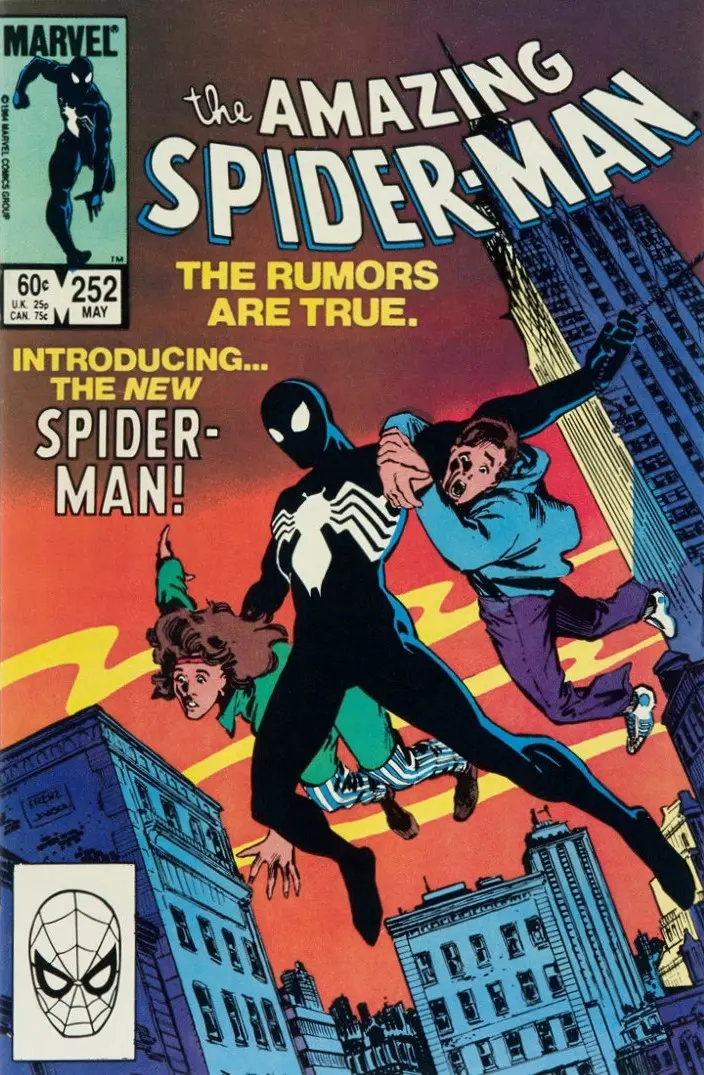
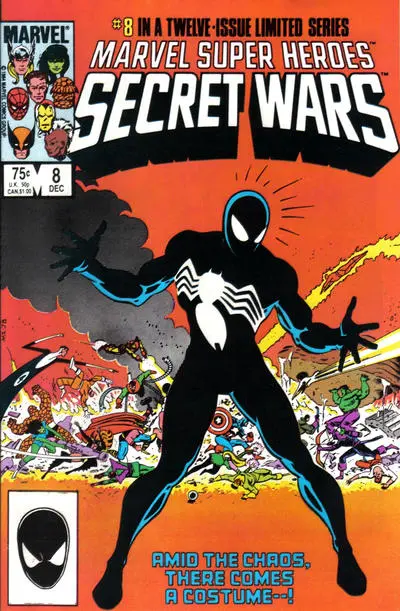
The costume's creation has a longer history than the Venom character itself. Marvel reader Randy Schueller proposed a new black-and-white Spider-Man costume, while Marvel creators developed the design and its place in the stories. The black costume first reached readers in The Amazing Spider-Man #252 in 1984; Marvel Super Heroes Secret Wars #8 later showed how Peter Parker obtained it on Battleworld.

The black costume arrives in Spider-Man's flagship title before anyone knows it is alive.

The issue that reveals how Spider-Man acquired the alien costume on Battleworld.
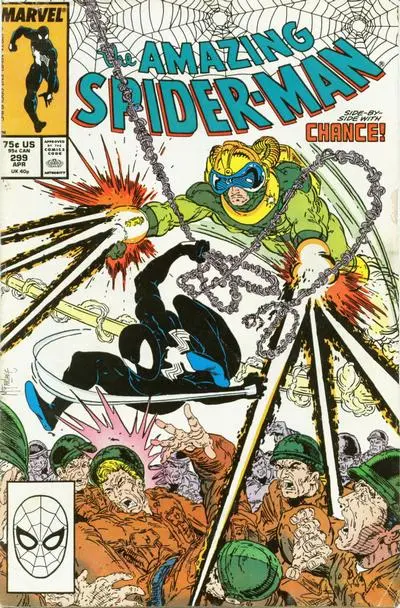
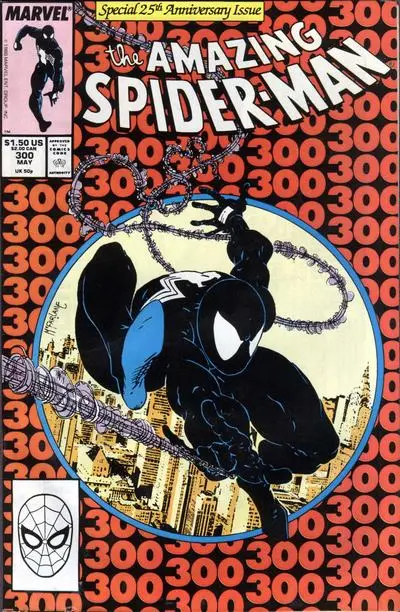
Once Peter discovered that the costume was alive, he rejected it. Writer David Michelinie recognised the dramatic potential of a creature that knew Spider-Man's identity and could bypass his spider-sense. Artist Todd McFarlane supplied the huge, muscular figure and visual aggression that defined the Eddie Brock version. Venom appeared briefly in The Amazing Spider-Man #299 before receiving his first full confrontation with Spider-Man in issue #300.
Eddie and the symbiote were united by resentment. Brock blamed Spider-Man for the collapse of his journalism career; the symbiote felt abandoned by Peter. Their shared hatred made Venom dangerous, but their belief that they protected innocent people also created the route towards antihero status.

Venom’s final-page cameo leads into the full confrontation in #300. McFarlane’s run began in the preceding #298.

Venom's first full appearance and the defining issue in the character's history.

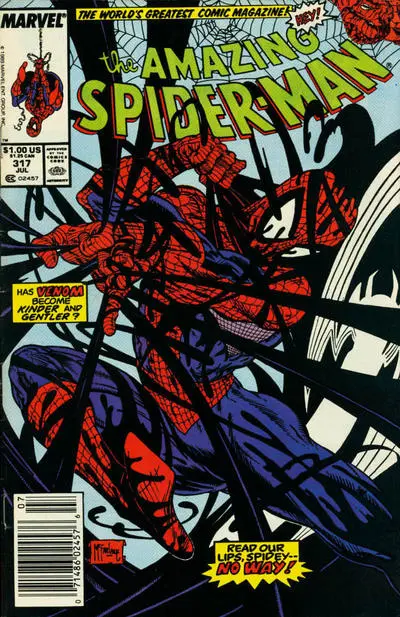
An early rematch and one of McFarlane's most memorable Venom cover images.
Publication chronology
The Venom timeline.
Start at the top and follow the spine down. This is the main publication story—from Spider-Man's black costume to Eddie Brock, the alternative hosts and the modern symbiote mythology—rather than a list of every appearance.
-
The origin
ASM #252 Spider-Man rootsThe alien costume reaches Earth.
The Amazing Spider-Man #252 introduces the black suit in Spider-Man's own title. Secret Wars #8 then shows how Peter Parker obtained it on Battleworld, before he learns that the costume is alive.
Key reading · ASM #252 · Secret Wars #8 · ASM #258
-
The villain
ASM #300 Eddie BrockVenom gets a name and a face.
The rejected symbiote bonds with disgraced reporter Eddie Brock. After the final-page reveal in issue #299, Amazing Spider-Man #300 delivers the first full Venom battle and establishes an enemy who knows Peter Parker's identity and bypasses his spider-sense.
Key reading · ASM #299–300 · #315–317
-
The antihero

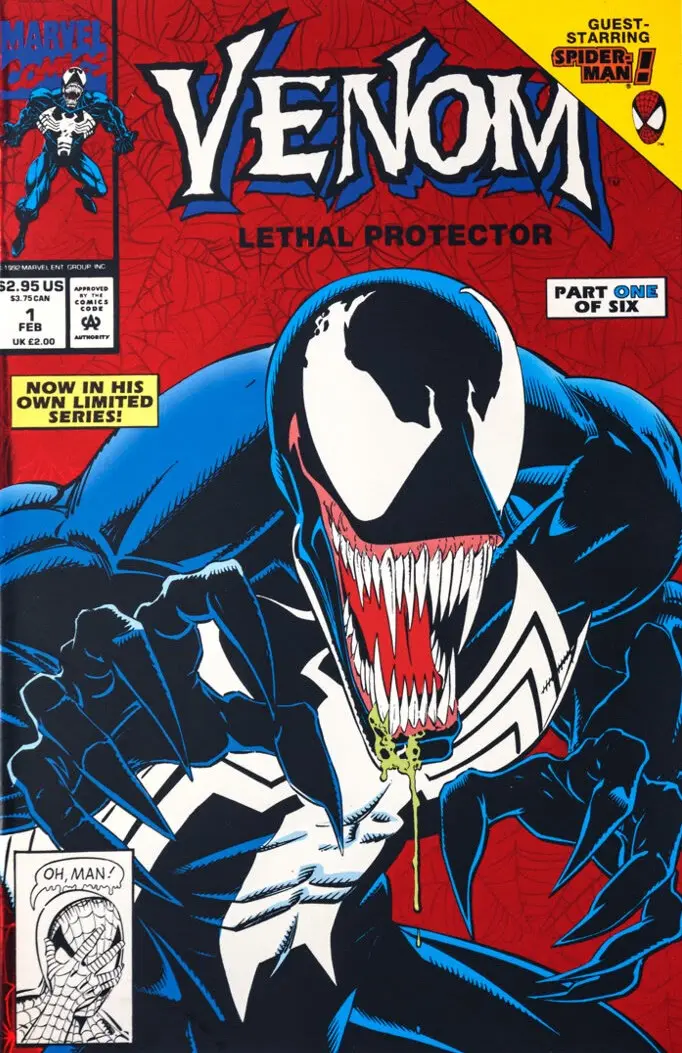
Lethal Protector #1 Solo eraThe villain becomes the lead.
After the uneasy agreement reached in The Amazing Spider-Man #375, Venom: Lethal Protector moves Eddie to San Francisco and makes his belief in protecting innocents the centre of the story. Maximum Carnage and a succession of mini-series secure Venom's place as a 1990s antihero.
Key reading · The Amazing Spider-Man #375 · Lethal Protector #1–6 · Maximum Carnage
-
The hostsNew
hostsAngelo Fortunato
Mac Gargan
Anti-VenomIdentity in fluxVenom separates from Eddie Brock.
The symbiote passes through Angelo Fortunato and then Mac Gargan, whose time as Venom is far more openly villainous. Eddie's story continues separately when the remnants in his body are transformed into the white Anti-Venom symbiote.
Key reading · Marvel Knights Spider-Man #7–12 · ASM #568–573
-
The agent

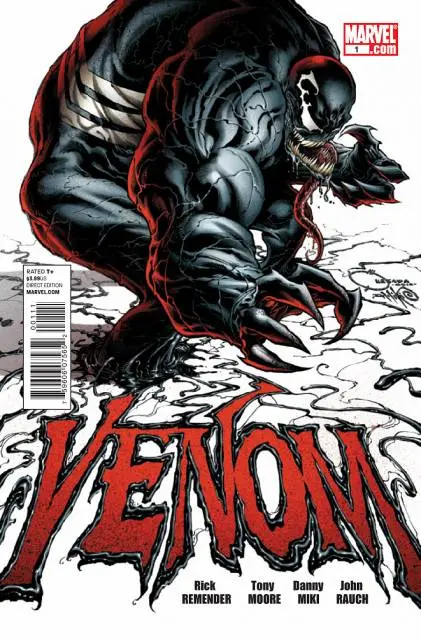
Venom #1 · 2011 Flash ThompsonAgent Venom turns the symbiote into a weapon.
Flash Thompson becomes the host for a government-controlled version of Venom, combining superhero action, covert missions and the fear that he may lose control. The reinvention proves that Venom can work as a legacy identity rather than only an Eddie Brock story.
Key reading · ASM #654–654.1 · Venom (2011) #1–5 · Circle of Four
-
Space and return

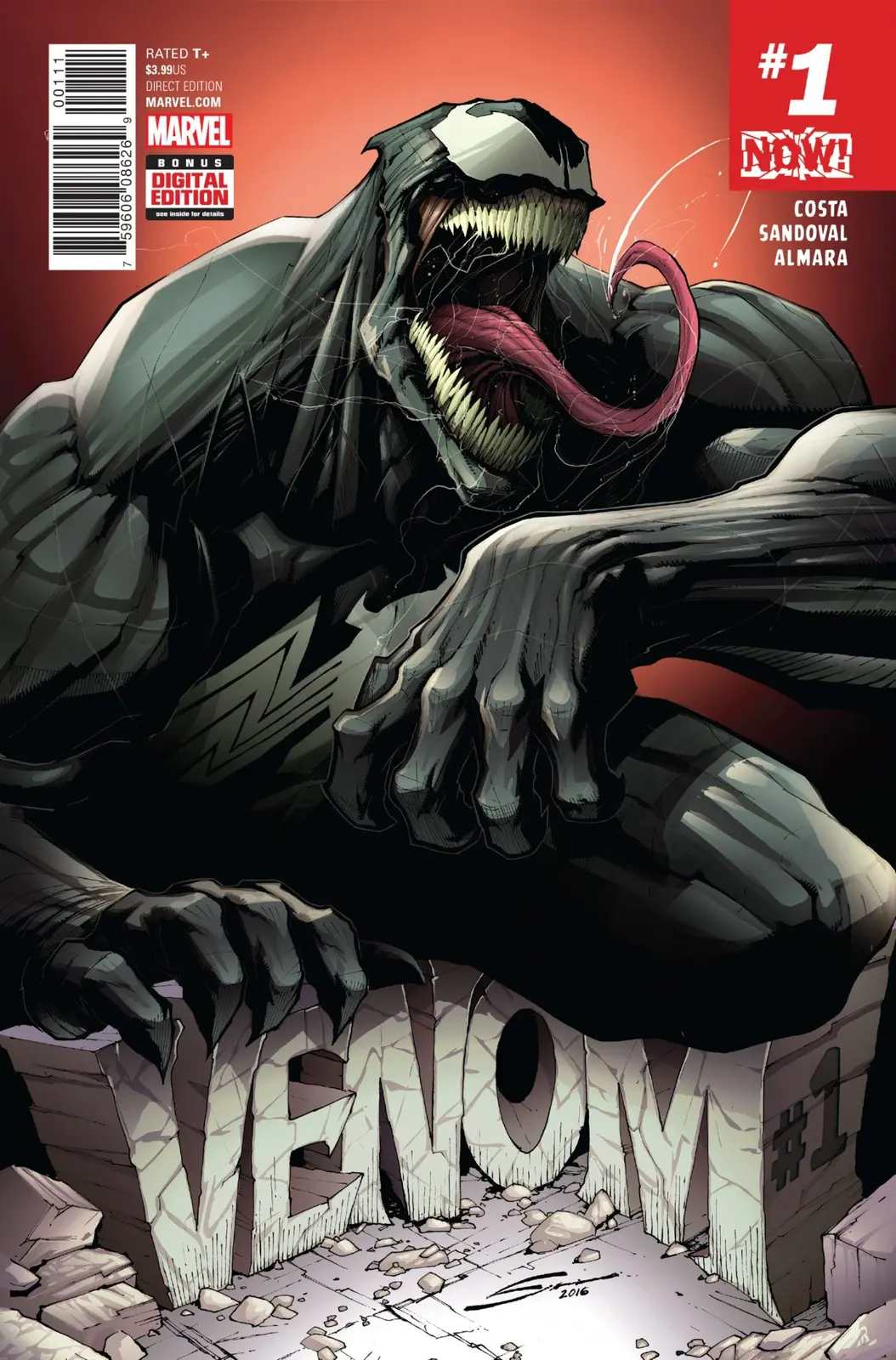
Venom #1 · 2016 Space Knight to EddieThe identity stretches—then comes home.
Flash takes the symbiote into space in Venom: Space Knight. A new series then introduces Lee Price as host before reuniting Eddie and the symbiote, restoring the partnership that most readers still regard as the character's central form.
Key reading · Space Knight #1–13 · Venom (2016) #1–6
-
The mythology
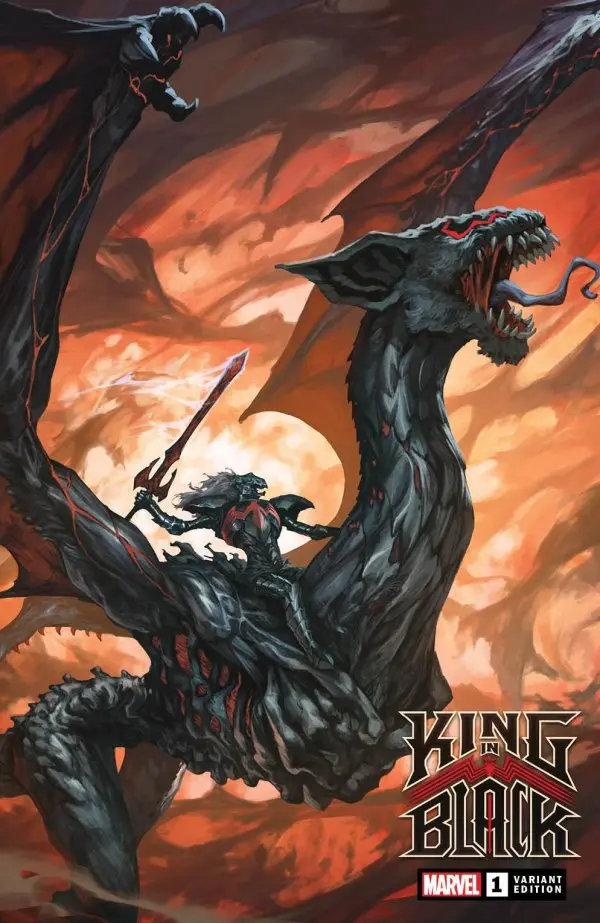
King in Black #1 Knull and the hiveVenom becomes a Marvel-wide epic.
Donny Cates and Ryan Stegman connect the symbiotes to Knull, a cosmic creator-god, while deepening Eddie's relationship with his son Dylan. The story grows through Absolute Carnage and culminates in King in Black.
Key reading · Venom (2018) #1–35 · Absolute Carnage · King in Black
-
The legacy
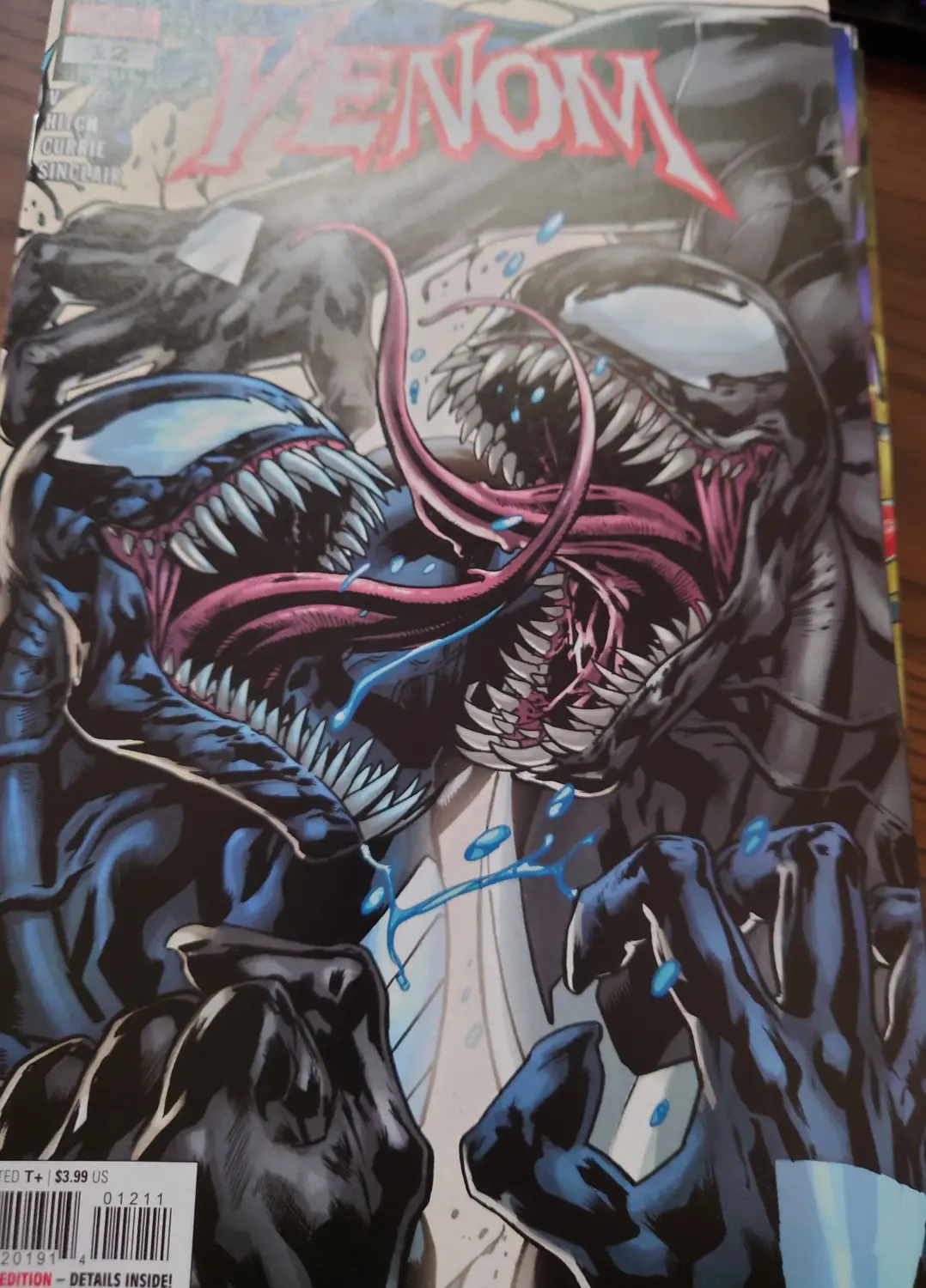
Venom #12 · 2022 Eddie, Dylan and beyondThe story splits across hosts, time and space.
The post-King in Black era follows Eddie through a cosmic role while Dylan carries Venom at street level. After Venom War, All-New Venom reveals Mary Jane Watson as the new host. The main title resumes its legacy numbering with issue #250 in 2025 and has reached #261 by September 2026.
Key reading · Venom (2021) #1–39 · Venom War #1–5 · All-New Venom #1–10 · Venom #250 onward
The decisive change
1993: Venom becomes the lead.
Following the uneasy agreement reached in The Amazing Spider-Man #375, the original six-issue Venom: Lethal Protector mini-series moved Eddie Brock to San Francisco. Written by David Michelinie and drawn initially by Mark Bagley, it repositioned Venom as a brutal protector rather than a straightforward villain.
The title provided the template for much of what followed: Venom could headline his own book, fight threats worse than himself and still remain unpredictable. Marvel followed it with a succession of limited series throughout the 1990s, building a recognisable Venom line without immediately committing to a conventional long-running monthly title.
Creators who shaped the character
The writers and artists who kept reinventing Venom.
Venom did not arrive fully formed in one issue. Different creative teams successively defined the villain, the antihero, the government agent and the cosmic legacy character. These are the five turning points that matter most.
David Michelinie & Todd McFarlane
Defining era · 1988–89What changed. Michelinie united Eddie Brock's professional ruin with the symbiote's rejection by Peter Parker, creating a villain whose two halves shared the same grievance. McFarlane gave that idea a physical presence: oversized, aggressive and recognisably descended from Spider-Man.
Why it matters. Their version established the essentials that still drive Venom—the secret identity knowledge, immunity to spider-sense, distorted morality and the uneasy feeling that host and symbiote are stronger together than apart.
Mark Bagley
Defining era · 1992–93What changed. Working with Michelinie, Bagley made the contrast between Venom and Carnage instantly readable—black muscular mass against red, filamented chaos—then helped make Eddie work as a lead rather than simply a final-page monster. Bagley pencilled Venom: Lethal Protector #1–3; Ron Lim and Sam de la Rosa handled the interior art on issues #4–6.
Why it matters. The shift created the durable “protector of innocents” version of Eddie. It also proved that a violent former villain could carry his own title without losing the danger that made him popular.
Rick Remender & Tony Moore
Defining era · 2011–12What changed. After Flash Thompson's transformation in ASM #654–654.1, Remender and launch artist Moore made him viable as a solo lead and recast Venom as a controlled military asset. Flash's heroism, combat trauma and addiction history turn every transformation into a test of whether he controls the suit or the suit controls him.
Why it matters. Agent Venom proved the concept could survive a complete change of lead, genre and silhouette. Moore set the tactical body-horror look, while Tom Fowler, Lan Medina, Declan Shalvey and others carried the wider Remender run.
Donny Cates & Ryan Stegman
Defining era · 2018–21What changed. Cates and Stegman connected Venom to Knull, the symbiote hive and a history older than Earth, while keeping Eddie's bond with Dylan Brock at the emotional centre. Stegman's scale lets the book move convincingly from intimate body horror to Marvel-wide catastrophe.
Why it matters. Their run turned decades of scattered symbiote ideas into a coherent modern mythology. Absolute Carnage and King in Black made Venom an event-level franchise without abandoning Eddie's personal story.
Al Ewing, Ram V & Bryan Hitch
Launch phase · 2021–23What changed. The 2021 series divides its attention between Dylan Brock's more immediate life as Venom and Eddie's new existence across the symbiote hive and the timelines of the Kings in Black. Hitch gives the launch phase the weight of science fiction while the two writers build separate stories designed to collide.
Why it matters. This team specifically defines issues #1–16 rather than the whole run: Ram V departs after #15 and Hitch after #16. Later chapters add Torunn Grønbekk and CAFU before Ewing carries the identity through Venom War and into the current series with Carlos Gómez.
The five defining comics
Five issues that explain Venom.
These are not simply the rarest or most expensive books. Together they show the decisive changes in the character's publishing history: costume, villain, established rival, solo lead and reinvention.
Stories and crossovers
Then follow the wider reading route.
ASM #252 & Secret Wars #8
Read these together: one introduces the black costume to Spider-Man's own title; the other explains how he acquired it.
ASM #299–300
The last-page reveal followed by the first full battle. These issues establish Eddie, the shared hatred and the famous immunity to spider-sense.
ASM #315–317
A compact early storyline that fixes Venom's look, personality and uneasy sense of honour in readers' minds.
Lethal Protector #1–6
The point where the villain becomes a leading character and the “protector of innocents” idea becomes central.
Venom (2011)
Flash Thompson becomes Agent Venom, combining the symbiote with espionage, military action and addiction-style tension.
Venom (2018) → King in Black
The major modern run: Eddie, Dylan, Knull and a mythology large enough to engulf the Marvel Universe.
Maximum Carnage
Venom and Spider-Man are forced onto the same side against Carnage. It is sprawling, unmistakably 1990s and fundamental to the character's move towards antiheroism.
Absolute Carnage & King in Black
These connected events turn personal symbiote history into a Marvel-wide conflict and complete the central arc of the Cates and Stegman era.
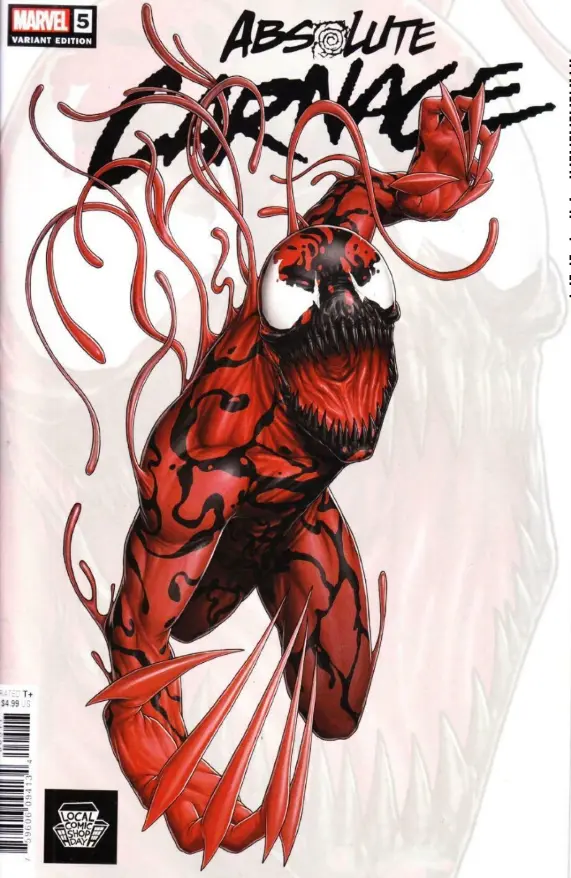
The Local Comic Shop Day variant for the finale of the symbiote event.
The cover introduces the scale and darkness of the Knull invasion.
Collector's route
How to build a Venom shelf.
A satisfying Venom collection does not need to begin with the most expensive books. Build outward from one era, then add the historical milestones as opportunities appear.
Choose the anchor
Start with Eddie Brock, Agent Venom or the modern Knull era. This keeps the first stage focused instead of turning every symbiote appearance into a target.
Add a signature book
Lethal Protector #1 is the natural solo-series anchor. Amazing Spider-Man #316 or #317 provides an iconic McFarlane-era alternative below the major debut books.
Follow the supporting titles
Look beyond books titled Venom: Amazing Spider-Man, Web of Spider-Man, Marvel Knights Spider-Man and event mini-series carry important parts of the chronology.
Buy the cover as well as the key
Venom is one of modern comics' strongest cover characters. A well-chosen variant or dramatic non-key issue can represent an artist or era better than an expensive minor appearance.
Cover art spotlight
Two modern artists, three versions of Venom.
A raw, painterly Venom that pushes the character towards horror.
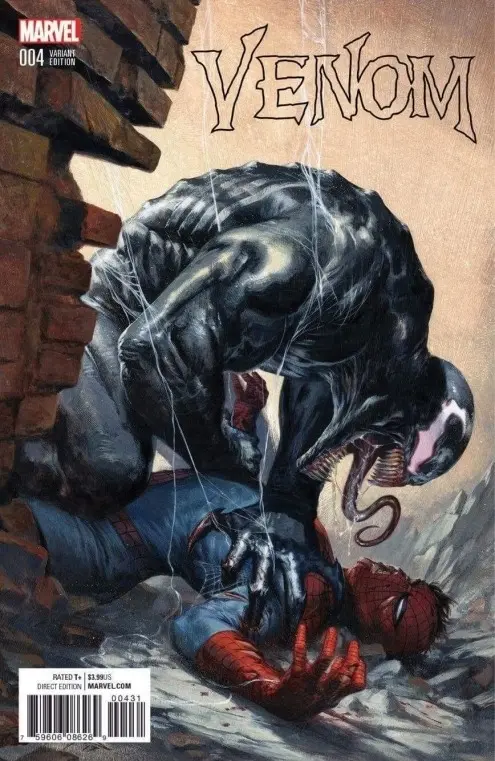
A weighty, realistic Venom towering over Spider-Man.
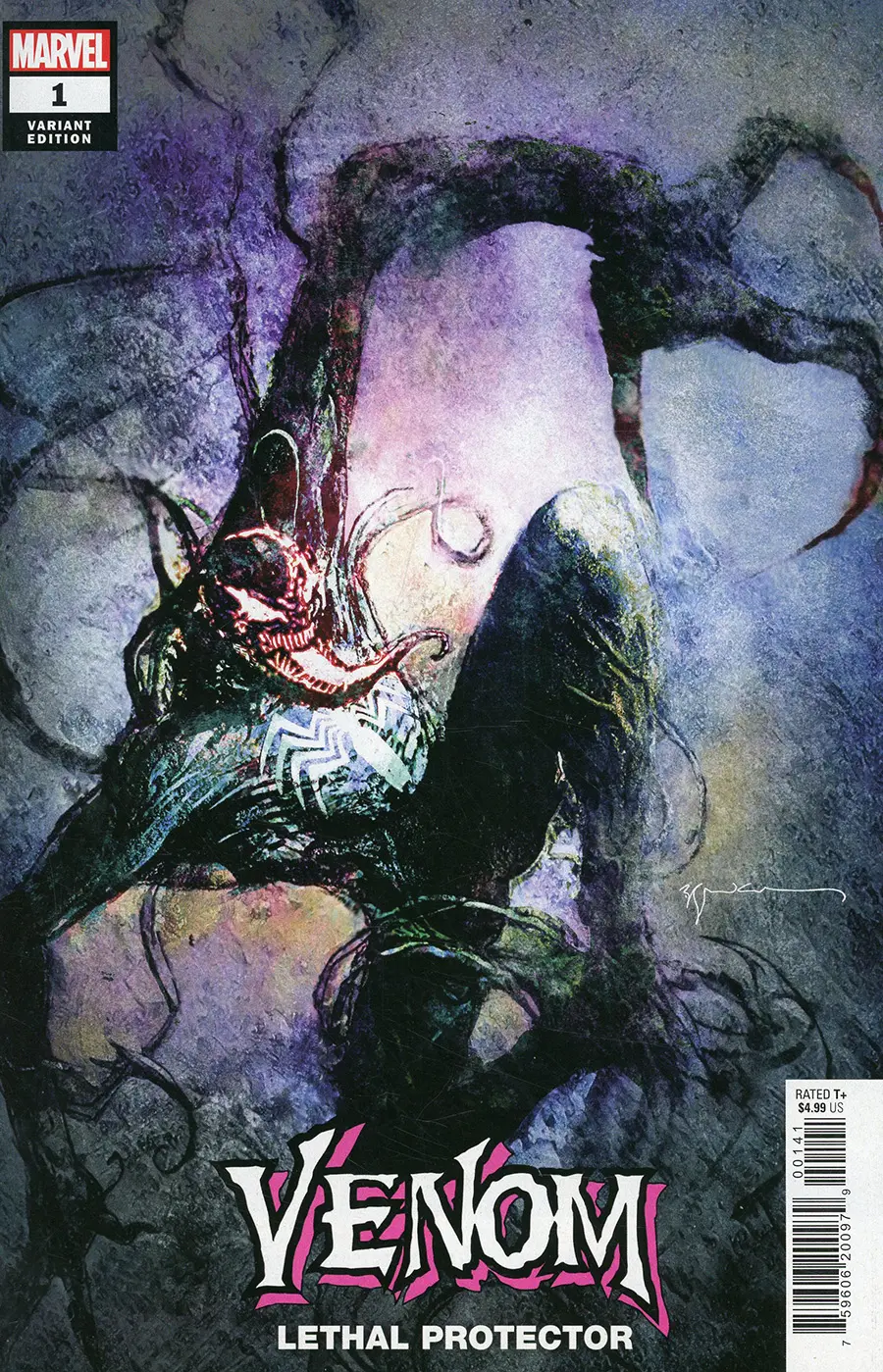
A shadowy, almost abstract interpretation of Venom.
Cover artwork and characters © Marvel and their respective creators. Images are reproduced in direct editorial context for identification, commentary and review.