Individual enclosure
A correctly sized inert bag and supportive board protect against rubbing, fingerprints and ordinary handling.
Comic Book Care & Storage Guide · Updated 19 September 2026
A practical UK field guide to choosing bags, boards and boxes; organising a large collection; displaying comics safely; and deciding when cleaning, pressing, grading or slabbing makes sense.
Measure · Support · File · Monitor · Record
The complete protection system
No bag, box or slab works alone. Good comic care has three layers: a correctly fitted enclosure around each book, firm support inside a suitable box or cabinet, and a stable room around the collection. Add careful handling and a usable inventory, and you can find a comic without damaging the books beside it.
This guide separates routine care from interventions such as cleaning and pressing. The first should be easy to reverse. The second can permanently alter a book, so the risk rises sharply with value, age and unusual cover materials.
Measure it. Sleeve it. Support it. Store it somewhere stable. Record its location.
The five-layer method
A second or third layer reduces handling, dust, pollutants, light and short environmental fluctuations. Each layer has a different job.
A correctly sized inert bag and supportive board protect against rubbing, fingerprints and ordinary handling.
A divider, toploader or self-slab may add bend and impact resistance for keys, transport or display.
Keep books upright, supported, organised and protected from light without crushing or overfilling.
Cool, dry, clean and monitored storage matters more than any premium branding on a sleeve.
Location codes, front/back images and an off-site backup reduce unnecessary searching and handling.
Bags, boards and safe handling
“Archival” is not a magic or consistently regulated product word. Look for the named material, a suitable usable opening and a board specification you can understand.
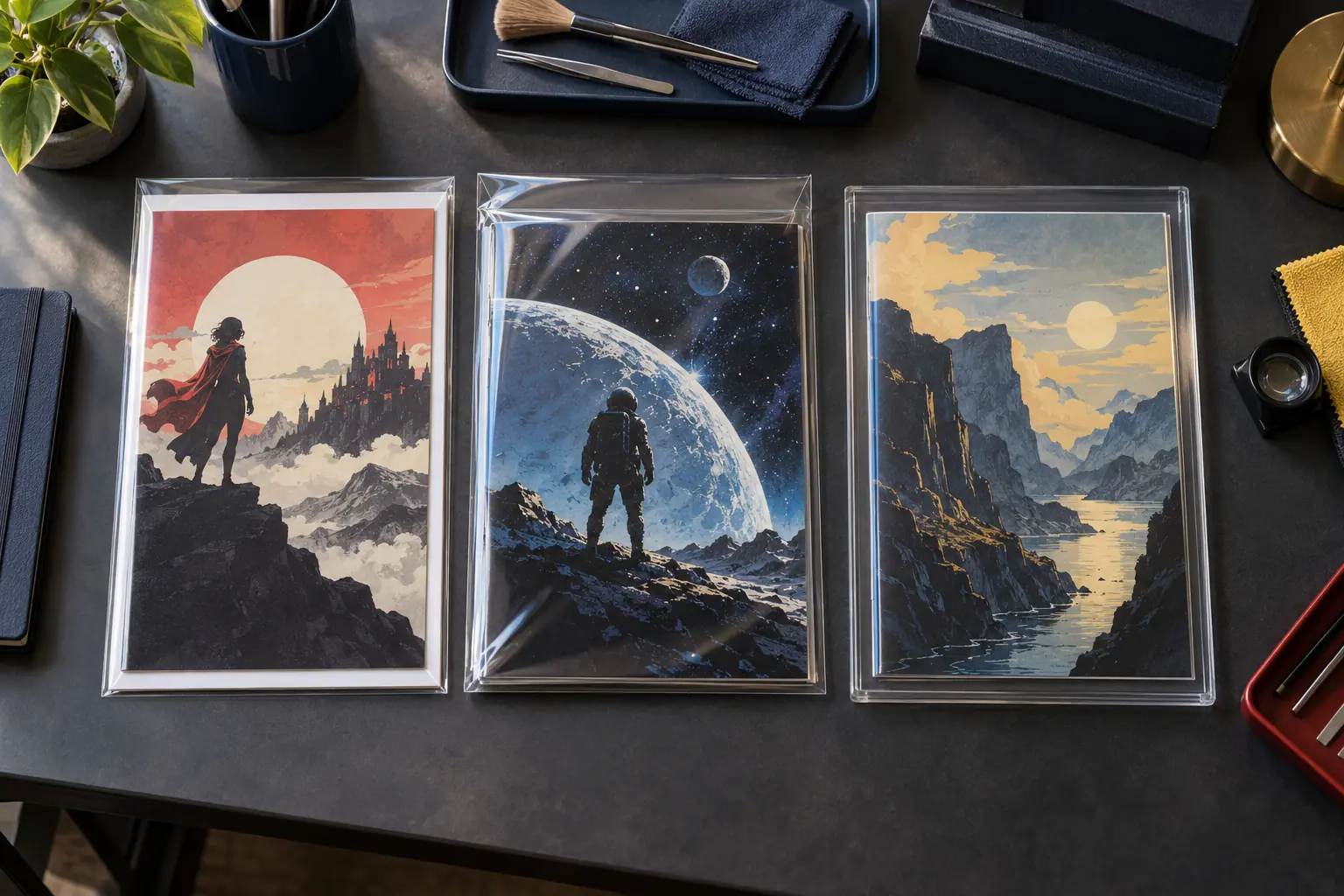
Clear, crisp and economical. A sensible routine choice when the film is uncoated and additive-free. Inspect it as part of your annual collection check.
Softer, flexible and often slightly cloudier. Conservation-compatible when pure and additive-free, but easier to scuff and less rigid.
Mylar and Melinex are trade names used for polyester film, not separate bag materials. Properly specified PET is exceptionally clear, stiff and dimensionally stable: a premium choice for key books, but less forgiving of a poor fit. Common 2 mil sleeves are flexible enough for everyday premium use; 4 mil versions are much more rigid. Neither blocks damaging light.
PVC is chemically unstable for long-term paper storage. Also avoid unknown plastics, plasticised vinyl and sleeves with undisclosed coatings or additives.
Prefer lignin-free, chemically purified and alkaline-buffered board. “Acid-free” alone does not explain long-term performance.
If only one face is coated, use the manufacturer-designated coated or white side against the comic. Use one comic per board.
A resealable strip on the bag body is safer than exposed tape on a flap. With loose tape, remove it completely before withdrawing the comic.
Check annually and after damp, heat or a move. Replace cloudy, yellow, wrinkled, brittle or tacky sleeves and warped, stained or acidic-smelling boards.
A purpose-made clear PET backer can support the comic while revealing wraparound art or a notable back cover. “Clear”, “acid-free” or generic craft plastic is not enough: confirm the maker identifies stable PET, avoid PVC and unidentified plastics, and check that every edge is smooth.
If supplied, remove protective transit film from both sides, keep the surface free of grit and test the full bag–comic–backer thickness. Move up a bag size if it is snug; never force a rigid corner past a cover. Clear PET adds physical support, but unlike a quality buffered paper board it provides no alkaline reserve.
A tight sleeve, bowed board or compressed row creates damage. The comic should slide in without catching and sit flat, with the full cover supported. Never bag a damp comic.
Comic ages, regional formats and magazines
Current, Silver and Golden are storage-product categories, not exact international standards. Print era, trim, page count, binding and manufacturer all change the usable fit.
Compare those measurements with the bag’s usable internal opening, not simply its advertised outer dimensions. Buy bag and board from the same range and test a small pack before standardising a collection.
| Comic format | Approximate book | Common bag reference | What to watch |
|---|---|---|---|
| US Modern / Current | about 6⅝ × 10 3⁄16–10¼in 168 × 259–260mm | about 6⅞ × 10½in 175 × 267mm | Thick modern, card-stock and square-bound issues may need a wider “thick” or Silver/Regular bag. |
| Bronze Age | No single cut size | Current to Silver/Regular | Later thin books may fit Current; Silver/Regular is often the safer mixed-run choice for earlier or thicker issues. |
| Silver Age | commonly about 6⅞ × 10½in 175 × 267mm | about 7⅛ × 10½in 181 × 267mm | Allow for thicker page counts and minor trim variation. Never accept edge or spine bowing. |
| Golden Age | Highly variable and often wider | about 7⅝ × 10½in 194 × 267mm | Annuals and 64/80-page books may need wider “thick” bags; fragile oversize books may need custom housing. |
| Magazine / prestige | Varies | about 8¾ × 11⅛in 222 × 283mm | Many magazines, prestige books and some Black Label books fit; larger magazines must be measured. |
| Treasury / oversize | Varies widely | about 10½ × 13½in 267 × 343mm | Use oversize housing and support. Very large or weak paper may be safer flat. |
| Certified slab sleeve | Match the exact holder | commonly about 9 × 14in 229 × 356mm | CGC, PSA and other holders can differ. A slab outer bag protects the case from scuffs, not the comic from light or heat. |
The dimensions above use commonly marketed reference sizes. Welded seams, flaps, board gauge and film stiffness reduce usable room. “Thick bag” usually means a wider bag for a thick book—not necessarily thicker film.
A UK pence-price version of a US issue is usually the same broad physical format as its cents counterpart. UK-produced weeklies range from pocket libraries to A4 and tabloid sizes, so Beano, Eagle, 2000 AD and Marvel UK material should be measured individually. Magazine, A4/C4 document or oversize print sleeves may be a starting point—never force them into a US-age bag.
Store bound volumes upright like books, fully supported and not leaning. Manga sizes vary from small tankōbon to deluxe A5 and larger editions. For a flexible sleeve around a thick book, allow for both width and depth; rigid boards are usually unnecessary for sound hardbacks.
Square-bound books, annuals, acetate, foil, embossed and originally polybagged editions need extra clearance. Do not let seams, closures or neighbouring books press into raised or delicate surfaces. Retain original components and document how they were supplied.
Boxes, drawers and a collection that can grow
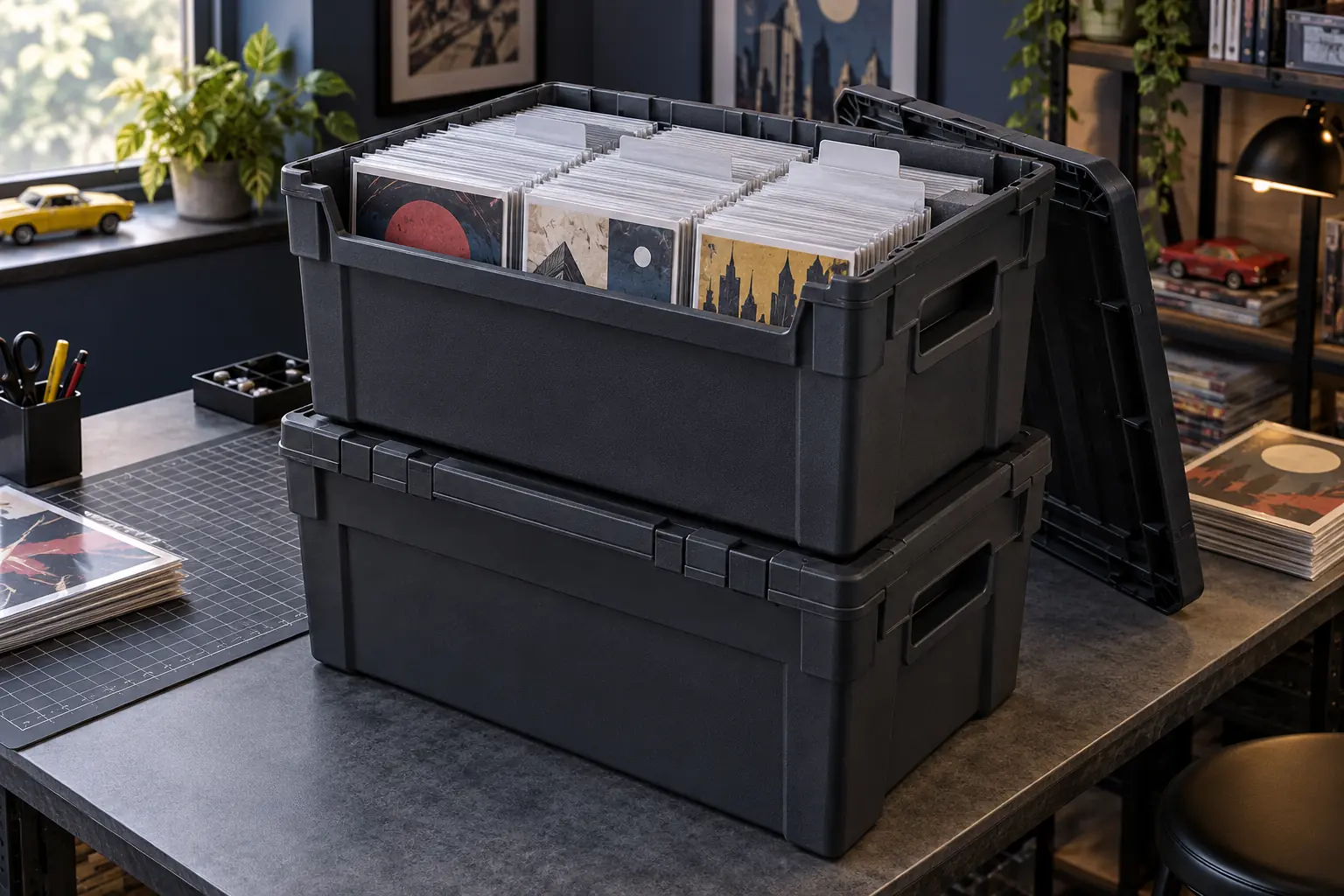
Comics should stand straight without slumping, bowing or being packed too tightly to lift safely. Smooth dividers and removable fillers keep a partly full row stable.
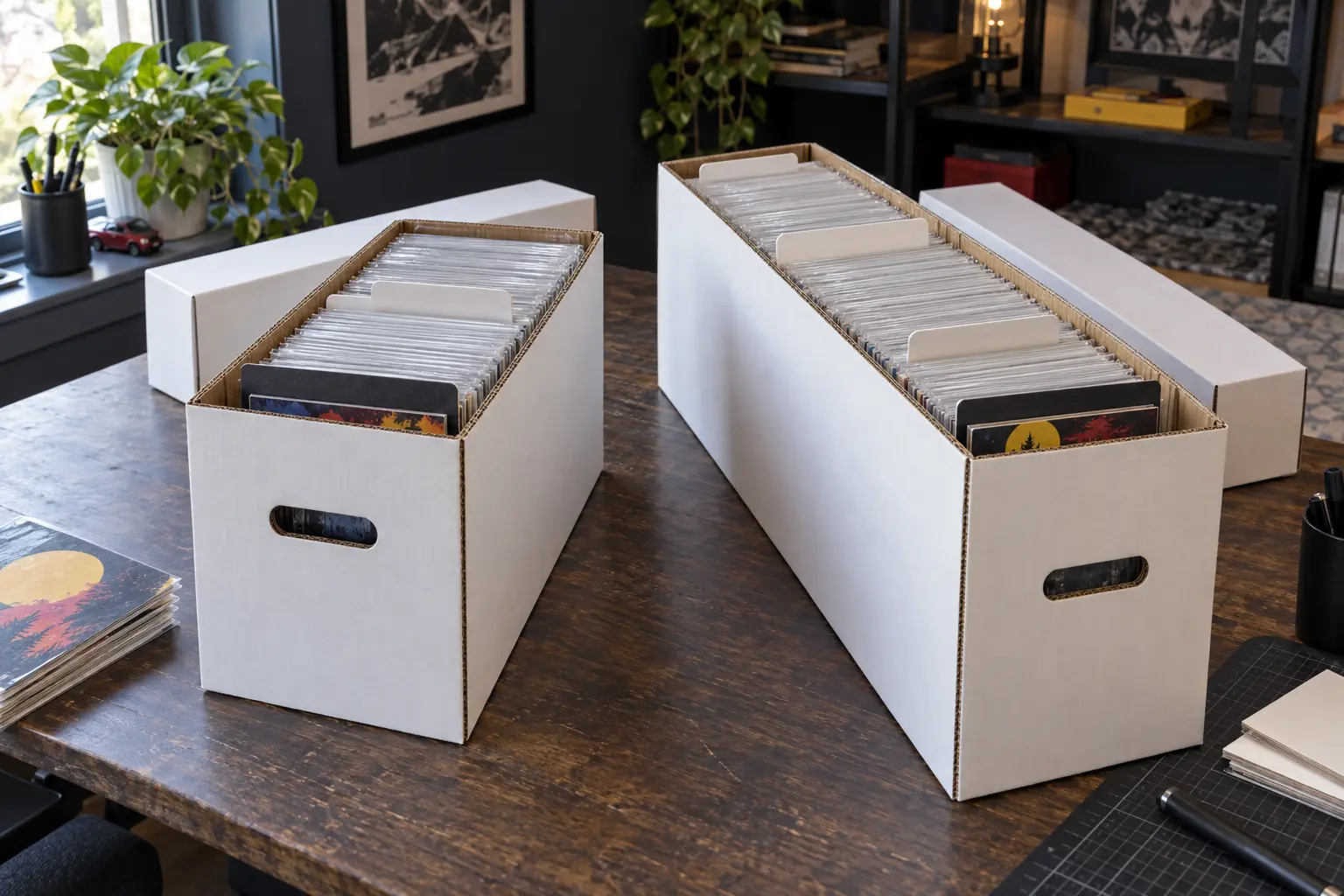
Short boxes are easier to lift, rotate and reorganise. Long boxes use the same tall comic profile but are substantially longer and become heavy when full. Dimensions vary, so compare the stated internal height and width with your largest protected comic.
Purpose-made bins can provide stronger walls, handles and repeatable stacking. Plastic also traps any moisture already present, so lids do not replace room monitoring.
Use purpose-sized magazine, treasury or slab boxes. Large, fragile paper may need flat support; slabs need deep boxes or shelves that prevent toppling.
The collector conversion
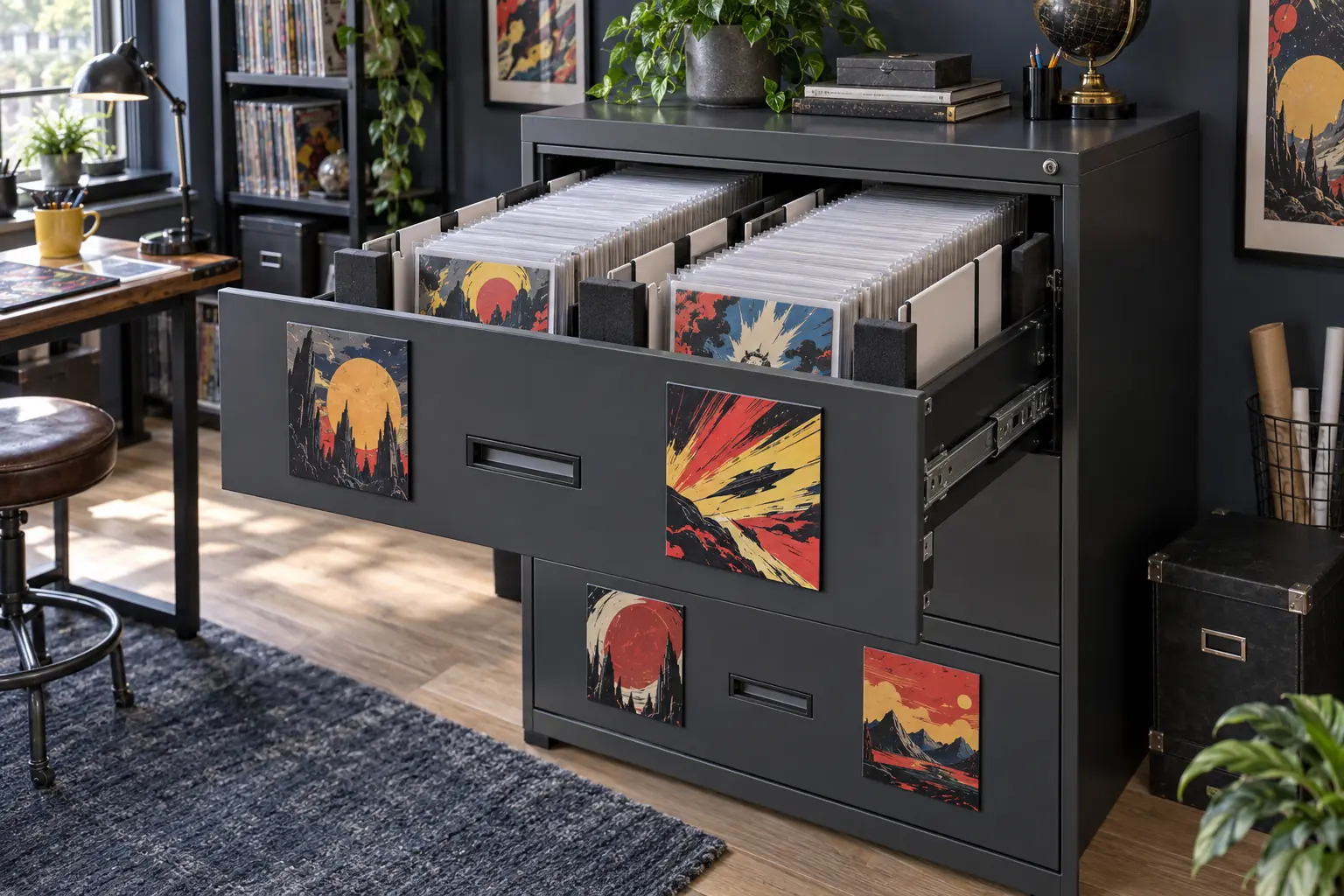
A heavy-duty steel filing cabinet can replace rows of boxes and make a large collection quick to browse. Collectors often favour 36- or 42-inch (roughly 915 or 1,067mm) lateral cabinets because a wide drawer can take two independently supported rows. Never buy by “legal”, “foolscap” or outside size alone: a protected comic normally needs at least 10¾in (273mm) of clear internal height, plus safe clearance around runners, rails and the closing drawer.
The room is part of the enclosure
Monitor with a digital thermo-hygrometer. A commonly cited conservation reference for paper is a stable environment at or below roughly 21°C and around 30–50% relative humidity, but avoiding persistent damp and rapid swings matters more than hitting one exact reading.

Avoid lofts, sheds, garages and cellars unless they genuinely remain stable. Keep books away from radiators, direct sun, external damp walls, windows and plumbing.
Raise boxes and cabinets to reduce flood risk. Add a water-leak alarm near vulnerable plumbing and a working smoke alarm nearby.
Use a humidistat dehumidifier only where monitoring shows a need. Silica gel is not a substitute for fixing damp and works only in a reasonably sealed, monitored enclosure.
Quarantine incoming collections. Check for live insects, droppings, webbing, mould and damp odour; remove shipping cardboard and keep food away.
Safety comes first. Water incidents become mould incidents quickly, so document the scene and begin professional advice early for valuable or widespread damage.
Displaying comics without sacrificing them
Light damage to inks and paper is cumulative and irreversible. UV-filtering can reduce ultraviolet exposure, but it does not prevent visible-light fading or make permanent display safe.
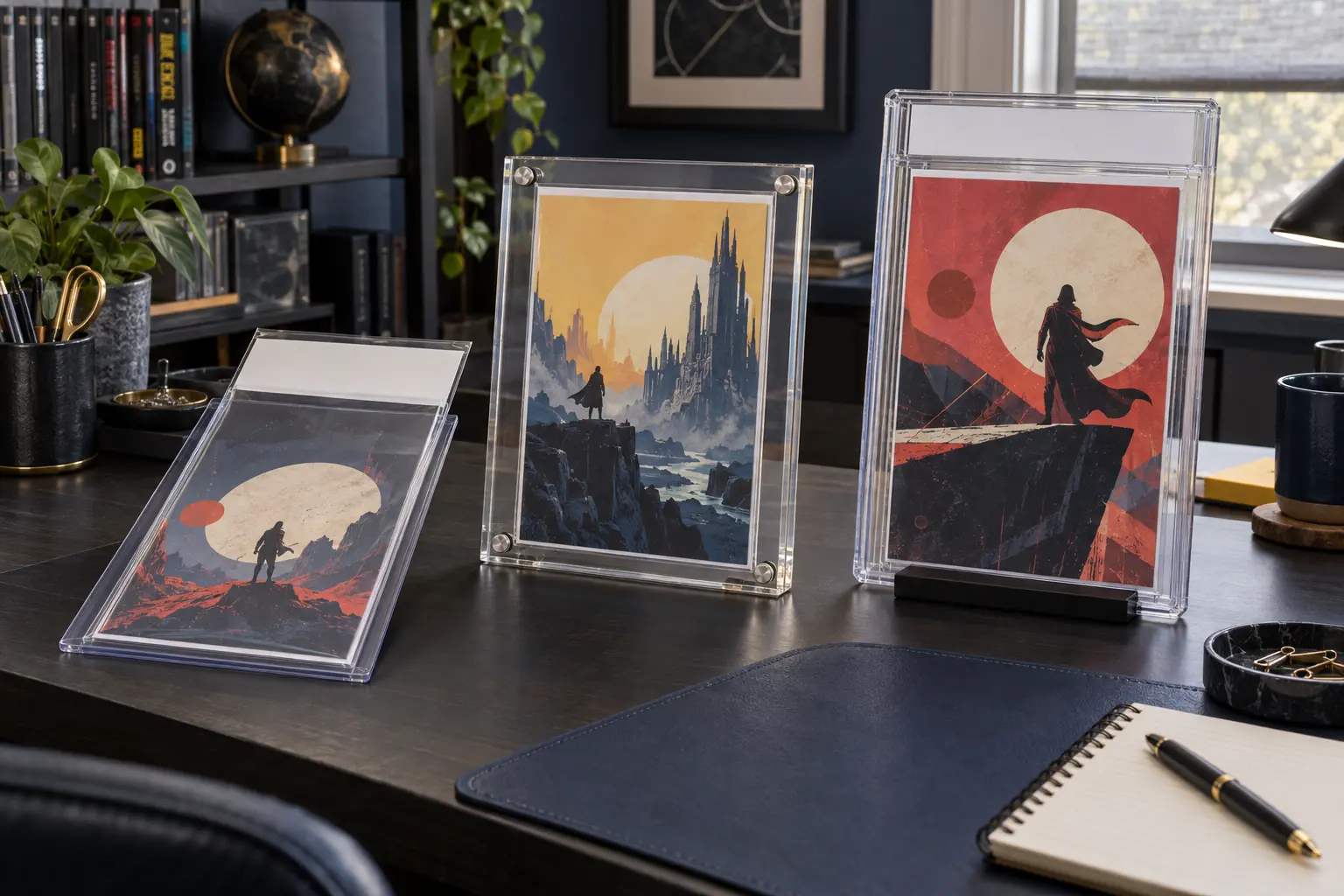
Keep the comic in a fitted inert bag with either a quality paper board or a verified clear PET backer. Check the combined thickness slides freely, verify the holder material, avoid PVC and never force the book.
Check internal depth, edge clearance, wall fixings and documented UV performance. Magnetic closure is convenient, not a preservation claim.
Good for presentation and handling protection when they fit correctly. Use a stable stand with a deep lip and keep it below dangerous fall height.
Use removable custom magnets to turn steel drawer fronts into a changeable gallery. Choose licensed, commissioned or original designs; keep every magnet and adhesive layer on the exterior, away from the comics.
Keep originals out of direct sunlight and away from heat. In a frame, use conservation backing, reversible mounts or spacers, and enough depth that glazing, clips or magnets never compress the spine.
Cleaning and pressing: DIY or outsource?
Cleaning and pressing should be considered only after identifying the book, its materials, its defects and its value. They are not guaranteed grade improvements, and no responsible provider can promise a particular result.
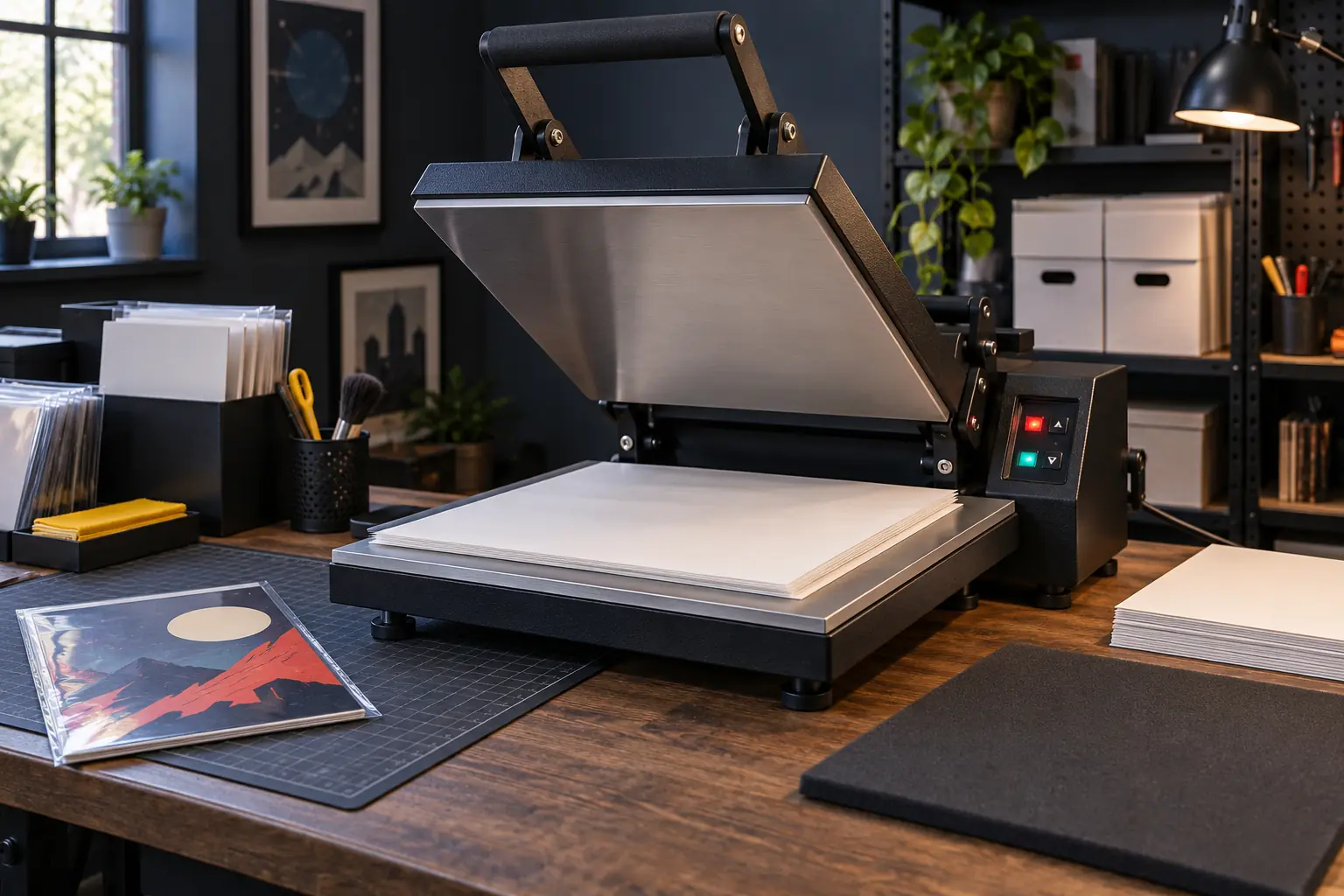
Dents, rippling, curled covers, spine roll, dog-ears and bends or creases that have not broken printed colour may respond. Every paper stock, ink, coating and binding behaves differently.
Missing paper, tears, holes, fading, stains, scratches, brittleness and colour-breaking creases remain defects. Flattening a colour break does not make it disappear.
Never use a household iron, hairdryer, oven, uncontrolled steam, liquid cleaners, solvents, bleach, peroxide, household wipes, abrasive “magic” sponges, glue, marker or tape. Poor heat, moisture or pressure can transfer gloss, lift colour, distort a spine or set dirt permanently.
When selling, disclose every treatment you know or reasonably suspect has been performed, even where a grading company would not call it restoration. Keep invoices and treatment notes in the comic’s record. Read CGC’s restoration guidance ↗.
How to grade and how to slab
Your own grade is an informed estimate. Work conservatively and record what you can see; independent certification is a separate paid service.
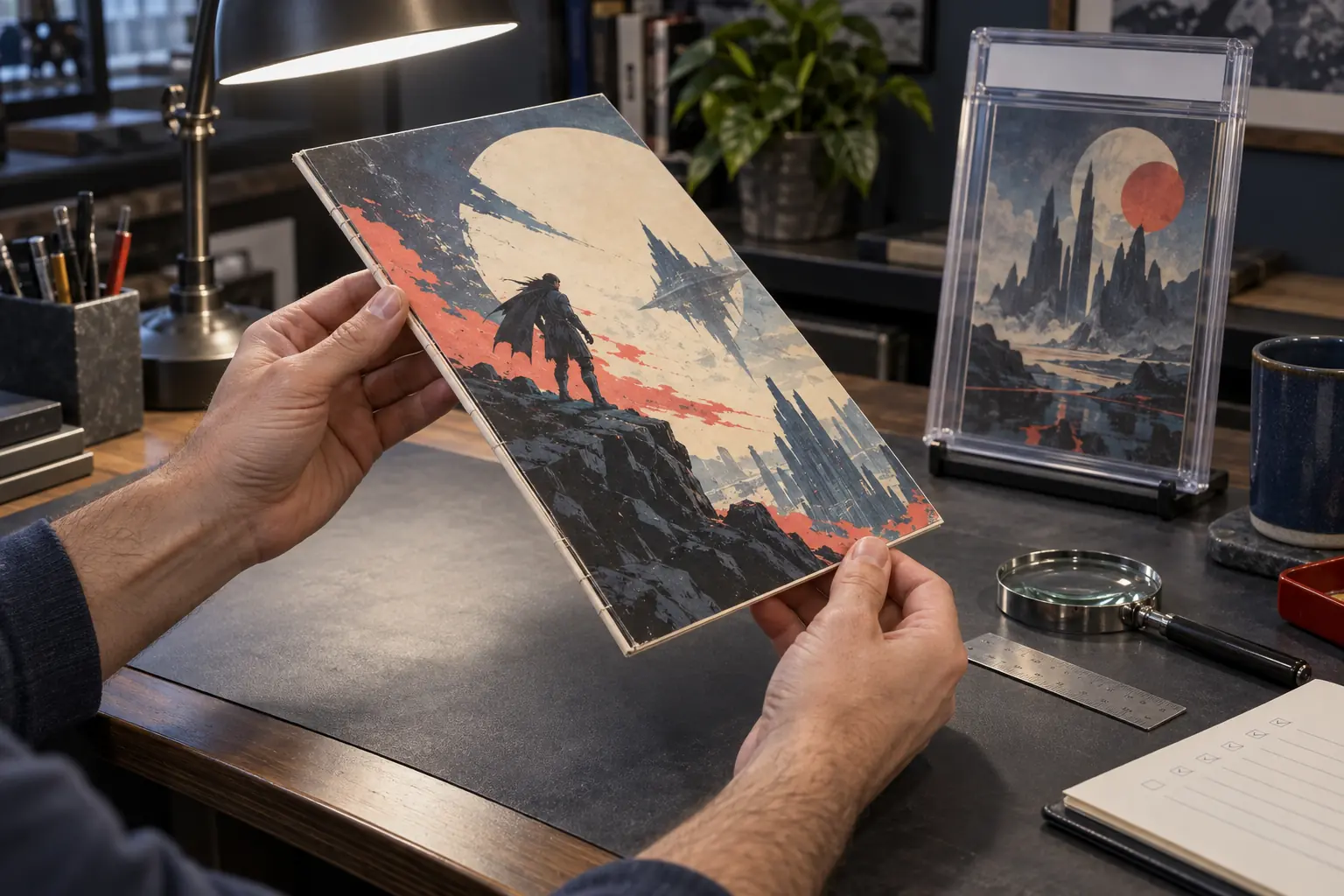
Confirm issue, printing, cover, page count, inserts and any detachable or missing material.
Examine front, back, spine, corners and edges under bright neutral light; separate colour-breaking from non-colour-breaking defects.
Check staples, centre wrap, page attachment, page colour, stains, writing, odour and possible restoration.
Compare the accumulated defects with a recognised scale. If uncertain, use a conservative range rather than false decimal precision.
The lowest-cost route and best access for reading. Document the copy carefully with front, back and defect images; your condition opinion is not independent certification.
Protection and presentation only. It does not authenticate the comic, screen restoration or certify a grade. Avoid homemade labels that could imply otherwise.
Independent grading can add authentication, restoration checking, a grade and tamper-evident encapsulation. For UK collectors, review CGC’s current CCG UK comics and magazines service information ↗, then follow its online submission instructions before posting.
When authentication, condition certainty, protection or easier resale is likely to add more than the grading fee, insured postage, risk and waiting time. Certification cannot make a common comic scarce or guarantee its future value.
Handling, scanning, transport and insurance
Most damage happens during use, searching, moving or shipping. A reliable routine matters as much as the container.
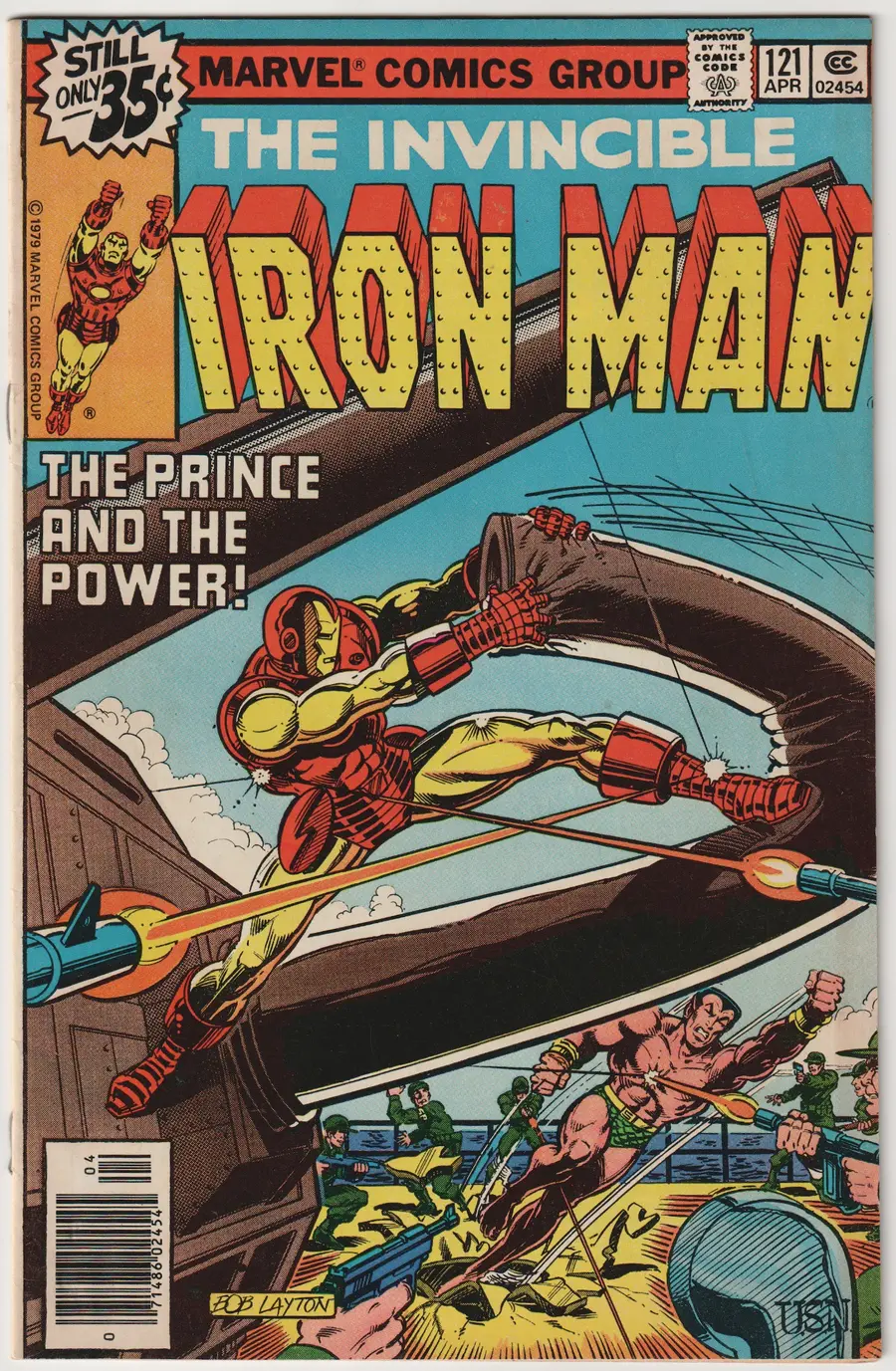
Clean, dry hands usually give safer control than cotton gloves, which can snag paper. Use a clear dry table, support the book with two hands and never force a scanner lid.
Use rigid, correctly sized mailers, backing sheets, pull tabs and a waterproof outer layer. Protect against both bending and movement inside the parcel.
Record issue, printing, condition, purchase details, location code and certification number. Keep an exported backup outside the collection room.
The collector accessory checklist
Start with fit, support and monitoring. Add premium materials and display equipment only where the collection actually benefits.
Preservation and grading desk
These links explain the conservation principles behind the guide and provide current grading or submission information. Service terms and fees can change.
Conservation guidance on plastics, paper enclosures, boards and unsuitable PVC.
Room, light, handling, pests, water risk and layered protection for paper collections.
Care, handling and storage guidance written specifically for comic books and magazines.
Why even apparently simple dry cleaning needs material assessment and restraint.
A manufacturer reference for common US bag and board categories; still measure the individual book and chosen product.
A free reference for numerical grades, page quality and label terminology.
Current official information for comic, magazine and pressing submissions routed through the London office.
Suitable defects, pressing variables and the limits of what a press can improve.
An official video reference for grading, conservation and certification topics; compare demonstrations with written conservation guidance.
Why product recommendations on commercial pages are identified as affiliate links.
Comic Agent is independent and is not affiliated with or endorsed by the preservation bodies, grading companies, retailers or manufacturers referenced here. External sources are supplied for research; always check current service terms and product specifications.
Quick answers before you buy equipment
Measure width, height and thickness, then compare them with the bag’s usable opening. Product-age labels are a starting point, especially for UK weeklies, magazines and square-bound books.
Yes—if the clear internal dimensions fit, each row is supported, the drawer load rating is suitable and the cabinet is level, anti-tip protected and anchored exactly as instructed.
Only begin with inexpensive, replaceable practice books and proper training. Outsource valuable, brittle, unusual, signed, water-damaged, mould-affected or grading-bound books.
No. It is a protective display holder, not independent authentication, restoration screening or a certified grade.
Two guides. One collecting system.
Use the collecting and investing guide to identify editions, follow releases, check prices and make selling decisions. Use Character Files to build the history behind the books already in your boxes.