
The short version
The monster stopped being a man—and became a world.
Swamp Thing is the rare character whose greatest reinvention did not erase his origin but changed what it meant. Len Wein and Bernie Wrightson created a tragic Gothic monster; Alan Moore asked whether that monster had ever been human; later creators opened the answer into the Green, a planetary memory and a mantle that could outlive Alec Holland.
The earliest stories are built around loss. A scientist dies, something rises from the swamp and the people he loved cannot recognise him. Wein and Wrightson gave that familiar monster premise unusual tenderness: Swamp Thing was frightening to look at, but the real horror was isolation.
In 1984, “The Anatomy Lesson” overturned the central assumption. Moore redefined the then-current creature not as Alec Holland transformed into vegetation, but as plant life that had absorbed Holland's memories and believed itself human. From that point, the series could move beyond revenge and cure-seeking into identity, ecology, desire, theology and the uneasy relationship between civilisation and the living world.
Alec remains the emotional centre, but he is not the only root. Alex Olsen came first, Levi Kamei later carried the role into a different family and cultural history, and the Parliament of Trees suggested that every Swamp Thing belongs to something older and larger than one man.
Swamp Thing's history is not a straight line of rebirths. It is a root system: separate stories above ground, connected underneath.
Creation and first appearances
The first Swamp Thing was not Alec Holland.
The name begins with Alex Olsen in a self-contained 1971 horror story. The continuing mythology begins a year later when Wein and Wrightson rebuild the premise around Alec Holland.

Alex Olsen, a murdered early-20th-century scientist, rises from the swamp too late to reclaim the woman he loved.

Alec Holland arrives and the one-off Gothic tragedy becomes an open-ended DC series.
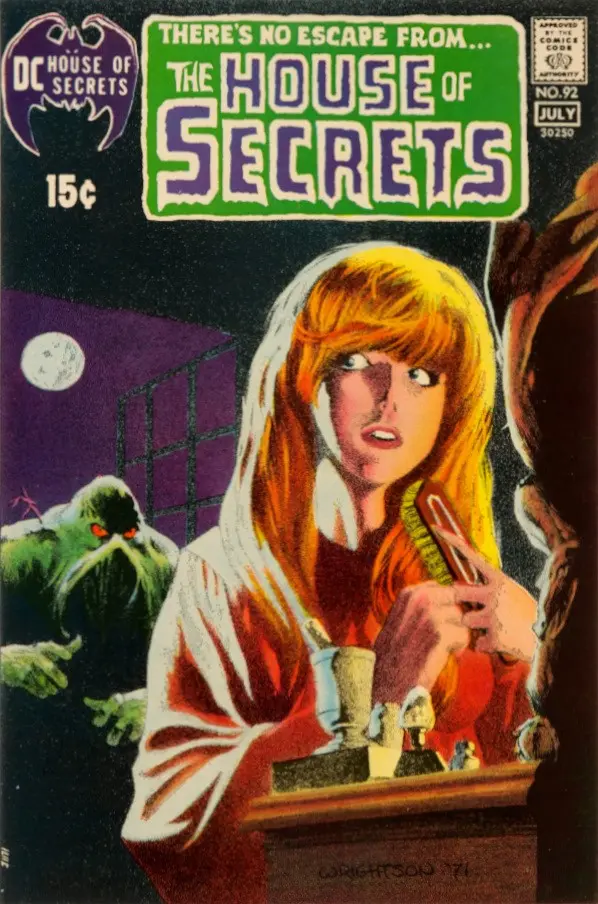
That distinction matters. House of Secrets #92 is the first appearance of the Swamp Thing concept and Alex Olsen; Swamp Thing #1 is the first appearance of Alec Holland's version and the true beginning of the long-running mythology. Later stories connected Olsen to the larger line of plant elementals, but the two origins were not originally presented as the same character or as a connected narrative.
Publication chronology
The Swamp Thing timeline.
Scroll from the 1971 prototype to the 2026 restoration of Rick Veitch's interrupted saga. The central root tracks publication history rather than attempting to force every continuity revision into a single fictional biography.
- The prototype
House of Secrets #92 Alex OlsenA complete Gothic tragedy.
Wein and Wrightson create the first Swamp Thing for an eight-page anthology story. It has a beginning, an ending and a different protagonist; its success supplies the seed rather than an unfinished first chapter.
Key reading · House of Secrets #92
- The ongoing
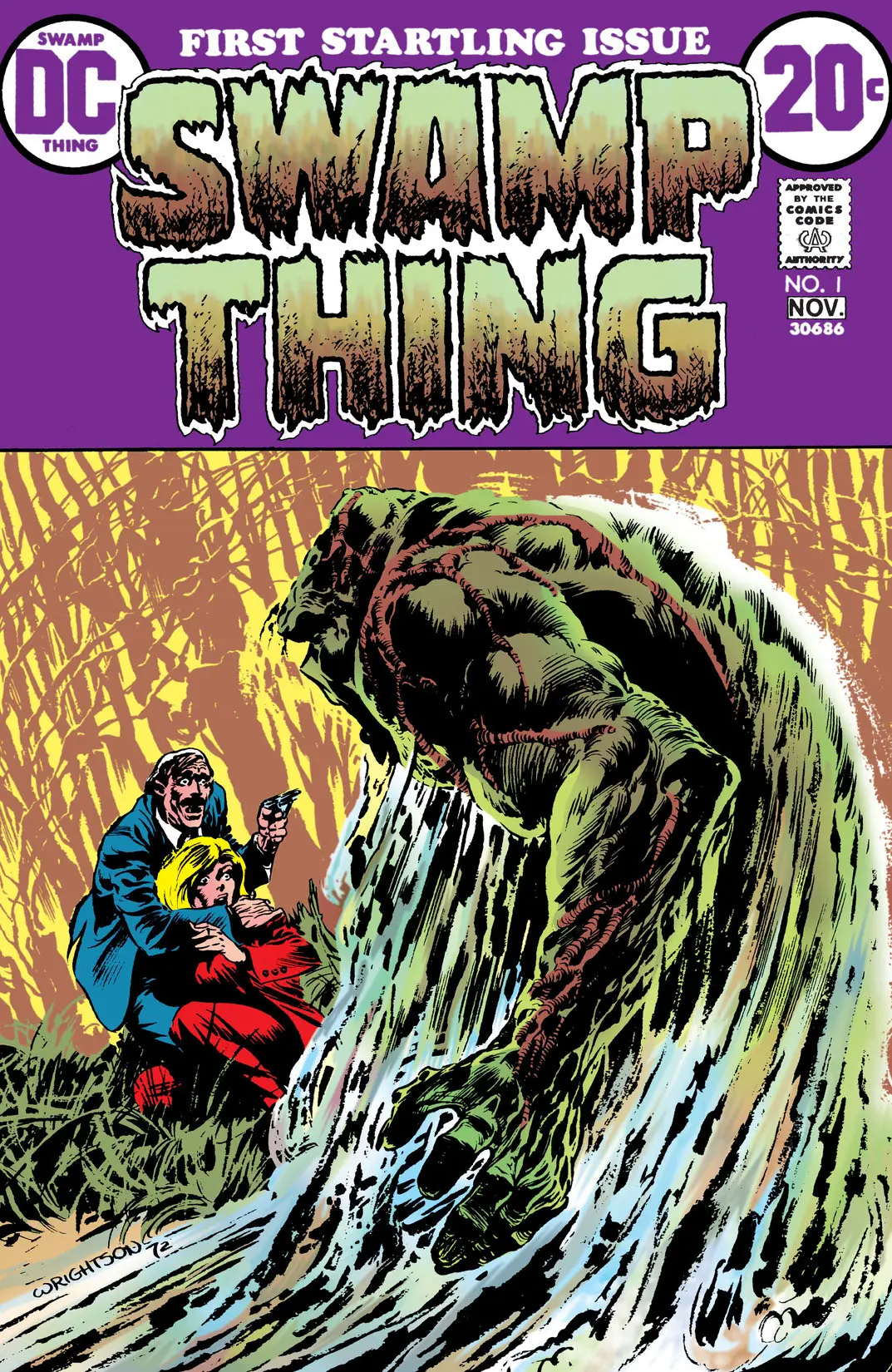
Swamp Thing #1 Alec HollandThe modern mythology takes root.
Alec and Linda Holland, Matt Cable, Anton and Abigail Arcane, and the bio-restorative formula turn the premise into a continuing fugitive horror series. Wrightson draws the first ten issues; Wein writes the first thirteen.
Key reading · Swamp Thing #1–10
- The returnThe Saga BeginsPasko · YeatesA new monthly series
Back in print—and ready to mutate.
Martin Pasko writes the first nineteen issues of The Saga of the Swamp Thing, launched visually by Tom Yeates and continued by a changing art team. The series restores the cast and atmosphere before the creative shift that makes the title historic.
Key reading · The Saga of the Swamp Thing #1–19
- The revelation

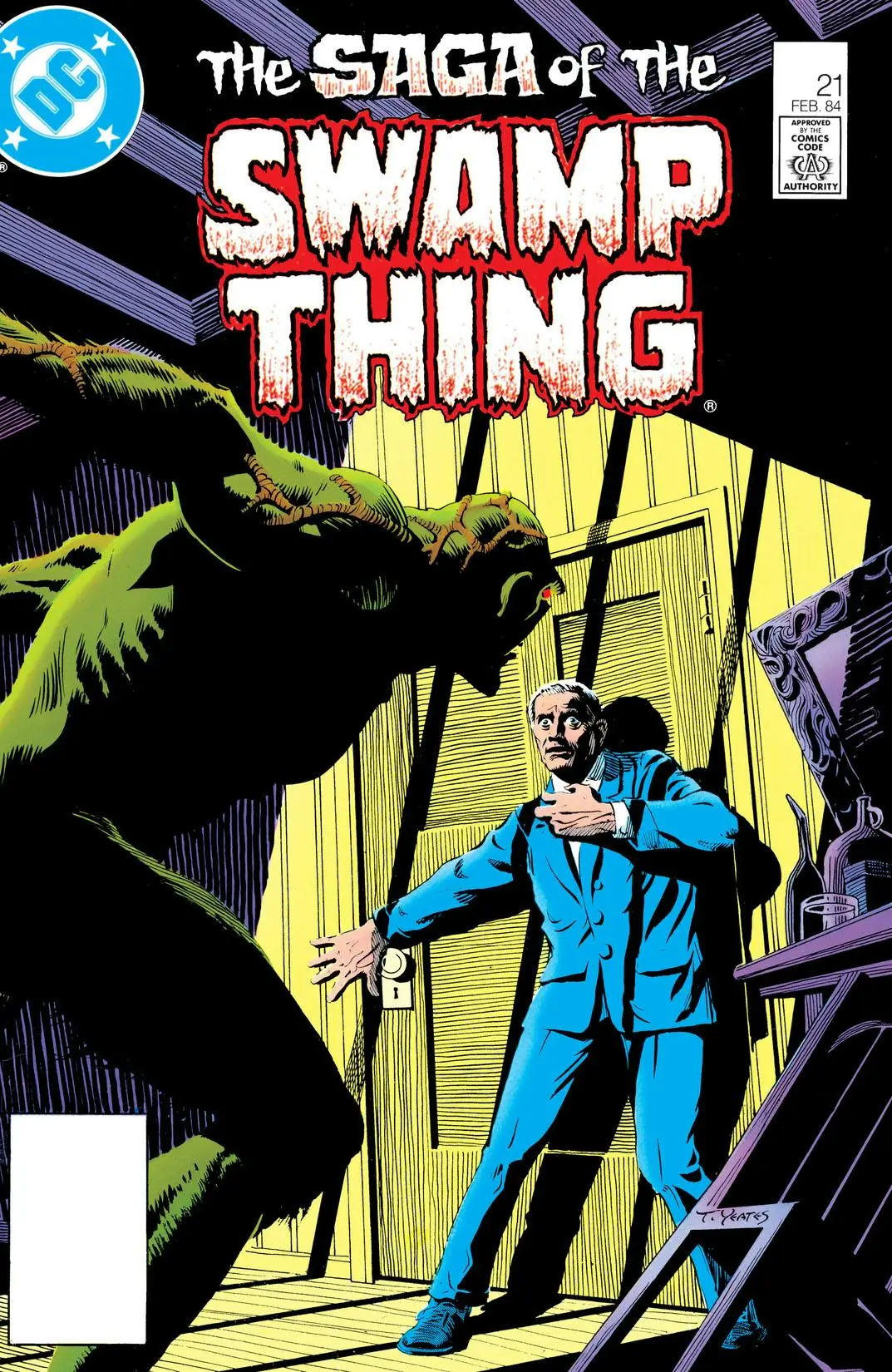
The Saga of the Swamp Thing #21 The Anatomy LessonA plant that believed it was Alec.
Alan Moore begins with #20, then #21 overturns the old mutation story. Stephen Bissette, John Totleben and Tatjana Wood help make the revelation tactile, horrifying and unexpectedly liberating.
Key reading · #20–27 · Annual #2 · #34
- American Gothic

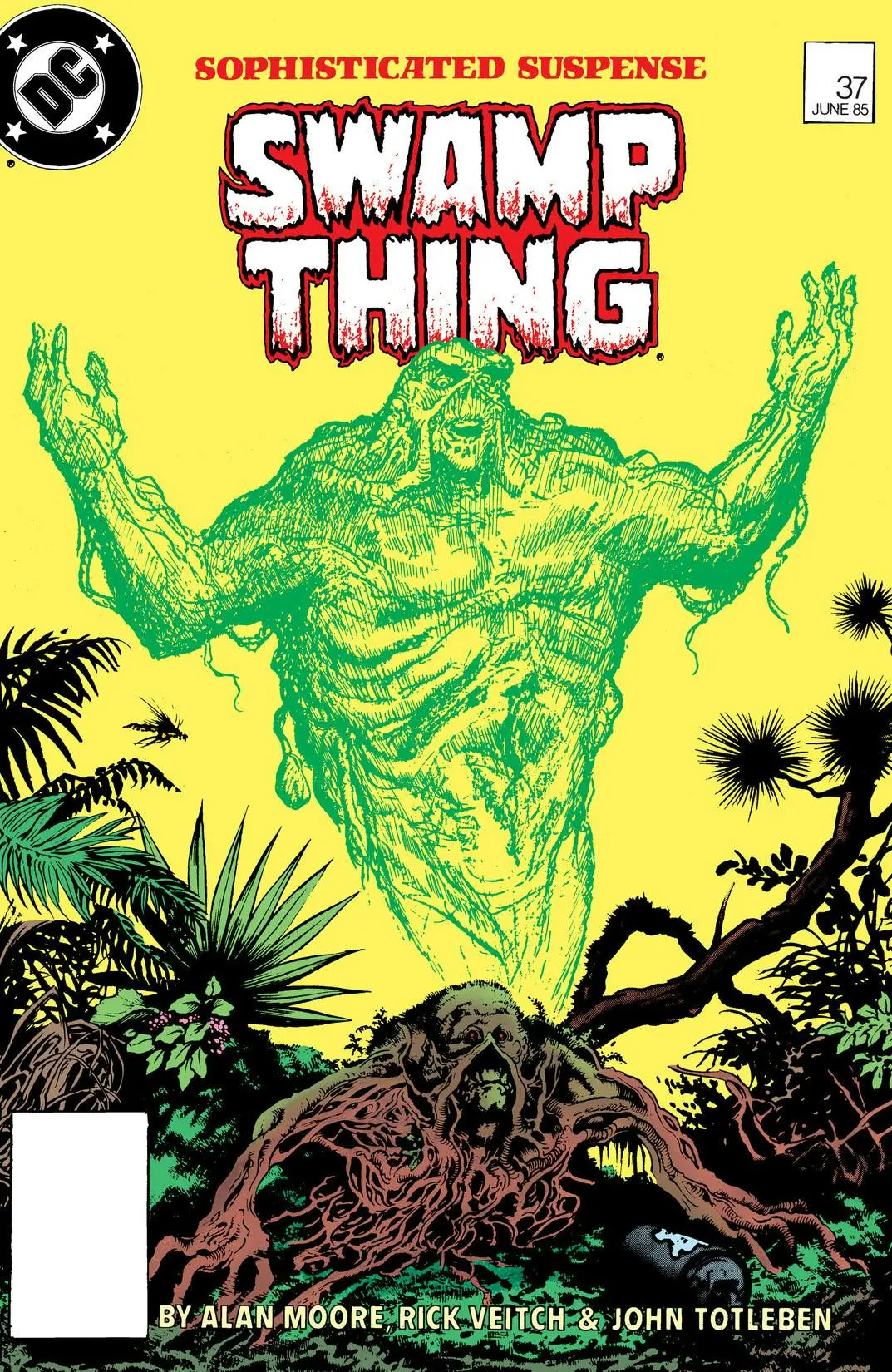
Swamp Thing #37 Constantine and the wider occult worldThe swamp connects to everything.
John Constantine's first full appearance opens a chain of regional horrors that runs towards Crisis on Infinite Earths, the Parliament of Trees and a confrontation with an ancient darkness.
Key reading · #37–50
Continue into the John Constantine / Hellblazer collecting guide →
- Veitch's run
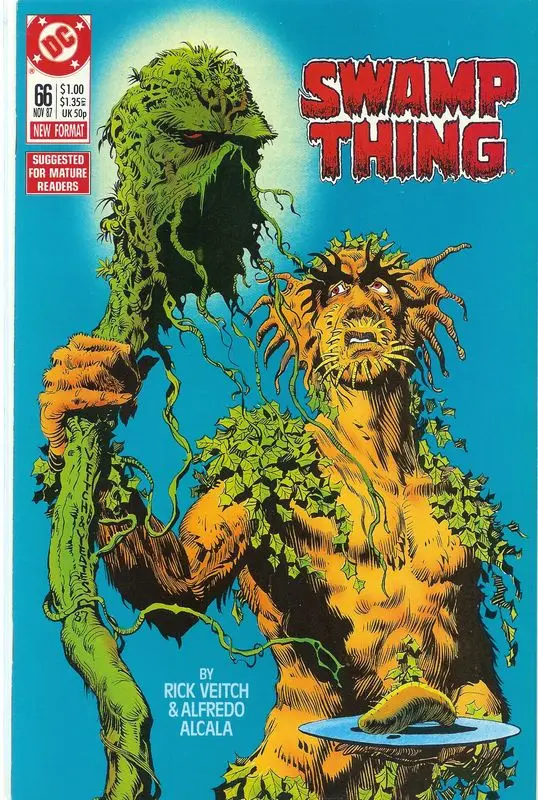
Swamp Thing #66 After MooreThe mythology keeps growing.
Rick Veitch carries the book into stranger biological territory, the Sprout storyline and a backwards journey through time. The intended #88 is stopped before publication and Veitch leaves, creating one of the title's most famous absences.
Key reading · #65–87
- The long second volume
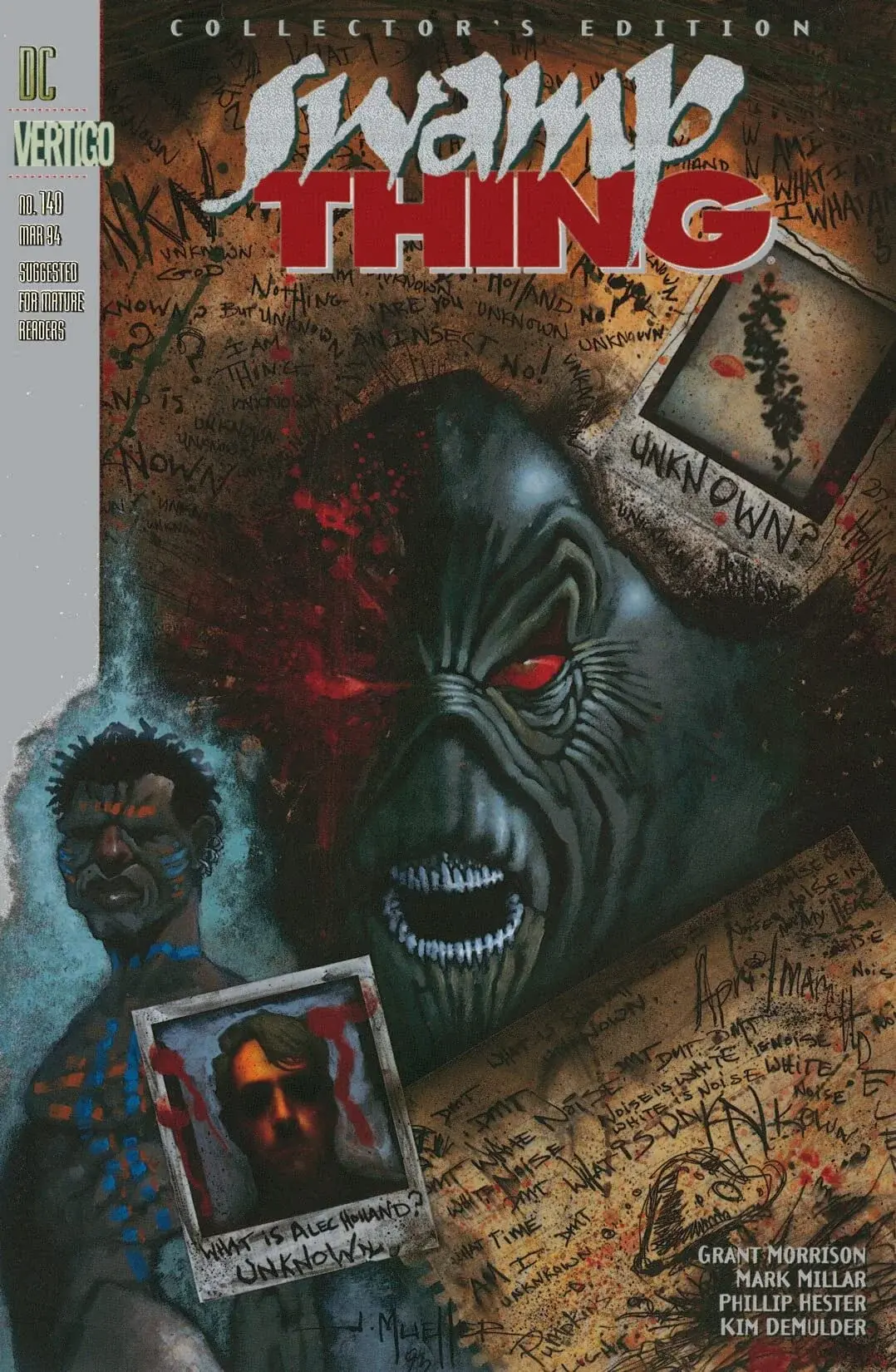
Swamp Thing #140 Wheeler · Collins · Morrison · MillarFrom Southern Gothic to Vertigo.
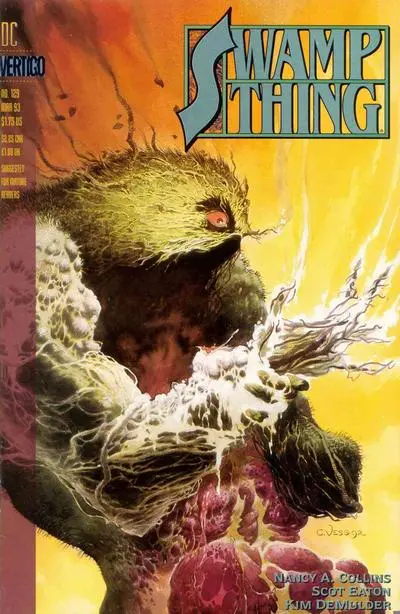
Doug Wheeler continues the numbering, while Nancy A. Collins brings the story home to Louisiana. Vertigo branding arrives at #129. Grant Morrison and Mark Millar begin the final stretch before Millar closes the series at #171.
Key reading · #110–138 · #140–171
- New volumesTefé and AlecVolumes 3 and 4Two different restarts
The family tree branches.
Brian K. Vaughan's 2000 series centres on Tefé Holland. A fourth volume begins in 2004 with Andy Diggle before Will Pfeifer and Joshua Dysart take over, showing how difficult—and fertile—a post-Vertigo restart can be.
Key reading · Vol. 3 #1–20 · Vol. 4 #1–29
- Rebirths

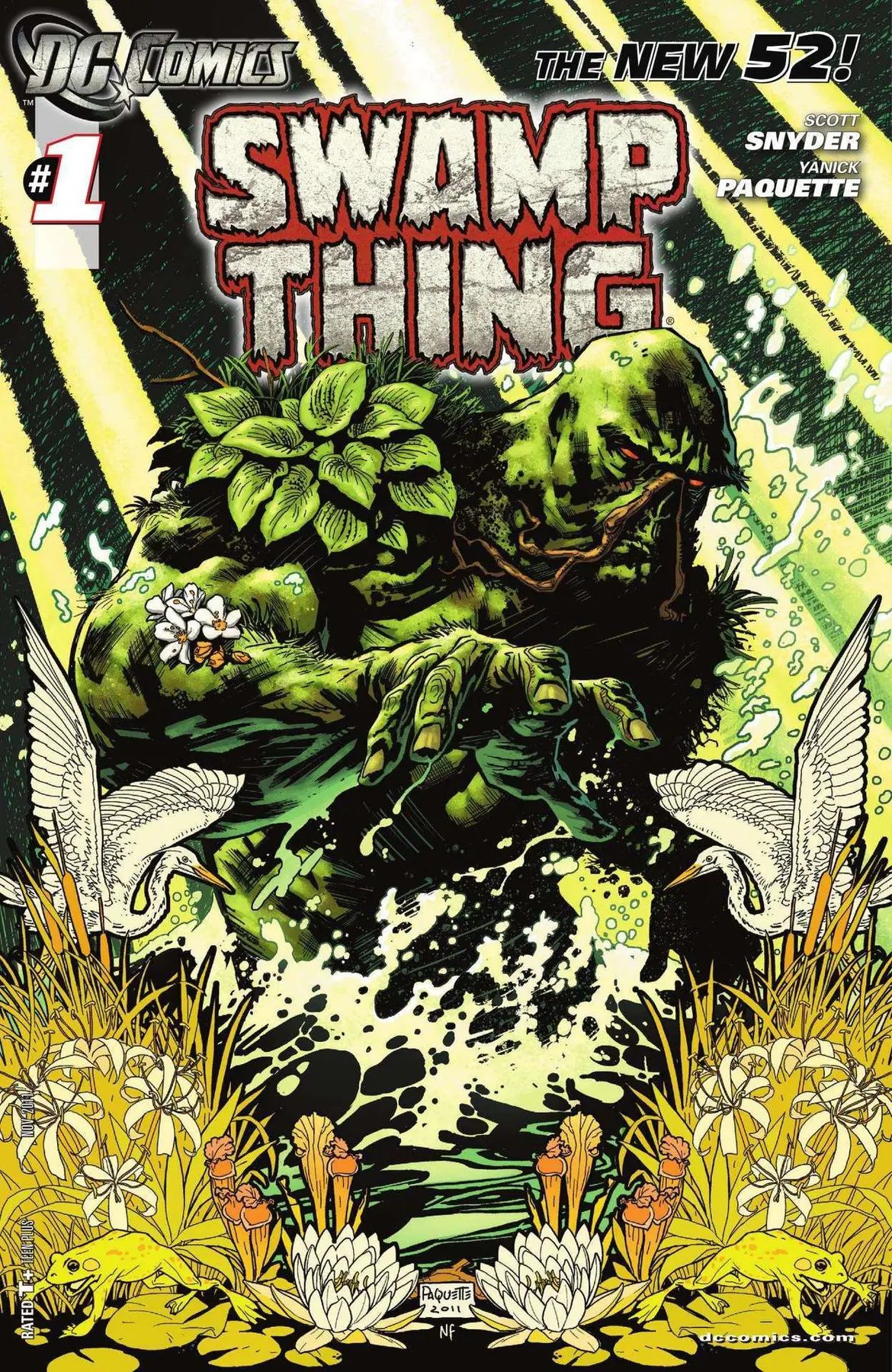
Swamp Thing #1 · 2011 The New 52 and beyondThe Green, the Red and the Rot.
After Brightest Day #23–24 and The Search for Swamp Thing, Scott Snyder and Yanick Paquette bring the recently restored Alec back to the foreground. Charles Soule and Jesús Saíz continue the main #1–40 sequence, which also includes #0 and three annuals. Len Wein and Kelley Jones later return for a 2016 miniseries, followed by the 2018 Winter Special.
Key reading · Swamp Thing (2011) #1–40 · (2016) #1–6
- A new avatar

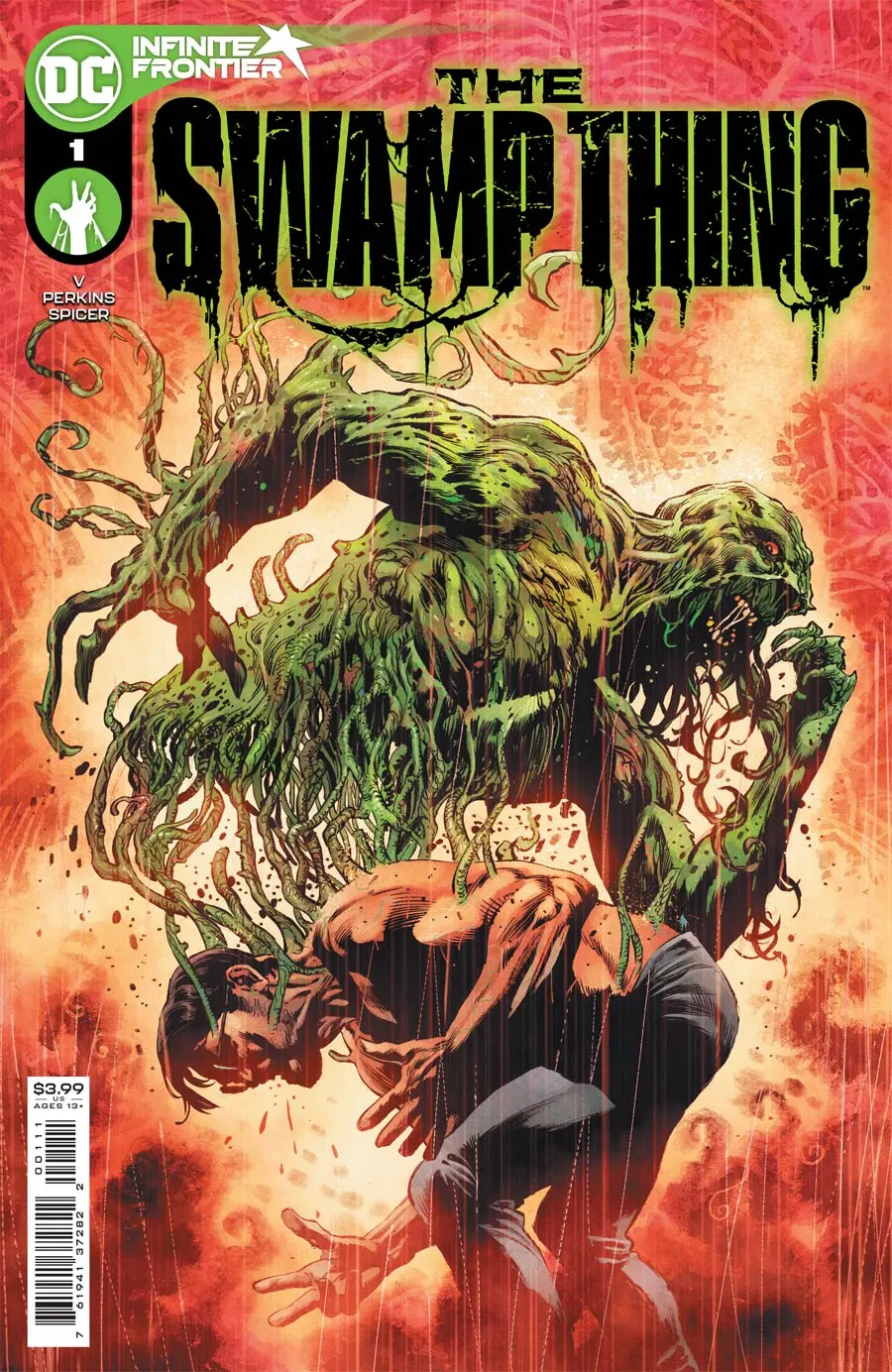
The Swamp Thing #1 Levi KameiThe role moves beyond Alec.
Ram V, Mike Perkins and Mike Spicer build a sixteen-issue story around inherited memory, displacement, environmental exploitation and a transformation with its own decomposing physicality.
Key reading · The Swamp Thing #1–16
- The lost finale
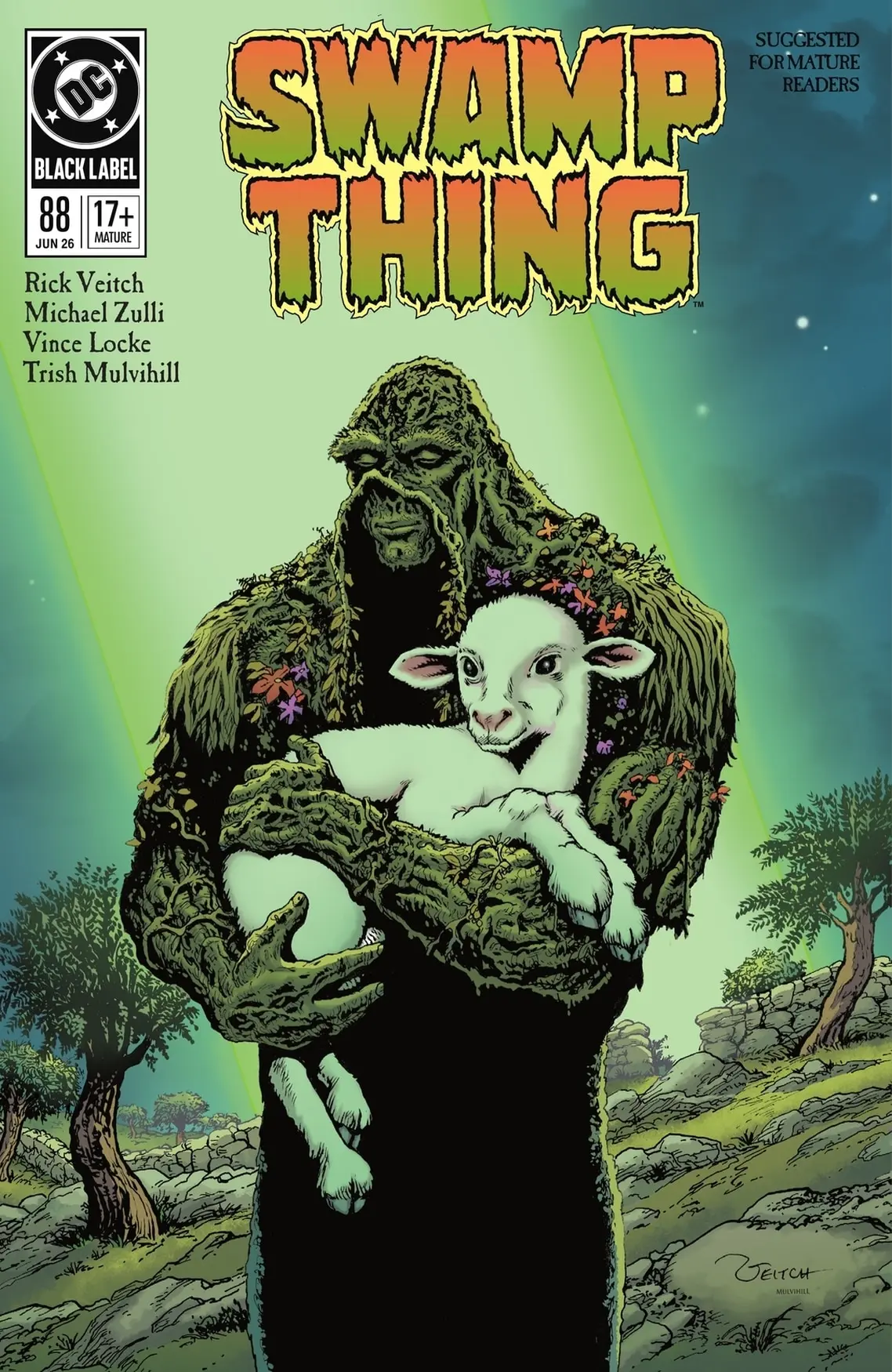
Swamp Thing 1989 #1 Veitch's intended #88–91Thirty-seven years later, the branch is restored.
DC publishes Veitch's once-blocked #88 over Michael Zulli's original pencils, completed and inked by Vince Locke. Three further chapters drawn by Tom Mandrake complete the intended path. The project does not renumber or replace the Wheeler issues originally published as #88–91.
Key reading · Swamp Thing 1989 #1–4
The decisive change
1972: A one-off tragedy takes root.
Swamp Thing #1 rebuilt an eight-page horror story as an open-ended fugitive narrative, placing Alec Holland inside the wider DC world while preserving the melancholy of the original.
The first volume ran for 24 issues, but its essential architecture was established during Wein and Wrightson's opening ten: Alec's apparent transformation, Abigail and Anton Arcane, the Un-Men, forbidden laboratories and a creature crossing the world in search of an identity he could never recover.
Wrightson's Swamp Thing is heavy, wet and painfully alive—a monster that appears to have pulled itself out of the earth rather than stepped into a costume.
Creators who shaped the character
Seven eras that changed what could grow in the swamp.
Swamp Thing's greatest creative runs do more than supply new villains. They repeatedly change what the creature is, how the natural world speaks and whether “Alec Holland” describes a man, a memory or a role.
Len Wein & Bernie Wrightson
Defining era · 1971–74What changed. A single tale of murder and unrecognised love became a contemporary series built around Alec Holland, Abigail Arcane and a wandering creature hunted by science and the supernatural.
Why it matters. Nearly every lasting element is present: melancholy rather than simple menace, the swamp as atmosphere and the contrast between a monstrous body and a deeply human consciousness.
Martin Pasko, Tom Yeates & collaborators
Defining era · 1982–83What changed. Pasko's nineteen-issue run restores Swamp Thing to a regular title, rebuilds the supporting cast and leans into contemporary ecological and supernatural threats. Yeates launches the series visually before a changing art team carries it to #19.
Why it matters. Moore's celebrated run grows directly from this series rather than appearing from nowhere. Yeates establishes the visual ground that Bissette and Totleben make progressively stranger.
Alan Moore, Stephen Bissette, John Totleben & Tatjana Wood
Defining era · 1984–87What changed. “The Anatomy Lesson” recasts Swamp Thing as vegetation carrying Alec's memories. Moore-era teams—including Rick Veitch, Stan Woch and Ron Randall among the collaborators—introduce the Green, the Parliament of Trees and John Constantine while widening the book into ecological, political, sexual and cosmic horror.
Why it matters. The series becomes an inquiry into what a person, a body and a natural world might be. Its layouts, colour and language transform the possibilities of mainstream American horror comics.
Rick Veitch & collaborators
Defining era · 1987–89 / completed 2026What changed. Veitch carries Moore's ideas into stranger biology, alien ecosystems and a journey backwards through DC history and human myth.
Why it matters. His run proves that Swamp Thing can survive Moore's departure without imitation. The interrupted finale becomes part of comics history before its four-part completion in 2026.
Nancy A. Collins, Scot Eaton & collaborators
Defining era · 1991–93What changed. Collins draws the story back towards Louisiana, family life, folklore and contemporary environmental and social anxieties, with Abby, Tefé and the surrounding community near its centre.
Why it matters. The substantial run restores intimacy after the cosmic journeys and shows that domestic life around the swamp can be every bit as unsettling as supernatural spectacle.
Scott Snyder, Yanick Paquette, Charles Soule & Jesús Saíz
Defining era · 2011–15What changed. Alec returns to the foreground as the Green is placed beside the Red and the Rot. After Snyder and Paquette's body-horror opening, Soule and Saíz broaden the world through a new Parliament and rival avatars.
Why it matters. The main #1–40 sequence—alongside #0 and three annuals—provides a modern entry point and proves the elemental mythology can support both a line-wide crossover and a sustained superhero-horror run.
Ram V, Mike Perkins & Mike Spicer
Defining era · 2021–22What changed. Levi Kamei carries the mythology into a story about inherited memory, displacement, family fracture and environmental exploitation.
Why it matters. Levi demonstrates that the role can move beyond Alec Holland without becoming a simple replacement exercise. Perkins and Spicer give the transformation a tactile, decomposing identity of its own.
The five defining comics
Five issues that explain Swamp Thing.
These are not simply the most valuable books. Together they show the decisive changes: first concept, ongoing mythology, modern reinvention, expansion into DC's occult world and a new avatar of the Green.
Stories, runs and crossovers
Choose a path through the Green.
Wein & Wrightson's opening ten
Read House of Secrets #92 first, then Swamp Thing #1–10 for the complete visual and emotional foundation.
Moore's #20–64
Start with the transition at #20 rather than skipping directly to “The Anatomy Lesson,” then follow the full transformation through #64.
Veitch #65–87 → 1989 #1–4
This route follows Veitch's intended creative line. It sits beside, rather than erasing, the Wheeler issues originally published as #88 onward.
Collins #110–138
A focused return to Louisiana, community, family and environmental politics—one of the strongest under-read sections of the long second volume.
New 52 #1–40
Snyder and Paquette lead into Rotworld; Soule and Saíz carry the volume through a new Parliament and competing avatars.
The Swamp Thing #1–16
Ram V and Mike Perkins make Levi Kamei's complete first story accessible with little prerequisite reading.
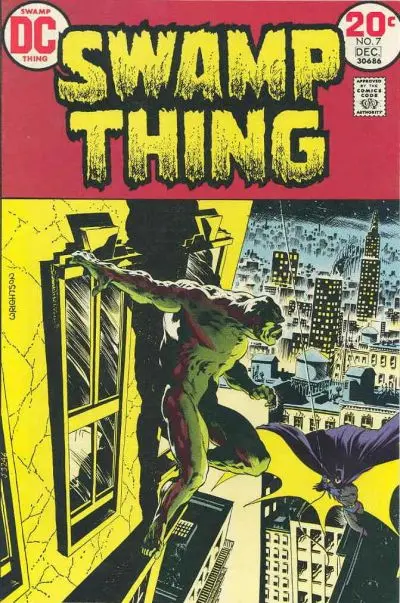
Swamp Thing #7: Night of the Bat
Batman confronts the monster in Gotham while both pursue the Conclave. It is an early proof that Wrightson's Gothic creature can enter the wider DC Universe without losing his atmosphere.
American Gothic and Crisis
Issues #37–50 move from regional horror to DC-scale consequences. The main Crisis on Infinite Earths series supplies optional context for #46.
Rotworld
Swamp Thing and Animal Man cross through issues #12–18 after parallel build-ups, bringing the Green and the Red together against the Rot.
Justice League Dark
The character becomes central to James Tynion IV and Ram V's supernatural ensemble, including The Witching Hour crossover with Wonder Woman.
Future State, Green Hell and Feral Trees
Ram V and Mike Perkins' two-issue Future State experiment anticipates their regular series. Jeff Lemire and Doug Mahnke's three-part Green Hell is a separate Black Label future, while G. Willow Wilson and Perkins' Poison Ivy/Swamp Thing: Feral Trees reunites two champions of the Green for a 2024 horror one-shot.

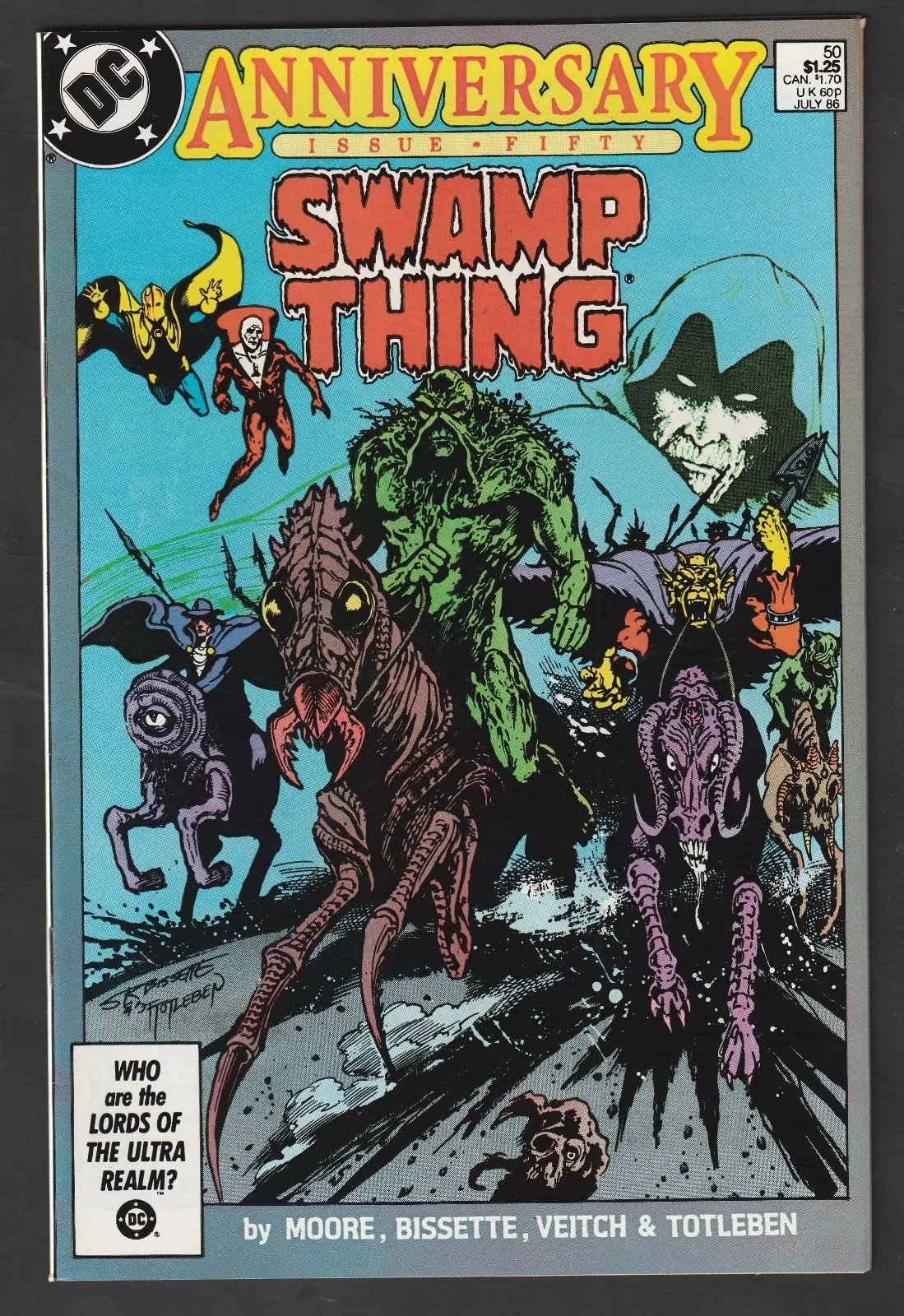
The anniversary-sized culmination of “American Gothic” brings its occult cast into one enormous confrontation.
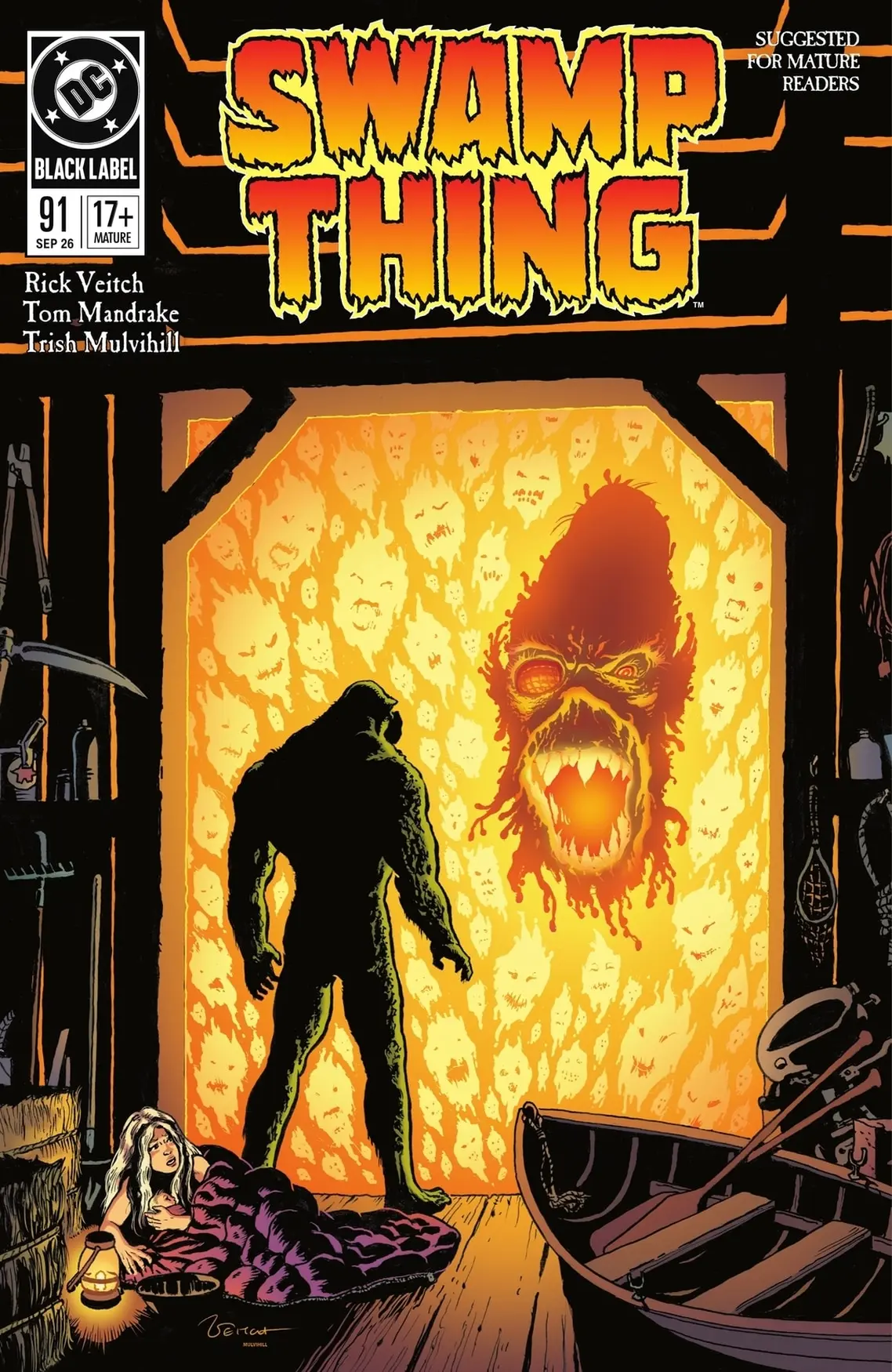
The final chapter gives the chronology a genuinely current endpoint: a conclusion arriving more than three decades after the original run stopped.
Collector's route
How to build a Swamp Thing shelf.
A satisfying collection does not need to begin with House of Secrets #92. Swamp Thing divides naturally by creator, and the long second volume offers rich, affordable stretches between its major keys.
Choose the root
Build around Wein and Wrightson's Bronze Age Gothic, Moore's mature horror, Collins's Southern Gothic, the New 52 or Levi Kamei.
Start with an accessible anchor
The 2011 and 2021 first issues make strong modern anchors. Later Moore and Veitch issues provide defining-era work without beginning with the major first appearances.
Build a creator block
Target the 1972 series #1–10, Moore's #20–64, Collins's #110–138, New 52 #1–40 or Ram V's complete #1–16 rather than collecting disconnected keys.
Verify edition and condition
Check year, volume, printing, barcode and indicia—especially with House of Secrets #92 facsimiles and the many series numbered Swamp Thing #1. Dark green and black covers expose colour rub and spine ticks; on older copies inspect staples, page quality and the full back cover.
Collector key spotlight
Three keys beyond the headline books.
Collectibility is not limited to first appearances. These three issues mark an early DC crossover, a publishing-history milestone and a final statement from one of Swamp Thing's creators.

Swamp Thing #7 · 1973
Why it matters. “Night of the Bat” is the first in-story meeting of Alec Holland's Swamp Thing and Batman, taking Wein and Wrightson's Gothic creature into Gotham without losing the horror atmosphere.
Collector check: Confirm the November–December 1973 original with its 20¢ US cover price; the story has been reprinted many times. Standard cover art by Bernie Wrightson.

Swamp Thing #129 · 1993
Why it matters. This is the first issue of Swamp Thing to carry the Vertigo branding, placing Nancy A. Collins's run inside the imprint the character helped make possible.
Collector check: It is not a new #1 or Collins's debut—the numbering continues uninterrupted. Look for the Vertigo logo and Charles Vess's painted standard cover.

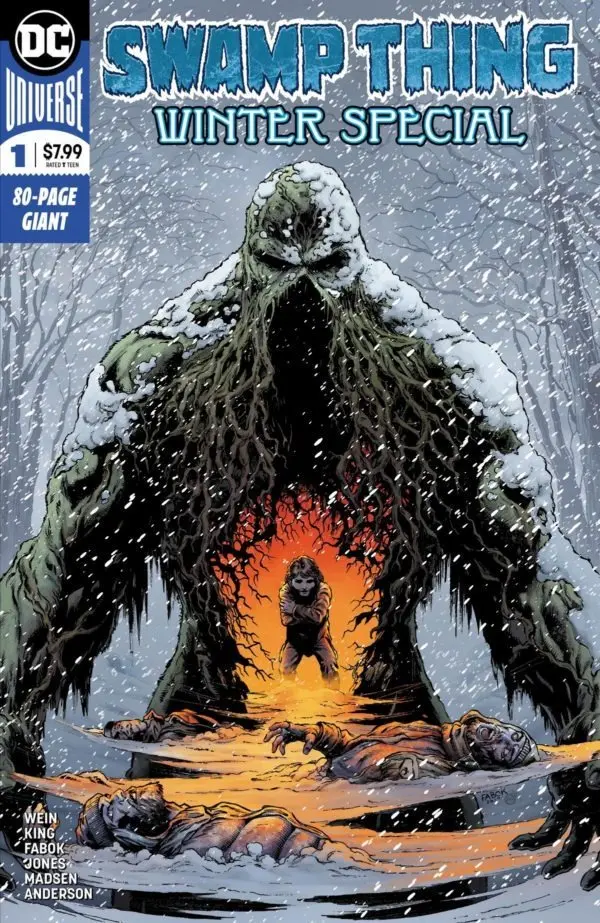
Swamp Thing Winter Special #1 · 2018
Why it matters. The oversized special pairs Tom King and Jason Fabok's award-winning “The Talk of the Saints” with Len Wein's final Swamp Thing story material and Kelley Jones's finished sequential art.
Collector check: Wein died before adding dialogue to “Spring Awakening!”; the issue presents its art wordlessly, followed by his plot. The regular cover is by Jason Fabok and Peter Steigerwald.
Cover artwork and characters © DC and their respective creators. Publisher and retailer images are reproduced at limited size in direct editorial context for identification, commentary and review.