Character File 09 / Marvel / 1972-2026

WEREWOLF
BY NIGHT

The curse, the man and the collection

A guide to Jack Russell, Jake Gomez, the stories that matter and the difference between a comic you want to read and a key you want to own.

CHOOSE YOUR WAY IN

Published 24 September 2026
Research and price snapshot checked 24 September 2026

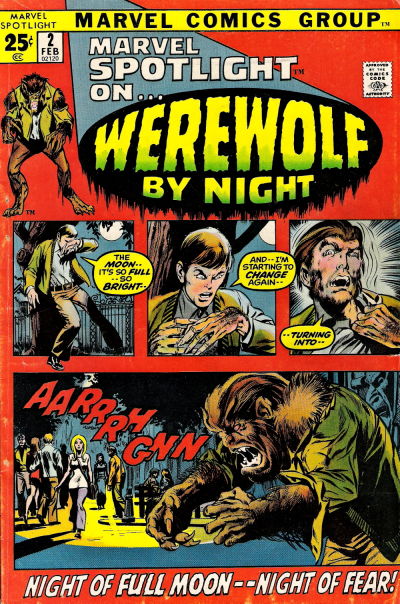
Marvel Spotlight #2 (1972).
Introduction

The monster is only half the story.

Jack Russell lives with a fear most superheroes never have to face: the next threat may be himself. In the best Werewolf by Night stories, a transformation is not a convenient power-up. It puts trust, family and responsibility under pressure. The claws are immediate; the consequences last longer.

His comics also open a particularly rich corner of Marvel. Gothic inheritance meets Los Angeles, occult manipulators meet ordinary friends, and other monsters sometimes offer more understanding than people do. Later, Jake Gomez makes the name his own through a different family and community.

Begin with the stories. The famous keys can come later, if they interest you. This guide separates the two Werewolves, maps the changing series and explains why an affordable modern issue, an original horror comic and Moon Knight’s first appearance serve very different collecting goals.

01 / Your starting point

Read for pleasure.
Collect with purpose.

I’m not interested in investing

Just read and enjoy.

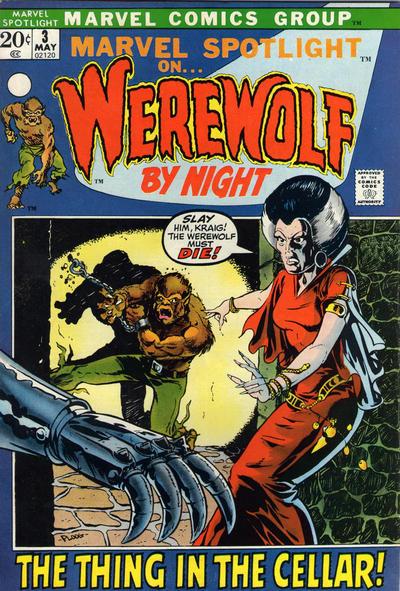
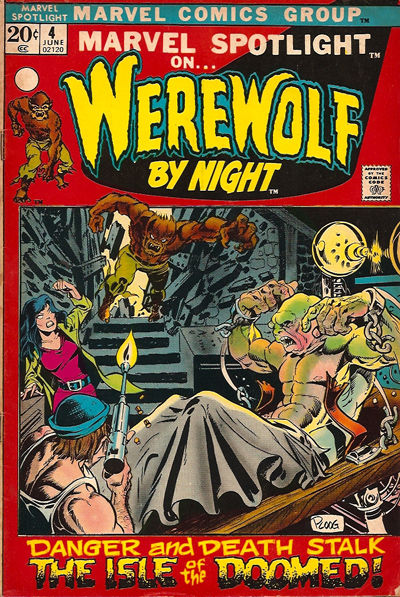
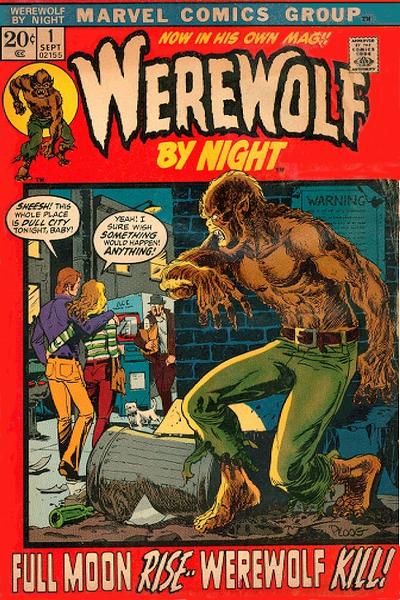
Our classic starting route is Marvel Spotlight #2-4, followed by Werewolf by Night #1-4: the foundation of Jack’s world, with Mike Ploog’s expressive horror art. Spotlight #4 continues into the solo title, so do not stop at the anthology and assume you have finished the opening story.

Read it in a collection or an available lawful digital edition. Marvel Masterworks: Werewolf by Night Vol. 1 contains the route and more; The Complete Collection Vol. 1 is another option if sensibly priced. Compare the contents and delivered cost rather than chasing a particular out-of-print edition.

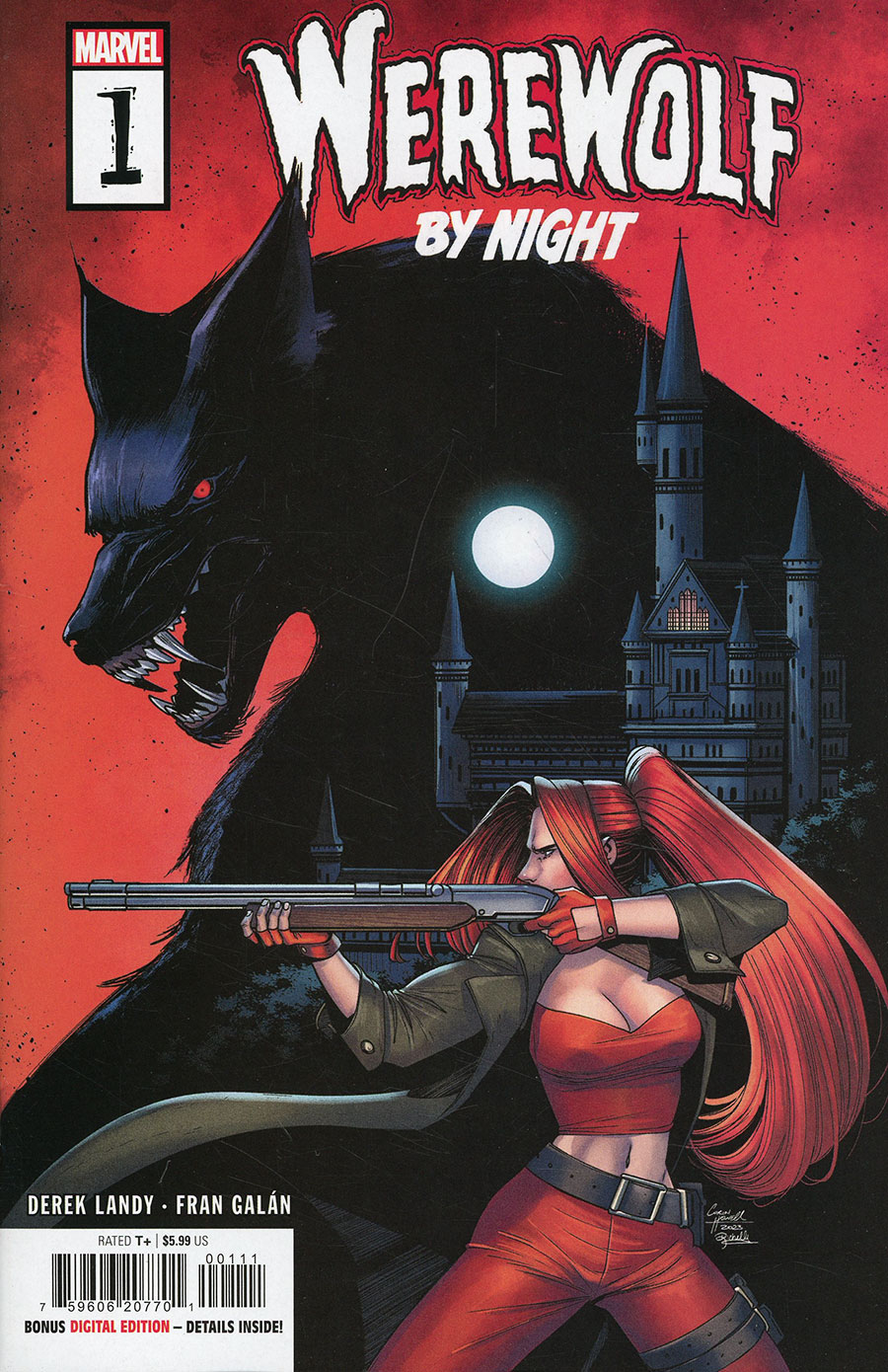
Prefer one modern comic tonight? Choose Werewolf by Night #1 (2023), by Derek Landy and Fran Galán: a self-contained Jack Russell and Elsa Bloodstone adventure. Buy a complete reading copy, borrow where possible, and enjoy it. You do not need an expensive original or an investment plan.

Werewolf by Night #1 (2023).

Ten books, from first buys to collecting goals.

Raw acquisition-guide estimates in GBP, checked 24 September 2026. Low / Mid / High are Key Collector’s broad bands, not numerical grades or verified UK FMV. Converted at £1 = $1.3348 (22 September 2026); rounded; postage and other costs excluded.

Book / price sourceWhy consider it?LowMidHigh
Affordable first buysWerewolf by Night #1 (2023)A self-contained Jack Russell and Elsa Bloodstone adventure; a sensible modern reading entry rather than an assumed investment key.Where it fits in the story →£1£1£4
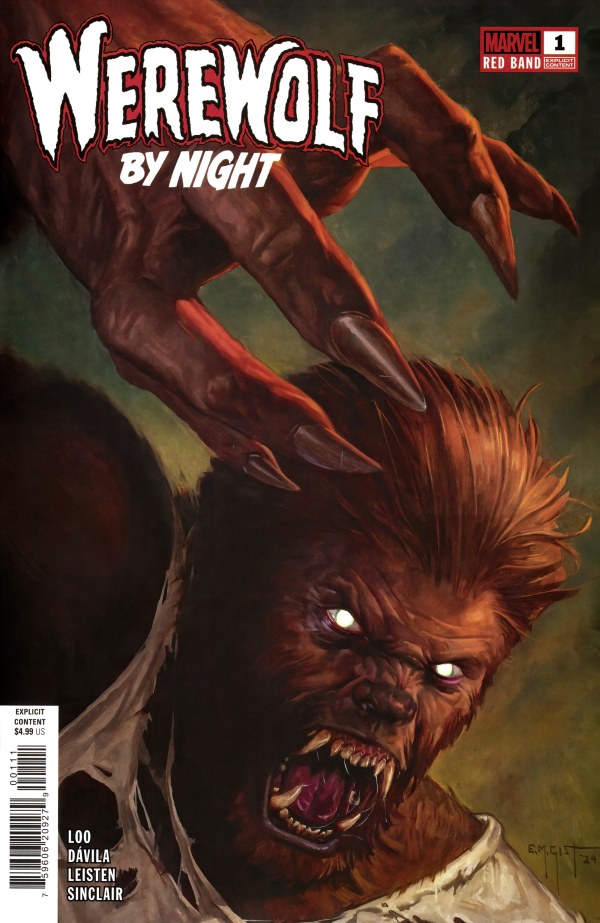
Affordable first buysWerewolf by Night: Red Band #1 (2024)Launch of Jason Loo and Sergio Dávila's explicit-content Jack Russell series; a reading choice for adults who want the more graphic modern horror approach.Where it fits in the story →£1£1£4
Affordable first buysWerewolf by Night #1 (2020)Jake Gomez's first appearance gives the modern generation its own collecting starting point.Where it fits in the story →£2£7£22
Classic collecting keysWerewolf by Night #13 (1974)Topaz and Taboo enter the series; an affordable route into the supporting cast and Mike Ploog's return.Where it fits in the story →£4£13£52
Classic collecting keysMarvel Spotlight #3 (1972)Jack Russell's second appearance and the early Darkhold thread; a historical step between his debut and his own title.Where it fits in the story →£15£60£169
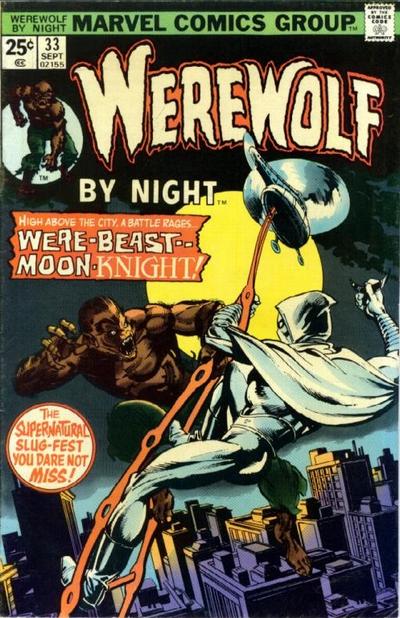
Classic collecting keysWerewolf by Night #33 (1975)Moon Knight's second appearance and the conclusion of his opening encounter with Jack; a companion to #32 with a lower guide price.Where it fits in the story →£15£60£150
Classic collecting keysMarvel Spotlight #4 (1972)Third Werewolf appearance and introduction of the Darkhold as an object in the story; the final Spotlight chapter before the solo title.Where it fits in the story →£19£71£240
Classic collecting keysWerewolf by Night #1 (1972)The first issue of Jack Russell's own ongoing title, continuing the story from Marvel Spotlight #4.Where it fits in the story →£22£67£225
Landmarks to aim forMarvel Spotlight #2 (1972)Jack Russell's debut and origin: the central landmark for a Werewolf-focused collection.Where it fits in the story →£30£90£300
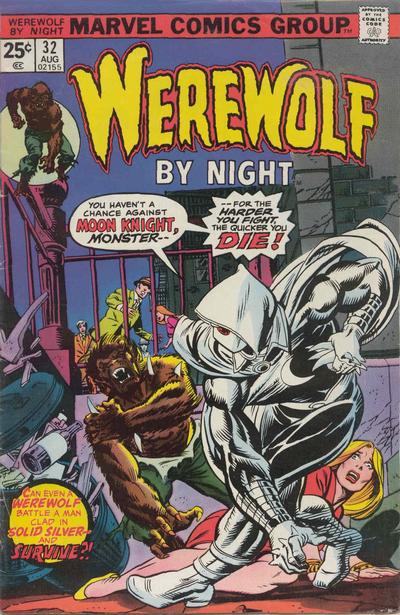
Landmarks to aim forWerewolf by Night #32 (1975)Moon Knight's debut makes this the major crossover collecting landmark, sought by both Moon Knight and Werewolf readers.Where it fits in the story →£75£225£749
How to use these figures

These figures are a sense of scale, not an appraisal or a quotation. The source is Key Collector’s raw acquisition guide. It describes averaging up to ten ungraded secondary-market transactions over a month and then applying a roughly 10-15% acquisition discount. The underlying dated sale sample for each entry is not exposed here.

The check date records when we observed the guide, not when an individual comic sold. Low, Mid and High are provider categories without an established mapping here to numerical grades. A High-band figure is not a ceiling for unusually sharp copies. The conversion uses the Bank of England reference exchange rate dated 22 September 2026, rather than a live-rate quote.

Compare recent completed sales of the same edition and a realistically similar copy before buying. Exclude facsimiles, variants, restored or incomplete copies when they do not match the object you want. Allow for postage, selling costs, tax and currency conversion. On a low-value modern comic, delivery can cost more than the book.

No sufficiently matched ten-year raw-sales series has been established for this guide. We therefore show no invented appreciation percentage. Collecting significance, scarcity, condition and a profitable resale are different questions.

Werewolf by Night #1 (2023): USD $1 / $2 / $6. Raw regular first print, Cover A; provider Low/Mid/High bands. Match the 2023 one-shot and Corin Howell regular cover. The several other Werewolf #1 launches and incentive variants are different editions. Price source.

Werewolf by Night: Red Band #1 (2024): USD $1 / $2 / $5. Raw regular first print, E.M. Gist Cover A; provider Low/Mid/High bands. The source URL contains an old Blood Hunt slug but its page is explicitly Red Band #1. Do not substitute Werewolf by Night: Blood Hunt #1 or foil/incentive variants. An intact polybag does not establish the condition of the comic inside. Price source.

Werewolf by Night #1 (2020): USD $3 / $9 / $30. Raw regular first print, Mike McKone cover; provider Low/Mid/High bands. Jake Gomez is a different character from Jack Russell. Match the first printing and cover; a new first appearance alone does not establish future demand. Price source.

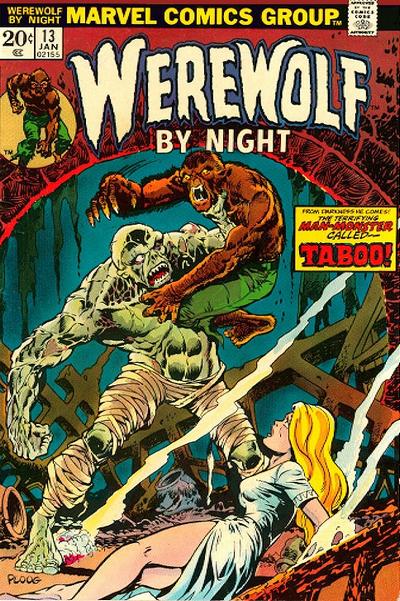
Werewolf by Night #13 (1974): USD $5 / $18 / $70. Raw standard US first print; provider Low/Mid/High bands. The UK pence edition has a separate guide. Compare actual cover price, page completeness and condition instead of assuming all copies share the same value. Price source.

Marvel Spotlight #3 (1972): USD $20 / $80 / $225. Raw standard US first print; provider Low/Mid/High bands. The Darkhold is mentioned here; #4 is its on-page introduction. Do not pay a first-appearance premium without knowing which milestone the seller means. Price source.

Werewolf by Night #33 (1975): USD $20 / $80 / $200. Raw standard US first print; provider Low/Mid/High bands. An inexpensive facsimile exists. Check indicia, cover price and edition before comparing with the original 1975 book. Price source.

Marvel Spotlight #4 (1972): USD $25 / $95 / $320. Raw standard US first print; provider Low/Mid/High bands. Cross-character Darkhold demand can influence this book. A connection to a wider franchise is not a guarantee of price appreciation. Price source.

Werewolf by Night #1 (1972): USD $30 / $90 / $300. Raw standard US first print; provider Low/Mid/High bands. This is the first solo-title issue, not Jack's first appearance. For a significant purchase, inspect the back, staples and interior as well as the front cover. Price source.

Marvel Spotlight #2 (1972): USD $40 / $120 / $400. Raw standard US first print; provider Low/Mid/High bands. Demand complete interior and spine photographs. Detached pages, missing material and restoration can radically change comparability. Reject facsimiles and other editions from original-copy comparisons. Price source.

Werewolf by Night #32 (1975): USD $100 / $300 / $1000. Raw standard US first print; provider Low/Mid/High bands. Multiple facsimiles and original-market editions exist. Require confirmation of the original edition and interior completeness, including inserts; do not transfer slabbed, restored or incomplete sale prices into a complete raw comparison. Price source.

These ten choices cover different budgets and collecting reasons. They are not a ranking of the ten most valuable variants. Reading for enjoyment is a complete choice.

02 / Know the people

Two Werewolves.
Two different lives.

Jack Russell

The original Werewolf by Night, born Jacob Russoff. His inherited supernatural curse places him between human relationships and animal danger. Stories change his awareness and control, so neither “always mindless” nor “only transforms under a full moon” works as a universal rule.

Jake Gomez

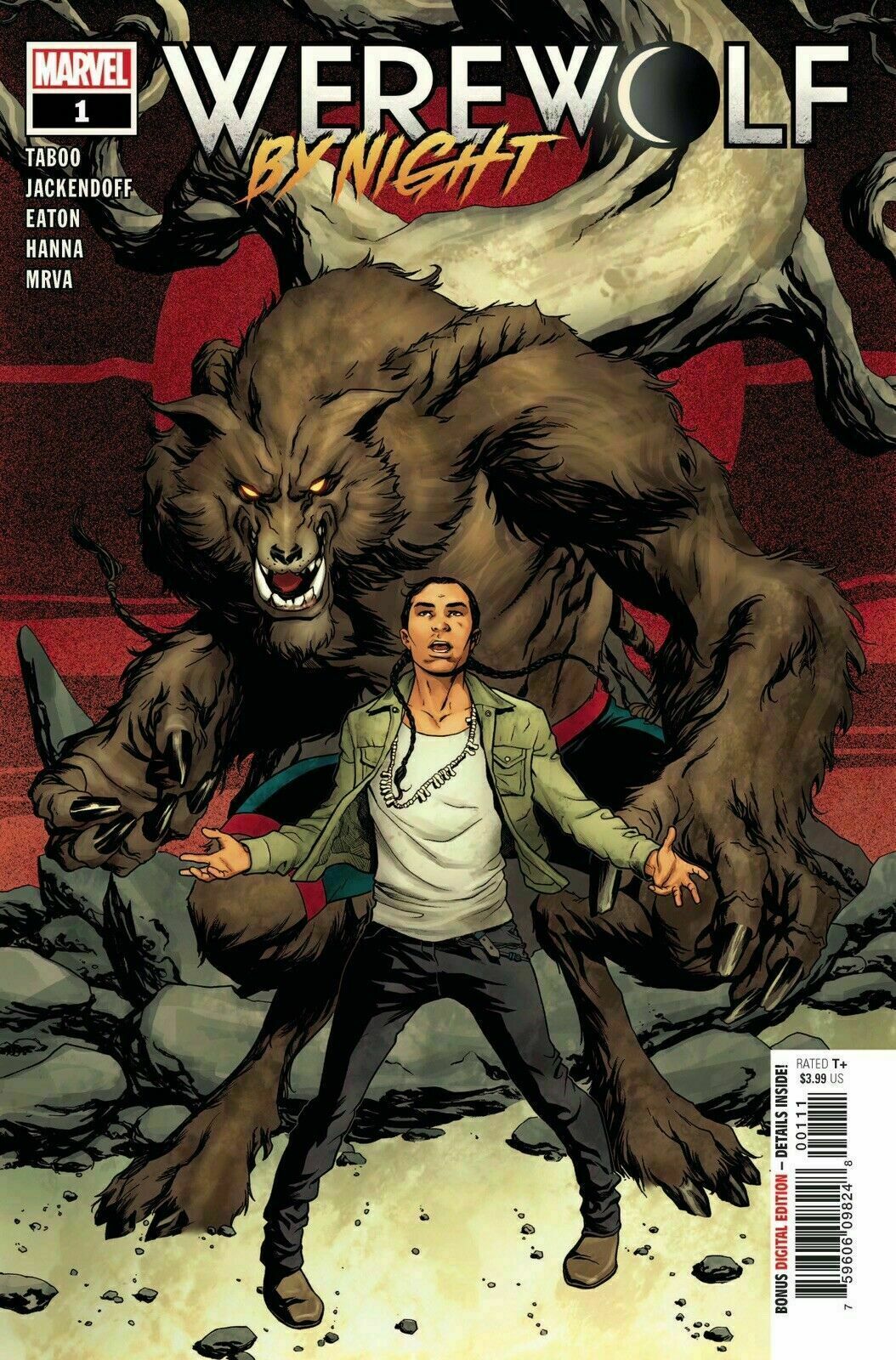
A separate young Werewolf introduced in 2020, with a story rooted in his Hopi community in Arizona. Taboo, Benjamin Jackendoff (also credited as B. Earl) and Scot Eaton give him his own family, pressures and allies. He does not erase or rename Jack.

The name is not a diagnosis

John Jameson’s Man-Wolf and Rahne Sinclair’s Wolfsbane are different Marvel characters. Equally, a screen version of Jack does not supply every fact of the comics. Use the character, title and series year together when choosing a book.

What makes these stories work

The useful question is what a character does with dangerous power when control is uncertain. Jack’s stories often use secrecy and guilt; Jake’s place more emphasis on family and community. Their different situations make the shared name more interesting.

The people and forces around them

Lissa Russell

Jack’s sister makes the family stakes personal. The possibility that the curse reaches beyond Jack gives the early material a continuing source of dread.

Topaz and Buck Cowan

Topaz brings empathy and occult knowledge; Buck offers friendship and investigation. These relationships give Jack a world worth returning to after a transformation.

Elsa Bloodstone

A monster hunter whose skills and distrust make her an effective partner and opponent. The 2023 one-shot is a direct way into their uneasy teamwork.

Jake’s family and Red Wolf

Jake’s sister JJ and his wider community belong to his own story. Red Wolf is an ally in the 2020 series; the setting is more than a new costume for Jack.

The Committee

The organisation that hires Moon Knight to capture Jack. Its treatment of a person as an asset is central to the first encounter.

The Darkhold and Dracula

The occult history behind the curse leads into other Marvel horror books. Neither a vampire nor a werewolf story has to be read as an isolated mythology.

03 / The series map

Follow the book,
then follow the wolf.

The title moves between an anthology, an ongoing series, shorter revivals and ensemble stories. Issue years below distinguish editions; classic dates are cover-year identifiers, not precise shop-release dates.

1972

An inherited curse, an original voice

Marvel Spotlight #2-4

The opening story was plotted by Roy and Jean Thomas, scripted by Gerry Conway and drawn by Mike Ploog. Jack’s eighteenth birthday and family history supply the trap; Ploog makes the fear legible in faces and bodies. Marvel Spotlight #4 then carries the story into the new solo title.

Collector’s distinction: Spotlight #2 is Jack’s debut. #3 is his second appearance; #4 is the first full Darkhold appearance. Neither is the first issue of the later solo series.

1972-1974

A horror lead needs a human world

Werewolf by Night #1-15

The ongoing begins with unfinished business from Spotlight. Writers including Conway, Len Wein and Marv Wolfman develop a world of family danger, manipulation and friendship. Topaz’s arrival in #13 makes her a significant part of that world. Read the continuing issues to understand what Jack might lose, not only the isolated debuts.

Collector’s distinction: Werewolf #1 launches the ongoing; #13 introduces Topaz. A series-launch key and a supporting-character debut are different collecting choices.

1974

Dracula, Tigra and giant-size numbering

Tomb of Dracula #18 → Werewolf by Night #15; Giant-Size Creatures #1

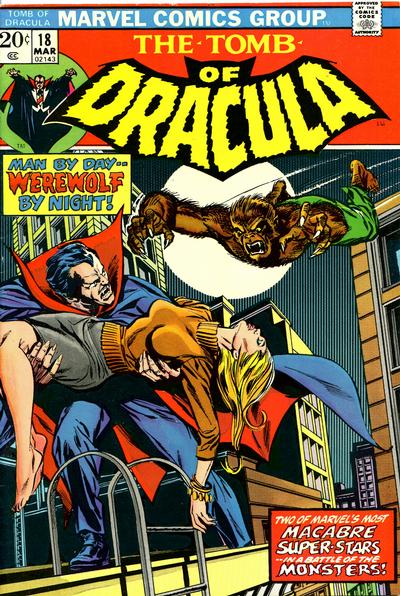
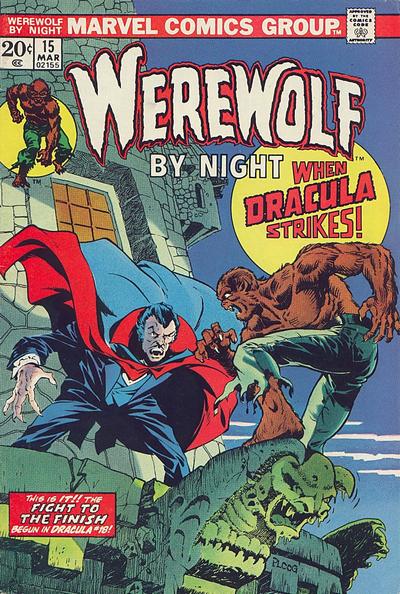
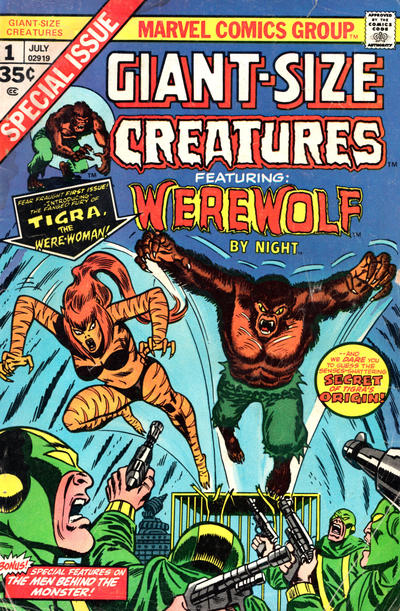
The Dracula crossover lets Wolfman connect two horror worlds, with Colan and Tom Palmer on the vampire chapter and Ploog with Frank Chiaramonte on the Werewolf chapter. Giant-Size Creatures #1 then brings Jack alongside Greer Nelson as Tigra. The companion title continues as Giant-Size Werewolf #2-5.

Collector’s distinction: Giant-Size Creatures #1 is Greer’s first appearance as Tigra, not her first appearance as the Cat. There is no original Giant-Size Werewolf #1 to find under that exact title.

1975-1977

The hunter who becomes something more

Werewolf by Night #32-33; Marvel Premiere #28; Werewolf by Night through #43

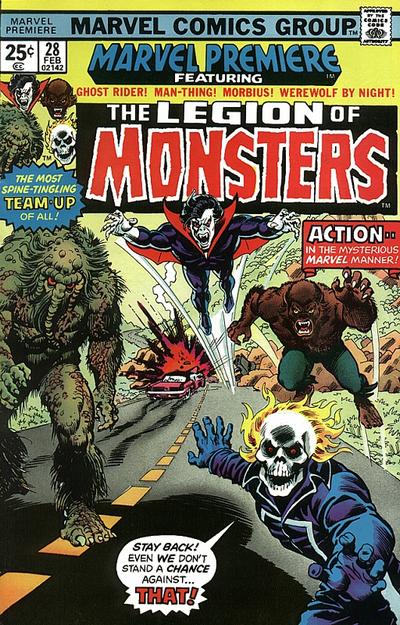
Moench and Perlin introduce Moon Knight as a paid hunter in #32. The two-part encounter turns on his response to the people paying him. Jack also joins the original Legion of Monsters gathering in Marvel Premiere #28. His own ongoing finishes with #43, leaving a finite original run whose most famous key now draws two readerships.

Collector’s distinction: #32 is Moon Knight’s debut, not Jack’s. #33 completes that initial story. Owning only the debut and reading the whole encounter are different projects.

Late 1970s-1990s

A continuing life between other people’s covers

Guest appearances; Moon Knight #29-30 (1983); Marvel Comics Presents; Morbius

An ended monthly does not mean an ended character. Spider-Woman, Marvel Team-Up, Ghost Rider and Moon Knight supply further encounters; later anthology and Morbius appearances keep Jack in Marvel’s horror community. The Complete Collection Vol. 3 is a useful way to gather the earlier scattered material around the original run’s ending.

Collector’s distinction: This is a guest-star and anthology period, not a hidden continuation of a monthly Werewolf series. Decide how broadly you want to collect appearances.

1998

A rougher, darker revival

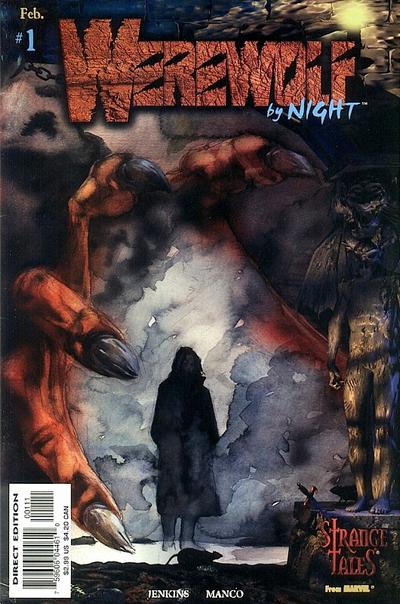
Werewolf by Night #1-6 → Strange Tales #1-2 (1998)

Paul Jenkins and Leonardo Manco bring a harsher visual mood to the revival. The Werewolf series lasts six issues, then the feature moves into the short-lived Strange Tales alongside Man-Thing. The experiment ends without a completed conclusion. It remains an art-led reading choice for someone comfortable with an interrupted story.

Collector’s distinction: The six issues are not a neatly completed miniseries. Include the two 1998 Strange Tales issues if following this version of Jack.

2007-2009

A one-shot and an adult reinterpretation

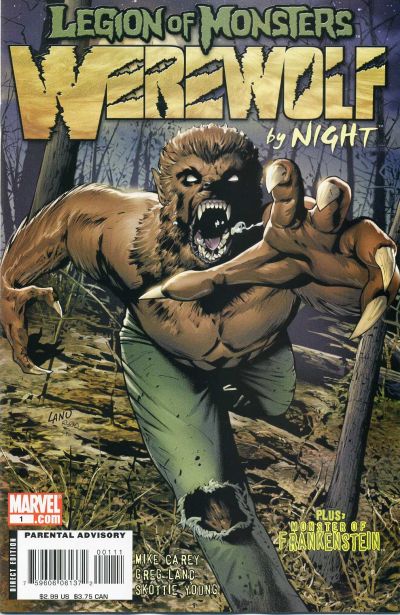
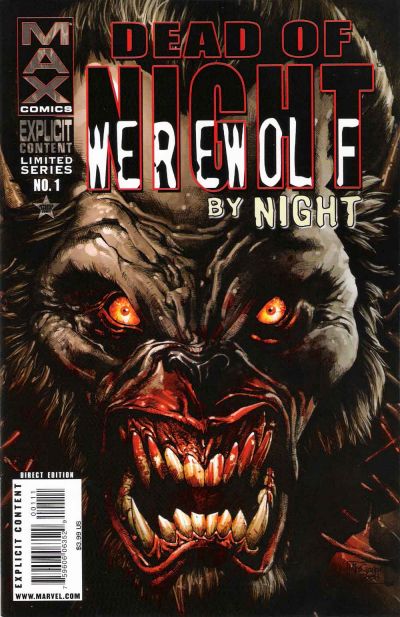
Legion of Monsters: Werewolf by Night #1; Dead of Night Featuring Werewolf by Night #1-4

Mike Carey and Greg Land tell the Jack story in the 2007 one-shot; Skottie Young’s Frankenstein backup is a separate feature. The 2009 MAX series, by Duane Swierczynski and Mico Suayan, is an adult alternate-continuity horror interpretation. Its collected edition is called In the Blood.

Collector’s distinction: The MAX series is a deliberate mature-content choice. Do not fold its family details into the main Jack Russell biography or confuse its collection title with another solo launch.

2009-2012

The monsters become a community

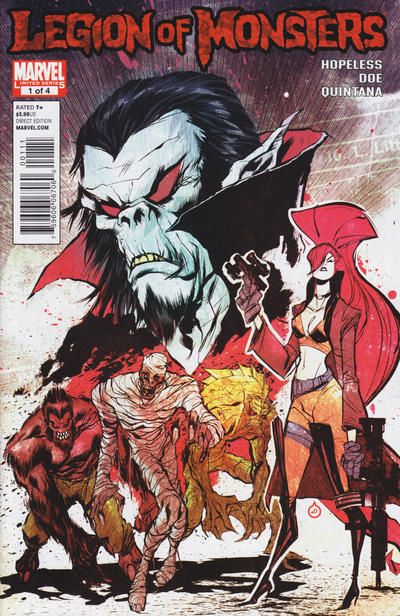
Marvel Zombies 4; Legion of Monsters #1-4 (2011-12)

Jack becomes part of a supernatural team around Morbius. Dennis Hopeless and Juan Doe’s Legion of Monsters miniseries puts Elsa Bloodstone into a monster community where the expected division between hunter and prey becomes less comfortable. It is a short ensemble route that connects naturally with the Morbius file.

Collector’s distinction: The 2011 mini is a different purchase from the 2007 Werewolf one-shot and the 1976 Marvel Premiere issue.

2020-2021

A new Werewolf with his own home

Werewolf by Night #1-4 / New Wolf Rising

Taboo, Benjamin Jackendoff and Scot Eaton introduce Jake Gomez. An inherited transformation, his family and a pharmaceutical operation drive a story set in Arizona. The four issues form the New Wolf Rising collection. Jack still exists; the new name on the cast list is the important distinction.

Collector’s distinction: The 2020 #1 is Jake’s debut. Its regular cover, incentives and later printings require separate comparisons.

2023

Jack and Elsa, without a long commitment

Werewolf by Night #1 (2023)

Derek Landy and Fran Galán place the two leads in a rescue adventure that works in one issue. Jack’s black-and-white world and Elsa’s colour make the partnership visually distinctive. The later Unholy Alliance collection mixes this story with other horror material; it is not a single continuous solo run.

Collector’s distinction: This #1 is a Jack Russell one-shot, not issue one of Jake’s four-part 2020 series.

2024-2025

Two wolves and several kinds of horror

Blood Hunt #1; Red Band #1-10; Blood Moon Rise #1; Beastly Buddies #1-10

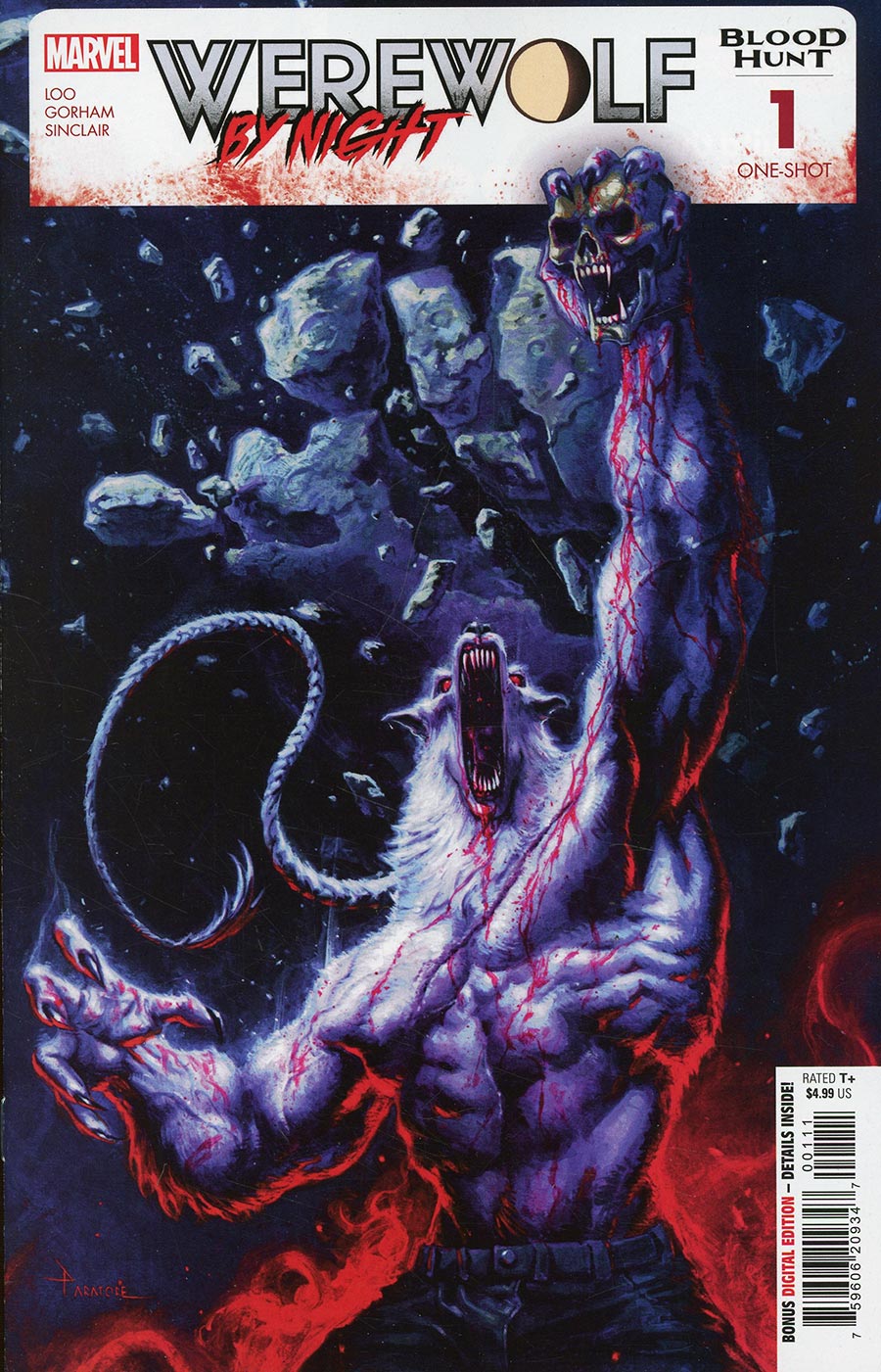
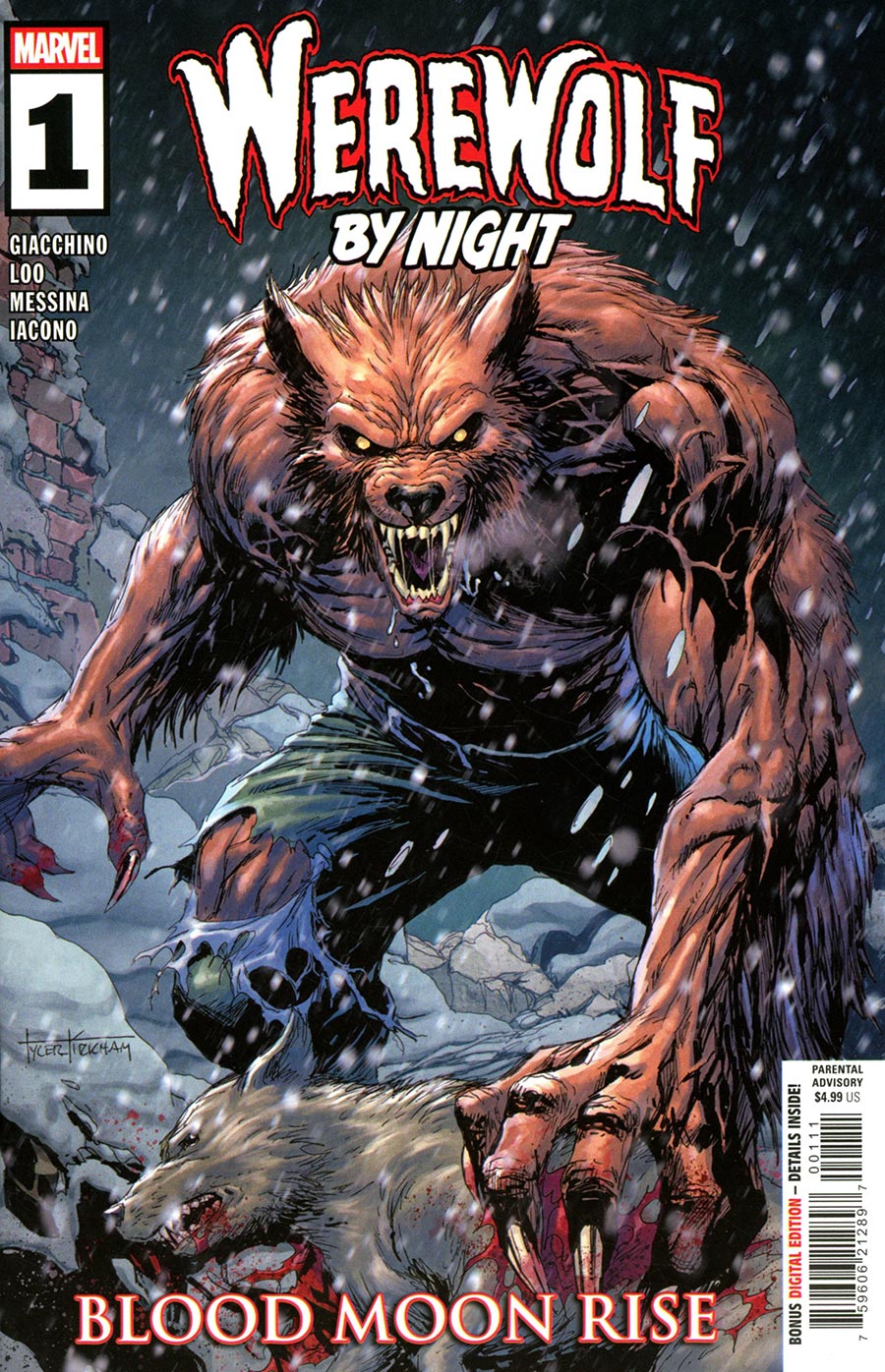
Jason Loo and Adam Gorham’s Blood Hunt one-shot follows Jake. Loo’s Jack-led Red Band series takes a much more graphic horror direction, with Sergio Dávila among its artists. Blood Moon Rise adds a Dracula encounter with Michael Giacchino and David Messina among the creators. For a lighter alternative, Steve Foxe and Armand Bodnar’s Beastly Buddies sends Jack and Man-Thing on a road trip.

Collector’s distinction: Red Band has ten published issues; a generic “Present” catalogue label does not establish an eleventh. Beastly Buddies is a separate digital-first project with a different tone.

2026

The current reading shelf

Uncanny X-Men #23-25; The Howling Tome; Strange Tales

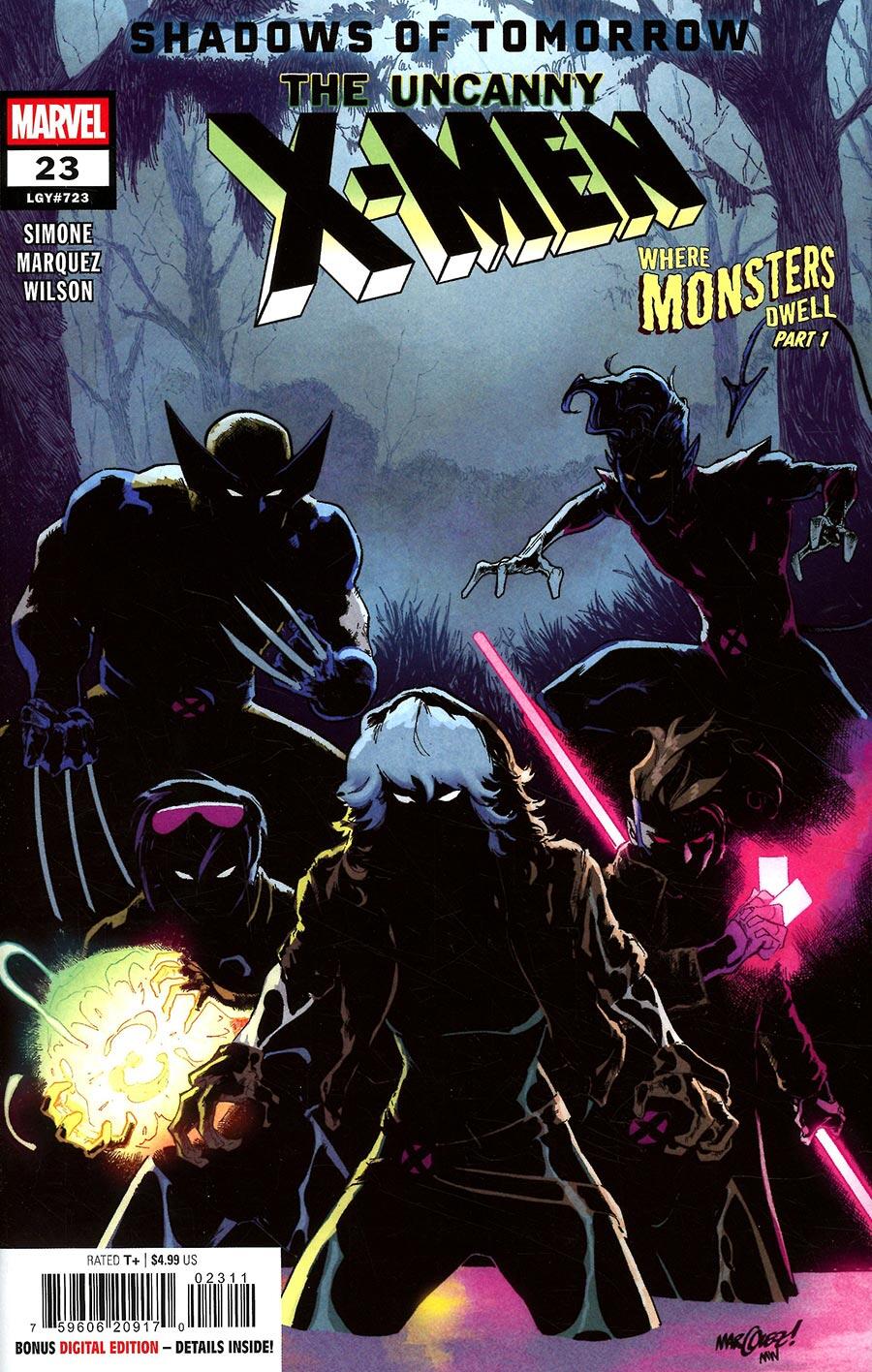
Jack and the Legion appear in the Where Monsters Dwell X-Men arc, published February-March 2026. The Howling Tome collected the recent Red Band material in January. August’s Strange Tales collection includes all ten Beastly Buddies chapters alongside other stories. One is a guest arc; the others provide print routes into already published work.

Collector’s distinction: These are the latest substantial checkpoints verified on 24 September 2026. They are not a newly announced Werewolf solo ongoing, and the list does not claim to exclude every later cameo.

04 / Read by mood

Pick the experience
you want.

The classic foundation

Marvel Spotlight #2-4 → Werewolf by Night #1-4 — Choose this for Ploog’s horror storytelling and the original family predicament. A first collection gives you more to continue with if it catches you; originals are unnecessary for reading.

Marvel Spotlight #2 (1972).

A gothic double bill

Tomb of Dracula #18 → Werewolf by Night #15 — Two linked chapters and two distinctive artists. Read in this order for Jack’s crossover, while recognising that Dracula’s own ongoing continues beyond it.

Tomb of Dracula #18 (1974).

The birth of Moon Knight

Werewolf by Night #32-33 — A meaningful story and a major collecting landmark. Marvel-Verse: Moon Knight reprints both, making the story accessible without purchasing the expensive first printing.

Werewolf by Night #32 (1975).

One modern evening

Werewolf by Night #1 (2023) — Our low-commitment modern choice: Jack, Elsa and an adventure with its own ending. Its visual approach makes it worth reading even if you know the characters already.

Werewolf by Night #1 (2023).

A monster ensemble

Legion of Monsters #1-4 (2011-12) — Choose the four-part series for community, grotesque company and Juan Doe’s energetic art. It is an ensemble experience rather than a full Jack biography.

Legion of Monsters #1 (2011). The four-part ensemble series.

A different lead

Werewolf by Night #1-4 (2020-21) / New Wolf Rising — Read Jake on his own terms. Four issues offer a manageable introduction to the second Werewolf and show why the series year matters.

Werewolf by Night #1 (2020).

Adult horror or an art-led deep cut

The Howling Tome; alternatively the 1998 revival — The recent collection is the more convenient completed era. Jenkins and Manco’s 1998 material offers a different visual atmosphere, but continues into Strange Tales and remains unfinished. The 2009 MAX In the Blood is a separate adult alternate-continuity option.

Werewolf by Night #1 (1998).

Lighter company, then a current guest arc

Beastly Buddies #1-10; Uncanny X-Men #23-25 (2026) — The Jack/Man-Thing road trip is collected in Strange Tales (2026). For the current shared universe, the X-Men arc brings the monsters into another team’s book. These are different moods, not one continuous storyline.

Uncanny X-Men #23 (2026). Where Monsters Dwell, Part 1.
05 / Follow the craft

The artists change
the kind of horror.

Roy and Jean Thomas, Gerry Conway and Mike Ploog

The debut story’s credits deserve precision: Roy and Jean Thomas plot, Conway scripts and Ploog draws it. Ploog’s faces and movement make Jack’s fear tangible. The original cover’s artist and the interior artist are separate credits.

Marv Wolfman, Mike Ploog and Gene Colan

The Dracula crossover lets you compare different visual languages within one short reading project. Read the two chapters in order and notice how each artist controls shadow, gesture and suspense.

Doug Moench and Don Perlin

Their Moon Knight encounter is a decisive publishing moment, but it is also a story about who deserves to be called a monster. Read #32 and #33 together instead of treating the debut as a single isolated image.

Paul Jenkins and Leonardo Manco

The 1998 revival is the route for readers who want harsher, denser horror imagery. Its interrupted ending is a reason to choose knowingly, not to deny the artwork a place in the character’s history.

Taboo, B. Earl and Scot Eaton

The 2020 team creates a distinct lead in Jake Gomez. Read for the character and his setting before judging the comic purely as a first-appearance purchase. Mike McKone supplies the regular #1 cover; Eaton draws the story.

Derek Landy and Fran Galán

The 2023 one-shot uses the contrast between Jack and Elsa as a visual as well as narrative idea. Its limited length makes it a useful introduction for a reader who does not want a large event or a long run.

Jason Loo and the modern horror artists

Adam Gorham draws the Jake-led Blood Hunt one-shot; Sergio Dávila is the principal artist associated with the Jack-led Red Band launch. Keep the titles and contributors separate when following a favourite creator.

Michael Giacchino and David Messina

Blood Moon Rise gives the filmmaker a comics writing credit in a Dracula encounter, with Messina drawing that story. It is a comics project, not a printed adaptation of the television special.

06 / The wider Marvel world

Where the paths cross.

The road to Moon Knight

Werewolf by Night #32-33 is the first encounter. Marvel Spotlight #28-29 follows as Moon Knight’s solo feature, and Moon Knight #1 (1980) begins his first ongoing. These are debut, solo spotlight and series launch: three different milestones.

The Dracula two-parter

Read Tomb of Dracula #18 first, then Werewolf by Night #15. Werewolf #13 introduces Topaz and is a different key. Two neighbouring numbers can matter for completely different reasons.

Three versions of the Legion

Marvel Premiere #28 is the 1976 team encounter. Legion of Monsters: Werewolf by Night #1 is a 2007 character one-shot. Legion of Monsters #1-4 is a 2011-12 ensemble miniseries. Put the year and full title on the want list.

Blood Hunt: choose the right Werewolf

Werewolf by Night: Blood Hunt #1 (2024) follows Jake. Red Band follows Jack and runs for ten issues. Buying every comic with “Blood Hunt” on it is not necessary to read the specific branch you want.

The bridge to Hulk

The Red Band era includes an encounter with Hulk, while both characters ask what happens when a dangerous transformation escapes control. That makes Hulk a useful next reading direction without pretending that a gamma transformation and an inherited curse share an origin.

Legion of Monsters #1 (2011). The four-part ensemble series.
07 / Buying well

A good copy
starts with good questions.

Start with the exact object

Write down the title, year, issue, printing, cover and country/price edition. Werewolf #1 can mean the 1972 original, the 1998 revival, Jake’s 2020 debut or the 2023 one-shot. Red Band adds another launch. Familiar artwork alone cannot prove an original printing.

Inspect the inside as well as the cover

Ask for front, back, spine, staples, centre spread and page-completeness photographs. On an older key, ask specifically about missing coupons or inserts, detached pages, restoration and trimming. A sharp-looking cover does not make an incomplete copy equivalent to a complete one.

Separate US originals, price editions and UK reprints

An original comic with a different printed price is not automatically the same object as a later British reprint. Check the indicia, publisher, dimensions and contents. Do not pay an original US-key price merely because the cover image looks right.

Treat variants and bags as edition details

A regular cover, incentive variant and later printing need their own comparisons. Red Band issues were sold with explicit-content packaging; a bag does not guarantee the condition of the comic inside. Decide whether you want to read it, keep it sealed or collect a particular edition.

Use condition to set the comparison

A broad guide band cannot inspect your copy. Compare complete raw books with complete raw books, and keep professionally certified grades, restored copies and incomplete examples separate. If a slab becomes relevant, its grade-specific census and sale history require their own dated check; no population number is inferred here.

Let resale remain a possibility, not a promise

Moon Knight’s debut attracts a different audience from Jack’s debut. Demand for one cannot prove demand for the other, and publicity can fade. Include selling costs and the time it might take to find a buyer. Buy a comic you would still be pleased to own if its quoted guide value did not rise.

Three collecting projects worth finishing

The reading shelf. Choose the classic opening, the 2023 one-shot and New Wolf Rising. That gives you Jack’s foundation, a modern standalone adventure and Jake’s own story. None requires an original grail.

The Bronze Age horror shelf. Build from Werewolf #1 toward Topaz in #13, the Dracula two-parter, Giant-Size Creatures #1 and Marvel Premiere #28. Add ordinary run issues because you enjoy the artwork and continuing story, not only because a database calls them keys.

The original-run challenge. The 1972 series has 43 numbered issues. Plan for the cost of #32 before trying to complete it with originals. A clearly labelled facsimile can fill the reading gap while you save, or remain your permanent choice. The Giant-Size sequence is a separate companion project.

Keep exploring

Evidence / Checked 24 September 2026

Sources and credits.

Reading choices and collecting priorities are editorial judgements. This is a substantial guide to the principal characters and publications, not a complete inventory of every cameo or variant. Market figures are separate from story recommendations.

  1. Marvel: Jack Russell character profile
  2. GCD: Marvel Spotlight #2, story credits
  3. Marvel: Marvel Spotlight #4
  4. Marvel: Werewolf by Night history
  5. Marvel Masterworks: Werewolf by Night Vol. 1 contents
  6. The Complete Collection Vol. 1 contents
  7. GCD: Werewolf by Night #13 / Topaz
  8. GCD: Werewolf by Night #15
  9. Marvel: Tomb of Dracula #18
  10. Marvel: Giant-Size Creatures #1
  11. Marvel: Werewolf by Night #32
  12. Marvel: Moon Knight reading guide
  13. Marvel-Verse: Moon Knight contents
  14. GCD: original 43-issue series
  15. The Complete Collection Vol. 3 contents
  16. GCD: Werewolf by Night 1998 series
  17. GCD: Strange Tales #2, 1998
  18. GCD: Legion of Monsters: Werewolf by Night
  19. GCD: Dead of Night MAX, continuity and credits
  20. Marvel: In the Blood collection
  21. Marvel: Legion of Monsters #1, 2011
  22. Marvel: introducing Jake Gomez
  23. Marvel: Werewolf by Night 2020-21 series
  24. Marvel: New Wolf Rising collection
  25. Marvel: Werewolf by Night #1, 2023
  26. Marvel: Werewolf by Night: Blood Hunt #1
  27. GCD: Red Band, ten published issues
  28. PRH: The Howling Tome, 13 January 2026
  29. Marvel: Blood Moon Rise #1 credits
  30. Marvel: Beastly Buddies and Steve Foxe
  31. PRH: Strange Tales, 25 August 2026
  32. GCD: Uncanny X-Men #23, 2026
  33. GCD: Uncanny X-Men #24, 2026
  34. GCD: Uncanny X-Men #25, 2026
  35. PRH: Where Monsters Dwell collection
  36. Key Collector: raw guide methodology
  37. Bank of England: exchange-rate reference
  38. Marvel: Werewolf omnibus contents
  39. Marvel: original Legion collection
  40. Marvel: Unholy Alliance contents

Marvel characters and cover artwork © Marvel and their respective rights holders. Covers identify the comics discussed and accompany editorial commentary. All rights remain with their respective holders.