Comic Agent / The autumn filesCollection notes · 2026
Character File No. 05 · Marvel

BLADE

Before the Daywalker.

A vampire hunter walked into Dracula’s comic in 1973. Fifty years of horror, painted magazine covers and solo reinventions followed. Here’s where to start—and what is worth a place on your shelf.

First published 21 September 2026
Autumn edition · updated 28 September 2026

01 / The beginning
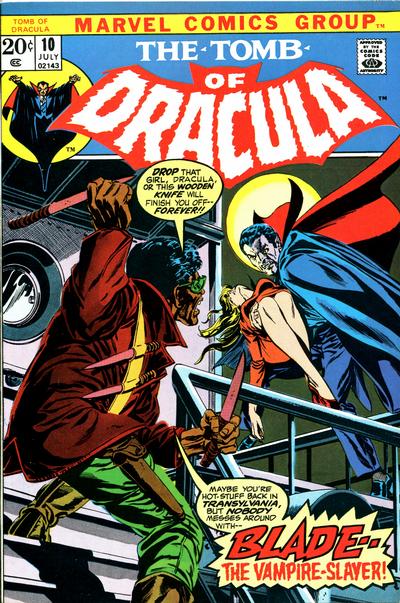
Tomb of Dracula #10 (1973), standard cover
Tomb of Dracula #10 · 1973Cover: Gil Kane; Tom Palmer
02 / The reinvention
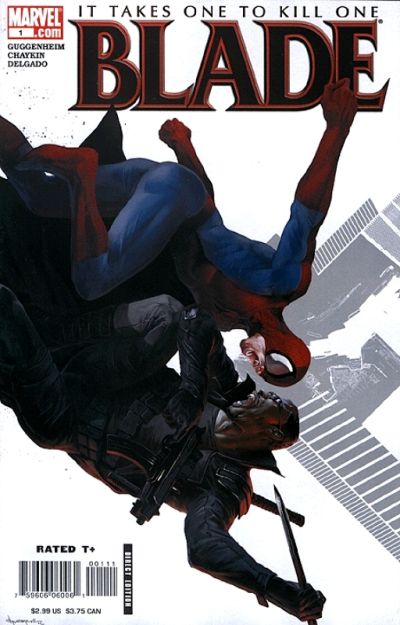
Blade #1 (2006), standard cover
Blade #1 · 2006Cover: Marko Djurdjević
First appearanceTomb of Dracula #10
1973 · Colour comic
First solo featureVampire Tales #8
1974 · Magazine
First solo ongoingBlade: The Vampire-Hunter #1
1994 · Comic series
Created byMarv Wolfman
Gene Colan
The collecting desk

Your first Blade book.
Your own way in.

Read a great story, build a modest shelf, or work towards an original Bronze Age key. Choose the route that fits your budget.

Not investing / the reading pick

Start with the story.

Blade Vol. 1: Mother of Evil

Blade (2023) #1–5

Bryan Hill sends Blade after an ancient evil he has accidentally released, with Elena Casagrande and Valentina Pinti delivering the supernatural action. This is an inviting modern way to meet the vampire hunter through a story.

Choose the standard Mother of Evil paperback, a used reading copy or the issues digitally. This volume collects #1–5, the opening half of the ten-issue run; continue with the second volume if you want the full run. Check the contents before buying.

Read it. Enjoy it. That is enough. You do not need a valuable first printing to get the pleasure of the story.
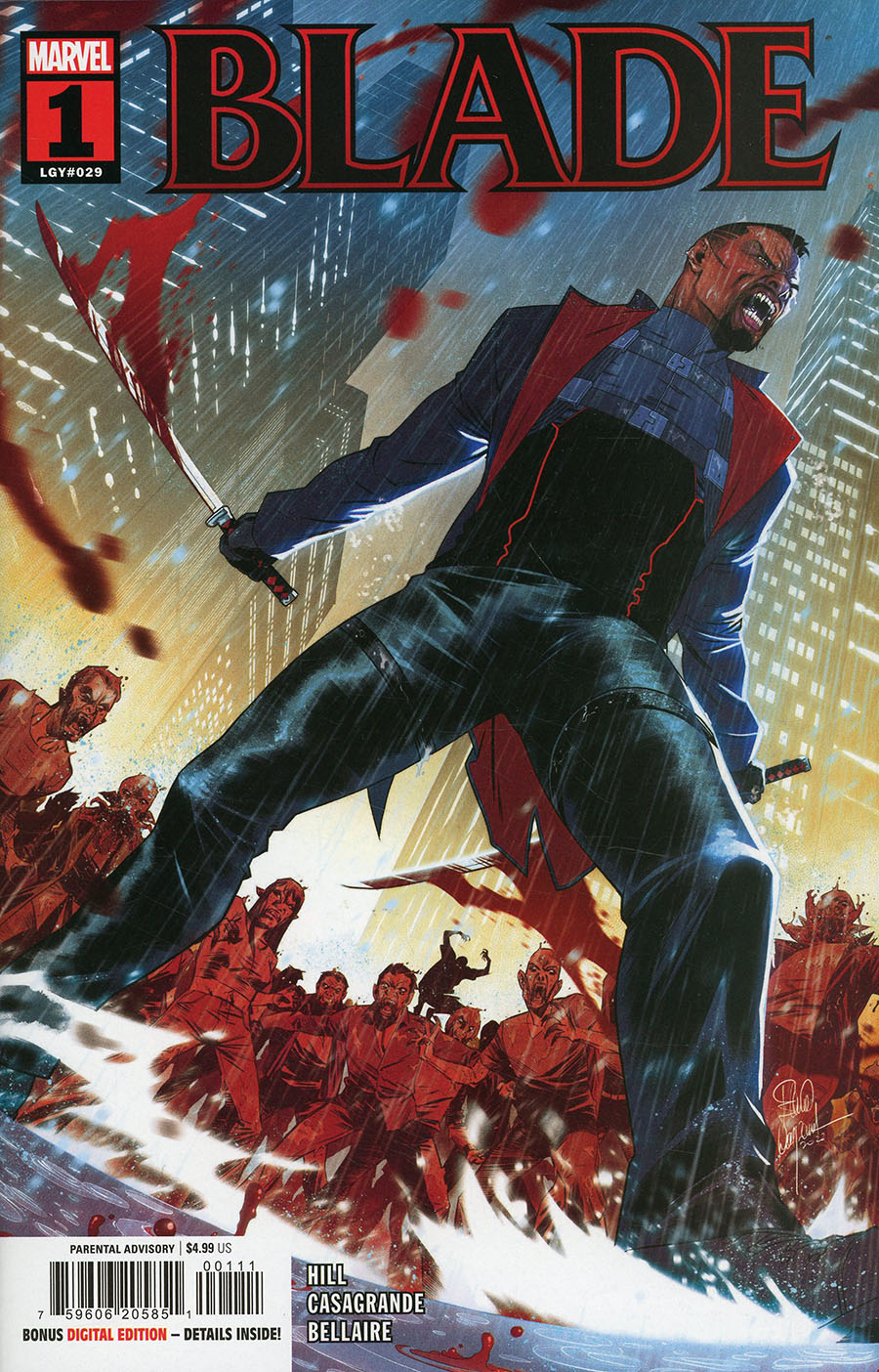
Blade Vol. 1: Mother of Evil — full cover reference
Blade #1 (2023), Elena Casagrande cover · first issue represented in the collection; image shows the original comic.
Ten books / a range of budgets

What should you budget?

Indicative raw buying budgets, checked 28 September 2026. Each range applies to the condition stated, for the original regular first printing. Prices exclude postage and import costs; stronger copies can cost considerably more.

How we use sales evidence ↓
Entry level

Small books. Plenty of Blade.

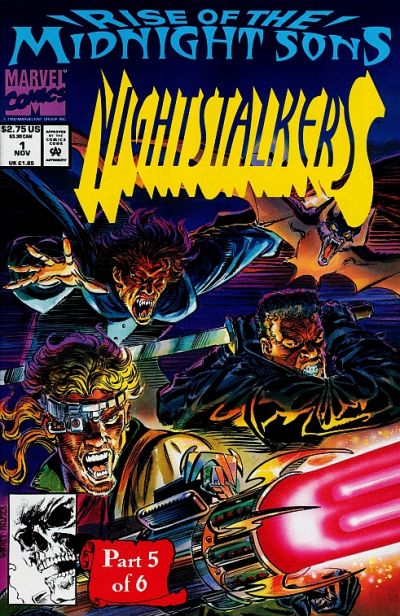
Nightstalkers #1 (1992), standard cover
Nightstalkers #1 · 1992
The team launch

Nightstalkers #1 (1992)

The Midnight Sons era, and a practical introduction to Blade, Hannibal King and Frank Drake as a team.

£2–6

VF–NM, standard direct edition

Edition & price evidence

Many recorded raw eBay sales around US$1–5 during 2026; exclude misclassified 28-book bundle.

Blade #1 (2006), standard cover
Blade #1 · 2006
A modern solo run

Blade #1 (2006)

A twelve-issue solo project with a striking Marko Djurdjević cover at its starting point.

£3–8

VF–NM, regular first print

Edition & price evidence

Recorded raw sales mostly US$1.49–5.99; one high-grade listing US$9.99 in June 2026.

Blade #1 (2023), standard cover
Blade #1 · 2023
The modern reading pick

Blade #1 (2023)

Begin the Bryan Hill and Elena Casagrande run. A reading entry point, rather than a scarcity claim.

£3–6

NM, regular Elena Casagrande cover

Edition & price evidence

Recorded regular-cover sales US$4 on 11 August 2026 and US$4.49 on 8 August 2026; aggregate mixes variants, so do not use its headline price without filtering.

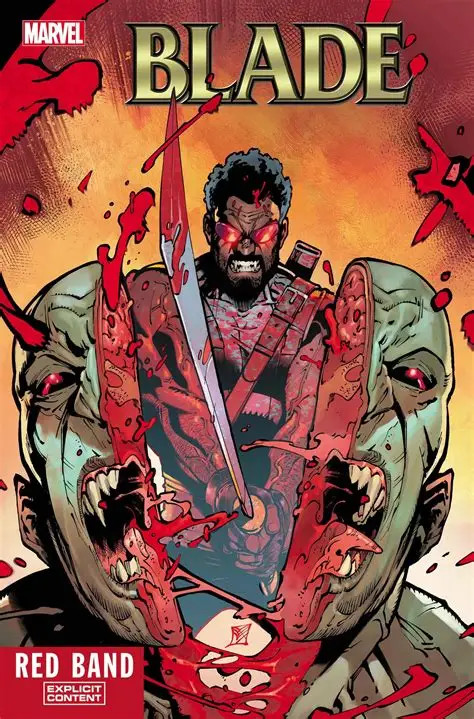
Blade: Red Band #1 (2024), standard cover
Blade: Red Band #1 · 2024
After Blood Hunt

Blade: Red Band #1 (2024)

The post–Blood Hunt chapter. A compact five-issue horror project for mature readers.

£4–7

NM, regular first print

Edition & price evidence

UK retailer lists polybagged regular issue at £4.55, marked sold out. Displayed retail price, not independently verified sold transaction.

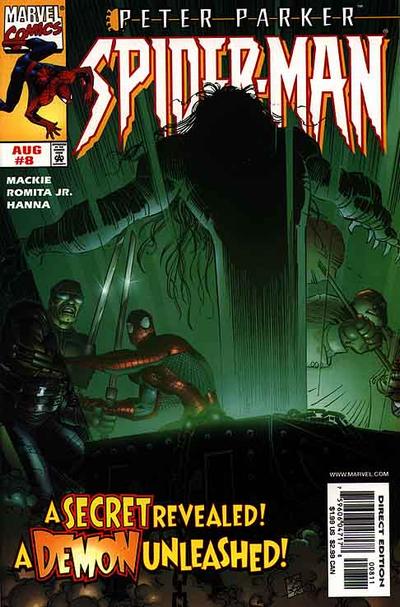
Peter Parker: Spider-Man #8 (1999), standard cover
Peter Parker: Spider-Man #8 · 1999
The Morbius encounter

Peter Parker: Spider-Man #8 (1999)

The Morbius encounter makes this guest appearance a useful marker in Blade’s changing powers.

£4–10

VF–NM, standard first print; no premium assumed for newsstand

Edition & price evidence

Secondary eBay records: VF US$3.99 on 17 February 2026; high-grade US$9.99 on 2 April and 13 May 2026; NM US$4 on 28 June 2025. A US$20 NM outlier from November 2025 should not set the routine budget.

Mid tier

Put the history on your shelf.

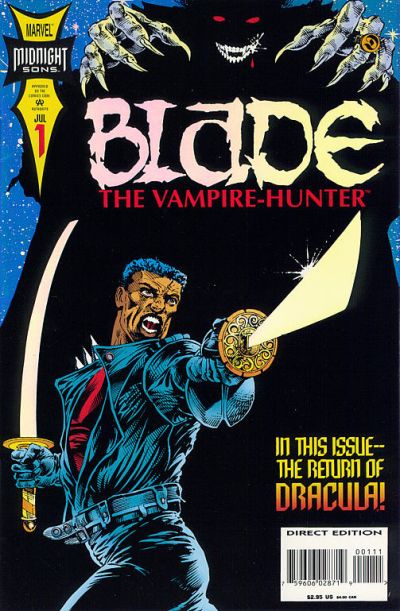
Blade: The Vampire-Hunter #1 (1994), standard cover
Blade: The Vampire-Hunter #1 · 1994
The first solo ongoing

Blade: The Vampire-Hunter #1 (1994)

The first ongoing comic under Blade’s own name. Ten issues make a manageable run to assemble.

£15–30

FN–NM, regular foil cover

Edition & price evidence

UK NM− product page priced £25 and marked sold out. Direct eBay page confirms US$30 sale on 19 August 2026; generic eBay condition field is not a comic grade.

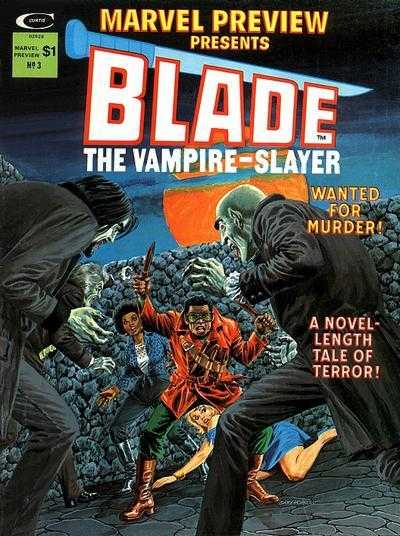
Marvel Preview #3 (1975), standard cover
Marvel Preview #3 · 1975
The magazine spotlight

Marvel Preview #3 (1975)

A Gray Morrow magazine cover and an early solo spotlight. Vampire Tales #8 precedes it.

£20–45

VG–FN magazine; stronger copies can exceed range

Edition & price evidence

Recorded VG+ raw sale US$34.99 on 20 August 2026; FN/VF US$42.99 on 29 July 2026; other recent ordinary raws US$20–35.

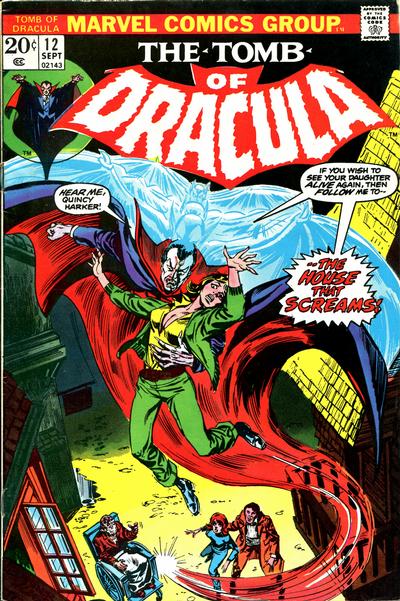
Tomb of Dracula #12 (1973), standard cover
Tomb of Dracula #12 · 1973
The second appearance

Tomb of Dracula #12 (1973)

Blade’s second appearance: an early companion to the famous debut.

£20–50

VG–FN; attractive VF copies can exceed £50

Edition & price evidence

Recorded VG/F US$28.49 on 6 August 2026, VF− US$66 on 16 August 2026; considerable auction and condition variation.

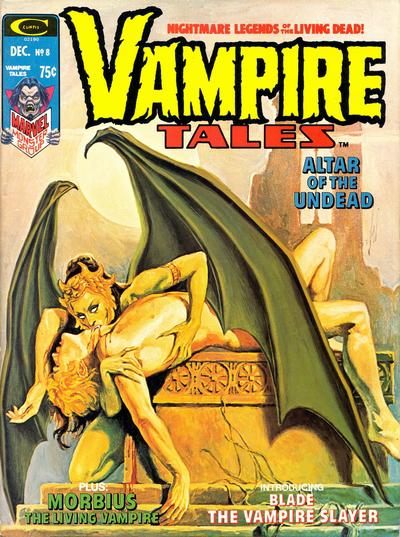
Vampire Tales #8 (1974), standard cover
Vampire Tales #8 · 1974
The first solo story

Vampire Tales #8 (1974)

The first solo feature, in a black-and-white anthology magazine. A separate milestone from the debut.

£25–60

VG–FN magazine

Edition & price evidence

Recorded midgrade US$39.50 on 21 September 2026 and VG/F US$51.57 on 6 August 2026; considerable auction variation.

Top key

The book at the beginning.

Tomb of Dracula #10 (1973), standard cover
Tomb of Dracula #10 · 1973
The character debut

Tomb of Dracula #10 (1973)

Marv Wolfman and Gene Colan introduce Blade. The central character key, with condition and completeness crucial to the price.

£250–500

Complete lower-to-mid-grade original; inspect individually

Edition & price evidence

Primary UK retailer's 2025 sales review explicitly reports VG+ sold at £285. Secondary 2026 raw sale records include VG US$307 and VG/F US$650; ordinary raw copies often US$300–650.

Buying ranges, condition and the evidence behind them

These are Comic Agent’s editorial shopping budgets, not measured UK averages or guaranteed resale values. They combine reported completed sales with selected UK retail comparisons. PriceCharting aggregates eBay records; we have not independently inspected those copies or confirmed every accepted-offer amount. Retail prices marked sold out are identified as retail comparisons, not proof of a sale at that price.

The UK retailer The Unreality Store reports a VG+ Tomb of Dracula #10 sale at £285 in its 2025 review. That is a useful condition-specific comparison, not a price for every copy. Dollar observations in the linked evidence informed broad sterling budgets; the ranges are not exact currency conversions.

VG = Very Good; FN = Fine; VF = Very Fine; NM = Near Mint. These describe the target condition, not a grade assigned to a book you have not examined. For older comics and magazines, confirm completeness, cover attachment and any restoration. Facsimiles, variants, pence editions, signatures and graded copies need their own comparisons.

Buy for the character, the artwork and the copy in front of you. Fees, postage and time can outweigh gains on inexpensive books. No ten-year return is promised. If considering a slab, check the live CGC Census for the exact edition and label; census totals count graded submissions, not all surviving copies. No census count is claimed here.

The character in one sitting01

You know the silhouette. Now meet the history.

You can recognise Blade without knowing where to start reading him. That is partly because his public image and his publication history are not the same thing. The familiar Daywalker carries decades of changes behind him: a different early look, shifting abilities and a career spread across horror anthologies, team books and repeated solo launches.

Eric Brooks first enters the comics in Tomb of Dracula #10 in 1973, created by writer Marv Wolfman and artist Gene Colan. He is a vampire hunter inside Dracula’s series, not the star of a book called Blade. The original portrayal places more emphasis on his skills and resistance to vampirism than on the later package of superhuman Daywalker abilities.

That makes Blade a particularly useful character to collect with a map. The landmark debut is only one route. You could explore the black-and-white magazines, assemble a Nightstalkers run, follow a favourite artist or try a modern story in collected form. Understanding what a book adds to the history is more useful than treating every appearance as equally essential.

A beginner’s essential distinction02

Three beginnings. Three different books.

Tomb of Dracula #10 (1973), standard cover
Tomb of Dracula #10 · 1973Cover: Gil Kane; Tom Palmer
First appearance

Tomb of Dracula #10 · 1973

Blade joins an established horror series. This is the character debut.

Vampire Tales #8 (1974), standard cover
Vampire Tales #8 · 1974Cover: José Antonio Domingo (credited as JAD)
First solo feature

Vampire Tales #8 · 1974

A Blade-led story in a black-and-white anthology magazine. It is not an ongoing Blade comic.

Blade: The Vampire-Hunter #1 (1994), standard cover
Blade: The Vampire-Hunter #1 · 1994Cover: Douglas Wheatley; Chris Ivy
First ongoing solo series

Blade: The Vampire-Hunter #1 · 1994

The solo comic launches more than twenty years after the debut. Keep the series year in your catalogue.

Vertical publication chronology03

From a Dracula story to a world of his own.

A selected route through the major eras, earliest first. Dates identify the original publications. Guest appearances and separate continuities make a full checklist longer than this introduction.

1973
Tomb of Dracula #10 (1973), standard cover
Tomb of Dracula #10 · 1973Cover art: Gil Kane; Tom Palmer

Enter the vampire hunter

Tomb of Dracula #10

Wolfman and Colan introduce Blade into Dracula’s ongoing story. Start here to see the early character on his own terms: his look, weapons and place in the cast belong to the Bronze Age horror book around him.

1974
Vampire Tales #8 (1974), standard cover
Vampire Tales #8 · 1974Cover art: José Antonio Domingo (credited as JAD)

The first solo feature

Vampire Tales #8

Blade gets a solo feature inside a black-and-white magazine. This is a different milestone from the first appearance and a different physical format from a standard colour comic.

1975
Marvel Preview #3 (1975), standard cover
Marvel Preview #3 · 1975Cover art: Gray Morrow

A magazine spotlight

Marvel Preview #3 and #8

Marvel Preview #3 gives Blade a magazine spotlight; another story appears in the multi-character Legion of Monsters anthology at #8. The #3 cover is an important early reading destination, but Vampire Tales #8 came first as a solo feature.

1976
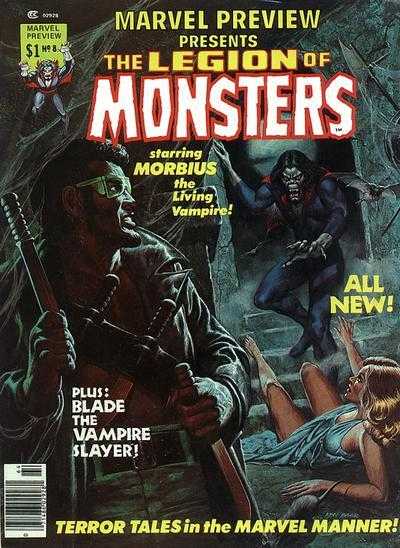
Marvel Preview #8 (1976), The Legion of Monsters magazine cover
Marvel Preview #8 · 1976Cover: Ken Barr

Inside The Legion of Monsters

Marvel Preview #8

Blade shares this black-and-white magazine with other Marvel horror characters. His feature continues the early solo trail; the Morbius-led cover does not make this a new Blade debut.

1992–94
Nightstalkers #1 (1992), standard cover
Nightstalkers #1 · 1992Cover art: Ron Garney; Tom Palmer

The Nightstalkers era

Nightstalkers #1–18

Blade, Hannibal King and Frank Drake form the central vampire-hunting team. The launch connects to Rise of the Midnight Sons, bringing Blade into the supernatural publishing world shared with Ghost Rider and other Marvel monsters.

1994–95
Blade: The Vampire-Hunter #1 (1994), standard cover
Blade: The Vampire-Hunter #1 · 1994Cover art: Douglas Wheatley; Chris Ivy

A title of his own

Blade: The Vampire-Hunter #1–10

The first ongoing solo Blade comic begins. It is a bounded ten-issue collecting project, but its numbering must not be confused with the later series that also start at #1.

1998
Blade: Crescent City Blues #1 (1998), standard cover
Blade: Crescent City Blues #1 · 1998Cover: Gene Colan

Back into Colan’s shadows

Blade: Crescent City Blues #1

Christopher Golden and Gene Colan bring Blade to New Orleans in a standalone one-shot. Its title distinguishes it from both the other 1998 Blade miniseries and the 1999 Vampire Hunter launch.

1998–99
Peter Parker: Spider-Man #8 (1999), standard cover
Peter Parker: Spider-Man #8 · 1999Cover art: John Romita Jr.; Scott Hanna

The screen image and the comic diverge—and reconnect

Blade (1998 film); Peter Parker: Spider-Man #8 (1999)

The film is a useful cultural marker, not an issue on the comics checklist. In the comics, the encounter with Morbius in Peter Parker: Spider-Man #8 becomes a key reference point for Blade’s developing vampiric abilities. Avoid describing the 1973 debut as though every later power was already established.

1999–2000
Blade: Vampire Hunter #1 (1999), standard cover
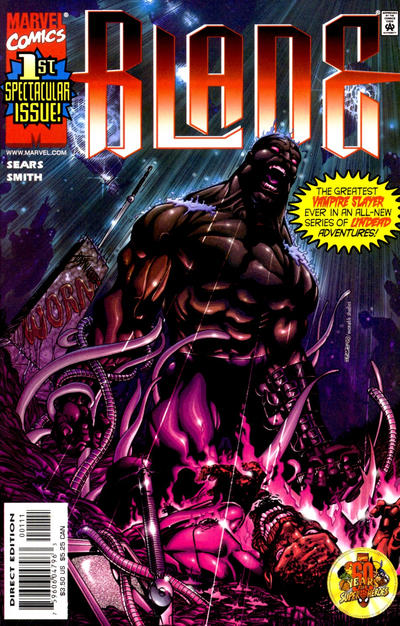
Blade: Vampire Hunter #1 · 1999Cover: Bart Sears

A new Vampire Hunter launch

Blade: Vampire Hunter #1–6

The Bart Sears-era series starts again at #1. This is a separate six-issue run, not the 1994 first ongoing or the 1998 Crescent City Blues one-shot.

2002
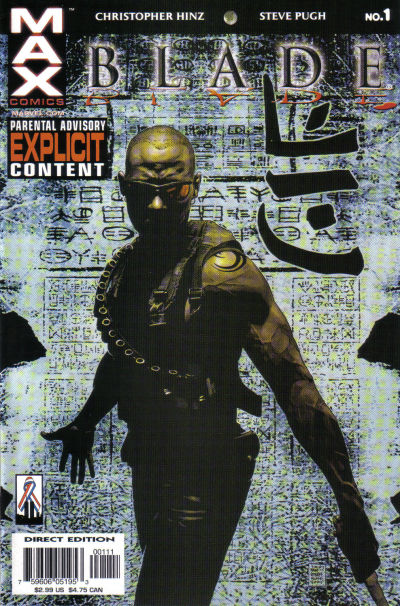
Blade #1 (MAX) (2002), Tim Bradstreet standard cover
Blade #1 (MAX) · 2002Cover: Tim Bradstreet

A different kind of solo book

Blade #1–6 (MAX)

Christopher Hinz and Steve Pugh take Blade into Marvel’s mature-readers MAX line. Tim Bradstreet’s opening cover marks a very different visual approach. Keep the MAX branding and 2002 year with the issue number.

2006–07
Blade #1 (2006), standard cover
Blade #1 · 2006Cover art: Marko Djurdjević

A longer modern solo run

Blade #1–12

Marc Guggenheim and Howard Chaykin build a twelve-issue series around the hunter and his history. It provides a substantial modern reading route without requiring the collector to assemble every guest appearance between the earlier launches.

2008–09
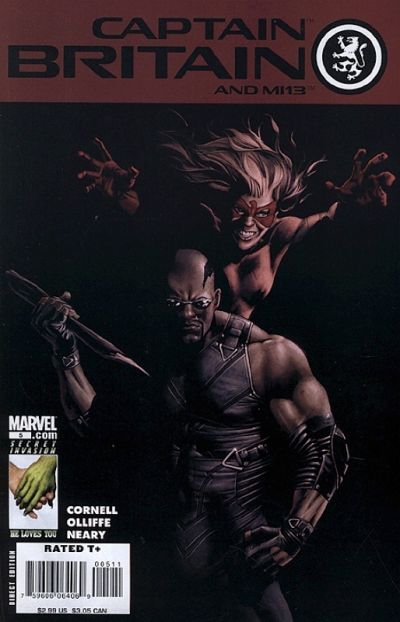
Captain Britain and MI:13 #5 (2008), Bryan Hitch standard cover
Captain Britain and MI:13 #5 · 2008Cover: Bryan Hitch

A British supernatural team

Captain Britain and MI13

Blade’s place in a team can be as revealing as a solo story. This era brings him into Captain Britain’s supernatural world and gives readers another route through the character’s British connections.

2013–14

Another name, another team

Mighty Avengers

Blade also operates within the superhero ensemble. The Spider Hero and Ronin identities make this a reminder that a useful appearance checklist cannot always be assembled by searching for the word Blade in the title.

2023
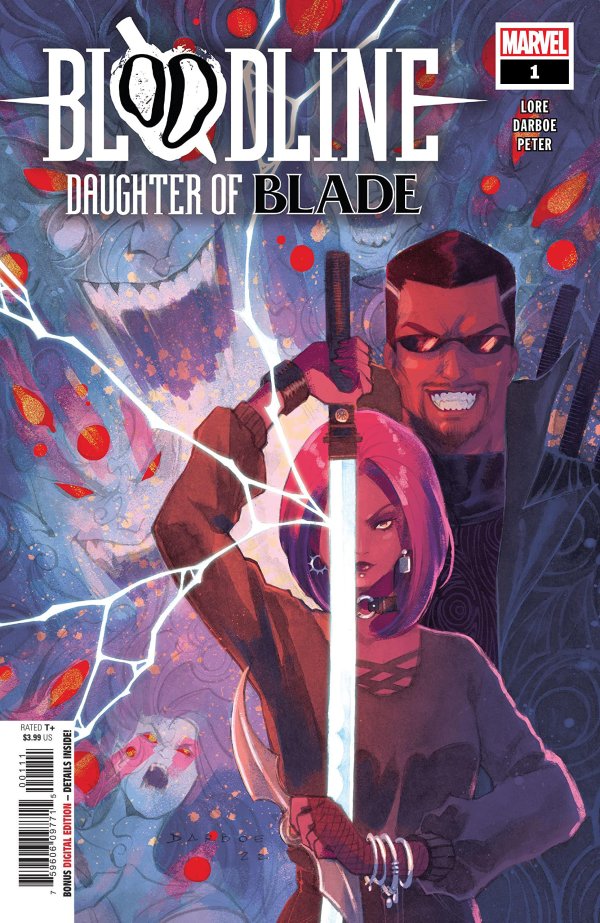
Bloodline: Daughter of Blade #1 (2023), standard cover
Bloodline: Daughter of Blade #1 · 2023Cover art: Karen S. Darboe

A family branch

Bloodline: Daughter of Blade #1–5

Brielle Brooks receives her own miniseries. This is a story about Blade’s daughter and a useful companion route, rather than another volume of Blade’s solo title. Her first appearance predates this #1.

2023–24
Blade #1 (2023), standard cover
Blade #1 · 2023Cover art: Elena Casagrande

The Adana story

Blade #1–10

Bryan Hill and Elena Casagrande launch a modern supernatural-action series. The ten-issue run supplies a defined reading project and useful context for the direction Blade takes around Blood Hunt.

2024
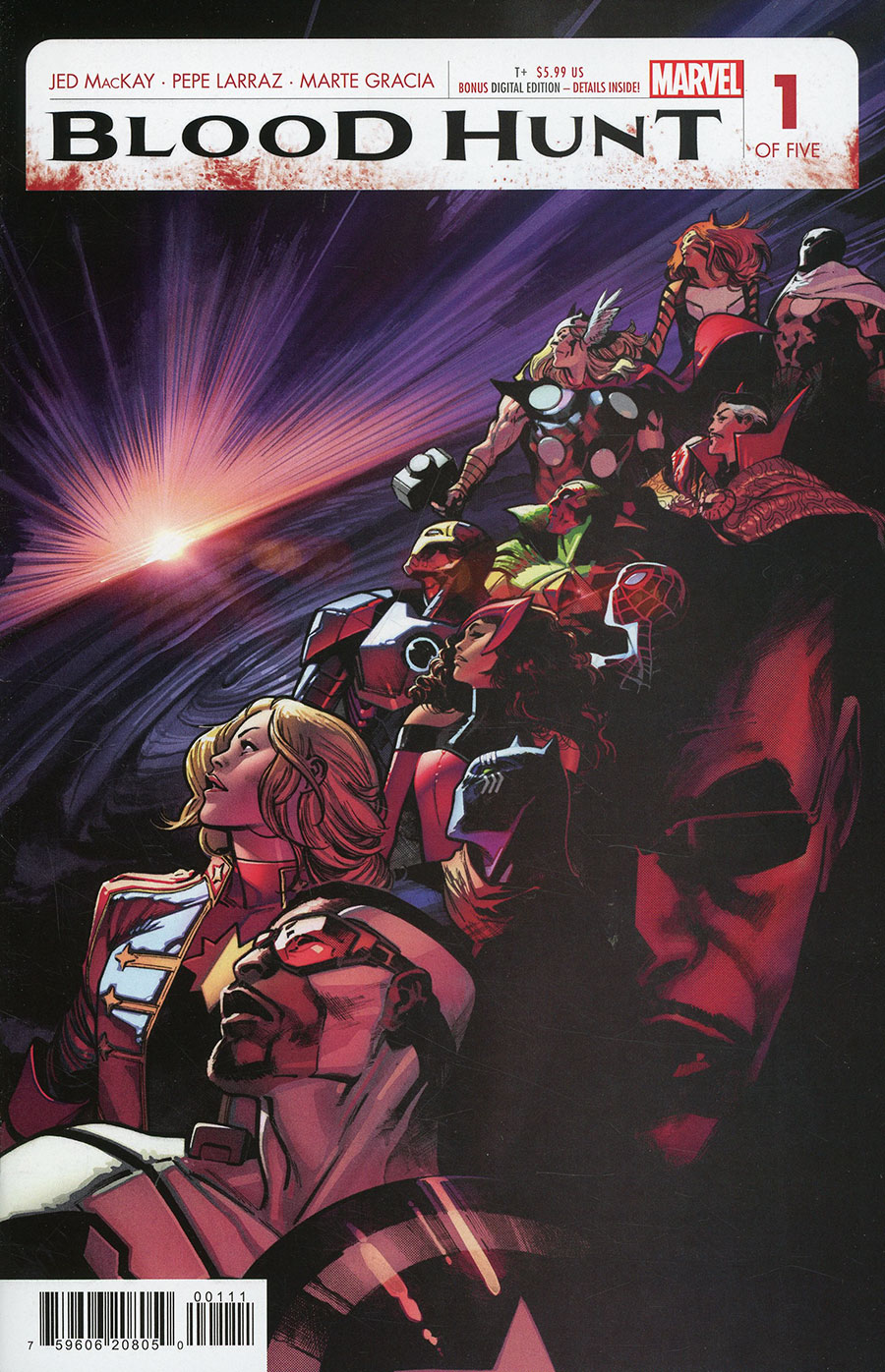
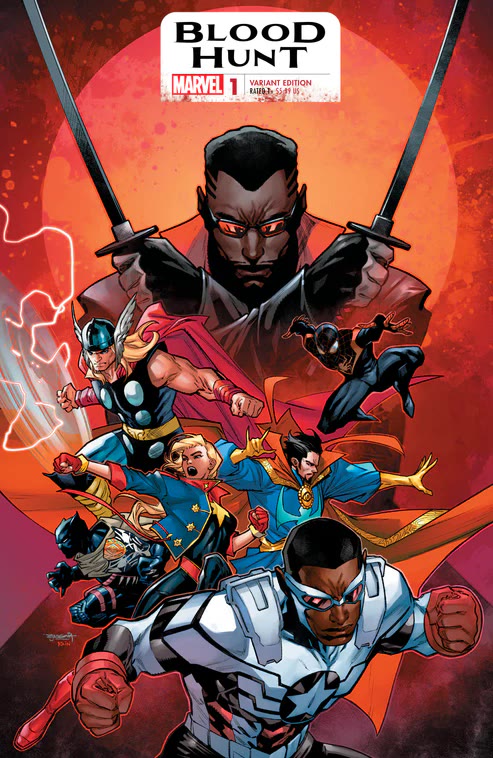
Blood Hunt #1 (2024), standard cover
Blood Hunt #1 · 2024Cover art: Pepe Larraz

The crisis becomes a Marvel event

Blood Hunt #1–5

Jed MacKay and Pepe Larraz lead a vampire event extending across multiple titles. The five main issues form its core. Standard and Red Band editions are separate versions of the event books; neither should be confused with the later Blade: Red Band series.

2024–25
Blade: Red Band #1 (2024), standard cover
Blade: Red Band #1 · 2024Cover art: C.F. Villa

After Blood Hunt

Blade: Red Band #1–5

Bryan Hill returns for a five-issue story beginning in October 2024 and concluding in February 2025. C.F. Villa draws the opening issue; later issues also involve Federica Mancin. The Red Band branding signals mature horror content, not a grading designation.

Reading today

Choose a complete story

Original issues or collected editions

This selected history reaches the completed 2024–25 Red Band miniseries. Start with the route that interests you and check the contents of any collected edition. A similar cover or title does not guarantee that two collections contain the same issues.

Marvel Preview #3 (1975), standard cover
Marvel Preview #3 · 1975Cover: Gray Morrow
From the magazine rack / 1975

Painted covers.
Black-and-white nightmares.

Blade’s early history is also a magazine story. Vampire Tales and Marvel Preview bring a different format, different cover artists and a different feel to the shelf.

Gray Morrow’s Marvel Preview #3 cover makes a striking centrepiece. Collect it for its place in the early solo story—and leave room in your storage for a magazine-sized book.

See the magazine buying pick →
Writers and artists04

Six creative chapters worth knowing.

01
Tomb of Dracula #10 (1973), standard cover
Tomb of Dracula #10 · 1973
The foundation

Marv Wolfman & Gene Colan

Tomb of Dracula

Wolfman’s writing and Colan’s interiors introduce a hunter who has to function inside an ongoing horror ensemble. Colan’s shadows, movement and expressive faces are central to the atmosphere; Tom Palmer’s inking is also part of the series’ visual identity. Blade’s beginnings are richer when read as part of that world, rather than only as a first-appearance label.

Compare the character inside Tomb of Dracula #10 with a later solo launch. Keep story art and cover art separate: the debut’s cover is not simply a credit for the whole interior creative team.

02
Nightstalkers #1 (1992), standard cover
Nightstalkers #1 · 1992
The team years

D.G. Chichester & Ron Garney

Nightstalkers, from 1992

The Nightstalkers launch reframes the hunt as a team enterprise. Blade, Hannibal King and Frank Drake bring different experiences to the same problem, while the Midnight Sons setting puts the title into a larger network of supernatural stories. The pleasure of this route is the interaction between hunters, rather than only Blade appearing on a cover.

Begin with Nightstalkers #1 and follow the numbered series. Use a crossover checklist when an issue explicitly sends the story to another title; do not assume every connected Marvel horror book is required.

03
Blade: The Vampire-Hunter #1 (1994), standard cover
Blade: The Vampire-Hunter #1 · 1994
The first solo ongoing

Ian Edginton & Doug Wheatley

Blade: The Vampire-Hunter, from 1994

The opening of the 1994 series is the point where Blade finally carries an ongoing comic under his own name. Edginton and Wheatley provide the launch partnership. It gives a collector a useful alternative to a single major key: a finite run that records how Marvel presented Blade before the 1998 film reshaped his wider public identity.

The complete series is ten issues. Record the year and subtitle on each listing, and check issue-level credits rather than attributing every instalment to the launch team.

04
Blade #1 (2006), standard cover
Blade #1 · 2006
A modern solo identity

Marc Guggenheim & Howard Chaykin

Blade, 2006–07

This twelve-issue run offers a distinctive creator-led route through the modern character. Chaykin’s graphic storytelling supplies a very different visual experience from Colan’s Gothic shadows. That contrast is a useful reason to collect by creative team: the same character can lead to markedly different pages and reading rhythms.

Start at Blade #1 from 2006. The first issue of a new volume is a reading entry point; it is not a new first appearance of Blade.

05
Blade #1 (2023), standard cover
Blade #1 · 2023
The modern horror-action line

Bryan Hill & Elena Casagrande

Blade, 2023–24

Hill and Casagrande’s launch makes the supernatural threat and the physical action central to the reading experience. Casagrande’s standard #1 cover provides the visual anchor for this file’s modern era. The run can be read as its own ten-issue project before deciding how deeply to follow the wider event material.

Hill also writes the later Blade: Red Band miniseries, with C.F. Villa on its opening issue and Federica Mancin also contributing to the run. Treat these as related publications, not one uninterrupted numbering sequence.

06
Bloodline: Daughter of Blade #1 (2023), standard cover
Bloodline: Daughter of Blade #1 · 2023
A legacy with its own voice

Danny Lore & Karen S. Darboe

Bloodline: Daughter of Blade, 2023

Brielle Brooks is more than an excuse for another Blade cover. Her miniseries shifts the perspective to a younger lead discovering her place in a supernatural family history. It expands the collecting map while keeping a clear distinction between the parent character and the new protagonist.

Bloodline: Daughter of Blade #1 launches her solo miniseries. For the first-appearance trail, look separately at the 2022 Free Comic Book Day Avengers/X-Men issue; do not label the 2023 #1 as her debut.

Five defining comics05

Five issues that explain Blade.

Each earns its place for a different reason. This is a guide to the history, not a price ranking or a requirement to buy all five.

The character debutTomb of Dracula #10 (1973), standard cover
Tomb of Dracula #10 · 1973Cover art: Gil Kane; Tom Palmer

Tomb of Dracula #10 · 1973

The starting point for Blade’s comic history. Read it within the Dracula series rather than expecting the complete modern Daywalker concept on arrival.

The first solo featureVampire Tales #8 (1974), standard cover
Vampire Tales #8 · 1974Cover art: José Antonio Domingo (credited as JAD)

Vampire Tales #8 · 1974

A Blade-led magazine story. An important collecting distinction: a solo feature inside an anthology is not the same as a solo ongoing title.

The team identityNightstalkers #1 (1992), standard cover
Nightstalkers #1 · 1992Cover art: Ron Garney; Tom Palmer

Nightstalkers #1 · 1992

Blade’s vampire-hunting partnership and the Midnight Sons era make this a useful bridge between classic horror and the 1990s supernatural line.

The powers turning pointPeter Parker: Spider-Man #8 (1999), standard cover
Peter Parker: Spider-Man #8 · 1999Cover art: John Romita Jr.; Scott Hanna

Peter Parker: Spider-Man #8 · 1999

A guest appearance can matter more to the character’s development than another self-titled #1. The Morbius encounter belongs on this reading map.

The modern reading doorBlade #1 (2023), standard cover
Blade #1 · 2023Cover art: Elena Casagrande

Blade #1 · 2023

The start of the Hill–Casagrande run. Chosen as a modern entry point and creative milestone, rather than for a first-appearance claim.

Choose your first route06

Read a story. Then build a shelf.

Vampire Tales #8 (1974), standard cover
Vampire Tales #8 · 1974Cover: José Antonio Domingo (credited as JAD)

I want the Bronze Age atmosphere

Read the early Blade appearances in Tomb of Dracula, then explore the Vampire Tales and Marvel Preview material. Collected editions can be a practical first step: check their contents before buying an original magazine for a single feature.

Blade #1 (2006), standard cover
Blade #1 · 2006Cover: Marko Djurdjević

I want a clear solo project

Choose Blade (2006) #1–12 or Blade (2023) #1–10. Both offer a defined set with a beginning and an end. The 1994 ten-issue series is another route if the first solo ongoing era appeals most.

Blood Hunt #1 (2024), standard cover
Blood Hunt #1 · 2024Cover: Pepe Larraz

I want the supernatural crossover story

Read the 2023 Blade run, then the five main Blood Hunt issues, followed by Blade: Red Band #1–5. Add tie-ins selectively. Red Band material is intended for mature readers; a complete checklist is not a requirement to enjoy the core story.

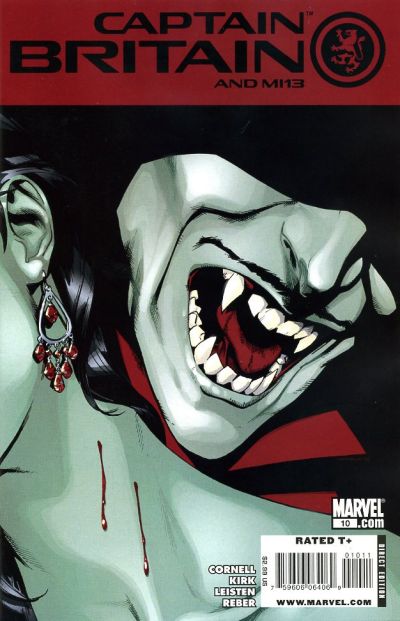
Captain Britain and MI:13 #10 (2009), Stuart Immonen standard cover
Captain Britain and MI:13 #10 · 2009Cover: Stuart Immonen

I want a British vampire story

Try Paul Cornell’s Vampire State, with its prologue in Captain Britain and MI:13 #10. Blade works within a British supernatural team while Dracula’s plans put the whole country in danger. The collected volume includes #10–15 and Annual #1.

Beyond the solo titles07

Blade belongs to a wider night.

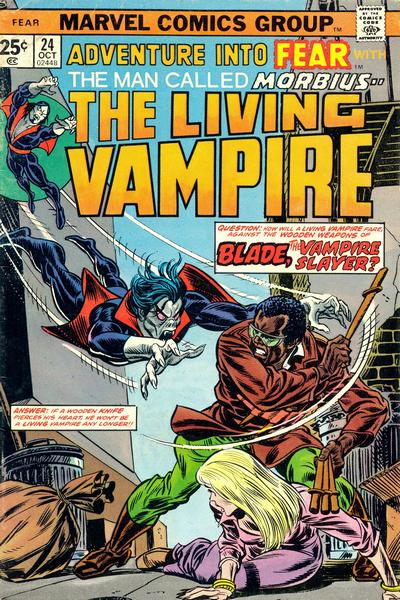
Adventure into Fear #24 (1974), standard cover
Adventure into Fear #24 · 1974Cover: Gil Kane / John Romita Sr.

Adventure into Fear #24 · 1974

An early meeting with Morbius connects Blade with Marvel’s other vampire stories. This is not the 1999 bite issue: similar character pairings can mark different milestones.

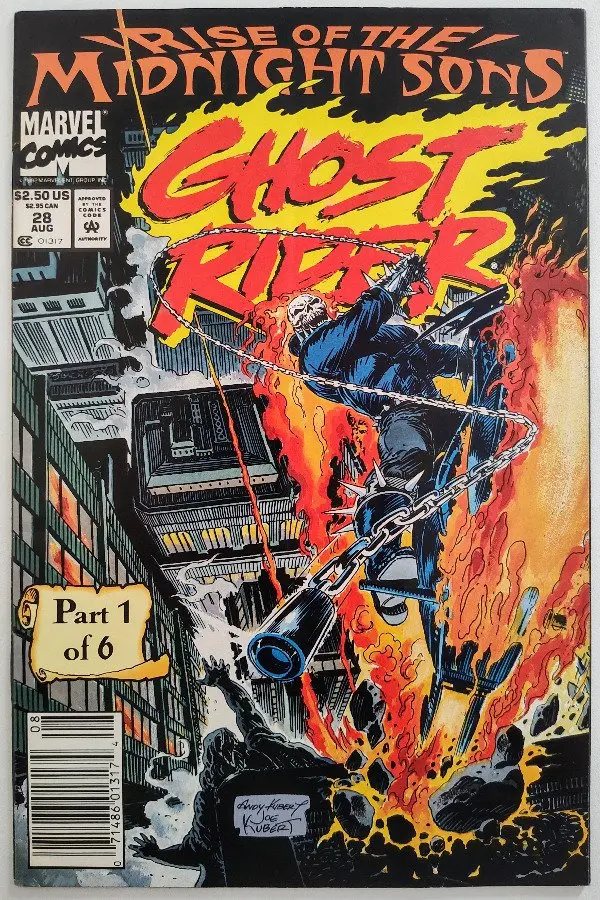
Ghost Rider #28 (1992), standard cover
Ghost Rider #28 · 1992Cover: Andy Kubert / Joe Kubert

Rise of the Midnight Sons · 1992

Nightstalkers #1 forms part of the launch-era crossover with Ghost Rider and the wider supernatural line. It offers a natural link to the Ghost Rider Character File.

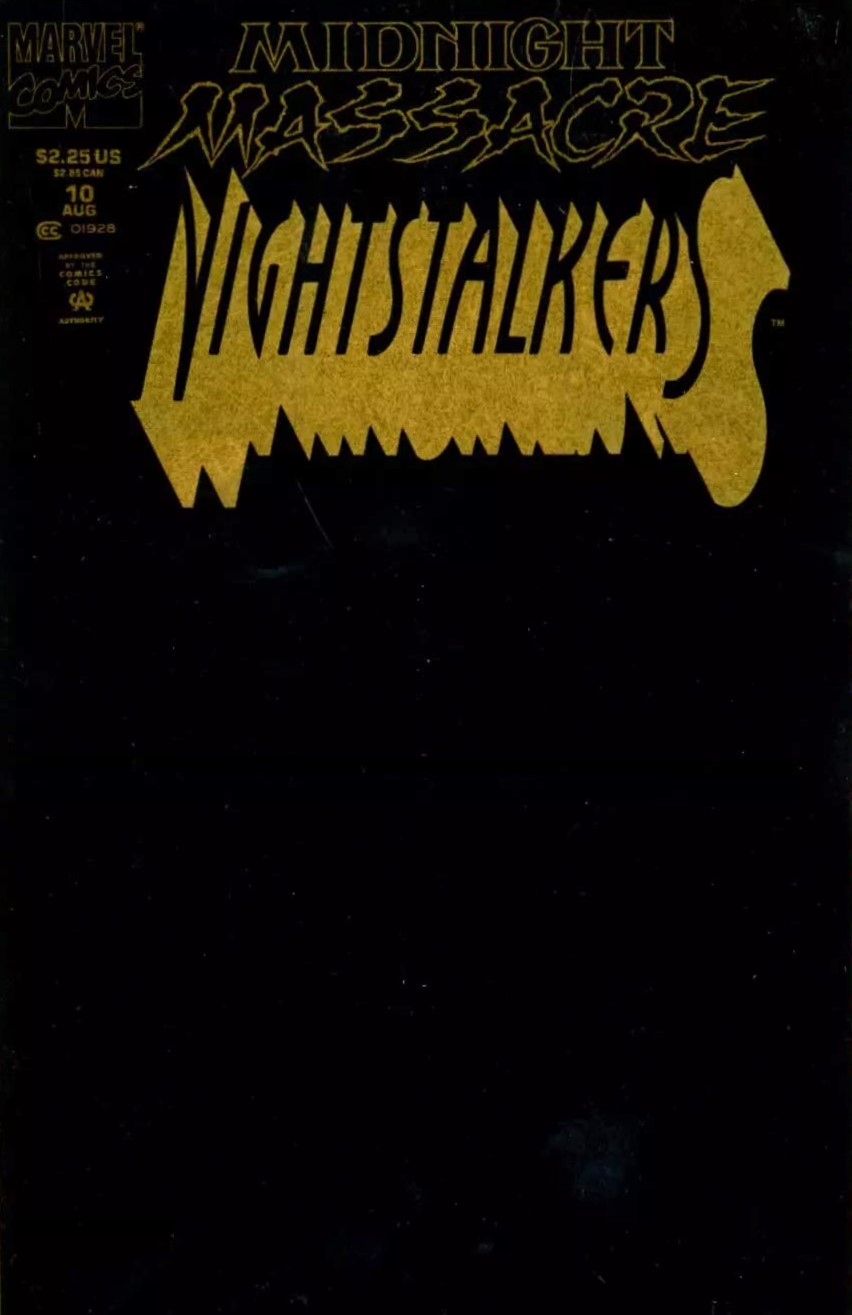
Nightstalkers #10 (1993), black-and-gold Midnight Massacre outer cover
Nightstalkers #10 · 1993

Midnight Massacre · 1993

A later Midnight Sons crossover provides another concentrated story route. Use the event’s issue checklist instead of assuming Nightstalkers alone contains every chapter.

Captain Britain and MI:13 #5 (2008), Bryan Hitch standard cover
Captain Britain and MI:13 #5 · 2008Cover: Bryan Hitch

Captain Britain and MI13 · 2008–09

A team-book route for readers interested in Blade’s British connections and encounters with other supernatural heroes.

Blood Hunt #1 (2024), standard cover
Blood Hunt #1 · 2024Cover: Pepe Larraz

Blood Hunt · 2024

The five-issue central event has many surrounding tie-ins. Start with that core. The standard and Red Band versions are alternative editions of the main series, with content differences; you do not need both versions to follow the event.

Keep the year with the title

Which Blade series?

A selected shelf guide to the runs discussed here, rather than a complete appearance checklist.

Publication yearsTitle & issuesWhat it represents
1973Tomb of Dracula #10Character debut inside Dracula’s series.
1974Vampire Tales #8First solo feature; anthology magazine.
1992–94Nightstalkers #1–18Team title; Midnight Sons connections.
1994–95Blade: The Vampire-Hunter #1–10First self-titled ongoing series.
1998Blade: Crescent City Blues #1One-shot by Christopher Golden and Gene Colan.
1998Blade #1–3Don McGregor / Brian Hagan miniseries.
1999–2000Blade: Vampire Hunter #1–6Bart Sears-era series; separate from the 1994 launch.
2002Blade #1–6 (MAX)Christopher Hinz / Steve Pugh; mature-readers series.
2006–07Blade #1–12Guggenheim / Chaykin solo run.
2023Bloodline: Daughter of Blade #1–5Brielle’s miniseries, not a Blade volume.
2023–24Blade #1–10Hill / Casagrande launch; the Adana story.
2024Blood Hunt #1–5Event core; standard and Red Band editions differ.
2024–25Blade: Red Band #1–5Separate follow-up miniseries.
A collector’s crib sheet08

Know what you are adding.

Match the milestone to the book

First appearance, first solo feature, first ongoing title and a major powers change are different claims. Keep the issue that supports the claim in your notes. A dealer’s use of ‘key’ is not a substitute for an explanation.

Always include the series year

Blade #1 from 1994, 2006 and 2023 are different publications. Record the exact title, year, issue, printing, cover artist and variant designation. Keep Blood Hunt: Red Band and Blade: Red Band separate.

Check magazines as magazines

Vampire Tales and Marvel Preview are physically different from standard US comic books. Measure the actual copy and use a suitable bag, board and storage box. Check the spine, corners and interior completeness as well as the front cover.

Check original versus reproduction

A facsimile, later printing or collected reprint may repeat familiar artwork. Check the indicia and publication details. On older originals, inspect coupons and inserts where present; do not assume every 1970s issue contains a Marvel Value Stamp.

Separate condition from presentation

Sharp cover images do not establish a grade. Ask for the back cover and interior details where necessary, and record defects consistently. Keep polybag, printing and edition information with the book; sealed packaging is not a guarantee of perfect condition.

Build around a purpose

A first-appearance collection, a complete run and a cover-artist collection need different checklists. Set a budget before comparing sold copies, then match the edition, condition and completeness. Use the condition-specific buying budgets near the top as a starting point for your own comparisons.

Same issue, different cover.

These are two covers for Blood Hunt #1 (2024). Pepe Larraz’s standard cover and Stephen Segovia’s variant are separate cover editions of the same numbered issue. Record the cover artist, printing and retailer or convention designation when cataloguing; alternate artwork alone does not establish a different story or a higher value.

Standard coverBlood Hunt #1 (2024), standard cover
Blood Hunt #1 · 2024Cover art: Pepe Larraz
Stephen Segovia variantBlood Hunt #1 (2024), Stephen Segovia variant cover
Blood Hunt #1 · 2024Cover art: Stephen Segovia
Three more books to explore09

Take the next turn.

The magazine spotlightMarvel Preview #3 (1975), standard cover
Marvel Preview #3 · 1975Cover art: Gray Morrow

Marvel Preview #3 · 1975

A striking headline appearance for Blade’s early solo material. An additional direction for a Bronze Age horror shelf, with magazine-sized storage needs.

The solo-series launchBlade: The Vampire-Hunter #1 (1994), standard cover
Blade: The Vampire-Hunter #1 · 1994Cover art: Douglas Wheatley; Chris Ivy

Blade: The Vampire-Hunter #1 · 1994

The first ongoing solo comic is a separate milestone from the much earlier character debut and anthology features.

The next generationBloodline: Daughter of Blade #1 (2023), standard cover
Bloodline: Daughter of Blade #1 · 2023Cover art: Karen S. Darboe

Bloodline: Daughter of Blade #1 · 2023

A different collecting branch with a five-issue miniseries of its own. Label it as a solo-series launch, not Brielle’s first appearance.

Editorial notes10

Sources behind the file.

First published 21 September 2026 · Autumn edition updated 28 September 2026 · Comic Agent Editorial. Publication history and cover credits are distinguished from our editorial buying budgets.

Full-cover images supplied to Comic Agent for this editorial. Cover artwork and characters belong to Marvel and their respective rights holders. Comic Agent is an independent collector resource and is not affiliated with Marvel.