Marvel · Marc Spector · 1975–2026

MOON
KNIGHT

The many lives of Marvel’s midnight protector.

A reader’s route through the stories. A collector’s map of the keys. From a werewolf’s adversary in 1975 to the Midnight Mission and the new Midnight Sons in 2026.

FIND YOUR FIRST BOOK →

Research checked 24 September 2026
Character File No. 10 · Reading and collecting guide

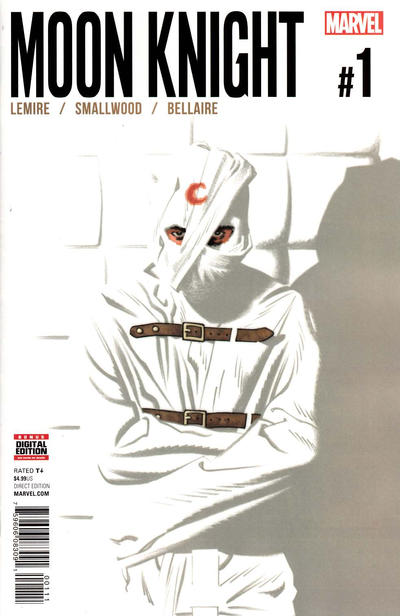
Moon Knight #1 (2016)

The character file

One name. Many ways in.

Moon Knight is unusually rewarding to collect because the books keep changing the question. Is this a detective story, an argument with a god, a portrait of identity, or a community defending itself after dark? Different creative teams give different answers. Choosing the version you enjoy is the best first decision you can make.

This file follows the principal series, people and turning points, then connects them to practical collecting choices. Start with the buying guide below. A collected story is a perfectly complete way into the character; an original first appearance is a separate ambition. You do not need to buy your way through fifty years before enjoying one excellent book.

01

Start with what you enjoy

Your way into Moon Knight.

First choice / I’m not interested in investing

Just read and enjoy.

I’m not interested in investing — just read and enjoy. Our first recommendation is The Midnight Mission, collecting Moon Knight (2021) #1–6 by Jed MacKay and Alessandro Cappuccio. It gives the character a clear purpose, an engaging supporting cast and a modern starting point.

Prefer a short, visually inventive crime sampler? Choose From the Dead, collecting Moon Knight (2014) #1–6 by Warren Ellis, Declan Shalvey and Jordie Bellaire. Want one complete, more dreamlike story about identity and Khonshu? Read Moon Knight (2016) #1–14 by Jeff Lemire, Greg Smallwood and collaborators.

Buy the ordinary collected or digital edition that suits your budget. First printings, variants and grading are optional. Enjoying the story is the goal.

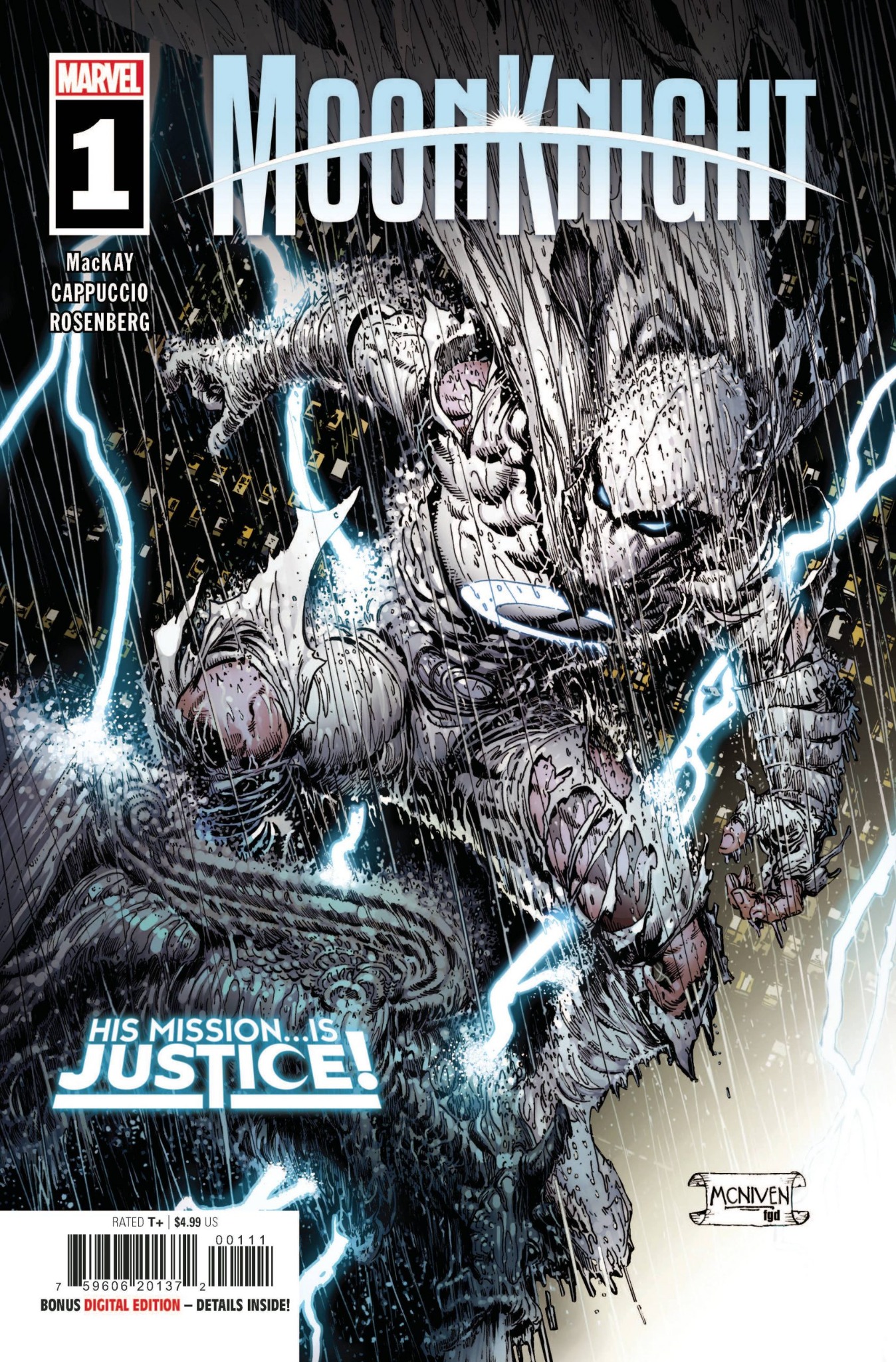
Moon Knight #1 (2021)
Build a reading shelf

Affordable beginnings

Choose a run you want to read. Ordinary editions and collected books can give you the story without a key-issue premium.

Follow the character

Classic milestones

Look for the first solo stories, the original ongoing series and the creators who changed the book.

A long-term collecting goal

A grail to aim for

Understand the edition, completeness and condition before pursuing the debut. Owning a grail is optional.

Raw acquisition snapshot · 24 Sep 2026 · GBP

Ten books. Different reasons to collect.

Raw buying snapshot, checked 24 September 2026. Approximate GBP conversions of Key Collector’s US acquisition estimates; these are not independently verified UK fair market values or offers to sell. Low / Mid / High are the provider’s broad condition bands, not numerical grades. Standard first-print editions only; see the edition notes.

Approximate raw guide values, rounded to the nearest £1. Low / Mid / High are the provider’s broad condition bands.
Book & editionWhy it mattersLowMidHigh
Entry / read the modern runMoon Knight #1 (2021)First-print Cover A, Steve McNiven coverLaunch of the Midnight Mission era; introduces Reese and Dr. Badr, with Hunter’s Moon in cameo.Find it in the timeline →View price source£1£2£2
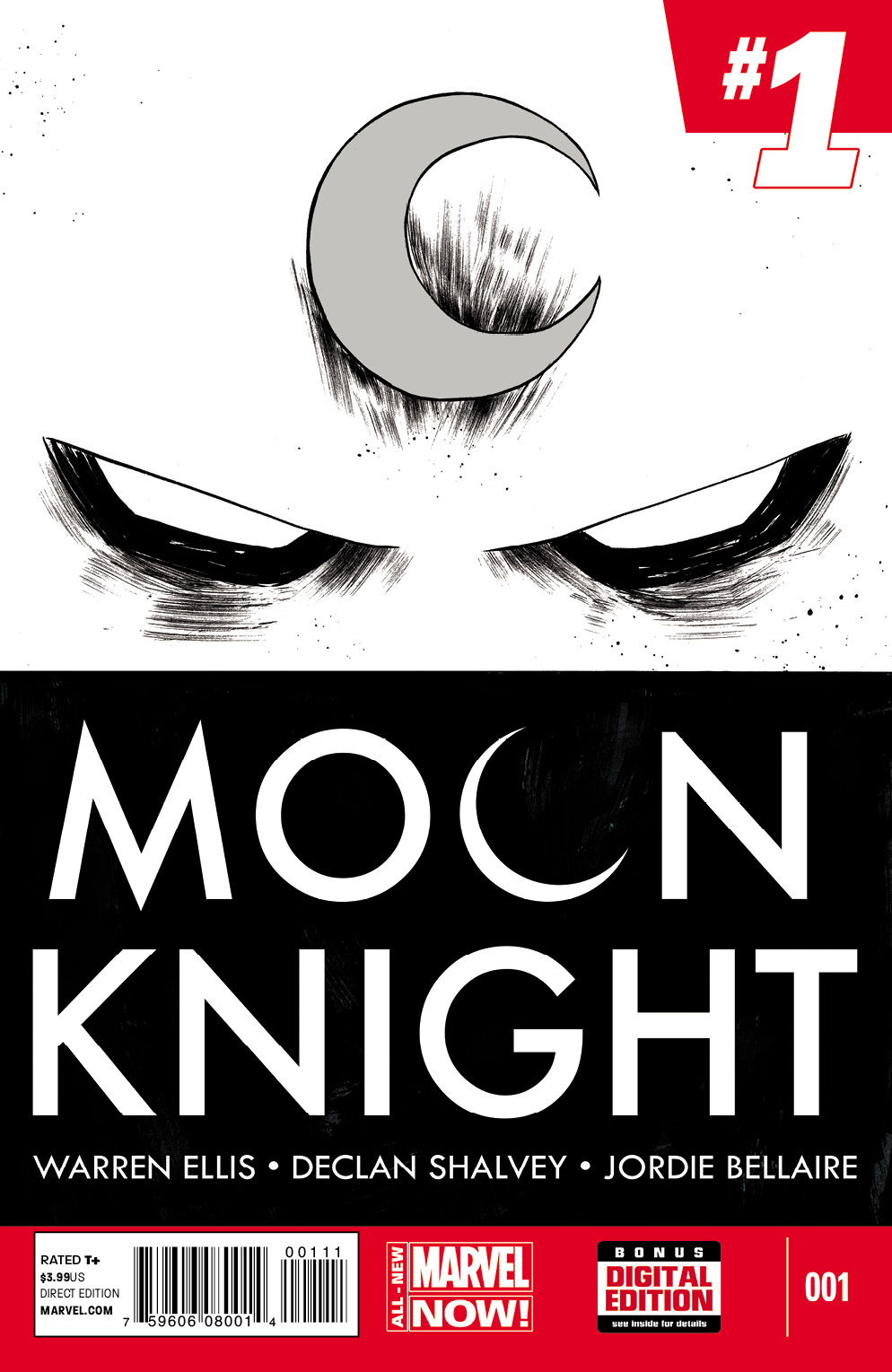
Entry / modern milestoneMoon Knight #1 (2014)Regular first printing, Declan Shalvey coverLaunch of the Ellis–Shalvey run and adoption of the Mr. Knight name.Find it in the timeline →View price source£1£2£8
Entry / story-led collectingMoon Knight #1 (2016)First-print Cover A, Greg Smallwood coverOpening of the Lemire–Smallwood run; Dr. Emmet debuts.Find it in the timeline →View price source£1£2£9
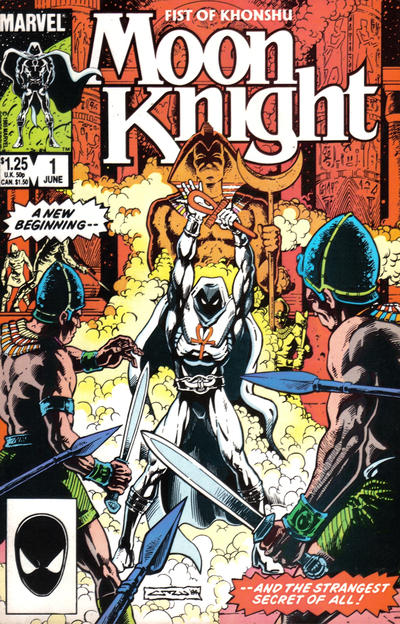
Affordable vintageMoon Knight #1 (1985)Regular US first printing / direct-market entryLaunch of the six-issue Fist of Khonshu series, with a changed costume and powers.Find it in the timeline →View price source£1£2£9
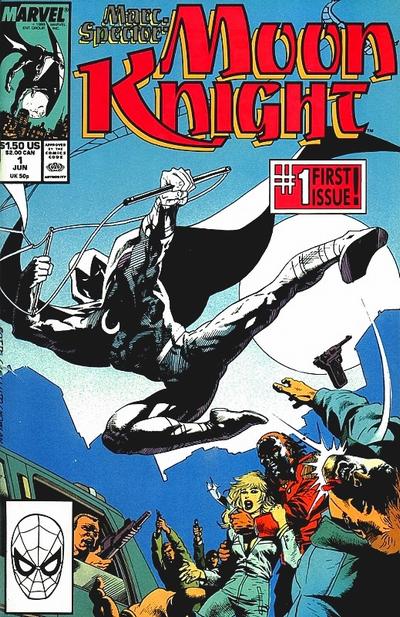
Affordable vintageMarc Spector: Moon Knight #1 (1989)Regular first printing, Carl Potts coverBegins the sixty-issue Marc Spector: Moon Knight series and introduces Chloe Tran.Find it in the timeline →View price source£1£4£14
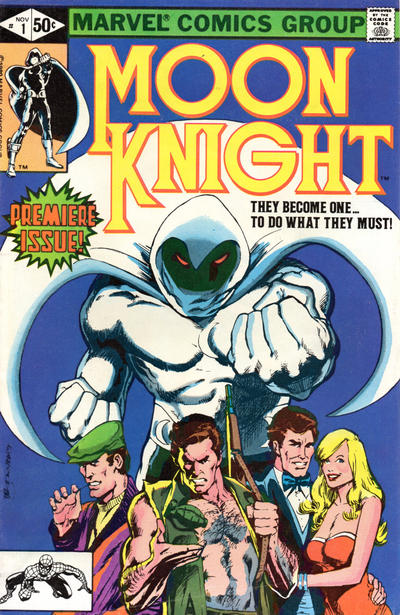
Classic foundationMoon Knight #1 (1980)Regular first printing / direct-market entryFirst ongoing solo title; explains the Egyptian origin and introduces Bushman and Khonshu.Find it in the timeline →View price source£4£11£38
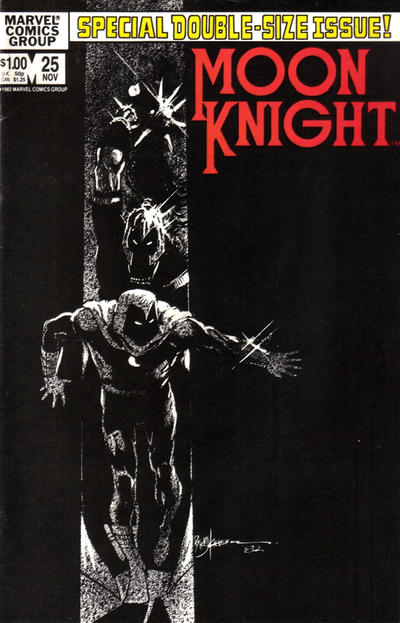
Classic character keyMoon Knight #25 (1982)Regular first printing, not the separate error-edition entryFirst appearance of the original Black Spectre, Carson Knowles.Find it in the timeline →View price source£6£15£60
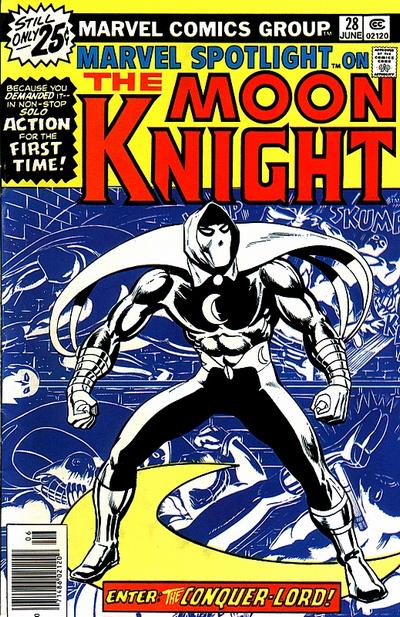
Bronze Age solo landmarkMarvel Spotlight #28 (1976)Regular US 25-cent first printingFirst solo Moon Knight story; introduces Marlene and Crawley and establishes Steven Grant and Jake Lockley.Find it in the timeline →View price source£11£38£113
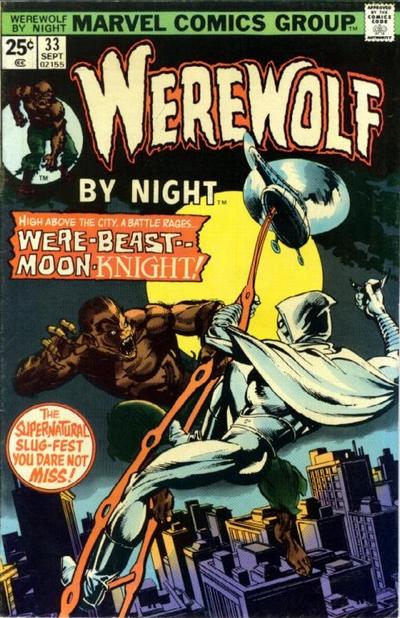
Early appearanceWerewolf by Night #33 (1975)Regular US first printingMoon Knight’s second appearance and the continuation of his debut story.Find it in the timeline →View price source£15£60£151
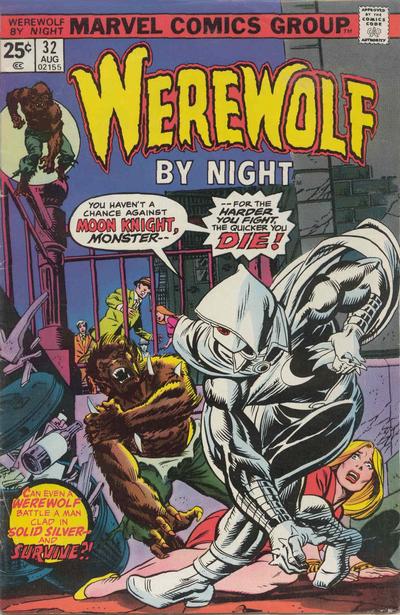
GrailWerewolf by Night #32 (1975)Regular US first printingMoon Knight’s debut, in a Werewolf by Night story.Find it in the timeline →View price source£75£226£754

A selection of useful entry points and milestones, rather than a ranking of the most expensive variants. Converted at US$1.3265 per £1; allow for rounding, postage and any import costs.

Read the price methodology and edition checks

Key Collector describes an acquisition guide based on up to ten ungraded secondary-market transactions in a month, with an approximate 10–15% reduction. Its public issue pages do not disclose each book’s underlying sale dates, sample size or most recent valuation update. “Checked” means when the displayed figures were inspected, not when every underlying sale occurred.

The original USD figures are retained in the evidence appendix. GBP = USD ÷ 1.3265, rounded to the nearest pound, using the Bank of England’s displayed spot reference for 23 September 2026. Currency conversion does not establish a UK market price. Small rounded figures can be below ordinary shop prices; they do not mean a copy is available at that price.

Low, Mid and High are broad raw condition categories. They are not grades 2.0, 6.0 and 9.8, and the High figure is not a pristine-copy ceiling. Certified sales, scarce variants, incomplete copies and restored copies need separate comparisons. Shipping, import costs, purchase fees and eventual selling costs are additional.

Use these numbers to decide what to research next. Before paying, compare recent completed sales of the same issue, printing, price edition and comparable condition. Asking prices and unsold listings do not establish value. For a substantial purchase, examine clear photographs of the front, back, spine, staples and interior.

We have not established a matched ten-year raw sales series. A defensible uplift would require like-for-like editions and condition, comparable sale samples at both dates, and a clear treatment of fees and inflation. We therefore publish no ten-year percentage or promised return. These are collecting choices with resale risk, not guaranteed investments.

Moon Knight #1 (2021)USD $1 / $2 / $3. Edition priced: First-print Cover A, Steve McNiven cover. Buying check: Choose the standard first printing; numerous variants and later printings are separate purchases. Source.

Moon Knight #1 (2014)USD $1 / $2 / $10. Edition priced: Regular first printing, Declan Shalvey cover. Buying check: A white-suit design appeared earlier in Secret Avengers #19; distinguish design debut from named identity. Source.

Moon Knight #1 (2016)USD $1 / $3 / $12. Edition priced: First-print Cover A, Greg Smallwood cover. Buying check: This is the ordinary first-print cover, not the Marco Rudy incentive or another variant. Source.

Moon Knight #1 (1985)USD $1 / $3 / $12. Edition priced: Regular US first printing / direct-market entry. Buying check: A relaunch rather than Moon Knight’s first solo title; distinguish newsstand and Canadian editions. Source.

Marc Spector: Moon Knight #1 (1989)USD $1 / $5 / $18. Edition priced: Regular first printing, Carl Potts cover. Buying check: Confirm the 1989 series; the same title relaunched in 2026. Source.

Moon Knight #1 (1980)USD $5 / $15 / $50. Edition priced: Regular first printing / direct-market entry. Buying check: Not Moon Knight’s first appearance. Newsstand and facsimile pages have separate prices. Source.

Moon Knight #25 (1982)USD $8 / $20 / $80. Edition priced: Regular first printing, not the separate error-edition entry. Buying check: Assess this copy’s actual condition; an error edition is catalogued separately. Source.

Marvel Spotlight #28 (1976)USD $15 / $50 / $150. Edition priced: Regular US 25-cent first printing. Buying check: The 30-cent test-price variant and UK pence edition are different entries; do not mix their sales. Source.

Werewolf by Night #33 (1975)USD $20 / $80 / $200. Edition priced: Regular US first printing. Buying check: Check that it is the original, not a modern facsimile; inspect both covers and interior completeness. Source.

Werewolf by Night #32 (1975)USD $100 / $300 / $1000. Edition priced: Regular US first printing. Buying check: Require clear front, back, spine and interior evidence; completeness, restoration and edition can materially change the price. Source.

02

Understand the people

The people beneath the mask.

Marc Spector

The former mercenary at the centre of the story. His responsibilities, old violence and uneasy service to Khonshu give the hero a moral struggle beyond winning fights. The Egyptian origin becomes a defining part of the solo series in 1980; it is not the whole premise of the 1975 debut.

Steven Grant and Jake Lockley

In the classic comics, Steven is associated with wealth and social access; Jake with a taxi and street contacts. Their presentation develops across decades. Modern stories engage with dissociative identity disorder, but a changing superhero fiction should not be treated as a clinical explanation.

Mr. Knight

The white-suited persona associated with investigation and, later, the Midnight Mission. Do not assume that every comic treats Mr. Knight as a separate alter, or import the screen version’s roles into all the books. The white suit appears before the named 2014 presentation.

Khonshu

Marvel’s Egyptian moon deity: patron, demanding authority and frequent source of conflict. Moon Knight’s powers and the way Khonshu manifests vary by creative era. A fixed powers checklist can misrepresent the book you are actually reading.

The people and powers around him

Frenchie and Marlene

Jean-Paul “Frenchie” DuChamp connects Marc to his past and serves as a trusted pilot and friend. Marlene Alraune is a longstanding partner within the original supporting cast. She is not interchangeable with the television series’ Layla.

Gena and Crawley

The classic street-level network matters. These supporting lives help make New York a lived-in place and give Jake’s information gathering a social world.

Reese and the Midnight Mission

Reese, a vampire, becomes a central colleague. Soldier, 8-Ball and other outsiders broaden the Mission’s community; Tigra is an important superhero ally and relationship. These people give the modern run its emotional continuity.

Hunter’s Moon

Dr Yehya Badr is another Fist of Khonshu. He and Moon Knight can share a patron without sharing a judgement. His civilian introduction and costumed appearances should be distinguished when identifying modern keys.

Bushman and Black Spectre

Bushman is bound to the defining mercenary-era origin. Carson Knowles, the original Black Spectre, debuts in Moon Knight #25 (1982); later users of the name are separate collecting questions.

Stained Glass Scarlet and Midnight Man

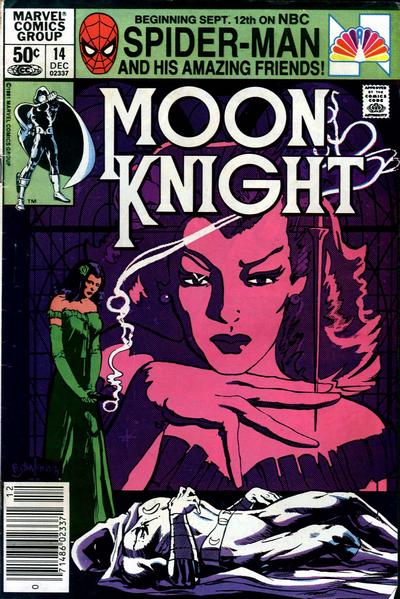
Scarlet Fasinera arrives in #14 (1981), one of the classic run’s memorable character stories. Anton Mogart, the original Midnight Man, appears in #3 (1981). Neither book is a relaunch #1, which is a useful reminder to look beyond launch issues.

03

The series map

A timeline told through the comics.

Follow the issue year as well as the number. Several different Moon Knight series begin with #1; classic years here identify the publication, not an exact on-sale date.

1975–1976

The adversary becomes the lead

Werewolf by Night #32–33; Marvel Spotlight #28–29

Doug Moench and Don Perlin create Moon Knight as an adversary for Jack Russell. Werewolf #32 is the debut; #33 supplies the second half of the encounter. The unfamiliar white costume belongs to a character still being defined, which is part of the historical appeal.

Spotlight gives him a solo feature and develops the civilian framework around Steven Grant, Jake Lockley, Marlene and street contacts. It is a different milestone from a first appearance. Read the four-issue sequence to see how rapidly the premise expands.

Collector’s distinctionFirst appearance: #32. Second appearance: #33. First solo feature: Spotlight #28. These labels should never be merged.

1978–1980

The magazine years matter

Hulk magazine #11–15, #17–18, #20; Marvel Preview #21

Before the first ongoing, magazine backups give the character room to develop. This material includes important early Bill Sienkiewicz work and is easy to miss if your collection only follows books with Moon Knight in the title.

Bad Moon Rising gathers the early trail, including the magazines and guest appearances. Moon Knight: Special Edition #1–3 later reprints earlier material; its title should not be mistaken for another first ongoing launch. The adjacent 1980 cover marks where this development leads.

Collector’s distinctionOriginal magazines need different storage from standard comics. A reprint can be the practical reading choice.

1980–1984

The classic foundation

Moon Knight #1–38

Doug Moench and Bill Sienkiewicz launch the ongoing. Its first issue establishes the defining Egyptian origin, Bushman and Khonshu; the cast and the art then become as important as the costume. The whole series is not by one unchanging creative team.

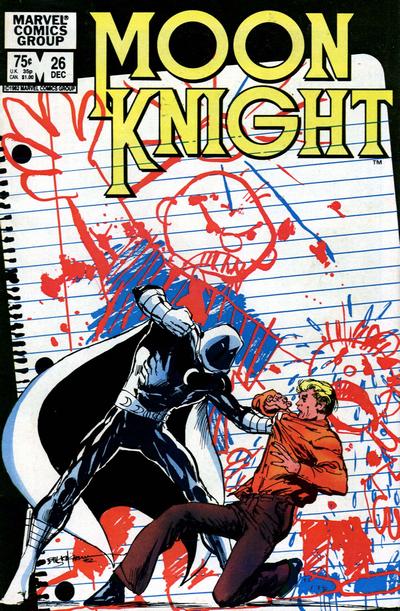
For a focused path, try #1, Stained Glass Scarlet’s arrival in #14, the original Black Spectre in #25 and “Hit It!” in #26. The last two are adjacent highlights, not a two-part Black Spectre story. The run is worth reading beyond its labelled keys.

Collector’s distinctionThe first ongoing #1 is five years later than the character’s debut. #26 is a story-and-art target even without a headline first appearance.

1985

Khonshu moves forward

Moon Knight #1–6, cover-branded Fist of Khonshu

Alan Zelenetz and Chris Warner launch a short series that brings Egyptian mythology, a revised costume and a different power emphasis to the foreground. Later issues involve other creators.

This six-issue project offers an accessible vintage lane for readers interested in the supernatural side. It also demonstrates why “Moon Knight #1” always needs a year attached.

Collector’s distinctionThe 1985 Fist of Khonshu branding and the 2024 series do not identify the same run.

1989–1994

A longer superhero lane

Marc Spector: Moon Knight #1–60

Chuck Dixon and Sal Velluto begin a sixty-issue ongoing. Other creators follow, with Terry Kavanagh and Stephen Platt among the notable later names. The series offers a different run-building project from the 1980 book.

The superhero connections and later art-led collecting interest can be attractions in their own right. Start by sampling the stories or a collection, then decide whether a full sixty-issue run is a project you want.

Collector’s distinctionA 1989 #1 is a relaunch, not the character’s first solo comic. The same title returns in 2026.

1998–1999

Two returns, two searches

Moon Knight (1998) #1–4; Moon Knight (1999) #1–4

Doug Moench returns with Tommy Lee Edwards for the 1998 story associated with The Resurrection War, then with Mark Texeira for the 1999 story often catalogued as High Strangeness or High Strangers. Search by year and issue to avoid mismatched listings.

Both miniseries are collected in Moon Knight: Marc Spector Omnibus Vol. 2. The Resurrection War Epic Collection is scheduled for 27 October 2026, so it remains forthcoming on this file’s research date.

Collector’s distinctionTwo separate four-issue series, not an eight-issue run. Check exact collected contents before ordering.

2006–2010

A harsher return, then Vengeance

Moon Knight (2006) #1–30; Vengeance of the Moon Knight (2009) #1–10

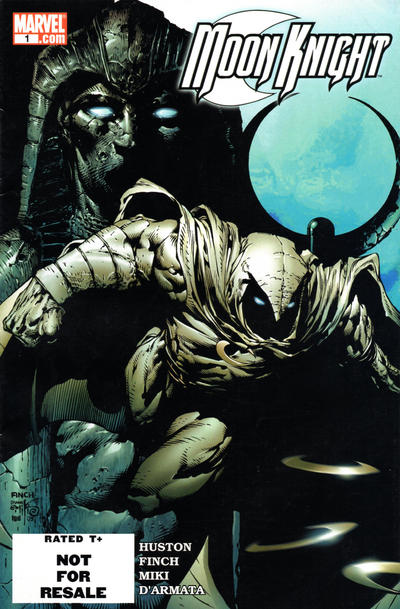
Charlie Huston and David Finch open the 2006 series with The Bottom, a violent, abrasive six-issue comeback. Mike Benson and other artists continue the thirty-issue run. This is a deliberate tone choice, rather than our gentlest general recommendation.

Gregg Hurwitz and Jerome Opeña launch the ten-issue Vengeance series in 2009, with other artists contributing later. Its opening story is Shock and Awe. The 2024 book of the same name comes much later in a different continuing saga.

Collector’s distinctionThe supplied 2006 #1 cover is the Book Market “Not For Resale” edition. It illustrates this era; it is not a standard retail price comparison.

2011–2012

A Los Angeles interpretation

Moon Knight (2011) #1–12

Brian Michael Bendis and Alex Maleev make a twelve-issue run with a Los Angeles setting and a distinctive interpretation of the character. Its Captain America, Spider-Man and Wolverine motifs belong to this particular approach; they should not overwrite Marc, Steven and Jake in a general character explanation.

Treat it as a complete creative experiment to sample if you like its team. It is one distinct lane in the character’s history, rather than a template for every version that follows.

Collector’s distinctionYear and creative team are more reliable buying identifiers than a bare volume number.

2014–2015

Six issues that change the visual language

Moon Knight #1–17; From the Dead = #1–6

Warren Ellis, Declan Shalvey and Jordie Bellaire make six compact, visually distinctive cases. The white-suited Mr. Knight presentation gives the book an immediately recognisable look. #5 is a particularly strong action-and-page-design showcase.

The series continues: Brian Wood and Greg Smallwood handle #7–12, followed by Cullen Bunn with Ron Ackins and other artists in #13–17. Buying all seventeen issues does not mean buying seventeen Ellis/Shalvey issues.

Collector’s distinctionWhite-suit precursor: Secret Avengers #19. Named Mr. Knight presentation: the 2014 launch. Separate those claims when assessing a listing.

2016–2018

Identity, reality and legacy numbers

Moon Knight (2016) #1–14; legacy #188–200

Jeff Lemire, Greg Smallwood and collaborators make a fourteen-issue story that puts identity, apparent reality and Khonshu at its centre. Its complete shape is the attraction; we recommend reading the whole sequence.

After #14, the title adopts legacy numbering for Max Bemis’s #188–200, with Jacen Burrows and other artists. You have not missed #15–187 of the Lemire run. Moon Knight: Legacy — The Complete Collection is the separate collected route into those later issues.

Collector’s distinctionThe Lemire/Smallwood Complete Collection contains the fourteen-issue story. A legacy jump is a numbering system, not missing chapters.

2021–2023

The Midnight Mission opens

Moon Knight (2021) #1–30

Jed MacKay and Alessandro Cappuccio launch a mission serving those endangered after dark. Reese, Hunter’s Moon, Tigra and the wider ensemble give the book a community. This is our strongest general starting recommendation because it supplies a recognisable purpose and a route into the continuing modern saga.

Begin with The Midnight Mission, #1–6. The final arc, The Last Days of Moon Knight, runs through #28–30, while the collected volume of that name contains #25–30. The ending changes who must carry the Mission forward; it does not end MacKay’s longer story.

Collector’s distinctionStandard #1, later printings and incentive covers are different purchases. Reading this run does not require an expensive first-print #1.

2024

The Mission outlives a title

Vengeance of the Moon Knight #1–9; Blood Hunt crossover

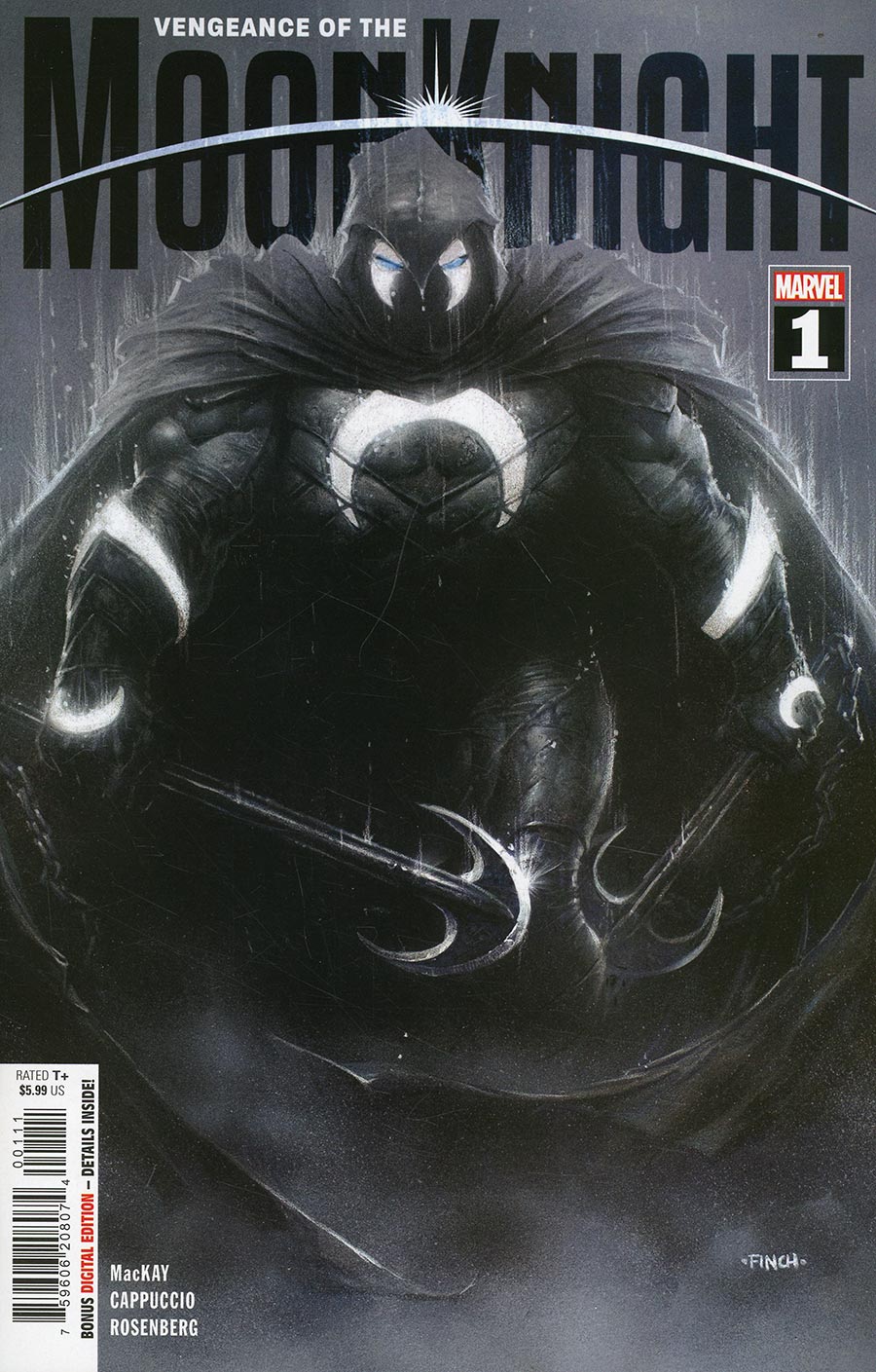
MacKay’s story continues through loss, succession and return. Cappuccio and Devmalya Pramanik are among the artists. The new Vengeance numbering is the next phase of the Mission, not a restart of the 2009 book.

The collections are New Moon (#1–4) and It’s Alive (#5–9). Blood Hunt intersects #5–7 and provides important context for the return that leads into Fist of Khonshu. Fist #0 appeared during the crossover, before Vengeance finished, so a simple series map is not a precise interleaved publication order.

Collector’s distinctionInclude #0 when building the following Fist run. Do not confuse Hunter’s Moon, Reese and the replacement Moon Knight.

2024–2025

The Fist returns

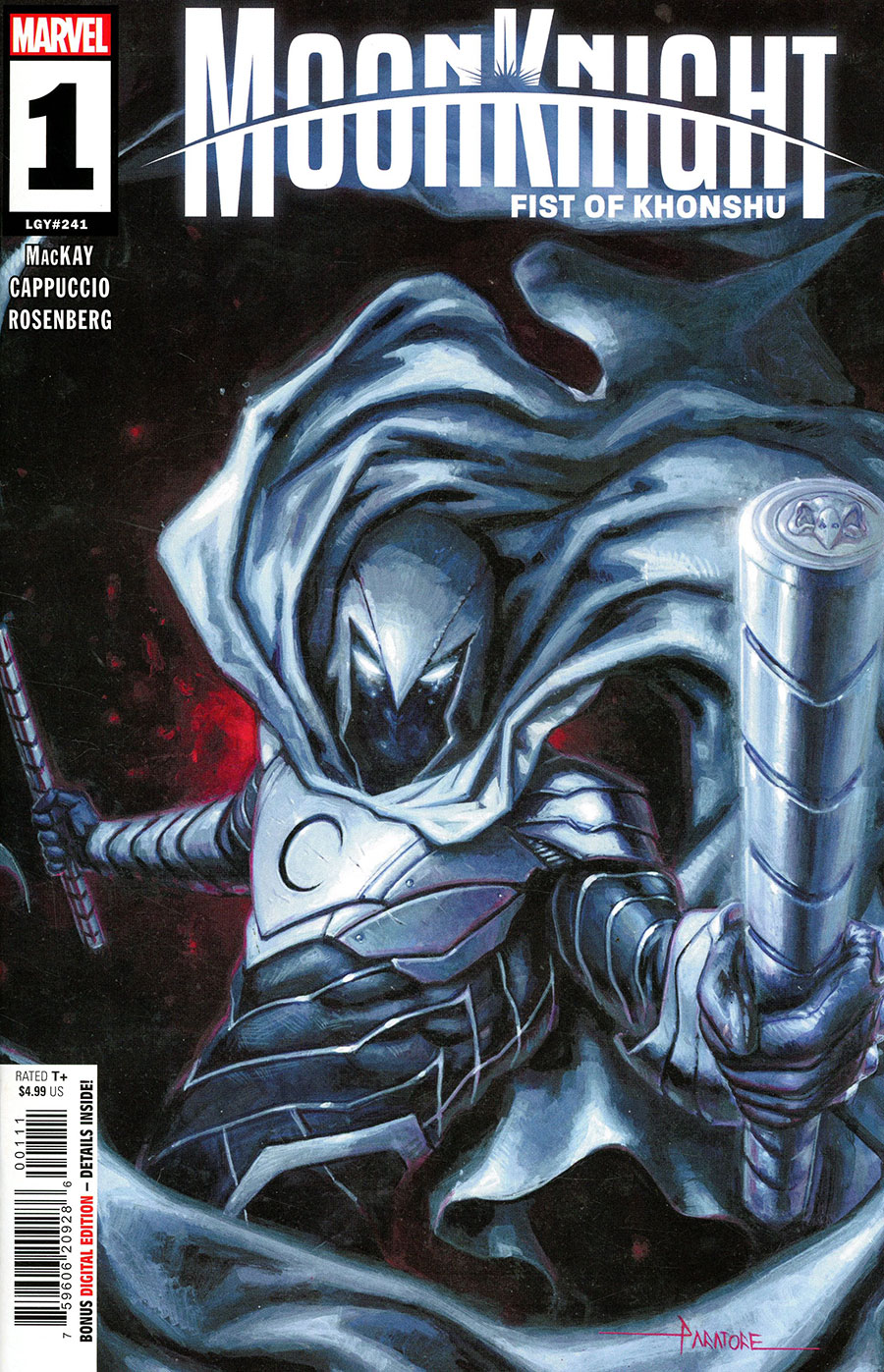
Moon Knight: Fist of Khonshu #0–15

MacKay continues with Cappuccio and other artists as the Mission moves into its next phase. #0 is a genuine part of the sequence: #0–15 means sixteen numbered instalments, not fifteen.

The three collected volumes are Leave Home (#0–5), Subterranean Jungle (#6–10) and We’re Outta Here (#11–15). The final issue arrived on 17 December 2025; a collected volume appearing in 2026 does not extend the single-issue run into that year.

Collector’s distinctionThis run has finished. Catalogue pages that still say “Present” need checking against the actual issues.

2026 / current

Marc Spector and the Midnight Sons

Marc Spector: Moon Knight #1–8 released as checked

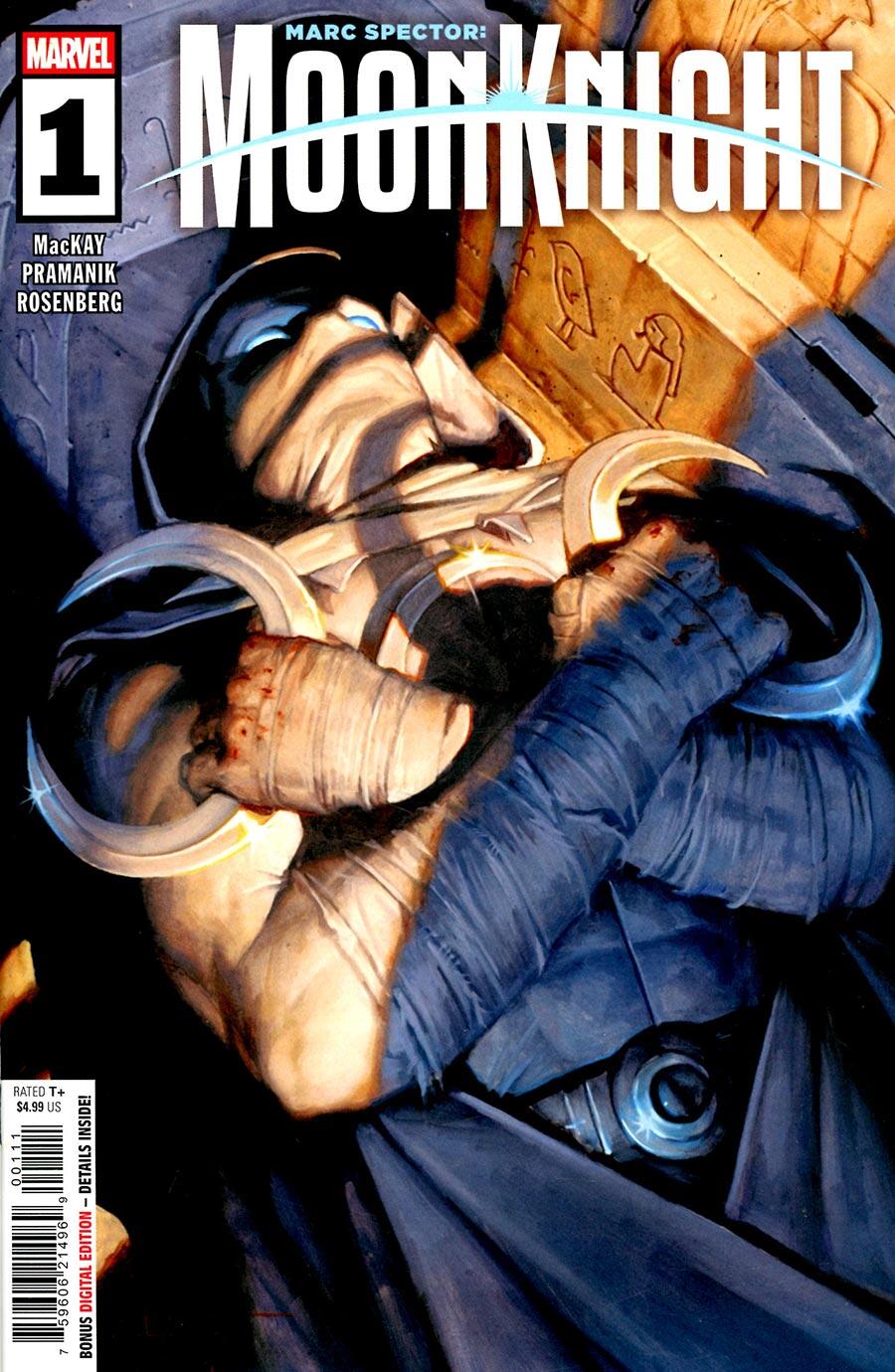
The 2026 title begins on 11 February with Jed MacKay and Devmalya Pramanik. It continues the same longer story. A fresh #1 is a useful current-monthly entry point for someone happy to learn relationships as they go; it is not a new origin or a continuity reset.

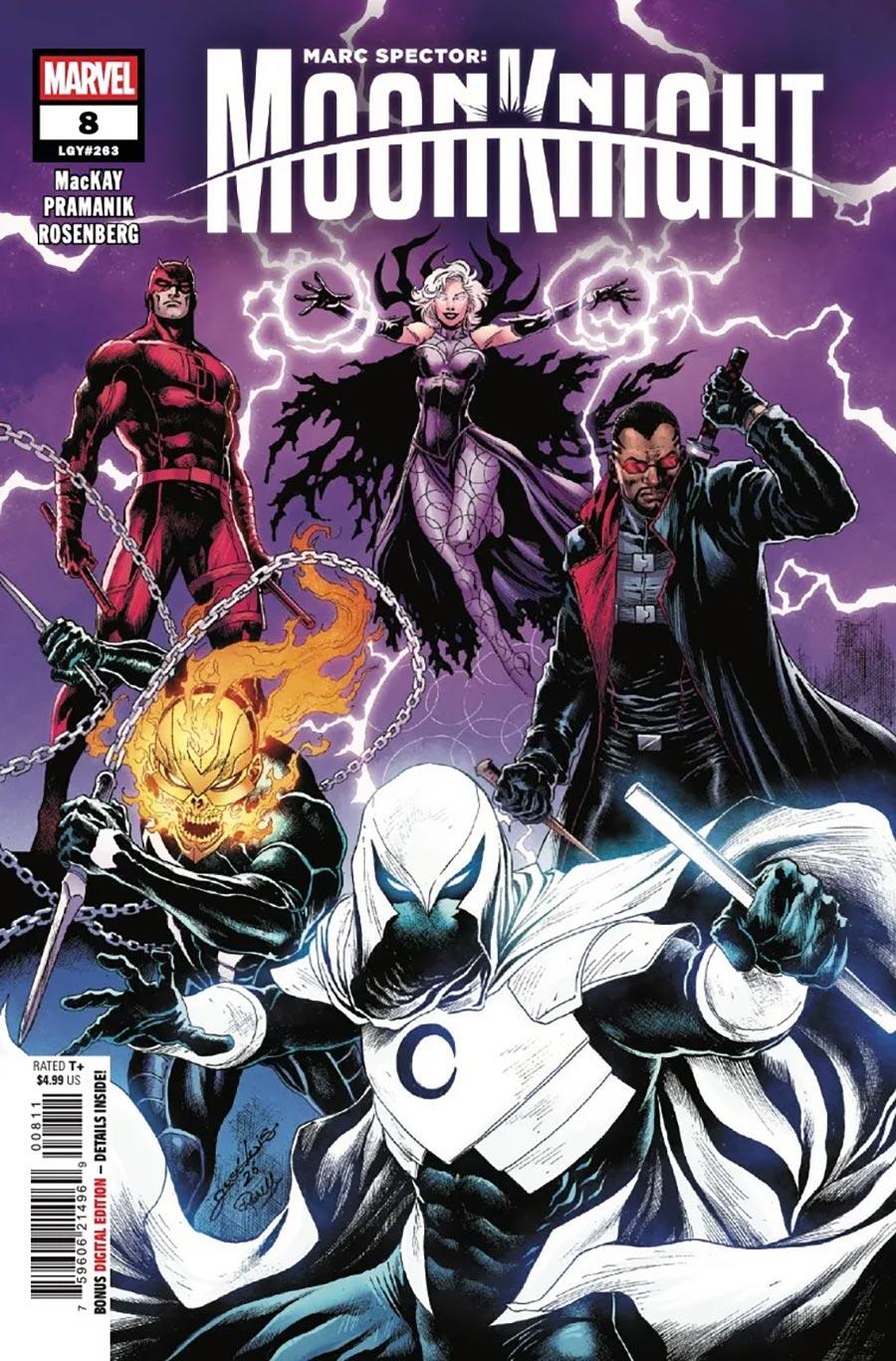
By the latest arc, Clea, Blade, Ghost Rider and Daredevil join a new Midnight Sons alliance to help the endangered Midnight Mission. #8 was released on 16 September and is the latest released issue verified here. Your supplied #1 and #8 covers capture both the launch and where the current story has reached.

Collector’s distinctionAlways include “2026” in searches for this title. #9 and #10 are forthcoming, not already released chapters.

Current position / 24 September 2026

Where the file stops today.

Checked 24 September 2026: Marc Spector: Moon Knight #8, released 16 September, is the latest released issue verified for this file. #9 is scheduled for 21 October and #10 for 18 November. The Brain Drain collection is scheduled for 12 January 2027; it is not an available reading purchase today. Future dates and contents can change.

04

Read by experience

Choose the Moon Knight you want to meet.

Moon Knight #1 (2021)

Best first stop

The Midnight Mission / Moon Knight (2021) #1–6

A contemporary purpose, a strong supporting cast and a manageable first volume. Read this first if you want a clear route towards the current saga.

Moon Knight #1 (2016)

One complete psychological story

Moon Knight (2016) #1–14

Lemire, Smallwood and collaborators build a story whose shifting worlds pay off across the whole sequence. Choose the Complete Collection for a straightforward reading purchase.

Werewolf by Night #32 (1975)

See the beginnings

Bad Moon Rising / Epic Collection

The earliest guest appearances, magazine material and the opening four ongoing issues in a collected route. Its publisher contents list is the checklist; the old originals are optional.

Moon Knight #1 (2006), Book Market “Not For Resale” edition. David Finch cover.

The hard-edged alternative

The Bottom / Moon Knight (2006) #1–6

Huston and Finch’s violent comeback is for readers actively seeking a darker tone. The promotional #1 pictured is clearly identified; an ordinary collected edition is the reading route.

Marc Spector: Moon Knight #8 (2026)

Follow the monthly conversation

Marc Spector: Moon Knight (2026)

Start with this year’s #1 if following current releases is your priority, knowing it continues established relationships. Read through the released #8; use the Mission collections when you want the earlier chapters.

05

Follow the craft

The creators are part of the reading order.

Moench and Perlin: the original proposition

Doug Moench and Don Perlin introduce Moon Knight within Werewolf by Night. The white costume makes a striking visual intruder into a horror comic, before the solo stories enlarge his world.

Moench and Sienkiewicz: character through drawing

Bill Sienkiewicz’s work develops through the magazine material and the first ongoing. Follow the changing compositions, faces and atmosphere as well as the issue numbers. The full #1–38 run includes other creators; “all by Moench and Sienkiewicz” is inaccurate.

Shalvey and Bellaire: space, rhythm and colour

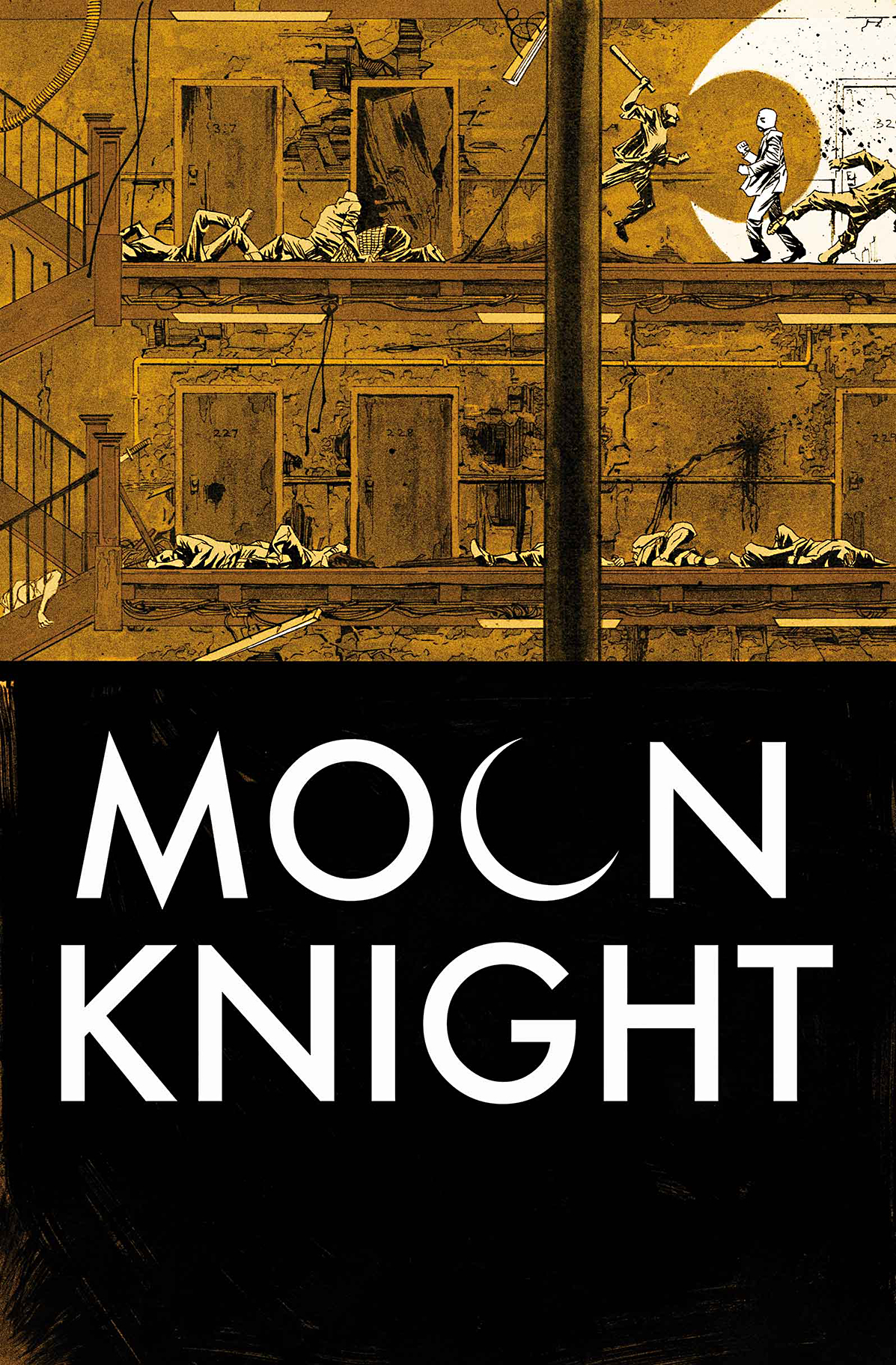
The 2014 opening six issues make the page itself part of the attraction. White space, controlled colour and precisely staged action distinguish this reading experience. Cover art and interiors reward attention without requiring a character debut.

Lemire, Smallwood and collaborators: unstable worlds

The 2016 run uses different settings and artistic approaches to question the story’s apparent reality. Read it as a complete fourteen-issue work; isolated key hunting loses much of what makes it satisfying.

MacKay’s collaborators: a continuing community

Alessandro Cappuccio establishes much of the Midnight Mission’s visual identity with colourist Rachelle Rosenberg. Devmalya Pramanik is central to the 2026 chapter. The writer’s continuing story survives changes in title and issue numbering.

Cover artist is a separate credit

David Finch’s supplied Vengeance #1 cover does not mean he draws that issue’s interiors. Likewise, the 2026 launch cover is E.M. Gist while Devmalya Pramanik draws the story. Collect an artist deliberately, but check which role the listing actually credits.

06

Beyond the solo book

The wider Marvel connections.

Werewolf by Night: the original bridge

Read Werewolf by Night #32–33 as a pair for the complete first encounter. Moon Knight begins in somebody else’s book; the shared history makes this the natural companion to our Werewolf file.

The wider superhero city

Defenders #47–50, Spectacular Spider-Man #22–23 and Marvel Two-in-One #52 belong to the early trail collected in Bad Moon Rising. Later Avengers and team appearances can extend the reading, but they are not required before a first solo story.

Mr. Knight: design before a name

Secret Avengers #19 is the important white-suit precursor. Moon Knight #1 (2014) develops the named Mr. Knight presentation. Listings that use “first Mr. Knight” without explaining which distinction they mean deserve a second look.

Midnight Sons: the 2026 connection

The current Marc Spector series brings Clea, Blade, Ghost Rider and Daredevil into a new Midnight Sons alliance. This is a published story development, not a prediction based on casting or film rumours. The supplied #8 cover makes an ideal visual bridge into our supernatural character files.

Marc Spector: Moon Knight #8 (2026)
07

Collect with confidence

The questions to ask before you buy.

Identify the book before judging the price

Record title, series year, issue, printing and cover or price edition. Moon Knight has many #1s. Marc Spector: Moon Knight (1989) and the 2026 title are different series; Vengeance (2009) and Vengeance (2024) are different runs. A thumbnail and an issue number are not enough.

Treat the major first appearance as its own purchase

Werewolf by Night #32 is the central Moon Knight first-appearance goal. Establish completeness, restoration history and the actual copy’s condition. Detached covers, missing pages, repairs and colour touch can make superficially similar copies incomparable. Do not substitute a slab record for a raw guide.

Ask for useful photographs

Look at both covers, the spine and staples, and ask about the centre spread and missing material. Photographs can conceal defects; a clear description and a workable returns policy matter. A seller’s optimistic grade is not independent evidence.

Distinguish price editions, reprints and promotions

Marvel Spotlight #28 exists in different price editions, including a US 30-cent test-price variant; the table uses the ordinary 25-cent edition. UK pence copies are editions of the original publication, not automatically later reprints. Facsimiles and later reprints are different again. The supplied 2006 #1 is marked “Not For Resale”, so its cover is explicitly labelled as a promotional edition.

Buy the story in the right format

The 1970s Hulk and Marvel Preview originals are magazine-size. Check dimensions, completeness and suitable storage. Collected editions can offer the same stories at a different price and in a different physical experience. Check the contents page or publisher listing before assuming a volume contains your chosen issue.

Choose a collection you can finish

Ordinary modern covers, a favourite six-issue story or a small classic sequence can be satisfying goals. Variant chasing adds cost without completing more of the story. A #1, an incentive ratio or a famous cover artist does not by itself establish scarcity, demand or future growth.

Allow for selling, not just buying

A dealer’s margin, marketplace fees, postage and time affect resale. A historical landmark may have a clearer collecting identity than a speculative cameo, but neither guarantees liquidity or profit. Set a comfortable hobby budget and keep a purchase record.

Collections with a clear finish line.

The reader’s shelf

The Midnight Mission, From the Dead and the Lemire/Smallwood complete run give three sharply different experiences. Choose one first; add the others when you want a different tone.

The classic character set

Moon Knight #1 (1980), #14 (1981), #25 and #26 (1982): origin, a memorable supporting character, a villain debut and an outstanding story-and-art issue. The project has a reason beyond accumulating #1s.

The early-history ladder

Start by reading Werewolf #32–33 and Spotlight #28–29 in a collection. If you later want originals, choose the condition and edition you can afford. #33 completes the debut encounter; #28 is the solo-feature milestone; #32 is the first appearance.

08

Quick answers

Clear up the common confusions.

What is the first appearance?

Werewolf by Night #32 (1975). #33 continues the debut encounter. Marvel Spotlight #28 (1976) is the first solo feature, and Moon Knight #1 (1980) launches the first ongoing solo series.

What should I read first?

Our general recommendation is The Midnight Mission, collecting Moon Knight (2021) #1–6. From the Dead is a strong alternative for a six-issue crime-and-design sampler. Neither requires owning vintage originals.

Why are the values lower than some shop prices?

The table converts a provider’s US raw acquisition guide, which includes an acquisition discount. It is not a list of available UK retail stock. Condition, edition, local supply, postage and seller pricing all matter. Verify completed comparable sales before buying.

Is the most expensive issue the best story?

That is a different judgement. #32 is the property’s first-appearance landmark. A relatively inexpensive modern collection may give you a richer introduction to the version of Moon Knight you want to read.

Do I need the television series?

No. Comics and screen adaptations share ideas but arrange identities, relationships and events differently. Read the comic on its own terms rather than treating the screen version as a continuity guide.

Is Fist of Khonshu still the current series?

The 2024 series finished at #15 in December 2025, with #0 also part of the run. Marc Spector: Moon Knight is the 2026 continuation. Always check a catalogue’s dates as well as its “Present” label.

—

Evidence / checked 24 September 2026

Sources, editions and credits.

Reading recommendations and collecting priorities are editorial judgements. This guide covers the principal series, stories and milestones; it is not an inventory of every cameo, printing or variant. Provider market estimates are kept separate from the reasons to read a story.

  1. Marvel: 10 Must-Read Moon Knight Stories
  2. Marvel: Werewolf by Night (1972) #32
  3. Marvel: Moon Knight Epic Collection — Bad Moon Rising
  4. Marvel: Moon Knight (1980) #1
  5. GCD: Moon Knight (1980) #3
  6. Marvel: Moon Knight (1980) #14
  7. Marvel: Meet Black Spectre
  8. GCD: Moon Knight (1980) #26
  9. Marvel: Moon Knight (1985) series
  10. Marvel: Marc Spector Moon Knight (1989) #1
  11. PRH: Moon Knight Epic Collection — The Resurrection War
  12. Marvel: Moon Knight (1999) #1
  13. Marvel: Moon Knight Vol. 1 — The Bottom
  14. Marvel: Moon Knight by Huston, Benson & Hurwitz Omnibus
  15. Marvel: Vengeance of the Moon Knight (2009) #1
  16. Marvel: Moon Knight by Bendis & Maleev Complete Collection
  17. Marvel: Moon Knight Vol. 1 — From the Dead
  18. Declan Shalvey: Moon Knight portfolio
  19. Marvel publisher listing via Apple Books: Dead Will Rise
  20. Marvel publisher listing via Apple Books: In the Night
  21. PRH: Moon Knight by Lemire & Smallwood Complete Collection
  22. Marvel: Moon Knight Legacy Complete Collection
  23. Marvel: Moon Knight (2016–2018) series
  24. PRH: Moon Knight Vol. 1 — The Midnight Mission
  25. Marvel: Vengeance of Moon Knight #1 trailer
  26. Marvel: Moon Knight in-comics profile
  27. Warren Ellis: Mr Knight, Mr Moench and Me
  28. Marvel: Khonshu reading guide
  29. Marvel: Midnight Mission explained
  30. Marvel: Meet Hunters Moon
  31. Marvel: Moon Knight Epic Collection — Final Rest
  32. Comic-Con 2025 souvenir book, Moon Knight history/creator recollections
  33. Key Collector: Secret Avengers #19
  34. Key Collector: Marvel Spotlight #28
  35. GCD: Marc Spector Moon Knight series
  36. Moon Knight (2021) #1
  37. Moon Knight's Midnight Mission, Explained
  38. Marvel Comics Presents: The Death of Moon Knight
  39. Moon Knight Vol.5 The Last Days of Moon Knight
  40. Moon Knight Vol.1 The Midnight Mission
  41. Vengeance of the Moon Knight 2024 series
  42. Vengeance of the Moon Knight (2024) #9
  43. Vengeance of the Moon Knight collected series
  44. The Death & Resurrection of Moon Knight, Explained
  45. Marvel release calendar 3 July 2024
  46. Moon Knight Fist of Khonshu Vol.1 Leave Home
  47. Moon Knight Fist of Khonshu #15
  48. Marvel updated series index
  49. Moon Knight Fist of Khonshu Vol.2 Subterranean Jungle
  50. Moon Knight Fist of Khonshu Vol.3 We're Outta Here
  51. Marc Spector Moon Knight2026#1
  52. Marc Spector Moon Knight#1 preview
  53. Marc Spector Moon Knight#8
  54. Marc Spector Moon Knight#7
  55. Marc Spector Moon Knight#9 ArioAnindito variant
  56. Marc Spector Moon Knight#10
  57. Marc Spector Moon Knight Vol.1 Brain Drain
  58. Bank of England: 23 September 2026 spot reference, £1 = US$1.3265
  59. Key Collector: acquisition-guide methodology
  60. Grand Comics Database: 2006 #1 Book Market edition
  61. Grand Comics Database: Moon Knight Special Edition reprint series
  62. Marvel: Moon Knight (2014) #5, cover by Declan Shalvey

Marvel characters and cover artwork © Marvel and their respective rights holders. The supplied covers identify the comics discussed. Original image proportions and complete cover artwork are preserved.