Character File No. 06 · Marvel’s master of the mystic arts

DOCTOR
STRANGE

From Strange Tales to the Sorcerer Supreme

A surgeon, a student and a guardian of impossible worlds. Follow Stephen Strange from a five-page debut to Marvel’s great magical epics, with the books, people and collecting details that make the journey easier to navigate.

Strange Tales #110 (1963), original standard front cover
Strange Tales #110 · 1963Cover art: Jack Kirby (pencils); Dick Ayers (inks)
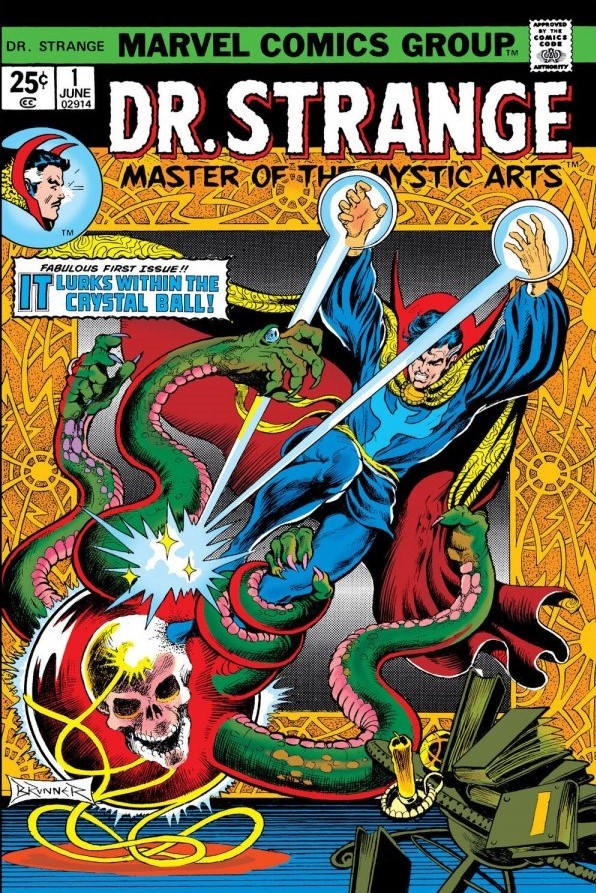
Doctor Strange #1 (1974), original standard front cover (frank brunner)
Doctor Strange #1 · 1974Cover art: Frank Brunner
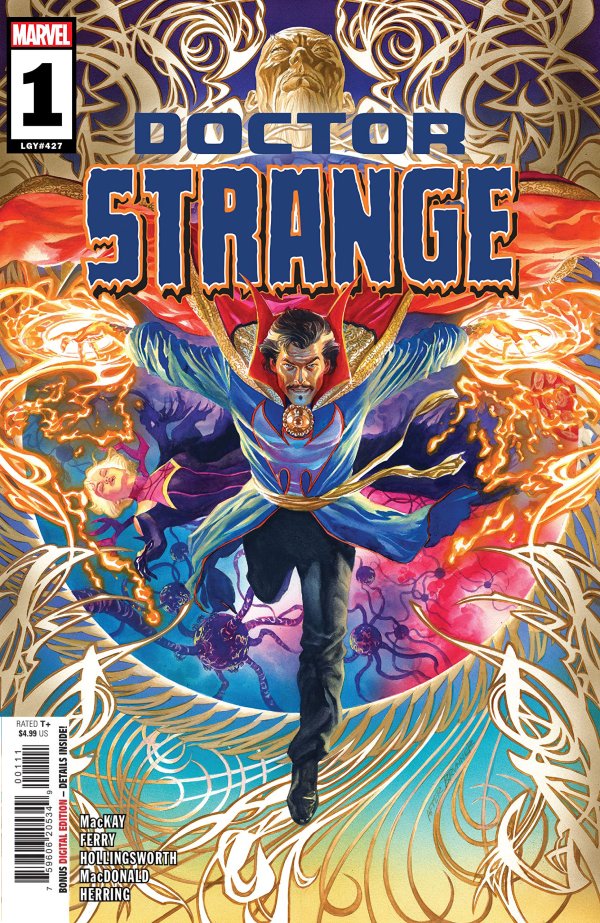
Doctor Strange #1 (2023), regular front cover (alex ross)
Doctor Strange #1 · 2023Cover art: Alex Ross
First appearanceStrange Tales #110
1963 · Anthology feature
First self-titled issueDoctor Strange #169
1968 · Inherited numbering
New solo #1Doctor Strange #1
1974 · Second ongoing
Created byStan Lee
Steve Ditko
Your way into Doctor Strange

A great story first.
A collection if you want one.

Enjoying the comics is a complete reason to be here. Start with our reading pick, or explore ten original issues across collecting budgets.

01 / I’m not interested in investing

I’m here for
a great story.

Doctor Strange: The Oath

Doctor Strange: The Oath #1–5 (2006–2007)

A complete five-part mystery puts Stephen’s medical conscience, magic and friendship with Wong at the centre. Brian K. Vaughan and Marcos Martín give a new reader a clear story with a satisfying endpoint.

Read all five chapters in a paperback reprint or authorised digital edition. Choose a new, used or borrowed reading copy that fits your budget. The story is the same without a first-print premium.

Read it. Enjoy it. That is enough. You do not need a valuable first printing to get the pleasure of the story.
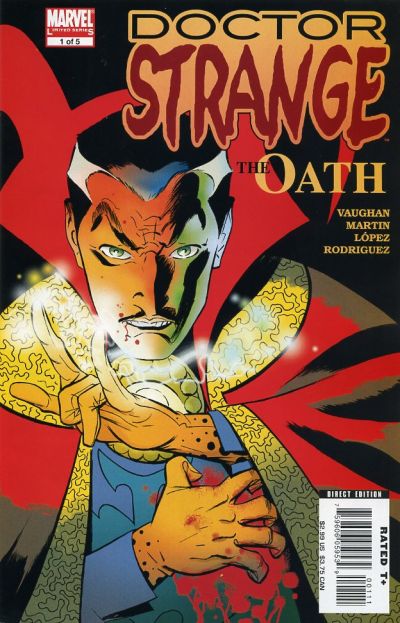
Doctor Strange: The Oath — full cover reference
Story illustration: The Oath #1 (2006). Collected-edition covers vary.

Curious about collecting originals?

Ten raw-guide snapshots · checked 23 September 2026. Raw means unencapsulated. The amounts below are Key Collector’s broad acquisition-guide categories converted into approximate pounds. They are not independently established UK fair market values or verified recent sale prices. The provider’s Low / Mid / High bands do not correspond to specific numerical grades.

These editorial picks span different budgets; they are not the ten most expensive books or an investment portfolio. Delivery, payment conversion and any applicable import costs are extra. Read the price method ↓

02 / First original issues

Small purchases. Stories worth owning.

Start with an era or creator you enjoy. The guides below give a sense of scale; they are not current offers, and delivery can cost more than an inexpensive comic.

Doctor Strange: The Oath #1 (2006) — full cover reference
The Oath #1 · 2006 · standard first-print cover
Collecting pick 01

Doctor Strange: The Oath #1 (2006)

An inexpensive original issue with Marcos Martín’s cover; a manageable five-issue series to complete if you enjoy the story.

Provider mid-category guide · approximate GBP£1
Low guide
£1
Mid guide
£1
High guide
£2

Raw acquisition guide · not a recorded sale

Find its place in the story ↓
Edition, source & buying check

First print, standard Cover A. This guide prices issue #1 only. Key Collector Low / Mid / High are broad raw condition bands, not numerical grades. Observed 23 September 2026.

Budget separately for #2–5; a lone #1 does not contain the complete mystery.

Key Collector issue guide observed 23 September 2026: Low / Mid / High $1 / $2 / $3. Guide-page observation date; no dated sale sample verified for this card.

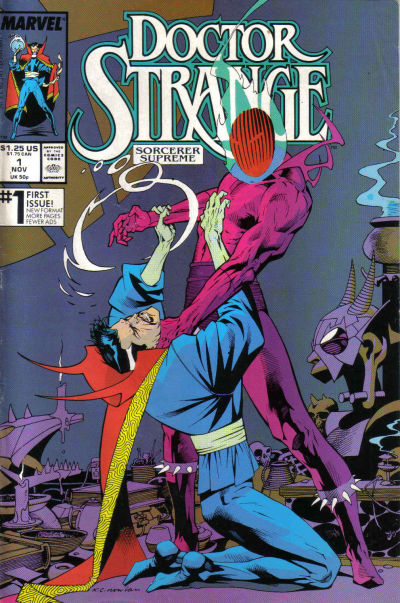
Doctor Strange, Sorcerer Supreme #1 (1988) — full cover reference
Doctor Strange, Sorcerer Supreme #1 · 1988 · standard cover
Collecting pick 02

Doctor Strange, Sorcerer Supreme #1 (1988)

A low-cost launch issue with a Kevin Nowlan cover, suited to a collection built around the late-1980s series.

Provider mid-category guide · approximate GBP£1
Low guide
£1
Mid guide
£1
High guide
£2

Raw acquisition guide · not a recorded sale

Find its place in the story ↓
Edition, source & buying check

Regular first printing. Key Collector Low / Mid / High are broad raw condition bands, not numerical grades. Observed 23 September 2026.

Match the 1988 series and inspect spine stress; postage can exceed the guide value.

Key Collector issue guide observed 23 September 2026: Low / Mid / High $1 / $2 / $3. Guide-page observation date; no dated sale sample verified for this card.

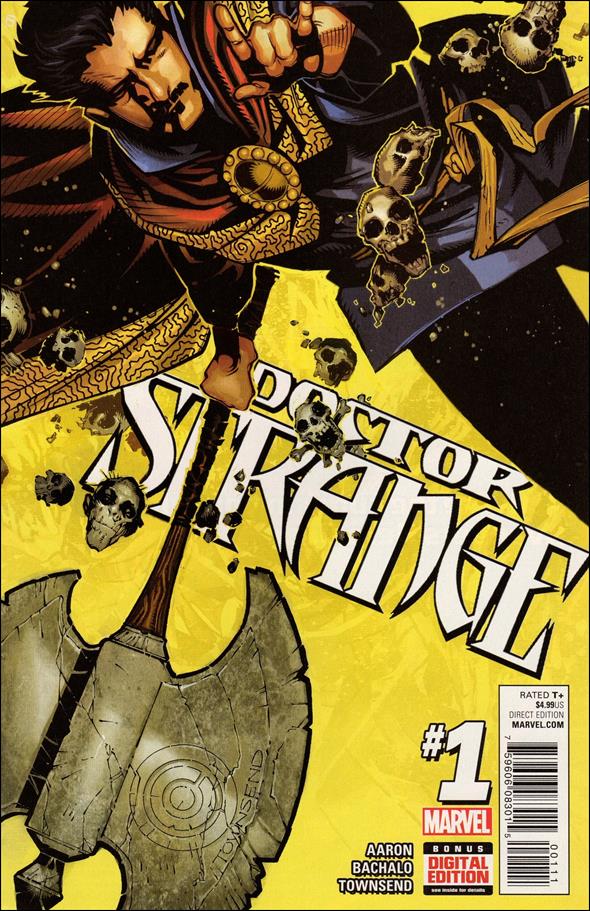
Doctor Strange #1 (2015) — full cover reference
Doctor Strange #1 · 2015 · Chris Bachalo standard Cover A
Collecting pick 03

Doctor Strange #1 (2015)

The Jason Aaron and Chris Bachalo launch adds Zelma Stanton and offers a distinctive modern run to collect.

Provider mid-category guide · approximate GBP£1
Low guide
£1
Mid guide
£1
High guide
£7

Raw acquisition guide · not a recorded sale

Find its place in the story ↓
Edition, source & buying check

First print, standard Cover A. Key Collector Low / Mid / High are broad raw condition bands, not numerical grades. Observed 23 September 2026.

There are numerous variants and later printings; these figures apply to the regular cover.

Key Collector issue guide observed 23 September 2026: Low / Mid / High $1 / $2 / $10. Guide-page observation date; no dated sale sample verified for this card.

Doctor Strange #1 (2023) — full cover reference
Doctor Strange #1 · 2023 · Alex Ross standard Cover A
Collecting pick 04

Doctor Strange #1 (2023)

A modern launch by Jed MacKay and Pasqual Ferry with an Alex Ross cover, useful for collecting the recent Stephen-and-Clea era.

Provider mid-category guide · approximate GBP£1
Low guide
£1
Mid guide
£1
High guide
£4

Raw acquisition guide · not a recorded sale

Find its place in the story ↓
Edition, source & buying check

First print, standard Cover A. Key Collector Low / Mid / High are broad raw condition bands, not numerical grades. Observed 23 September 2026.

Confirm the regular Alex Ross cover; incentive, virgin and retailer variants require separate comparisons.

Key Collector issue guide observed 23 September 2026: Low / Mid / High $1 / $2 / $5. Guide-page observation date; no dated sale sample verified for this card.

03 / Established collecting targets

Build around what matters to you.

These picks have a place in the character’s story, creative history or visual identity. Read why each matters before deciding whether an original belongs in your collection.

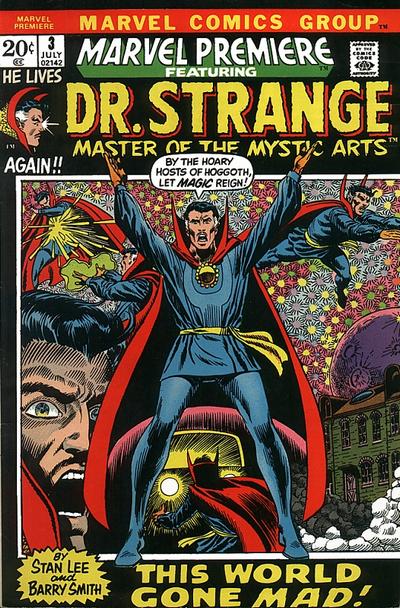
Marvel Premiere #3 (1972) — full cover reference
Marvel Premiere #3 · 1972 · original standard cover
Collecting pick 05

Marvel Premiere #3 (1972)

The beginning of Doctor Strange’s Marvel Premiere feature: a useful bridge between his first solo title and the 1974 series.

Provider mid-category guide · approximate GBP£34
Low guide
£9
Mid guide
£34
High guide
£105

Raw acquisition guide · not a recorded sale

Find its place in the story ↓
Edition, source & buying check

Regular first printing. Key Collector Low / Mid / High are broad raw condition bands, not numerical grades. Observed 23 September 2026.

Check staple attachment, spine splits and page completeness before comparing older raw copies.

Key Collector issue guide observed 23 September 2026: Low / Mid / High $12 / $45 / $140. Guide-page observation date; no dated sale sample verified for this card.

Doctor Strange #1 (1974) — full cover reference
Doctor Strange #1 · 1974 · Frank Brunner standard cover
Collecting pick 06

Doctor Strange #1 (1974)

Steve Englehart and Frank Brunner launch the second ongoing series, with a memorable Brunner cover and Silver Dagger’s debut.

Provider mid-category guide · approximate GBP£37
Low guide
£11
Mid guide
£37
High guide
£112

Raw acquisition guide · not a recorded sale

Find its place in the story ↓
Edition, source & buying check

Regular first printing. Key Collector Low / Mid / High are broad raw condition bands, not numerical grades. Observed 23 September 2026.

Check the indicia and visible defects; a later reproduction of this cover is a different collectible.

Key Collector issue guide observed 23 September 2026: Low / Mid / High $15 / $50 / $150. Guide-page observation date; no dated sale sample verified for this card.

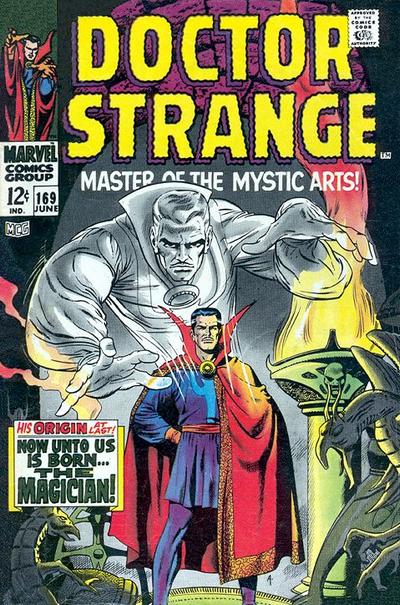
Doctor Strange #169 (1968) — full cover reference
Doctor Strange #169 · 1968 · original standard cover
Collecting pick 07

Doctor Strange #169 (1968)

The first self-titled Doctor Strange issue inherits Strange Tales’ numbering and retells his origin.

Provider mid-category guide · approximate GBP£135
Low guide
£45
Mid guide
£135
High guide
£450

Raw acquisition guide · not a recorded sale

Find its place in the story ↓
Edition, source & buying check

Regular first printing. Key Collector Low / Mid / High are broad raw condition bands, not numerical grades. Observed 23 September 2026.

First self-titled issue is distinct from first appearance. Check completeness, trimming and possible colour touch.

Key Collector issue guide observed 23 September 2026: Low / Mid / High $60 / $180 / $600. Guide-page observation date; no dated sale sample verified for this card.

04 / The long-term wish list

The books to aim for—if you want to.

Important originals offer a collecting destination, not a promise of profit. Condition, completeness, restoration and the exact edition can change the price dramatically.

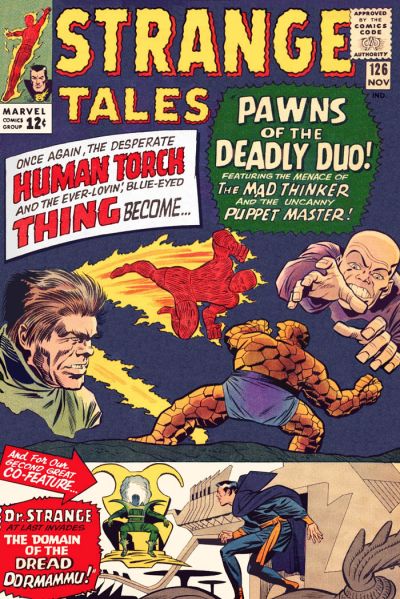
Strange Tales #126 (1964) — full cover reference
Strange Tales #126 · 1964 · original standard cover
Collecting pick 08

Strange Tales #126 (1964)

The first appearances of Clea and Dormammu make this a major landmark for collectors of Strange’s supporting cast.

Provider mid-category guide · approximate GBP£90
Low guide
£45
Mid guide
£90
High guide
£450

Raw acquisition guide · not a recorded sale

Find its place in the story ↓
Edition, source & buying check

Regular first printing. Key Collector Low / Mid / High are broad raw condition bands, not numerical grades. Observed 23 September 2026.

The large condition spread makes clear interior, spine and staple photographs essential for a raw purchase.

Key Collector issue guide observed 23 September 2026: Low / Mid / High $60 / $120 / $600. Guide-page observation date; no dated sale sample verified for this card.

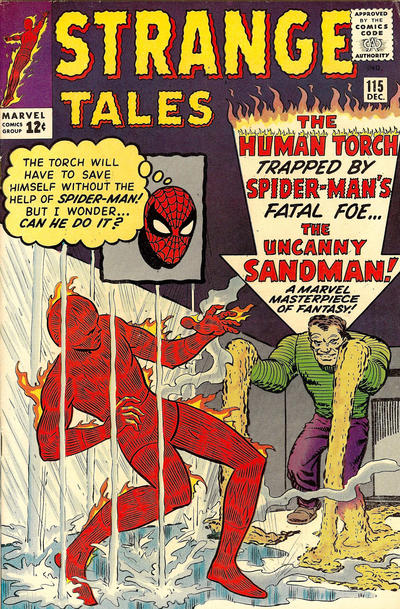
Strange Tales #115 (1963) — full cover reference
Strange Tales #115 · 1963 · original US standard cover
Collecting pick 09

Strange Tales #115 (1963)

Doctor Strange’s early origin story explains the damaged hands and change of purpose behind his magical career.

Provider mid-category guide · approximate GBP£322
Low guide
£90
Mid guide
£322
High guide
£899

Raw acquisition guide · not a recorded sale

Find its place in the story ↓
Edition, source & buying check

Regular US first printing; separate from the UK price edition. Key Collector Low / Mid / High are broad raw condition bands, not numerical grades. Observed 23 September 2026.

Match the edition and check every page; the Human Torch cover alone does not identify the Strange story inside.

Key Collector issue guide observed 23 September 2026: Low / Mid / High $120 / $430 / $1,200. Guide-page observation date; no dated sale sample verified for this card.

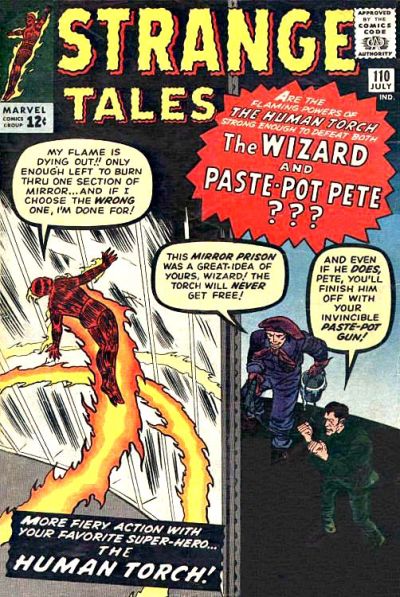
Strange Tales #110 (1963) — full cover reference
Strange Tales #110 · 1963 · original standard cover
Collecting pick 10

Strange Tales #110 (1963)

Doctor Strange’s first published appearance is the central historical target for an original-issue collection.

Provider mid-category guide · approximate GBP£6,440
Low guide
£1,270
Mid guide
£6,440
High guide
£20,200

Raw acquisition guide · not a recorded sale

Find its place in the story ↓
Edition, source & buying check

Regular first printing; provider displays rounded values of $1.7K / $8.6K / $27K. Key Collector Low / Mid / High are broad raw condition bands, not numerical grades. Observed 23 September 2026.

At this cost, require evidence of completeness and restoration status and a clear returns policy. Facsimiles and reprints are separate editions.

Key Collector issue guide observed 23 September 2026: Low / Mid / High $1,700 / $8,600 / $27,000. Guide-page observation date; no dated sale sample verified for this card.

How to use the prices, and why there are no ten-year return claims

Evidence: each card links to its exact provider issue page and preserves the original dollar amounts. Values were observed on 23 September 2026; the individual pages do not show a full dated transaction sample. See the provider’s acquisition-guide methodology. A guide estimate is not an offer to buy your copy.

Condition: compare original first printings with the same edition and condition. Facsimiles, later printings, incentive covers, signatures, pence editions, missing parts and restoration may belong to different markets. Ask for complete scans and inspect the actual comic. Low / Mid / High labels are the provider’s categories, not assigned professional grades.

Currency: US dollars are divided by 1.3348, using the Bank of England reference for 22 September 2026. Values are rounded to whole pounds, to £10 above £1,000 and to £100 above £10,000. These are reference conversions, not historical sterling proceeds or UK-market averages. Allow for postage, any buyer’s premium not already included in a sale, payment conversion and applicable import charges.

Before buying: find recent completed sales of genuinely comparable copies. Account for fees and other costs before thinking about resale. We have not established matched ten-year raw datasets, so no percentage uplift or future return is claimed. Reading or keeping a comic because you love it is a valid outcome in its own right.

Continue to the collecting guidance ↓
The character in one sitting01

A different kind of doctor. A different kind of hero.

Doctor Strange begins with a change of purpose. Stephen Strange is a gifted, arrogant surgeon whose damaged hands end his old career. His search for a cure leads to the Ancient One and a different kind of responsibility: protecting people from dangers they cannot see. His medical identity matters even when the threats become cosmic. The interesting question is often what he is prepared to sacrifice to help someone else.

Stan Lee and Steve Ditko introduced him in Strange Tales #110 in 1963. Ditko’s impossible architecture, floating pathways, staring eyes and shifting dimensions made the stories look unlike conventional superhero adventures. Strange shares Marvel’s world with Spider-Man and the Avengers, but his natural territory is the dream, the bargain, the forbidden book and the doorway that should remain closed.

For a new collector, there are several sensible ways in. You can follow the original Strange Tales stories, build a run of the 1974 series, collect a favourite artist or start with a complete modern story. You do not need an expensive first appearance to understand the character. This file separates the historical landmarks from approachable reading routes, then explains how to identify the editions you find.

A beginner’s essential distinction02

Three beginnings. Three different books.

FIRST APPEARANCE · 1963

Strange Tales #110

The first Doctor Strange story is a short feature inside an anthology. It is not his origin story, and the cover promotes a Human Torch adventure. Strange Tales #115 later explains how Stephen became a magician. A cover that does not show Strange can still contain his debut.

FIRST SELF-TITLED SERIES · 1968

Doctor Strange #169

His first self-titled comic begins at #169, continuing the numbering of Strange Tales. The 15-issue series runs through #183. The large number does not mean 168 earlier issues were published under the Doctor Strange title.

SECOND ONGOING SERIES · 1974

Doctor Strange #1

The familiar Frank Brunner cover launches a new ongoing series in 1974. It follows the Marvel Premiere solo feature and is an important Bronze Age starting point, but it is neither the character’s debut nor his first self-titled comic.

Vertical publication chronology03

Follow the doors. Follow the years.

A selected route through the major eras, earliest first. Years identify the original publication eras. Cover dates can differ from on-sale dates. Guest appearances and additional miniseries make a complete checklist longer than this selected introduction.

1963
Strange Tales #110 (1963), original standard front cover
Strange Tales #110 · 1963Cover art: Jack Kirby (pencils); Dick Ayers (inks)

A magician enters an anthology

Strange Tales #110, #111 and #114 onward

The first five-page story introduces Strange, the Ancient One and Nightmare. Strange is absent from #112–113 before returning in #114. The origin follows in #115. Those small gaps matter when you build a reading list or catalogue the earliest appearances.

1964–1968
Strange Tales #126 (1964), original standard front cover
Strange Tales #126 · 1964Cover art: Jack Kirby (pencils); Chic Stone (inks)

The other dimensions take shape

Strange Tales #126–146

Clea and Dormammu arrive in #126; Eternity’s first full appearance follows in #138. Ditko’s visual imagination makes the supernatural world feel vast and internally connected. His Doctor Strange run ends with #146, so a Ditko collection has a useful, identifiable boundary. The feature continues through #168 with later artists, including Bill Everett, Marie Severin and Dan Adkins.

1968–1969
Doctor Strange #169 (1968), original standard front cover
Doctor Strange #169 · 1968Cover art: Dan Adkins (pencils and inks)

His name takes over the book

Doctor Strange #169–183

Roy Thomas and Dan Adkins launch the first self-titled series with an origin retelling. Gene Colan and Tom Palmer then become a defining artistic partnership during the run. Colan’s shadows, movement and atmosphere offer a different visual language from Ditko’s angular otherworlds.

1971–1974
Marvel Premiere #3 (1972), original standard front cover
Marvel Premiere #3 · 1972Cover art: Barry Windsor-Smith (pencils); Frank Giacoia (inks)

A team role and a solo return

Marvel Feature #1; Marvel Premiere #3–14

Marvel Feature #1 brings the Defenders together with Strange, the Hulk and the Sub-Mariner. His solo feature then runs in Marvel Premiere #3–14. Steve Englehart and Frank Brunner become the key partnership from #9, leading towards the next ongoing title.

1974–1987
Doctor Strange #1 (1974), original standard front cover (frank brunner)
Doctor Strange #1 · 1974Cover art: Frank Brunner

The long Bronze Age collection

Doctor Strange #1–81

Englehart and Brunner launch the second ongoing series. The run later includes major work by Gene Colan, Roger Stern, Marshall Rogers and Paul Smith, among others. Its 81 issues make a substantial project: start with a creative period you enjoy before deciding to chase the entire series.

1987–1988

A shared title returns

Strange Tales #1–19, new 1987 series

A new Strange Tales pairs Doctor Strange with Cloak and Dagger in separate features. These are newly numbered 1980s issues, not a continuation of the original anthology at #169. Always include the series year in a want list or database search.

1988–1996
Doctor Strange, Sorcerer Supreme #1 (1988), original standard front cover
Doctor Strange, Sorcerer Supreme #1 · 1988Cover art: Kevin Nowlan (pencils and inks)

The title says Sorcerer Supreme

Doctor Strange, Sorcerer Supreme #1–90

Peter B. Gillis and Richard Case open this long-running series. Roy Thomas and Dann Thomas later write much of its central period. Its 90-issue run includes the 1990s supernatural landscape and crossover complications; checking issue contents helps distinguish a self-contained story from an event chapter.

1989
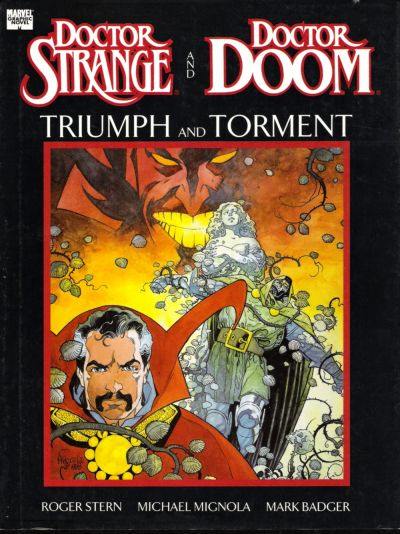
Doctor Strange & Doctor Doom: Triumph and Torment (1989), original graphic novel front-cover design
Doctor Strange & Doctor Doom: Triumph and Torment · 1989Cover art: Mike Mignola (pencils, inks and colors)

An uneasy alliance with Doom

Doctor Strange and Doctor Doom: Triumph and Torment

Roger Stern, Mike Mignola and Mark Badger send Strange and Doctor Doom into a story of obligation, pride and a soul in danger. The original is a larger-format 1989 graphic novel, commonly catalogued as Marvel Graphic Novel #49. Later collections use different covers and contents, so identify the edition before comparing copies.

2006–2007
Doctor Strange: The Oath #1 (2006), standard front cover
Doctor Strange: The Oath #1 · 2006Cover art: Marcos Martín

The doctor becomes the story

Doctor Strange: The Oath #1–5

Brian K. Vaughan and Marcos Martín build a compact mystery around medicine, magic and Strange’s relationship with Wong. This five-issue series is a welcoming complete-story route. Buying a collected edition is a different collecting decision from assembling five original issues.

2015–2018
Doctor Strange #1 (2015), regular front cover (chris bachalo)
Doctor Strange #1 · 2015Cover art: Chris Bachalo

Magic has a cost

Doctor Strange (2015), then legacy #381 onward

Jason Aaron and Chris Bachalo establish a busy, unsettling magical world in the 2015 relaunch. Donny Cates and Gabriel Hernández Walta later take over at legacy #381. The number jumps because Marvel resumes cumulative numbering; it is not a missing stack of issues between two consecutive releases.

2018–2020

Beyond Earth, then back to medicine

Doctor Strange (2018); Dr. Strange (2019)

Mark Waid and Jesús Saiz launch the 2018 series with a journey into space. Waid and Kev Walker then launch Dr. Strange, bringing Stephen’s medical work back to the foreground. Even the abbreviated title can matter when searching catalogues for a particular #1.

2021–2023
Strange #1 (2022), regular front cover (bjorn barends)
Strange #1 · 2022Cover art: Björn Barends

A death, and a new lead

Death of Doctor Strange #1–5; Strange #1–10

Jed MacKay and Lee Garbett tell Death of Doctor Strange. MacKay and Marcelo Ferreira then place Clea at the centre of Strange (2022). This is a change of protagonist, not simply Stephen’s book with a shortened logo. Reading the death story first gives the new series its context.

2023–2024
Doctor Strange #1 (2023), regular front cover (alex ross)
Doctor Strange #1 · 2023Cover art: Alex Ross

Stephen and Clea together

Doctor Strange (2023) #1–18

Jed MacKay and Pasqual Ferry launch a new series with Stephen restored and Clea an essential partner. Its later chapters meet the Blood Hunt event. For a new reader, beginning at #1 preserves the relationships and setup that an isolated event issue assumes you already know.

2025–2026

Asgard opens another door

Doctor Strange of Asgard; Doctor Strange (2025)

Derek Landy and Carlos Magno launch Doctor Strange of Asgard in March 2025. Landy and Ivan Fiorelli then open a new Doctor Strange series on 3 December 2025, continuing into 2026. Marvel labels that relaunch by its 2025 publication year; some catalogues use the January 2026 cover date. Check the writer, artist and actual cover as well as the year.

Writers and artists04

Six creative chapters worth knowing.

01
THE FOUNDATIONS

Stan Lee & Steve Ditko

Co-creators; the original Strange Tales era

Ditko’s contribution is visible in every impossible landscape and expressive hand gesture. Lee’s dialogue and incantations help give the feature its theatrical voice. Read the early pages as a collaboration whose visual storytelling is central to the experience.

Collector’s route: the Doctor Strange stories in Strange Tales #110–111 and #114–146. The anthology’s cover artist and lead cover character need not match the artist and character of the interior feature.

02
SHADOW AND MOVEMENT

Dan Adkins, Gene Colan & Tom Palmer

The 1968 solo launch and the artistic changes that follow

Roy Thomas writes the first self-titled issue, #169, with art by Dan Adkins. Colan and Palmer become a defining partnership later in the run. Colan gives bodies, cloaks and faces restless movement, while Palmer’s inks help shape the atmosphere.

Collector’s route: #169 is the title’s launch landmark, but not a Colan-drawn debut issue. Colan later returns to Strange, so use individual issue credits rather than assuming every appearance belongs to one continuous run.

03
COSMIC POSSIBILITIES

Steve Englehart & Frank Brunner

Marvel Premiere and the 1974 relaunch

Their stories push questions of identity, reality and creation into the foreground. Brunner’s intricate imagery makes a natural bridge between Ditko’s impossible spaces and the fantasy illustration associated with the 1970s.

Collector’s route: begin with Marvel Premiere #9–14, then the early 1974 issues. This is a selected creative period, not a promise that every issue contains a full new story by the same pair.

04
THE LONG VIEW

Roger Stern, Marshall Rogers, Paul Smith & Mike Mignola

Distinct collaborations across the 1980s

Stern’s Doctor Strange work rewards readers interested in character, responsibility and a coherent magical world. Rogers and Smith each bring a clear visual personality to portions of the ongoing series. They are separate collaborations, not one permanent art team.

For a focused reading choice, Stern’s Triumph and Torment with Mignola and Mark Badger is a complete graphic novel. Its atmosphere also offers an inviting route for readers drawn to horror and distinctive artwork.

05
A MODERN ENTRY POINT

Brian K. Vaughan & Marcos Martín

The Oath, 2006–2007

A limited series gives the pair room to tell one shaped story without asking a newcomer to assemble decades of events first. Martín’s clear layouts and expressive figures keep the mystery readable, while Vaughan connects the magician to the doctor he used to be.

Collector’s route: all five issues or a collected edition. Check whether a listing offers one issue, a complete set or a trade paperback; the same story title can describe three different purchases.

06
THE CONTEMPORARY SHELF

Jason Aaron, Chris Bachalo, Jed MacKay & Pasqual Ferry

Different modern eras, different artistic identities

Aaron and Bachalo’s 2015 launch makes the hidden magical ecosystem feel crowded and dangerous. MacKay’s later sequence connects Death of Doctor Strange, Clea’s Strange and the 2023 Doctor Strange series, whose launch artwork is by Ferry.

These are not interchangeable #1s. Add the series year, credited artist, printing and cover version to your catalogue. The 2025 relaunch introduces another distinct Landy and Fiorelli starting point.

Five defining books05

Five books that explain Doctor Strange.

Each earns its place for a different reason. This is a guide to the history, not a price ranking or a requirement to buy all five.

01 · THE DEBUTStrange Tales #110 (1963), original standard front cover
Strange Tales #110 · 1963Cover art: Jack Kirby (pencils); Dick Ayers (inks)

Strange Tales #110 · 1963

The character’s first published appearance, within a five-page anthology feature. Its Human Torch cover is a useful reminder that historical importance can be inside the book. An original, a facsimile and a later reprint are different editions, even when their artwork looks familiar.

02 · HIS OWN TITLEDoctor Strange #169 (1968), original standard front cover
Doctor Strange #169 · 1968Cover art: Dan Adkins (pencils and inks)

Doctor Strange #169 · 1968

The first self-titled issue, written by Roy Thomas and drawn by Dan Adkins. It inherits the numbering of Strange Tales. A collector’s description should say first self-titled issue, rather than first appearance or first #1.

03 · THE BRONZE AGEDoctor Strange #1 (1974), original standard front cover (frank brunner)
Doctor Strange #1 · 1974Cover art: Frank Brunner

Doctor Strange #1 · 1974

The second ongoing launch, with Steve Englehart and Frank Brunner. Its striking cover makes it an effective visual centrepiece, while the preceding Marvel Premiere stories explain how this creative period developed.

04 · THE COMPLETE EPICDoctor Strange & Doctor Doom: Triumph and Torment (1989), original graphic novel front-cover design
Doctor Strange & Doctor Doom: Triumph and Torment · 1989Cover art: Mike Mignola (pencils, inks and colors)

Triumph and Torment · 1989

A defining Doctor Strange and Doctor Doom story, selected for its reading value and creative partnership. The original 1989 graphic novel is larger than a standard comic. A collected reissue is a valid way to read it, but should not be catalogued as the original edition.

05 · THE ACCESSIBLE STARTDoctor Strange: The Oath #1 (2006), standard front cover
Doctor Strange: The Oath #1 · 2006Cover art: Marcos Martín

Doctor Strange: The Oath #1 · 2006

The opening of a five-issue modern mystery by Brian K. Vaughan and Marcos Martín. Its place here is editorial: it helps a new reader meet Stephen, Wong and the collision of medical and magical obligations. It is not a prediction of financial performance.

Choose your first route06

Read a story. Then build a shelf.

Start with one complete story

Read The Oath #1–5, then Triumph and Torment. They offer two distinct creative approaches and manageable endpoints. Choose original issues if the objects interest you; choose a collected edition or authorised digital edition if your immediate aim is the story.

Follow the original imagination

Read the Doctor Strange material in Strange Tales #110–111 and #114–146. Collected editions may include additional appearances, so check their contents. Then compare the 1968 solo launch with Marvel Premiere #9–14 and the start of the 1974 series.

Build a modern sequence

Begin with Doctor Strange (2015) #1 for the Aaron and Bachalo era. For the later MacKay sequence, follow Death of Doctor Strange, Strange (2022), then Doctor Strange (2023). Treat the 2025 Asgard stories and December relaunch as a subsequent chapter, not the starting point of that earlier sequence.

Beyond the solo titles07

Where magic meets the wider Marvel universe.

The Defenders

Marvel Feature #1 brings Strange together with the Hulk and Sub-Mariner as the Defenders. It explains why a supposedly solitary mystic repeatedly finds himself in unconventional teams. Follow the team’s own publication history rather than treating every Defenders comic as part of a solo run.

The Infinity Gauntlet

Jim Starlin, George Pérez and Ron Lim’s 1991 event gives Strange a role in a cosmic crisis. Its main six issues and the Doctor Strange, Sorcerer Supreme tie-ins are separate purchases. Check a collected edition’s contents before adding duplicate chapters.

Triumph and Torment

The alliance with Doctor Doom works as a complete graphic novel rather than a line-wide event checklist. It is an especially useful bridge for someone who knows Doom from Fantastic Four but wants to understand his pride, obligations and magical ambitions.

Secret Wars

Jonathan Hickman and Esad Ribić’s 2015 event uses Strange in a major role alongside Doom. It is a wider Marvel story with significant background. A newcomer should not mistake it for a straightforward first Doctor Strange adventure or confuse it with the original 1980s Secret Wars.

Blood Hunt

The 2024 vampire event connects Doctor Strange to the supernatural territory covered in our Blade file. The main series and Strange’s tie-ins are distinct. Expect major story revelations; read the 2023 solo run in order if you want its character developments to unfold naturally.

A collector’s crib sheet08

Know what you are adding.

Record the identity, not just the number

Use title, series year, issue number, publisher, cover date, printing and cover version. Doctor Strange #1 can mean very different books. Record legacy numbering as an extra field, not as a replacement for the number printed on the issue you own.

Check what is actually inside

An anthology can contain an important Strange story behind a Human Torch cover. A collected edition may omit other anthology features or add guest appearances. Verify the contents page and indicia before describing a book as a complete original issue or a particular first appearance.

Separate original, reprint and facsimile

Check the indicia, barcode, printed price and publication information. Reproduced cover art alone cannot establish an original printing. Modern variants also need a precise artist and edition description; an attractive variant is not automatically rarer or more valuable.

Give condition a usable description

For older raw comics, note spine splits, tears, staple condition, missing pieces, detached pages, writing and any signs of restoration. For slabs, verify the certification and match label, book and holder. A broad label such as ‘good for its age’ cannot substitute for visible defects and completeness.

Compare like with like

Use completed sales for the same series, issue, edition and comparable condition. Include postage, fees and any import costs when comparing UK and international purchases. A scarce-looking listing or a high asking price is not proof of a realised market value.

Choose a shelf you can finish

A five-issue Oath set, a favourite creator’s period or a single original graphic novel can be a satisfying collection. Measure larger-format books before buying bags, boards and boxes. Use the collecting guide for grading and market checks, and the care guide for practical storage.

Three more books to explore09

Take the next turn.

THE ORIGINStrange Tales #115 (1963), original standard front cover
Strange Tales #115 · 1963Cover art: Jack Kirby (pencils); Steve Ditko (inks)

Strange Tales #115 · 1963

The early origin story explains the surgeon’s fall and the change in his priorities. It is a different milestone from #110’s debut. Identify the original anthology issue carefully when browsing reprints of the origin.

THE WIDER MYTHOLOGYStrange Tales #126 (1964), original standard front cover
Strange Tales #126 · 1964Cover art: Jack Kirby (pencils); Chic Stone (inks)

Strange Tales #126 · 1964

The first appearances of Clea and Dormammu make this a central supporting-cast landmark. Clea becomes far more than someone to rescue; the later Strange (2022) series is a useful companion reading choice.

A LONG RUN BEGINSDoctor Strange, Sorcerer Supreme #1 (1988), original standard front cover
Doctor Strange, Sorcerer Supreme #1 · 1988Cover art: Kevin Nowlan (pencils and inks)

Doctor Strange, Sorcerer Supreme #1 · 1988

A recognisable starting issue for the 90-issue series. It offers a collecting route through a different period from the 1974 run. Confirm which series a seller means whenever ‘Sorcerer Supreme’ is used loosely in a title.

Editorial notes10

Sources behind the file.

Published 23 September 2026 · Comic Agent Editorial. This selected publication history separates character debuts, solo launches, story art and cover credits.

Full-cover images supplied to Comic Agent for this editorial. Cover artwork and characters belong to Marvel and their respective rights holders. Comic Agent is an independent collector resource and is not affiliated with Marvel.