
Books of Doom
Begin with Brubaker and Raimondi’s six-issue origin story. It gives the mask a life behind it.
The origin route →The man who would
rule everything.
Behind the iron mask: a brilliant mind, a wounded history and a rivalry that reaches from the Baxter Building to the end of the multiverse.
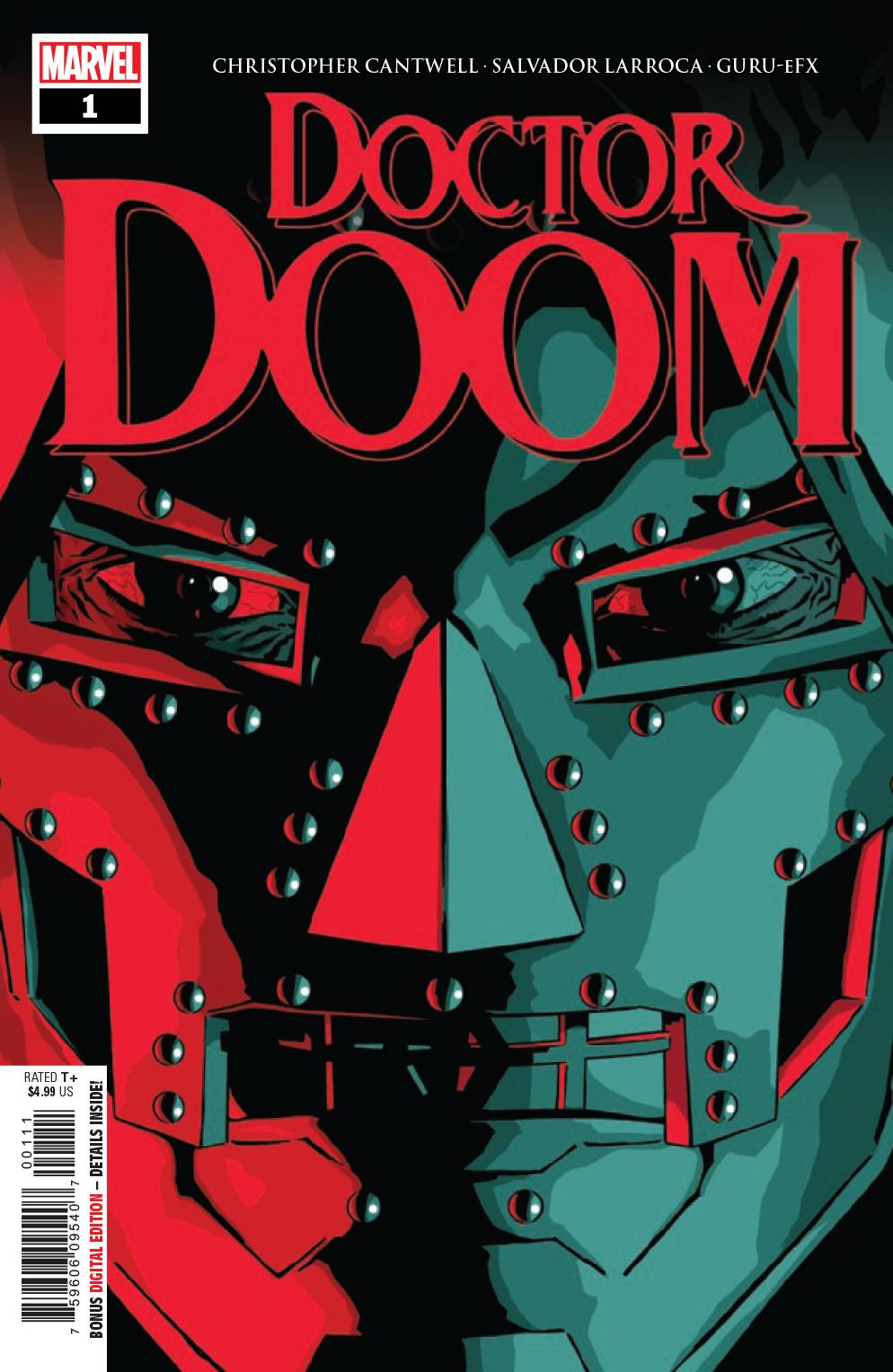
Doctor Doom enters a room before he says a word. The iron face, the green cloak, the impossible posture of someone who expects obedience: every part of his design communicates authority. Yet the mask is only the surface. Victor von Doom is a scientist, sorcerer and ruler whose greatest weapon is his certainty that the world would function better under his control.
For collectors, that range is a gift. His history moves through early Fantastic Four, Bronze Age villain features, armoured duels, supernatural tragedy and events that reshape Marvel itself. A strong Doom collection can tell a complete story through its covers: the calculating adversary, the monarch, the desperate son, the thief of cosmic power and the man who finally becomes a god.
This file follows the principal Marvel Comics incarnation. Alternate universes deserve their own labels: the Doom name, mask or visual silhouette alone does not establish that a book features the same Victor von Doom.
Begin with Brubaker and Raimondi’s six-issue origin story. It gives the mask a life behind it.
The origin route →Then follow Doom and Doctor Strange into Mephisto’s realm. This is the personal cost beneath the grand ambition.
The supernatural route →Build towards Hickman’s 2015 event. Doom’s greatest triumph brings his rivalry with Reed into sharp focus.
The cosmic route →Choose a paperback, a digital edition or an identified reprint. You can meet Doom without buying a Silver Age key.
Byrne’s Fantastic Four #258 or the Doomquest pair can anchor a focused, affordable collection.
Add a villain team-up, the Power Cosmic sequence or a complete modern solo run rather than isolated issues.
#5, #6, Annual #2 and early solo appearances need edition and condition comparisons before a budget becomes a bid.
Victor comes from a Romani community in the fictional European nation of Latveria. His background is rooted in persecution and family loss, rather than inherited royal privilege. His mother Cynthia's pact with Mephisto gives his history a supernatural wound: power obtained to resist oppression carries a devastating personal cost. His later pursuit of her soul is one of the clearest reminders that the figure beneath the armour once wanted something more intimate than conquest.
Doom's formative rivalry with Reed Richards belongs to his student years. A disastrous experiment, wounded pride and his subsequent journey towards the armoured identity become essential elements of his self-created legend. The monastery and the mask transform a gifted young man into a figure who presents himself as beyond ordinary humanity. Different retellings place different emphasis on the accident and his injuries; the persistent dramatic point is Victor's refusal to accept the limits of his own judgment.
Latveria then becomes more than a base for inventions. It is the stage on which Doom makes his argument for absolute authority. He can protect his country while demanding obedience from its people; devotion to a homeland and tyranny can occupy the same character. Reading him only as a secret hero misses the coercion. Reading him only as a machine for evil misses the attachments that make his decisions interesting.
For the collector, the key distinction is precise: Fantastic Four #5 introduces Doom and includes an early account of his background. Fantastic Four Annual #2 expands that origin. The annual is an important origin key, but it does not replace #5 as his debut or the first issue to address his past.
Two milestones, two purposes. #5 is the debut and includes early background. Annual #2 is the expanded origin. The second book deepens the first; it does not take its place.
Marvel: Lee, Kirby and the debutBooks of Doom: collected contents
Doom's armour, robotics and time technology make him a convincing opponent for Marvel's scientific heroes. His magical knowledge takes the same ambition into territory that laboratory equipment cannot settle. He can challenge Iron Man through engineering and Doctor Strange through sorcery, then turn either discipline towards acquiring still greater power.
This is why a Doom reading list should include both Doomquest and Triumph and Torment. A shelf built entirely from cosmic event covers loses the patient inventor and occult practitioner who make those larger stories possible. A shelf built entirely from Fantastic Four battles loses the emotional stakes that his supernatural stories can expose.
The recurring pattern is the desire to turn someone else's extraordinary power into his own instrument. In Fantastic Four #57, the prize is Silver Surfer's Power Cosmic. The original Secret Wars gives that appetite a much larger target. The spectacle grows, but the underlying temptation remains recognisable: if Doom could obtain enough power, surely nobody could deny that he was right.
Armour, Doombots and time travel externalise his intellect. Even the machine can become a performance of authority.
Magic exposes obligations and vulnerabilities that an invention cannot remove. The question becomes what Victor will sacrifice to obtain the result.
Marvel’s Doctor Doom profileThe pictured 2026 Triumph and Torment edition
The Reed–Doom conflict is about intelligence, but it is also about the use of intelligence. Reed belongs to a family and a network of collaborators. Doom prefers the clarity of a hierarchy with himself at its summit. Reed's mistakes can become problems to repair; Doom's mistakes threaten the identity he has built around being exceptional.
That is an editorial lens, not a rule that every writer follows identically. It helps explain why their clashes remain compelling after decades of inventions, disguises and escapes. Defeating the Fantastic Four is rarely enough. Doom wants Reed to recognise his superiority, which gives a personal argument the capacity to endanger an entire world.
The relationship also reaches into the Richards family. Doom's involvement in Valeria's birth and his later use of dark magic against the family make the emotional boundaries disturbingly unstable. Assistance does not erase manipulation, and affection does not guarantee safety. Unthinkable is essential because it strips away any comfortable assumption that charisma, regal bearing or occasional generosity makes Doom harmless.
He can conquer a world and still need one man to admit he was right.
Fantastic Four #39–40 turns the Baxter Building into a battlefield, while #200 makes the confrontation an anniversary spectacle. Neither is an origin book; each earns its place through a memorable expression of the relationship.
For the longer route, follow the early Lee–Kirby clashes, read Byrne’s view of the monarch and move through Unthinkable towards Hickman’s Secret Wars. The machinery changes. The demand for recognition remains a useful thread to follow.
Reed’s own history continues in our Fantastic Four Character File.
Marvel’s Fantastic Four historyUnthinkable: the collected arc
Stan Lee and Jack Kirby established Doom in 1962. Kirby's design gives the character a remarkable balance: medieval-looking armour paired with futuristic machinery, a human outline behind an unreadable iron face. It provides later artists with a recognisable foundation while leaving enormous room for atmosphere, scale and expression through posture.
John Byrne's Fantastic Four era brings sustained attention to Doom as a ruler and recurring presence. David Michelinie, Bob Layton and John Romita Jr. give his encounter with Iron Man the adventurous momentum of Doomquest. Roger Stern and Mike Mignola make his journey with Doctor Strange an intimate supernatural drama. Ed Brubaker and Pablo Raimondi revisit the life that precedes the mask.
Jonathan Hickman and Esad Ribić later place Doom at the centre of a collapsing multiverse. Brian Michael Bendis and Alex Maleev explore his attempt to inherit a heroic mantle. Christopher Cantwell and Salvador Larroca ask what remains when his position becomes uncertain. Ryan North and R.B. Silva return to the political implications of a world beneath his rule.
The medieval outline, futuristic tools and expressive posture establish a design that can survive almost any change in scale.
Read the kingdom and the routines alongside the battles. The monarch has a life beyond an encounter with the heroes.
Supernatural atmosphere makes his family obligation feel as consequential as a cosmic contest.
The origin becomes a sustained portrait of a person building a formidable version of himself.
Godlike power becomes the setting for an argument that has always been personal.
Remove secure authority and the character must confront possibilities he would normally control.
Doom is a character collection that can cross titles without losing its centre. Choose a period, then follow the stories that give its covers meaning.
Dates here describe the story eras. Cover dates and actual release dates sometimes differ.
Start with Fantastic Four #5, the expanded origin in Annual #2, the Power Cosmic story in #57–60 and the Latveria sequence in #84–87. Marvel Super-Heroes #20 adds an early solo spotlight.
Astonishing Tales gives Doom space alongside Ka-Zar. Giant-Size Super Villain Team-Up and Super-Villain Team-Up develop the uneasy possibilities of pairing powerful personalities, particularly Doom and Namor.
Doomquest, Byrne's Fantastic Four, the original Secret Wars, Emperor Doom and Triumph and Torment offer several sharply different ways into the character.
Unthinkable pushes the horror of his methods; Books of Doom revisits the beginnings of his identity.
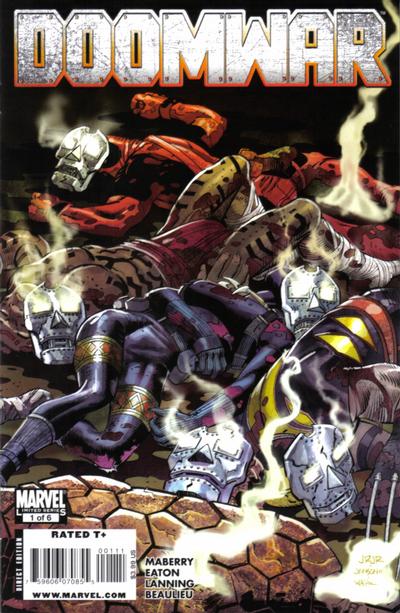
Doomwar, Hickman's Secret Wars, Infamous Iron Man, the Cantwell/Larroca solo series and One World Under Doom expand the collection beyond a straightforward villain chronology.
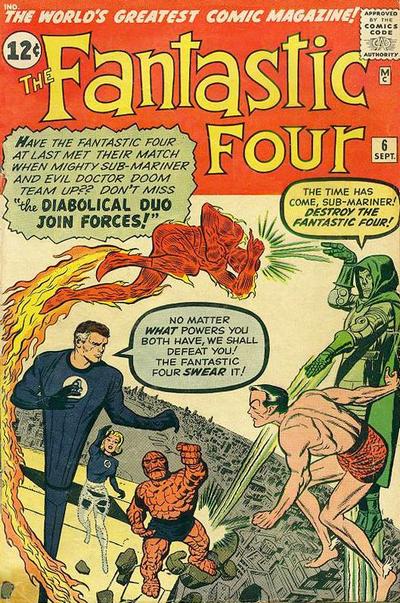
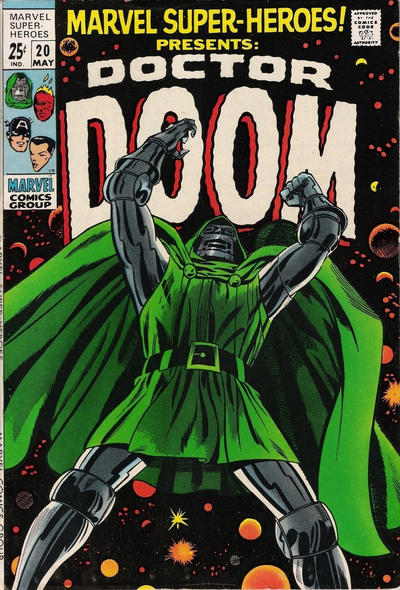
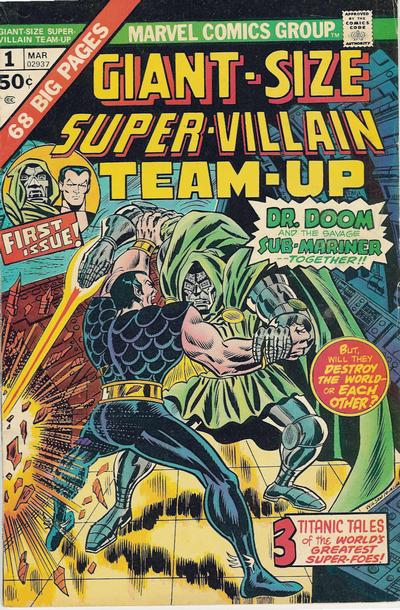
Twelve ways into the character, from an armoured adversary to a monarch with impossible power. Begin with Books of Doom or Triumph and Torment, then explore the eras that interest you.
Fantastic Four #57–60, 1966–1967
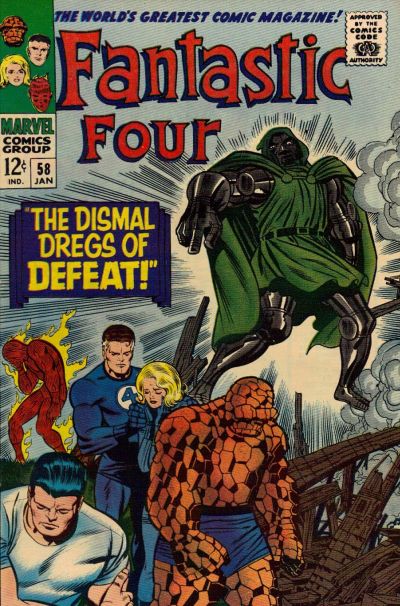
Doom steals Silver Surfer's power and turns an established rivalry into a crisis the Fantastic Four cannot solve through ordinary force. The attraction is the combination of Kirby spectacle and the character's appetite for escalation. These issues show how quickly a calculated scheme can become a claim to supremacy. Collect the sequence for the story; treat #57 as the moment of acquisition and #58 as a powerful visual expression of the consequences. Neither is Doom's debut, and the four issues span two cover years.
Iron Man #149–150, 1981
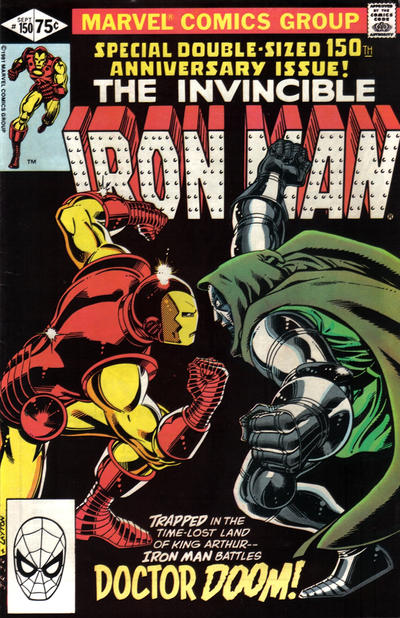
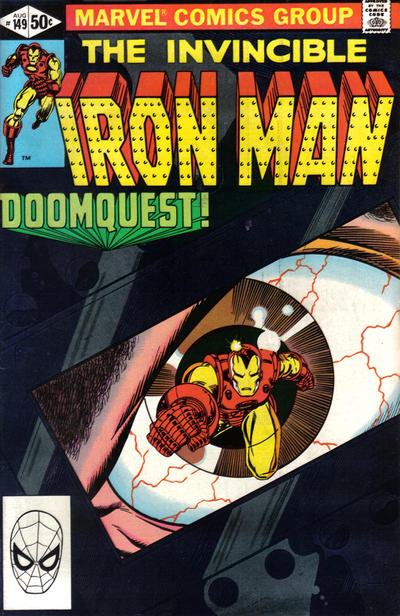
Tony Stark and Victor von Doom are displaced into the world of Camelot. The setting tests two men who normally surround themselves with modern technology, while their armour makes them look almost at home among knights. Michelinie, Layton and Romita Jr. build an adventure around rivalry and reluctant cooperation. This is an accessible way to see Doom outside his usual Fantastic Four framework. Keep both issues together: #150's celebrated clash has greater impact when #149 supplies the journey that leads into it.
Fantastic Four #258, 1983
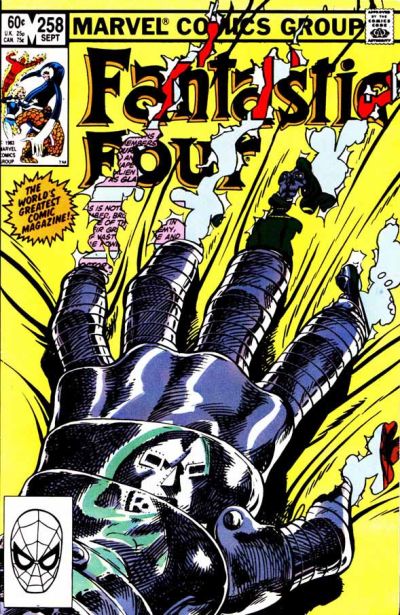
Byrne lets the series step away from its usual heroes and spend time with Doom. The appeal is perspective: the villain has a kingdom, routines, plans and a life that does not begin only when the Fantastic Four arrive. Read it alongside the surrounding Byrne issues rather than assuming every memorable Doom appearance must introduce a new power or character. As a collection piece, it represents the value of a defining portrayal. A book can be important because of what it understands about its subject.
Marvel Super Heroes Secret Wars #1–12, 1984–1985
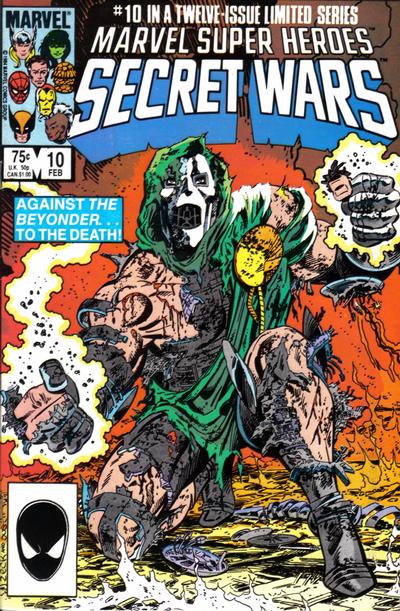
The original event brings Marvel heroes and villains to Battleworld under the influence of the Beyonder. Doom refuses to accept the role allotted to him and seeks the power behind the contest. For his character file, #10 is the visual and narrative centrepiece. Jim Shooter's event turns Doom's ambition into something almost impossible to contain, while Mike Zeck's imagery gives collectors an enduring representation of determination under extreme punishment. Read the complete event to understand the rise and its consequences; one famous cover captures only a portion of the story.
original graphic novel, 1987
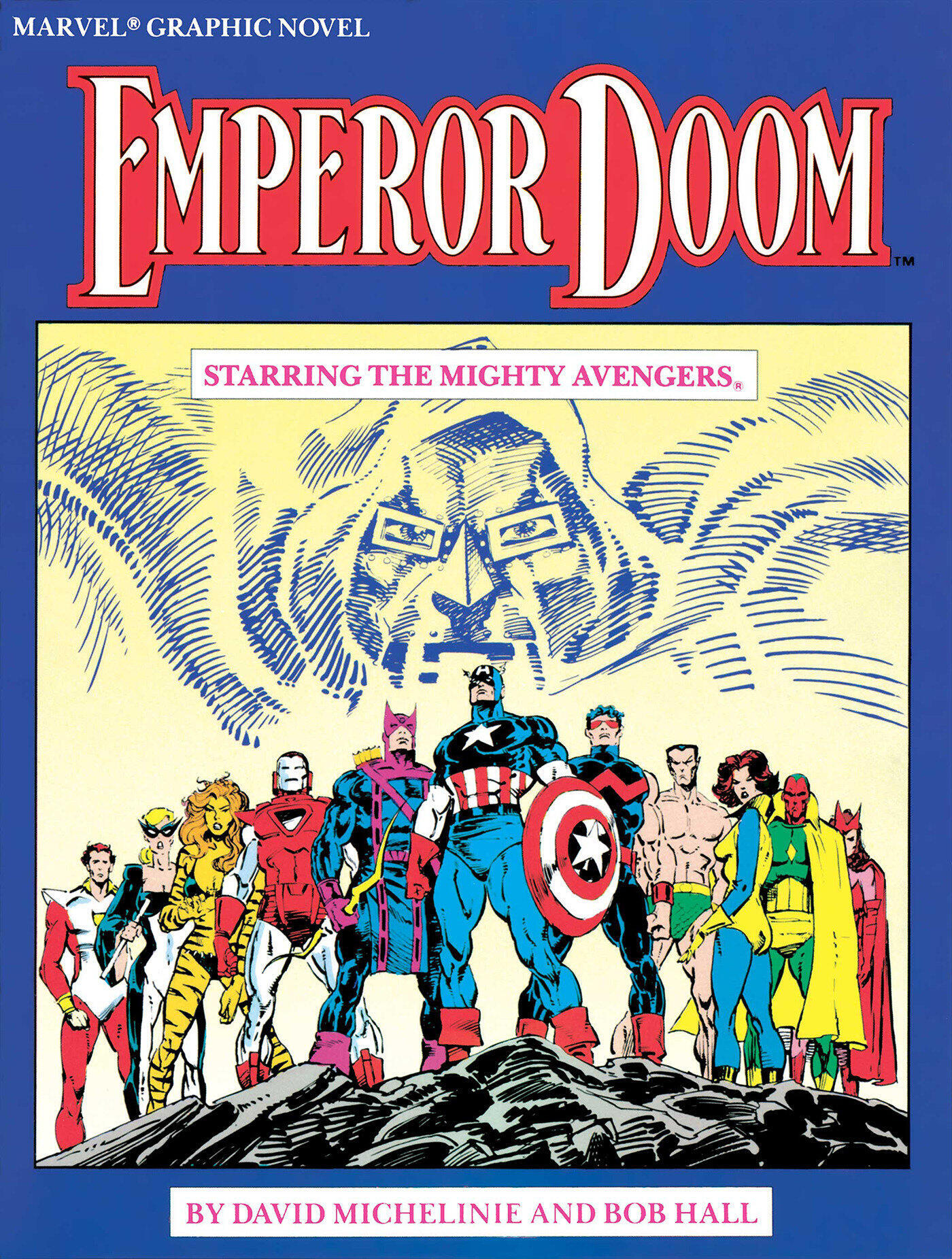
David Michelinie and Bob Hall examine an unusually revealing scenario: Doom obtains control of the world through the Purple Man's amplified power. Once conquest becomes government, the question changes. What does victory mean for a man whose identity depends so heavily on struggle and mastery? This compact story works particularly well beside the larger Secret Wars events. It puts the grand promise of universal rule into a more contained setting and invites the reader to examine what Doom thinks success should look like. Seek the original graphic novel or a collection that explicitly includes it.
Doctor Strange and Doctor Doom, 1989
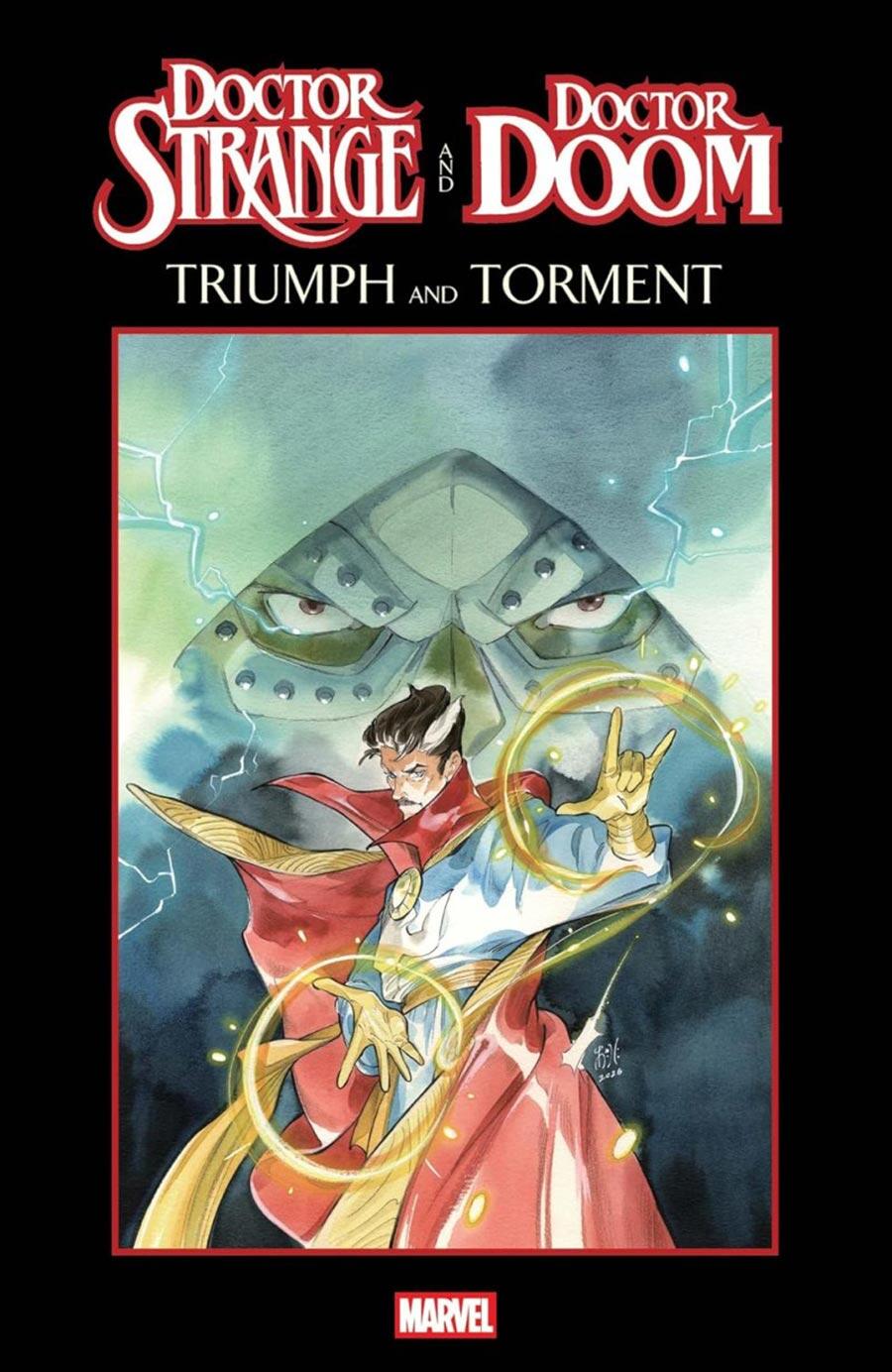
Roger Stern and Mike Mignola take Doom and Strange into Mephisto's realm in pursuit of Cynthia von Doom's soul. This is the emotional cornerstone of the reading list. It makes his sorcery purposeful, and his pride becomes something the reader must weigh against a son's obligation. The alliance allows two imposing personalities to reveal themselves through negotiation, danger and sacrifice. Start here if you want Doom to feel like a person rather than an event-sized threat. The original is a graphic novel, not an issue of the ongoing Doctor Strange series.
Pictured edition: Peach Momoko’s 2026 comic-format reprint, released 2 September 2026. The original Stern/Mignola graphic novel dates to 1989.
Fantastic Four #67–70 and #500, 2003
Mark Waid and Mike Wieringo intensify Doom's use of magic and aim his attack at the Fantastic Four's most personal vulnerabilities. The story becomes a test of Reed's confidence as well as the family's ability to withstand cruelty. It is an especially useful counterweight to stories that make Doom's nobility seductive. Readers should expect dark material. For collectors, check the numbering carefully: this arc begins in the 1998-launched series and concludes as Fantastic Four returns to legacy numbering at #500. A complete story matters more than matching numbers on a row of spines.
Collected editions commonly include the aftermath in Fantastic Four #501–502.
#1–6, 2005–2006
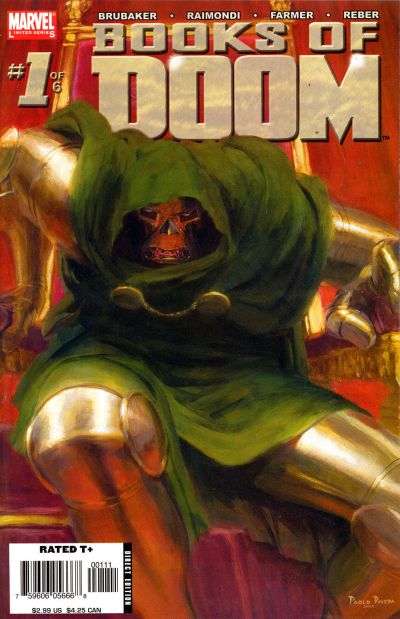
Brubaker and Raimondi trace Victor's movement from childhood towards the throne of Latveria. It provides a substantial origin reading experience rather than simply a checklist of facts about the mask. The pleasure lies in watching experiences accumulate into a worldview: intellect, loss and ambition become the story Victor tells about himself. Read the six issues as a unit. For a new reader, it supplies valuable context before revisiting the earlier Lee–Kirby material. For an established collector, it offers a modern companion to Annual #2 without replacing that older book's historical importance.
#1–9, 2015–2016
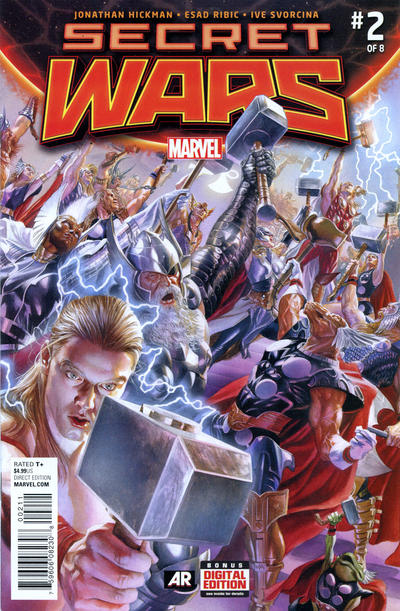
Hickman and Ribić's event follows the destruction of the multiverse and places Doom above the surviving fragments assembled into Battleworld. God Emperor Doom has the authority his earlier schemes repeatedly sought, but the existence of his world does not settle his conflict with Reed. Read the central nine issues for the core story; Hickman's Avengers and New Avengers provide the longer preparation. The pictured Secret Wars #2 uses Alex Ross’s Thor Corps cover: it marks this story chapter, rather than showing a Doom portrait. Keep this event clearly separate from the 1984 series: the shared name conceals different structures, creators and cosmic circumstances.
#1–12, 2016–2017
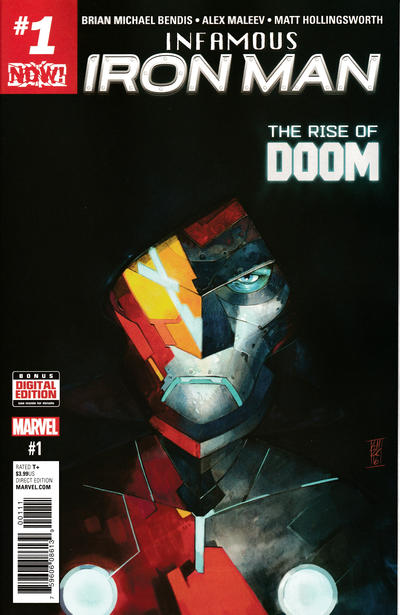
Bendis and Maleev put Victor inside a heroic identity associated with Tony Stark. The premise asks whether changed intentions can overcome a lifetime of distrust. His history follows him into every attempted act of heroism, giving the series a different tension from stories about conquering enemies. It is a worthwhile change of pace after Secret Wars: power gives way to reputation, accountability and the difficulty of being believed. Collect it as Doom's attempt to become Iron Man; it does not turn the established histories of Victor and Tony into a single biography.
#1–10, 2019–2020
Cantwell and Larroca remove the comfort of secure authority. A catastrophic attack leaves Doom accused and exposed, while visions of another life complicate the future he imagines for himself. The series offers a useful modern solo portrait because it can question the person without needing every confrontation to become a Fantastic Four reunion. ACO's first-issue cover makes a striking opening image for a modern Doom shelf. Read the ten-issue sequence for its complete argument about ambition and possibility; later collections may also include related appearances beyond the numbered run.
#1–9 · 2025
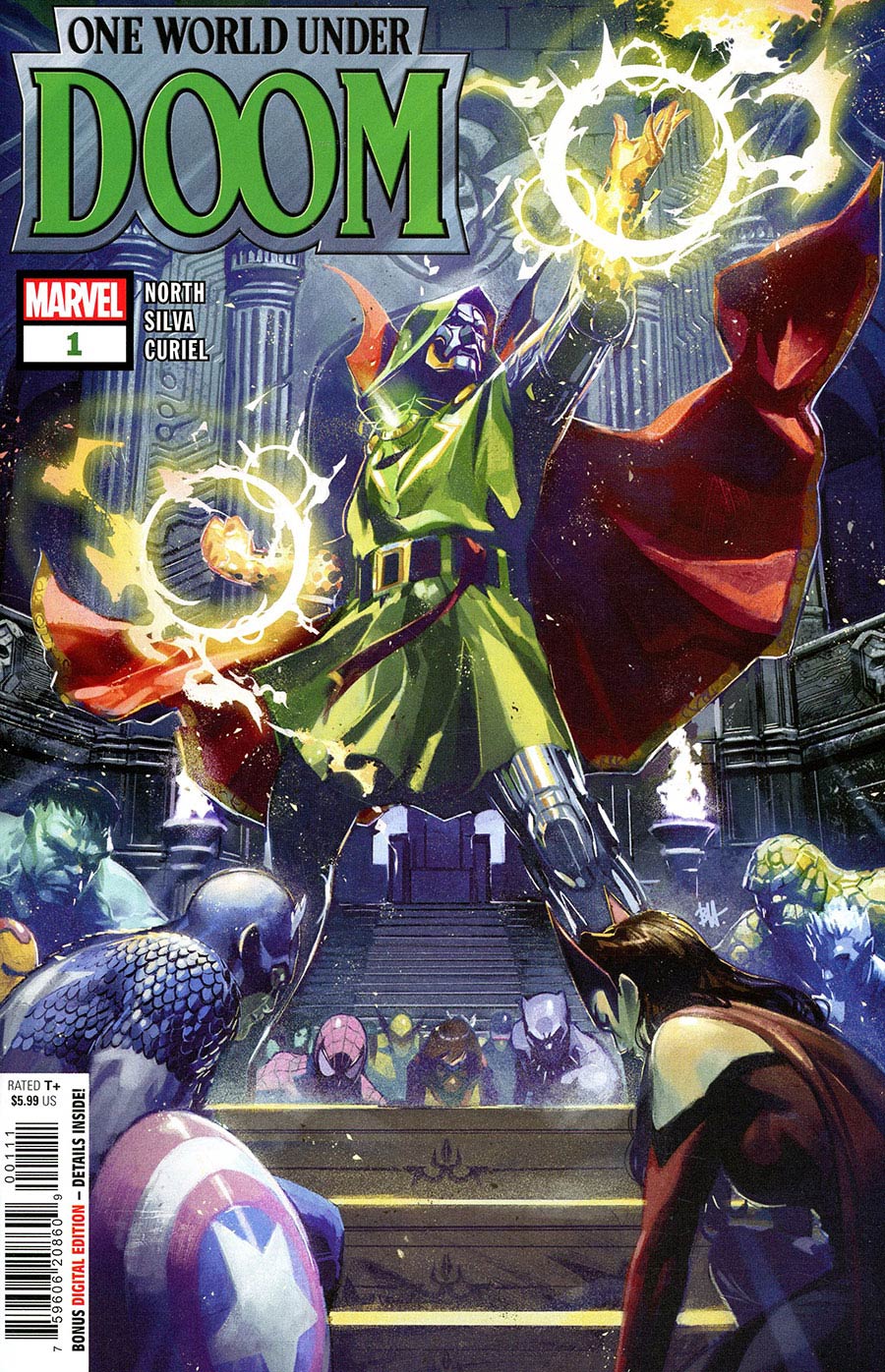
North and Silva begin with Doom as Earth's Sorcerer Supreme and a declaration of worldwide rule. The premise draws the national ruler onto a global political stage, with Marvel's heroes facing a challenge that cannot be understood only as a punch-up. This is the contemporary chapter to place alongside Emperor Doom: two different eras asking what happens when the demand to govern everyone becomes reality. Blood Hunt supplies the preceding transfer of the Sorcerer Supreme mantle. Date this material to its story era rather than presenting a temporary status as an eternal character trait.
#150 is the famous clash, but #149 supplies the journey into it. Buying the second half for its image and reading both halves for the story are equally clear collecting goals.
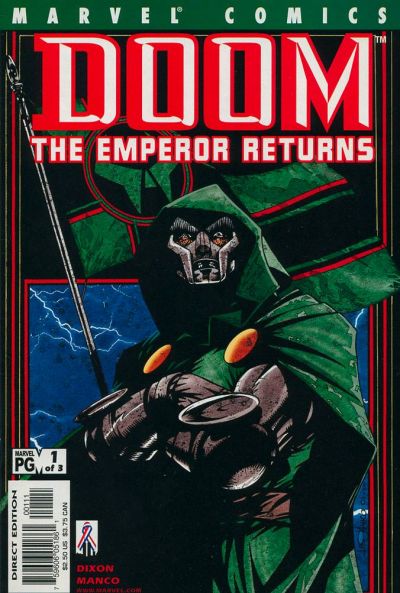
Doomwar #1–6 (2010) is another useful branch: the Wakanda conflict broadens the collection into Black Panther’s world. Doom: The Emperor Returns is a separate three-issue series, with its first issue cover dated 2002 and released in 2001. It is a different publication from the 1987 Emperor Doom graphic novel.
Marvel’s Doom reading guideIssue ranges, creators and collected contents ↓
Build a collection around something you can explain: a debut, an origin, an artist, a defining story or an image you want to live with.
Begin by deciding which version of the collection you want to see on the shelf. A historical route starts with the early Fantastic Four appearances and grows outwards. A story route begins with accessible collections such as Books of Doom, Doomquest and Triumph and Torment. A cover route follows the character's changing visual scale, from Kirby's armoured schemer to Zeck's defiant figure and the imperial presence of the modern events.
Those routes can overlap without becoming a hunt for every variant. Original issues, reprints, facsimiles and collected editions serve different purposes. Keep the edition visible in your records, especially when an image repeats a famous early cover. The strongest Doom collection is one whose books have a reason to be there: debut, origin, defining portrayal, memorable art or a story you want to revisit. That makes the collection satisfying before any resale decision enters the picture.
These dated observations are a starting point for shopping, not a price index. Conditions and edition descriptions come from the linked sellers; dealer asks and recorded sales are identified separately. Checked 7 October 2026.
| Comic | Price reference | Copy & status | Collecting purpose |
|---|---|---|---|
| Books of Doom — Panini UK paperback | £17.99 retail ask | New collected edition; #1–6 | A complete origin reading route. Gosh London listing. |
| Books of Doom #1 (2006 cover date) | £5.45 recorded sale | Seller-described NM 9.4 raw first print; 17 August 2026 | £5 item price plus £0.45 buyer fee. One single-bid UK auction, not a general value for all copies. |
| Fantastic Four #258 (1983) | £4.95 dealer ask | Raw VG+ original | Byrne’s Doom-focused Interlude. Silver Acre listed ask. |
| Iron Man #149–150 (1981), pair | £39.98 combined asks | Raw #149 VG+ and #150 VG | Doomquest in two parts. Total of separate Silver Acre listings: £9.99 + £29.99. |
| Iron Man #149–150 (1981), pair | £179.98 combined asks | Raw NM copies | The same story with a substantial grade premium in this dealer’s stock: £29.99 + £149.99. Not a sold pair. |
| Fantastic Four #57 (1966) | £64.99 dealer ask | Raw VG- original | The Power Cosmic chapter begins. Silver Acre listing; higher grades need their own comparison. |
| Fantastic Four Annual #2 (1964) | £240.75 dealer ask | Seller-described raw VG 4.0 | The expanded origin. UK business seller Genosha Collectibles; one asking-price anchor. |
| Marvel Super-Heroes #20 (1969) | £89.13 recorded sale | Seller-described raw G/VG 3.0; 23 August 2026 | £85 item price plus £4.13 buyer fee. One single-bid UK auction for the early solo spotlight. |
| Marvel Super-Heroes #20 (1969) | £299.99 / £499.95 asks | Raw FN- / FN+ originals | Silver Acre’s listed grades and asks. These are retail observations, not confirmed transactions. |
| Fantastic Four #5 (1962) | Book-specific comparison | Original debut; condition and restoration matter | No defensible grade-matched raw range was established in this snapshot. Request evidence for the exact copy. |
Add postage and charges where applicable. A seller’s grade is a description to inspect, rather than an independent certification. Graded, restored, incomplete and exceptional copies require their own comparisons.
Fantastic Four Annual #2 is a square-bound 1964 annual, a different publication from monthly #2. Inspect the spine, hinges, pages and completeness rather than relying only on the front image.
Emperor Doom is the 1987 graphic novel. Doom: The Emperor Returns is the later limited series. Their names connect a theme; their formats and editions differ.
The Triumph and Torment image here is the 2026 Peach Momoko reprint. The story is from 1989. Likewise, Books of Doom #1 was released in 2005 with a January 2006 cover date.
All 25 supplied covers, from the 1962 debut to the 2026 Triumph and Torment reprint. Tap a cover to open the full image. Each keeps its natural proportions.
Showing all 25 cover images
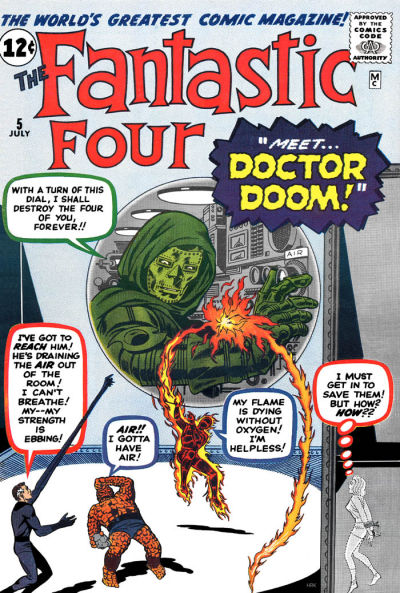
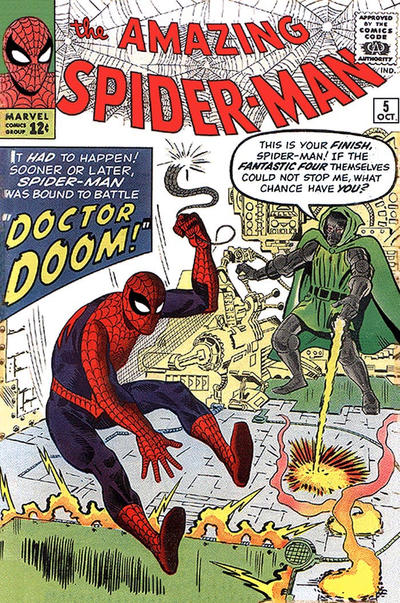
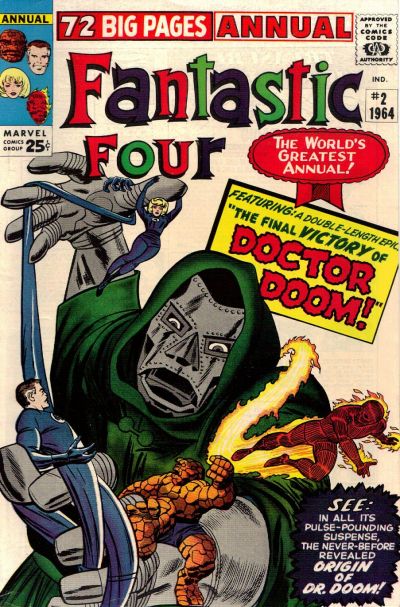
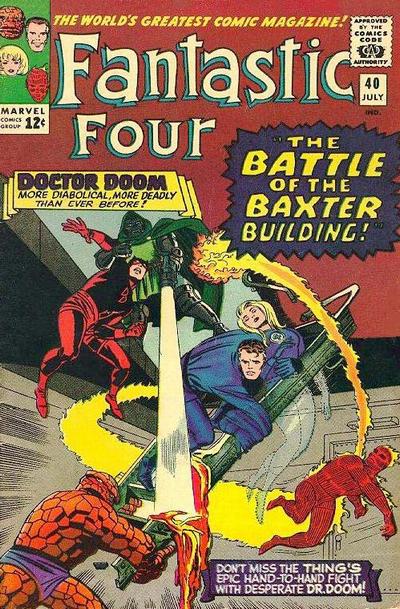
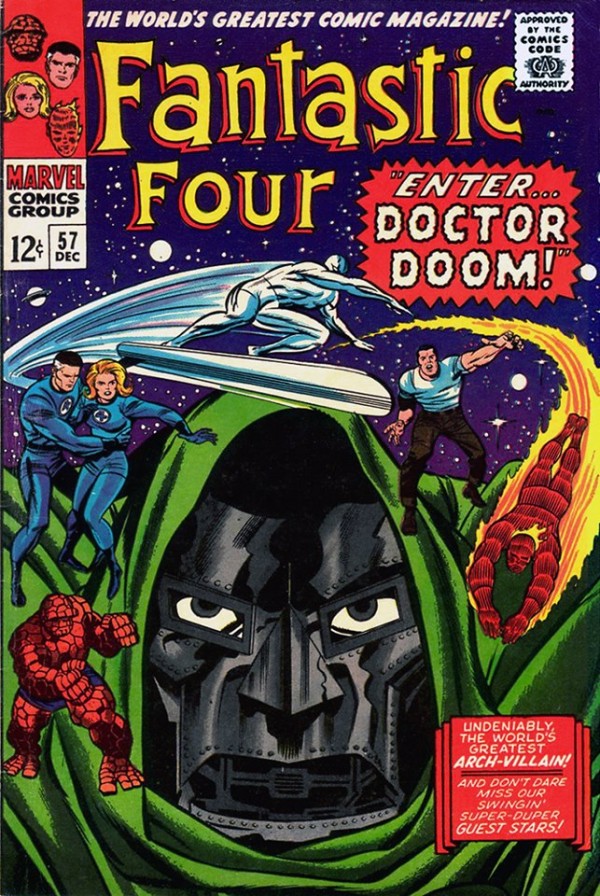
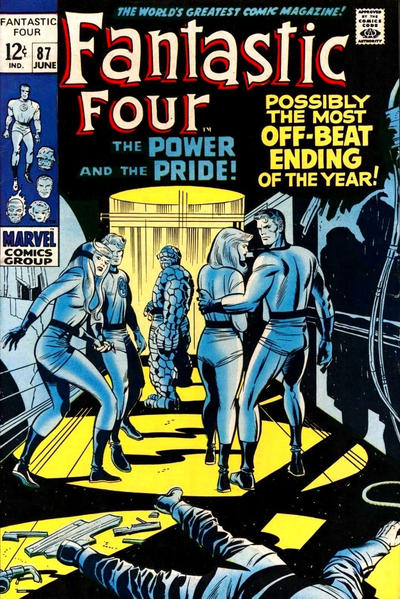
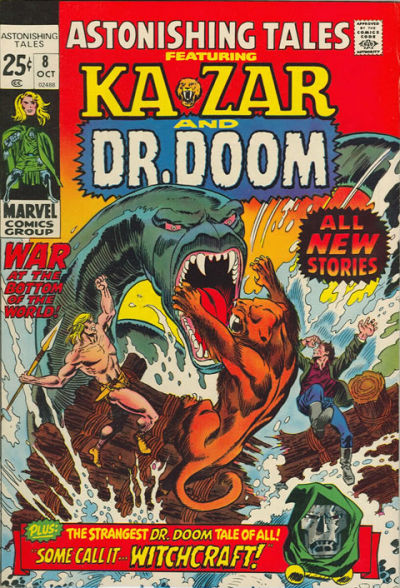
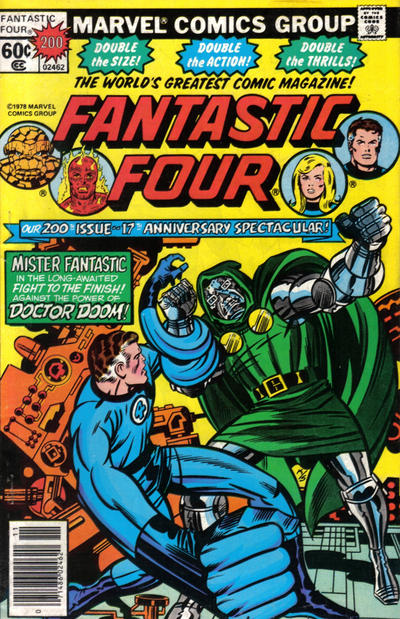
Historic cover artwork identifies the comic discussed; the image alone does not authenticate a physical first printing. Astonishing Tales #8 belongs here for its Doom feature inside, although Ka-Zar dominates its cover. The Thor Corps image on Secret Wars #2 identifies the 2015 event.
The scientist, the sorcerer, the monarch or the man behind the mask. Start with the version that interests you, then let the story give the next book a purpose.
Comic Agent is based in the UK. Not every comic is listed on eBay—contact us if you are looking for something specific. The covers in this feature are editorial references; check individual listings for available stock and condition.
Publication facts and story contents are checked against Marvel’s records and publisher/distributor catalogues, with specialist references for cover and edition details. Reading routes and interpretations are Comic Agent editorial judgments. Market observations retain their condition descriptions and status.
Doctor Doom, associated characters and cover artwork belong to Marvel and their respective rights holders. Comic Agent is an independent collector-run editorial and retail site.