
Go to Japan.
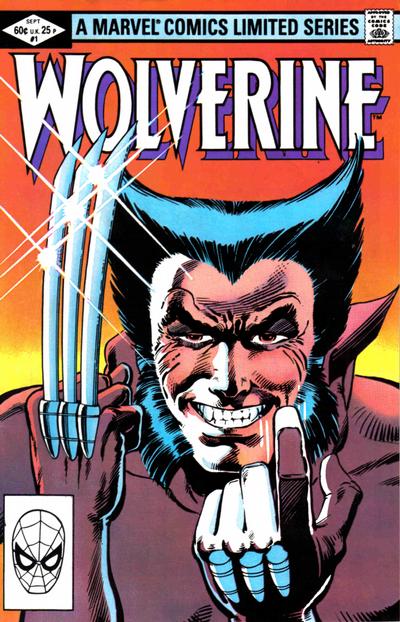
Claremont and Miller’s 1982 limited series gives you Logan, Mariko and a beautifully contained conflict between instinct and discipline.
Four issues. A defining portrait. →The man behind the claws.
Every scar has a story.
A yellow mask. Six claws. A life scattered across wars, laboratories and lost memories. Follow Logan from a Hulk encounter to the stories that made him impossible to replace.
You can recognise Wolverine before you know anything about him. The pointed mask, the compact silhouette, the claws held ready: a few shapes carry an extraordinary amount of history. Reading him reveals something more surprising. Inside that fierce image is a man who keeps trying to decide what sort of person he will be.
Logan can survive appalling injuries. He can also carry a slight for decades, lose people he loves and make decisions he struggles to forgive. His best stories bring those scales together: the body that repairs itself and the life that remains complicated. Honour, friendship and restraint become interesting because violence comes so easily.
A Wolverine collection has several possible centres. There is the Bronze Age X-Man, the samurai, the victim of Weapon X, the Madripoor adventurer and the older survivor facing what his life has left behind. Choose one thread first. You will discover the others along the way.
Claremont and Miller’s 1982 limited series gives you Logan, Mariko and a beautifully contained conflict between instinct and discipline.
Four issues. A defining portrait. →Barry Windsor-Smith takes you into the laboratory. Expect fractured perception, clinical cruelty and some of Wolverine’s most unsettling imagery.
Follow the experiment. →An alternate future turns the familiar survivor into a weary traveller. It is a bold, violent road story with its own continuity.
Take the long road. →Wolverine’s beginning spans three consecutive Hulk issues. Their collecting roles are distinct, and clear descriptions make the whole sequence more interesting.
Wolverine appears at the end of the story, stepping into the Hulk–Wendigo conflict. This is his first published story appearance: a cameo that announces the newcomer and sets up the confrontation.
Collect it for: the first moment readers meet him in the story.
The confrontation occupies the issue, and Wolverine appears on its cover. This is his first full appearance and first cover appearance, making it the most prominent centrepiece of the debut sequence.
Collect it for: the substantial introduction and the unmistakable cover.
A short follow-up appearance closes his immediate involvement. It completes this first Hulk encounter without carrying the same debut status as either preceding issue.
Collect it for: the complete opening sequence.
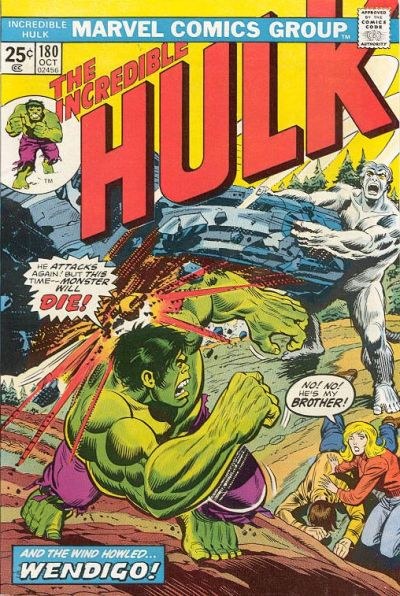
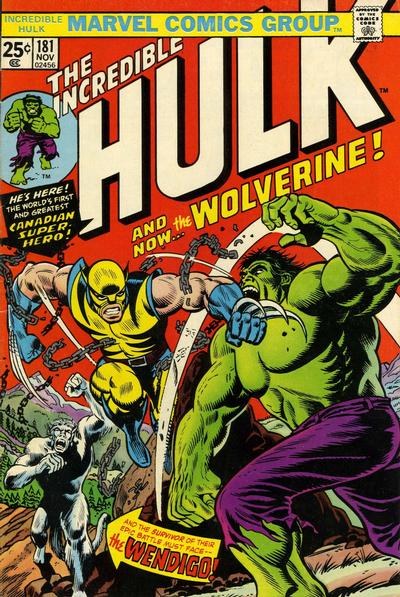
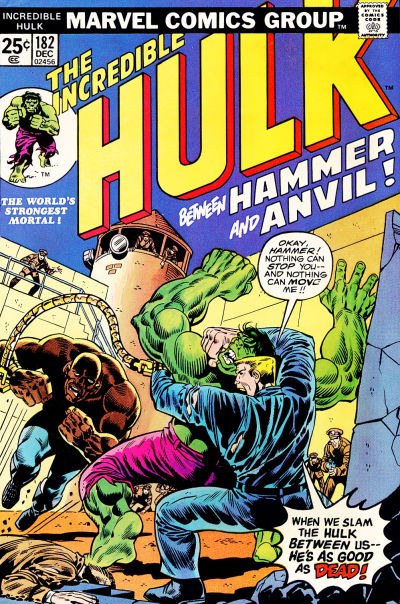
Issue #181’s cover date is November 1974; #180 is cover dated October and #182 December. Cover dates were publishing labels, so avoid treating them as exact shop-arrival dates. The useful collecting language is simple: first published story cameo, first full and cover appearance, then brief follow-up.
When buying an original, inspect the whole comic. These issues belong to Marvel’s Value Stamp era, so confirm the stamp is present and that the relevant page has not been cut. A handsome front cover can accompany an incomplete interior. Record restoration, missing pages and detached components alongside the edition.
Facsimiles let you enjoy the presentation of the early book at a different price level. Their purpose is easy to understand when the listing identifies them accurately. Check the indicia, publication details and the seller’s edition description before treating a familiar image as an original 1974 copy.
Debut and publication references ↓Read the Hulk Character File →
Wolverine’s creation brings several contributions together. Roy Thomas commissioned a Canadian character; Len Wein developed and wrote the introduction; John Romita Sr. designed the original costume; Herb Trimpe drew the first published appearances. Naming only the writer and the artist of #181 misses part of the story.
Len Wein and Dave Cockrum bring him into the new X-Men in Giant-Size X-Men #1. Cockrum’s continuing visual development and Chris Claremont’s long association with the team help turn a combative newcomer into a layered character. John Byrne’s X-Men work adds further definition, including the brown costume introduced in Uncanny X-Men #139.
Japan becomes a stage for honour, desire and self-command. Joe Rubinstein’s inks complete the 1982 mini’s distinctive finish.
Weapon X makes machinery, flesh and broken perception tell the story together.
Origin gives the childhood story a period atmosphere through Andy Kubert’s pencils and Richard Isanove’s colour work.
Old Man Logan builds a harsh alternate landscape around an ageing version of the familiar figure.
These are useful collecting routes in their own right. Follow an artist’s interpretation and you will see posture, facial expression and costume alter the mood as much as a new supporting character does.
The complete #1–4 cover sequence, from the beckoning claws of the opening issue to the final confrontation. Claremont and Miller’s Japan story makes a focused four-book collecting project and a clear starting point for readers.
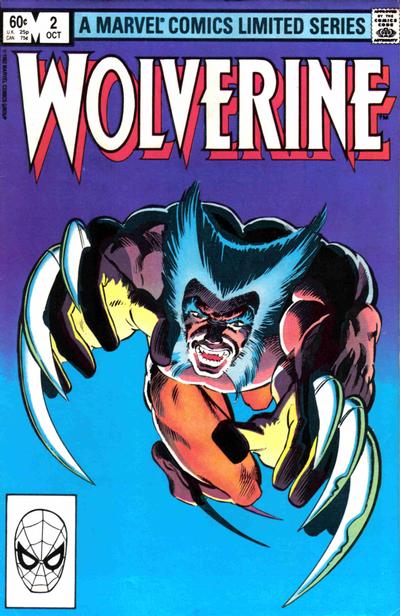
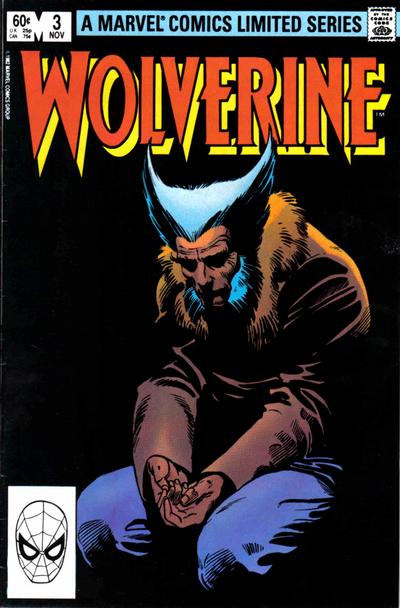
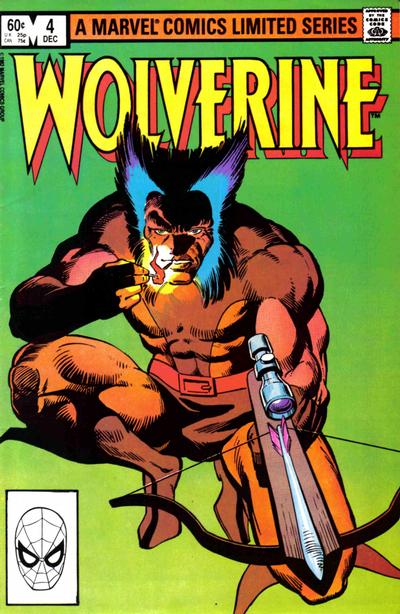
Marvel Comics Presents #72–84. Barry Windsor-Smith. 1991. A defining Wolverine story, and a wonderfully focused mini-collection with a clear finish line.
Logan is already a mutant, with a healing factor, heightened senses and natural bone claws. The Weapon X programme takes that existing person and subjects him to adamantium bonding, conditioning and experimentation. Barry Windsor-Smith turns the procedure into something far more disturbing than a diagram explaining where the metal came from.
The scientists talk about control. The images show its human cost: wires, restraints, monitors, a body treated as equipment. Fractured perception makes the reader question what Logan is experiencing and who is arranging it. The story’s horror grows from the distance between the clinical language of an experiment and the person trapped inside it.
Windsor-Smith writes and illustrates the sequence, using dense machinery, colour and page design to sustain its atmosphere. The covers give the original issues a visual identity of their own. Together, the story and the artwork make this a natural collecting project for Wolverine readers, artist collectors and anyone drawn to Marvel’s darker material.
The mutation belongs to Logan. Wolverine #75 later reveals the bone claws to readers after the loss of his adamantium.
Bonded adamantium and manipulation of his mind become lasting traces of a programme that tries to turn a life into a tool.
#72 is the obvious starting point. The satisfying collecting goal is the complete #72–84 sequence: the original serial, all its Wolverine-side covers and a run you can actually finish. Collectors pursue this as a recognised set; the CGC Registry gives the thirteen issues their own Weapon X set category.
You can build it issue by issue at comic marts and back-issue shops, or look for a complete run. Each gap has a number; the finish line stays in sight.
The laboratory imagery and Wolverine’s changing presence make this a rewarding cover sequence. The complete line-up gives the familiar opening image its wider context.
Every instalment belongs. The middle issues carry the experience forward, and #84 supplies the conclusion. A full run has a purpose beyond its headline book.
The original 1991 issues, #72 through #84. Tap any cover to open the individual image.
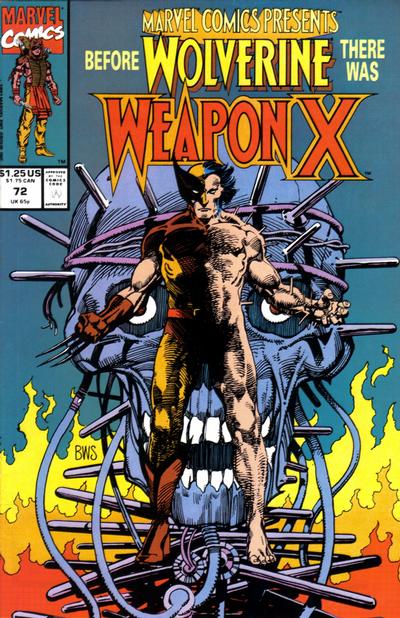
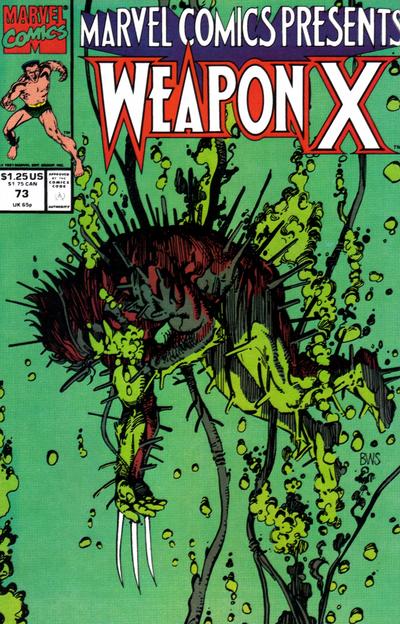
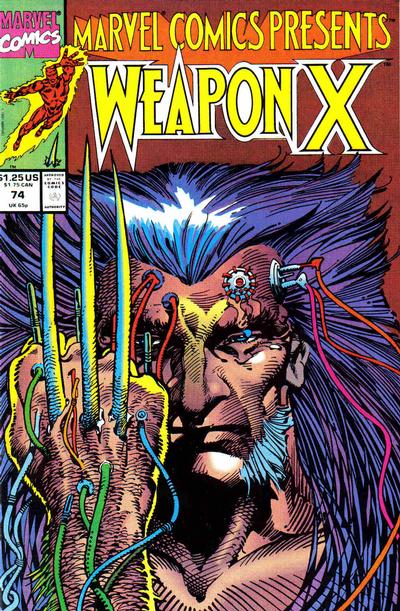
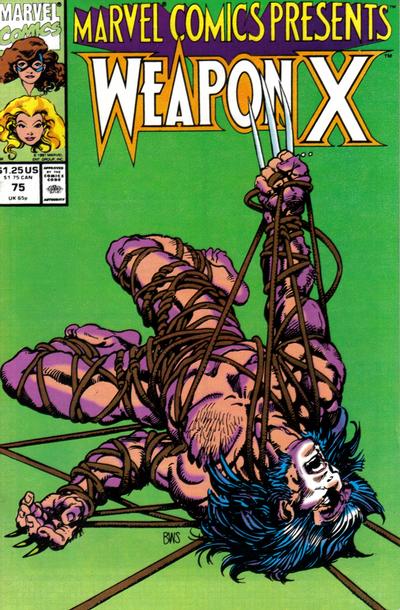
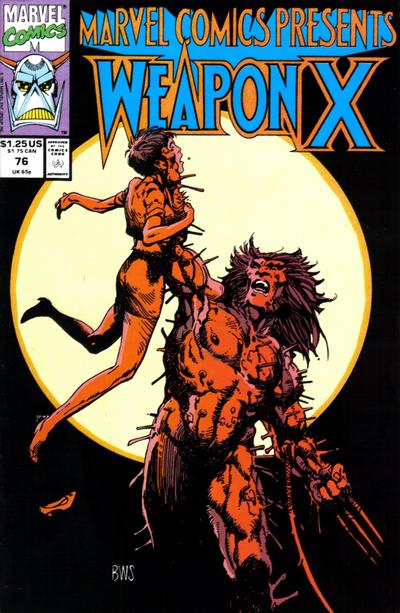
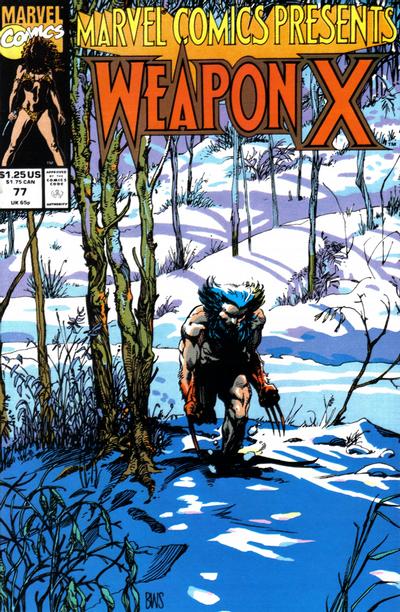
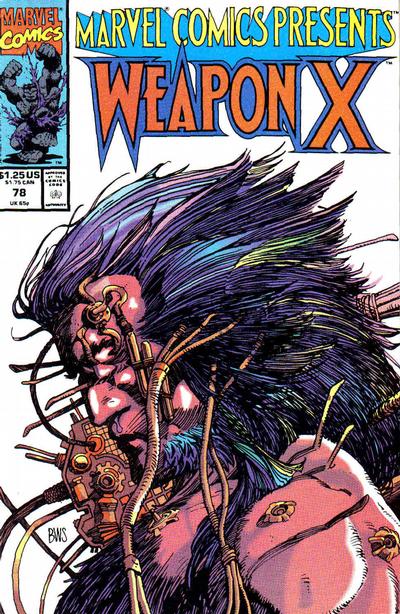
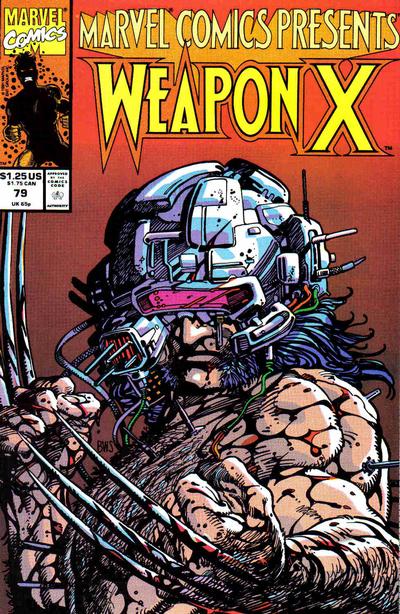
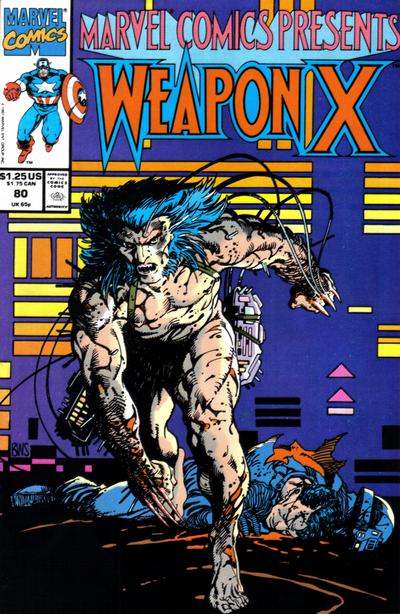
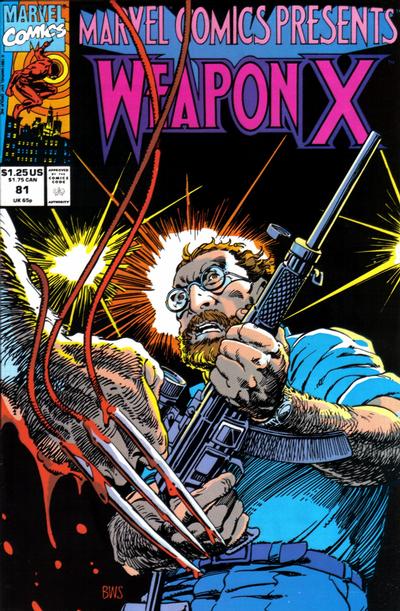
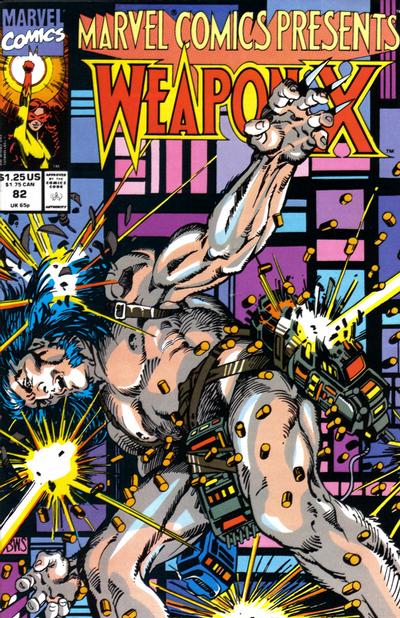
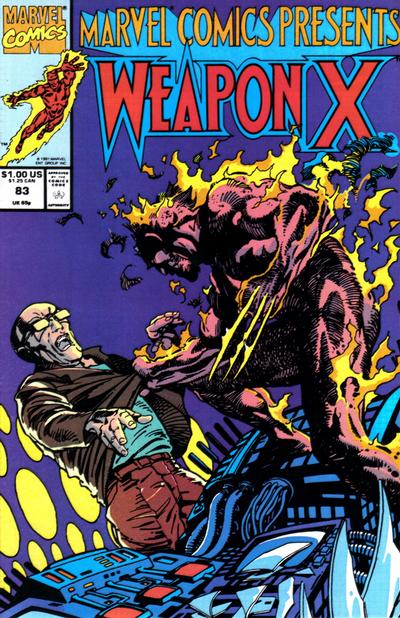
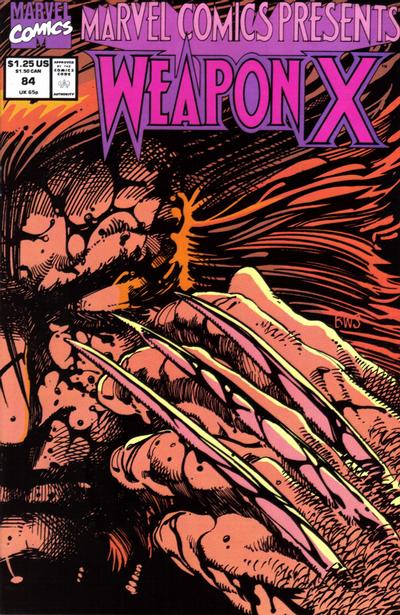
A complete original run contains all thirteen issues, including the prologue in #72 and the finale in #84. Ask for the issue list when a listing simply says “Weapon X set”.
A consistent, attractive raw run makes a satisfying project. Check spine stress, colour-breaking creases, staple attachments and completeness across the set. Price the actual copies and account for the cost of filling gaps.
This story was serialised within the ongoing Marvel Comics Presents anthology. Collected editions are a convenient reading route; the thirteen original comics form the mini-collection shown here. Other comics titled Weapon X are separate publications.
Thirteen issues. One complete story. A collection with a finish line.
Stock changes. The covers illustrate the collecting project; individual listings confirm what is available.
Marvel’s complete Weapon X reading list ↗The thirteen-issue CGC Registry set ↗
Victor Creed makes the Wolverine conflict intimate. He has the strength, senses and appetite for violence to meet Logan at close range, but the disturbing part is his pleasure in hurting people. Where Logan tries to impose rules on himself, Creed repeatedly attacks the very attachments that make those rules matter.
Sabretooth’s first appearance is in Iron Fist #14 (1977). His debut belongs to Iron Fist’s history before his relationship with Wolverine becomes central. That is a rewarding collecting connection: an important Wolverine adversary enters Marvel through another hero’s book.
Wolverine #10 (1989) makes a useful companion. Its birthday recollection ties Creed’s cruelty to Logan’s personal history and demonstrates why their encounters feel different from a routine supervillain fight. The menace is the promise that someone will keep coming back, remembering precisely where it hurts.
Their relationship has accumulated revelations, reversals and disputed accounts. Early suggestions about their family connection should not become an unqualified claim that Sabretooth is Logan’s father. Keep the emotional thread clear: Creed is the recurring possibility of savagery embraced, while Logan keeps struggling towards an identity shaped by responsibility.
Her cybernetic transformation makes the human cost of weaponisation visible in another form. Uncanny X-Men #205 is the essential reading stop: a wounded Logan and a pursuer who turns the city into hostile territory.
The coils, the Cold War history and the lethal physical presence move Wolverine into espionage and state experimentation. His arrival in the 1990s expands the visual vocabulary of a Wolverine rivalry.
Harada belongs to the Japanese family and power struggles surrounding Logan. The armoured silhouette looks wonderful on a cover; the relationships give the confrontation its stakes.
Kitty Pryde, Jubilee and Laura Kinney bring out different sides of Logan’s capacity to mentor and care. Mariko Yashida brings love, duty and belonging into his Japanese stories. Jean Grey and the X-Men place his desires within a shared life. A good reading collection makes room for these relationships alongside the fights.
Costumes make useful visual signposts. The stories explain why each period deserves space in the collection.
Dates describe the publication eras. Later origin stories can revisit much earlier points in Logan’s life.
The Hulk debut leads to Giant-Size X-Men #1 and the new team. Logan’s abrasive manner becomes part of an ensemble built around difference and belonging.
Uncanny X-Men #133 delivers a memorable solo stand. The brown costume, the 1982 limited series and the launch of the 1988 ongoing give collectors several distinct foundations.
The ongoing develops Logan’s life beyond the team, including the Patch identity. Weapon X and the bone-claw revelation push questions about his body and history into the foreground.
Origin reaches into childhood. Enemy of the State turns his training against his allies. Old Man Logan imagines an alternate endpoint.
Death of Wolverine, Laura’s time as Wolverine and Logan’s subsequent returns expand the meaning of the mantle. Identify the character and continuity whenever a title promises “Wolverine”.
Start with one complete story. These selections move between adventure, horror, espionage and tragedy; several contain graphic violence and mature material.
#1–4 · 1982
Chris Claremont, Frank Miller & Joe Rubinstein
Logan travels to Japan and enters the struggle surrounding Mariko Yashida’s family. Miller’s controlled movement and Claremont’s interior voice make violence feel inseparable from character. Love, shame and the desire to conduct himself honourably give the famous claws a human context. Read all four issues together. This is the original solo limited series; the ongoing titled Wolverine begins in 1988.
#1–6 · 1984–1985
Chris Claremont & Al Milgrom
Kitty’s ordeal in Japan draws Logan into a story about manipulation, survival and the difficult work of recovering yourself. Their relationship allows him to become a teacher with responsibilities beyond winning the next fight. It also gives the Japanese stories another perspective. Choose this after the 1982 mini to see how its concerns develop through someone younger and more vulnerable.
Uncanny X-Men #205 · 1986
Chris Claremont & Barry Windsor-Smith
A badly injured Logan moves through a wintry city while Lady Deathstrike and her allies pursue him. Katie Power’s presence changes the scale: a seemingly indestructible adult becomes someone a child tries to help. Windsor-Smith makes cold, pain and disorientation feel physical. This compact story is especially useful for readers who want a concentrated example before committing to a longer run.
#1–4 · 1988–1989
Walter & Louise Simonson; Jon J Muth & Kent Williams
Logan and Alex Summers are pulled into an espionage adventure with a distinctive painted atmosphere. Muth and Williams make this feel visually separate from a standard monthly X-Men comic. It is an excellent detour for a collector interested in format and artwork as well as continuity. The four-issue sequence offers a clear project with a beginning and an ending.
Marvel Comics Presents #72–84 · 1991
Barry Windsor-Smith
The adamantium procedure becomes a nightmare of observation, machinery and stolen agency. Windsor-Smith’s writing and art put the reader inside an experience whose meaning is repeatedly controlled by others. Read the complete sequence, preferably in a collected edition first. The original story is serialised across thirteen anthology issues; buying only #72 gives you the opening instalment.
Wolverine #119–122 · 1997–1998
Warren Ellis & Leinil Francis Yu
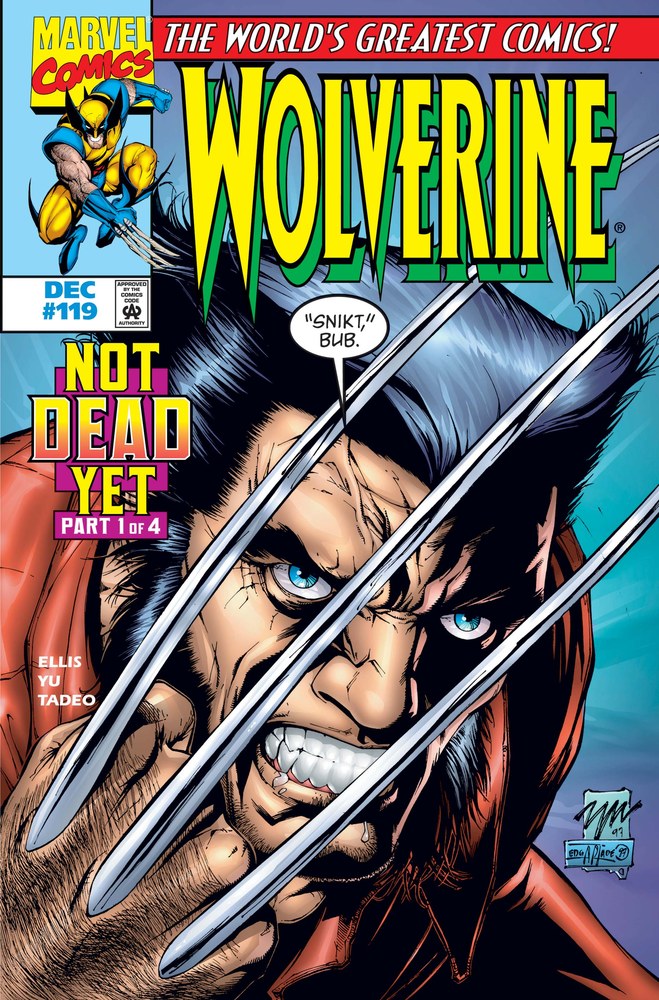
A figure from Logan’s past brings a fast-moving threat into his present. Ellis writes him with the instincts of someone who has spent years surviving dangerous people, while Yu gives the action a sharp, restless energy. This is a useful four-issue taste of the ongoing’s later 1990s period. Keep the 1988-launched series in your search terms to find the right numbering.
#1–6 · 2001–2002
Paul Jenkins, Andy Kubert & Richard Isanove
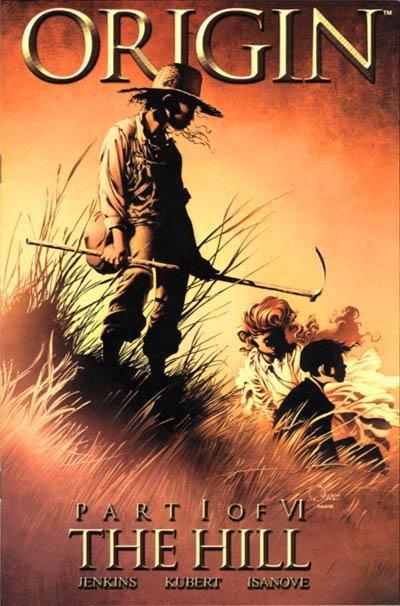
The childhood story takes the reader back to James Howlett and the circumstances that shape his early life. Kubert and Isanove give the period setting a soft, unsettling beauty. Jenkins scripts a story developed with Joe Quesada and Bill Jemas. Read it for the deliberate opening of a longstanding mystery, keeping it distinct from the later ongoing titled Wolverine Origins.
Wolverine #20–31 · 2004–2005
Mark Millar, John Romita Jr. & Klaus Janson
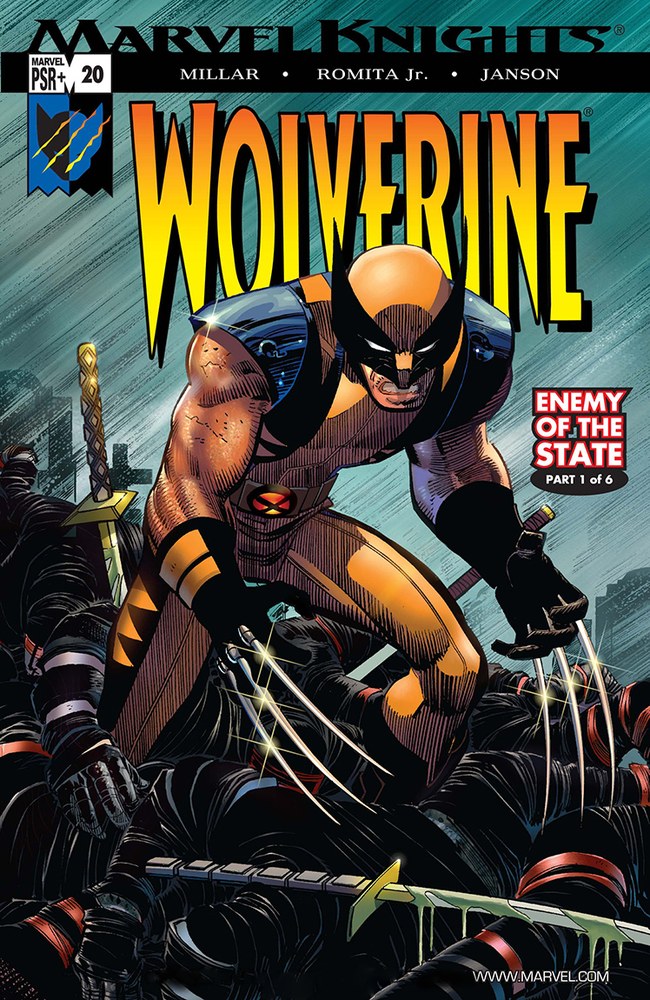
Mind control turns Logan into a threat to the people who know him. The premise delivers large-scale action while asking what happens when his abilities are stripped of his judgment. Read #20–25 for Enemy of the State and #26–31 for the answering Agent of S.H.I.E.L.D. sequence. Together they form the complete twelve-issue confrontation in the 2003-launched series.
Wolverine #62–65 · 2008
Jason Aaron & Ron Garney
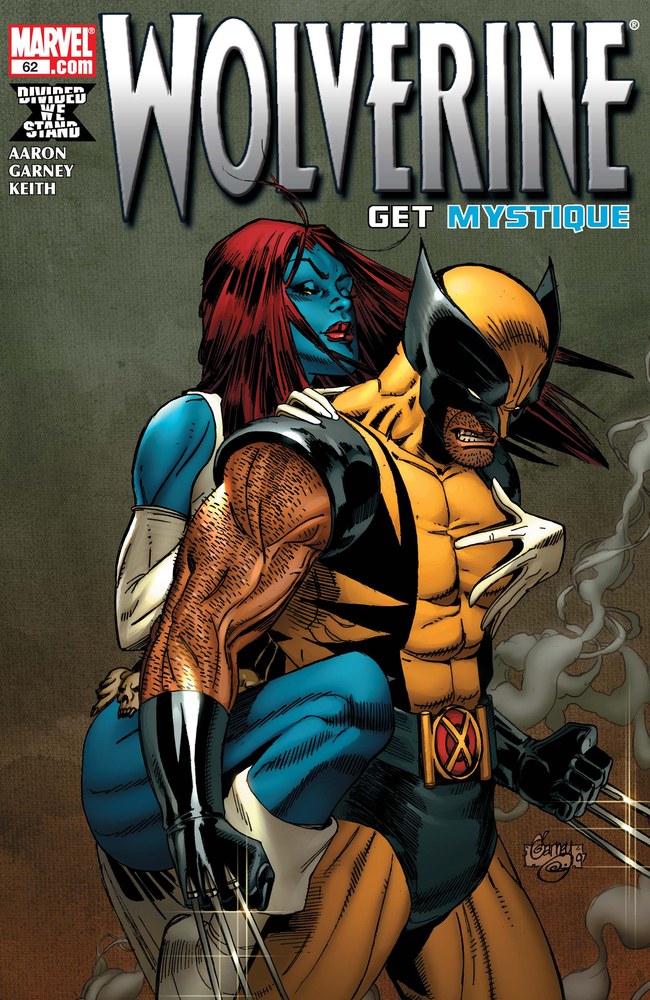
Logan pursues Mystique through a story built around deception, history and ruthless calculation. The pairing works because neither can rely on the other behaving predictably. Aaron and Garney give the chase a stripped-down momentum that makes an effective change of pace after a large event. This is another short, complete route into the 2003 ongoing.
#1–3 · 2008
Brian K. Vaughan & Eduardo Risso
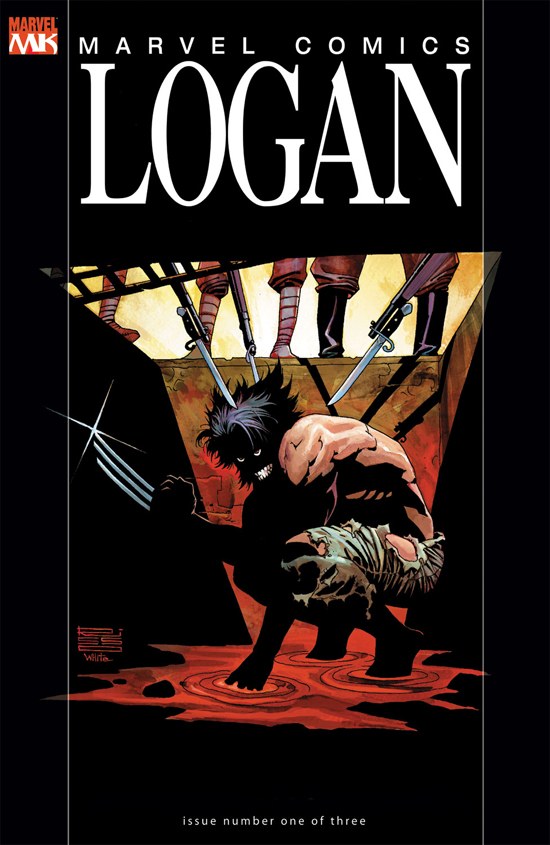
A return to Japan opens a wartime memory and an old wound. Risso’s expressive shadows let the past feel dangerous without needing an army of guest stars. Vaughan builds a contained encounter around love, loss and endurance. Seek the three-issue series or a collection with those contents; the short title is easy to confuse with other comics and the later film.
Wolverine #66–72 & Wolverine: Old Man Logan Giant-Size #1 · 2008–2009
Mark Millar & Steve McNiven
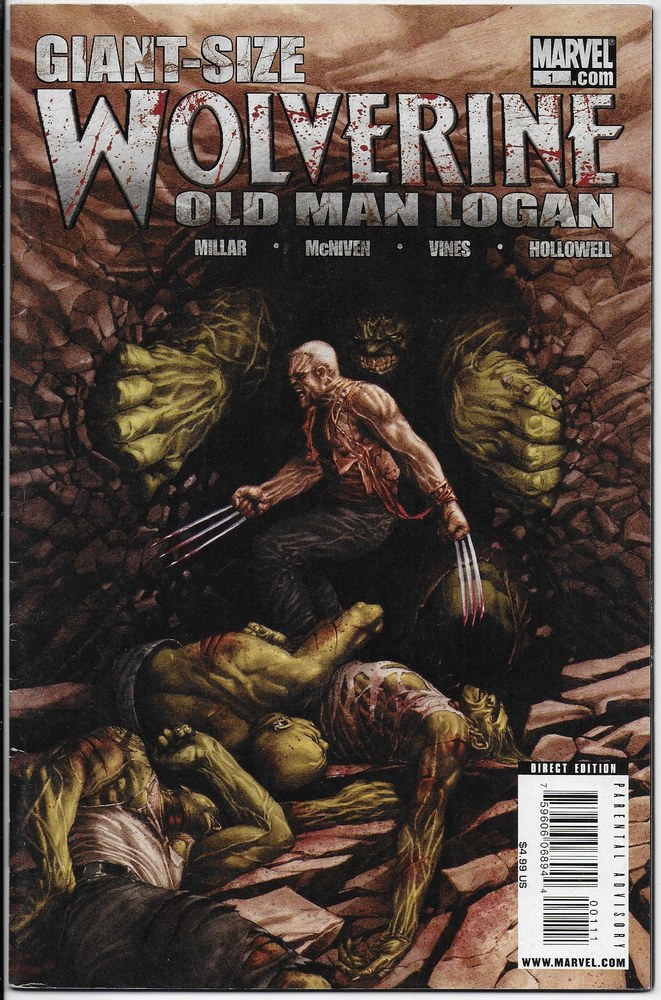
An older Logan crosses a conquered America with Hawkeye. McNiven’s landscapes and Millar’s grim revelations give the journey a scale far beyond its travelling pair. Keep the giant-size finale with the seven ongoing issues when building the original story. This Logan belongs to an alternate future; later Old Man Logan series continue and reinterpret that publishing branch.
#1–4 · 2014
Charles Soule & Steve McNiven
With his healing factor gone, Logan has to approach danger under unfamiliar conditions. Soule and McNiven draw together old relationships and the consequences of his weaponised body. Read it after establishing some of that history so the encounters carry weight. It is a specific four-issue event in a continuing publishing life, with later stories taking Logan and the Wolverine mantle onward.
Watch the volume. Wolverine #1 can mean the 1982 limited series, the 1988 ongoing or one of several later launches. Title, launch year, issue and printing belong together in every search and collection record.
Debuts, story landmarks and visual statements serve different collecting goals. These are purposeful starting points rather than a claim that every significant Wolverine issue fits in one table.
| Comic | Why it belongs | What to check |
|---|---|---|
| Incredible Hulk #180 | First published story appearance, a final-page cameo. | Original 1974 issue, completeness and Value Stamp. |
| Incredible Hulk #181 | First full appearance and first cover appearance. | Edition, restoration, interior and condition evidence. |
| Incredible Hulk #182 | Brief follow-up in the opening Hulk sequence. | Accurate description of its role; completeness. |
| Giant-Size X-Men #1 (1975) | Wolverine joins the new X-Men team. | Original, facsimile or other reprint; full interior. |
| Uncanny X-Men #133 | A defining solo stand within the Dark Phoenix period. | Buy the surrounding sequence if reading the full arc. |
| Uncanny X-Men #139 | The brown costume arrives. | Presentation of the cover and the correct edition. |
| Wolverine #1 (1982) | The first solo limited series begins. | First printing and identification of the four-part mini. |
| Wolverine #1 (1988) | The first ongoing solo series begins. | Volume, printing and any market-specific edition. |
| Marvel Comics Presents #72 | The original Weapon X serial opens. | There are thirteen instalments through #84. |
| Wolverine #75 (1993) | The bone-claw revelation changes the reading of his body. | Edition and condition of any enhanced cover. |
| Incredible Hulk #340 (1988) | Todd McFarlane’s reflected-claws cover and another Hulk encounter. | Original issue or later reprint; inspect the dark cover and spine. |
| NYX #3 (2004) | Laura Kinney’s first comic-book appearance. | Laura’s key; her screen debut preceded the comic. |
A deliberate Wolverine shelf can start with a single paperback or grow towards the major Bronze Age originals. Give the next purchase a clear purpose.
Choose a collected 1982 mini, Weapon X or Old Man Logan. Check the contents list so you get the complete story.
Build Kitty Pryde and Wolverine #1–6, a favourite short arc or a selection of covers by one artist.
Work towards the original 1982 mini, early ongoing issues or a complete Weapon X serial, according to condition and available budget.
Compare original Hulk debut issues and Giant-Size X-Men #1 individually. Completeness and restoration can materially change the buying decision.
That can mean a reading stack, a complete shorter run or money set aside for one particular original. Prices move, so compare recent completed UK sales for the exact edition and similar condition before deciding how many books the budget should buy. Postage, import VAT and fees can change the result when an overseas copy initially looks cheaper.
For a cover-led copy, examine the face, claws, central artwork, colour-breaking spine stress and the overall presentation. For a major original, add clear back-cover and interior photographs, page and staple checks, and explicit restoration and completeness information. Check dark covers carefully: strong contrast can make wear more visible.
Write down the artist, printing, cover designation and whether the edition is a standard alternate, incentive or retailer exclusive. A ratio describes ordering terms. It does not establish the number of copies still available or guarantee a resale premium. A later reprint of a celebrated image can make a satisfying display copy when that is the purpose.
These are individual copy references in GBP, with the seller’s condition description retained. Active asks, archived asks and a recorded sale are identified separately; they are starting points for comparison.
| Comic | Price reference | Copy | Status & evidence |
|---|---|---|---|
| Wolverine #1 (1982 limited series) | £115.00 | Raw; dealer-described VFN | Archived dealer ask; marked sold out. Printing and distribution edition not specified. View price evidence ↗ |
| Wolverine #1 (1988 ongoing series) | £46.61 | Raw/ungraded; eBay condition category Very Good, not a verified comic grade | Recorded eBay sale, 14 August 2026. Displayed £46.61 includes a £2.11 buyer fee; postage extra. Printing and distribution edition not verified. View price evidence ↗ |
| Marvel Comics Presents #72 (1991) | £25.00 | Raw; dealer-described VFN+/NM 9.0, small corner bends; complete | Active dealer ask. Small corner bends disclosed; described as complete. Printing and distribution edition not specified. View price evidence ↗ |
| Wolverine: Origin #1–6 (2001–2002), complete first-print set | £25.00 for all six issues | Raw; dealer-described VFN++ / NM | Active dealer ask for the complete six-issue first-print set; this is a set price. View price evidence ↗ |
| Wolverine #8 (June 1989), newsstand first print | £50.00 | Raw; dealer-described FN 6.0, foxing centre cover, light corner wear and surface bend | Active dealer ask. First-print newsstand copy; foxing, light corner wear and a surface bend disclosed. View price evidence ↗ |
| Wolverine #10 (August 1989) | £15.99 | Raw; seller-described Hi Grade Comic, with no numerical grade | Active dealer ask. Broad seller condition description; printing and distribution edition not specified. View price evidence ↗ |
| Giant-Size X-Men #1 (1975), first print | £1,700.00 | Raw; dealer-described FN / VFN | Archived dealer ask; marked sold out. First print stated. This is not a recorded sale. View price evidence ↗ |
| Wolverine: The Origin #1 (2001) | £8.03 | Raw/ungraded; eBay condition category Very Good, not a verified comic grade | Active UK business-seller ask. Printing not verified; postage extra. View price evidence ↗ |
Add postage and any applicable charges. Seller grades are descriptions to inspect. A sold-out listing does not establish the amount a buyer paid.
The Comic Agent approach: buy a story you want to revisit, a historical milestone you understand or an image you enjoy. Keep the edition and condition in your records so the collection remains intelligible as it grows.
Laura begins on screen in X-Men: Evolution before making her comic-book debut in NYX #3. Her publishing history grows through X-23 stories and into All-New Wolverine, where she takes the Wolverine identity. She is a distinct person with her own relationships, choices and experience of being treated as a weapon.
That makes her a meaningful companion collection. Follow Laura’s development through her own stories rather than using her only as an extension of Logan’s key list. Tom Taylor’s All-New Wolverine supplies a particularly accessible route into her time with the mantle; Gabby’s presence opens space for family, humour and responsibility alongside the danger.
When a cover says “Wolverine”, identify who it features. Logan, Laura, an alternate Logan and a story set in another reality can all sit beneath related branding. The label in your records should preserve the difference. Film familiarity can be a useful doorway, while the comic supplies its own continuity.
The wider family also leads towards Daken, and the team history returns repeatedly to the X-Men. You can follow those branches as deeply as you like. A focused Logan collection remains coherent when each additional book answers a question you actually want to explore.
Explore 35 covers across the debut, solo breakthrough and later story landmarks. Tap a cover to see the full image at its natural proportions.
Showing all 35 covers
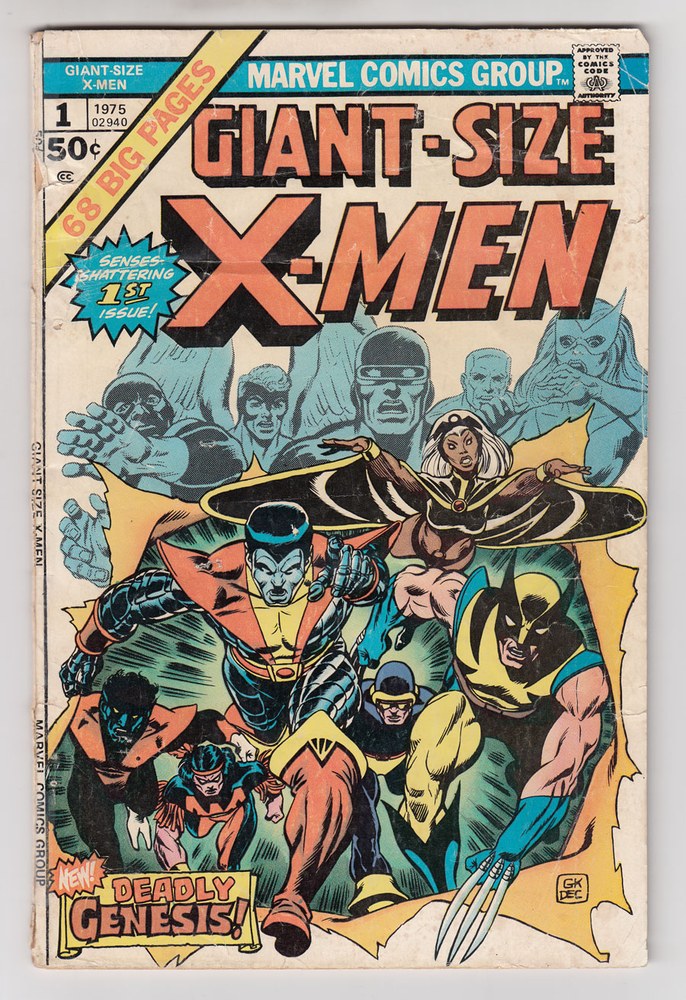
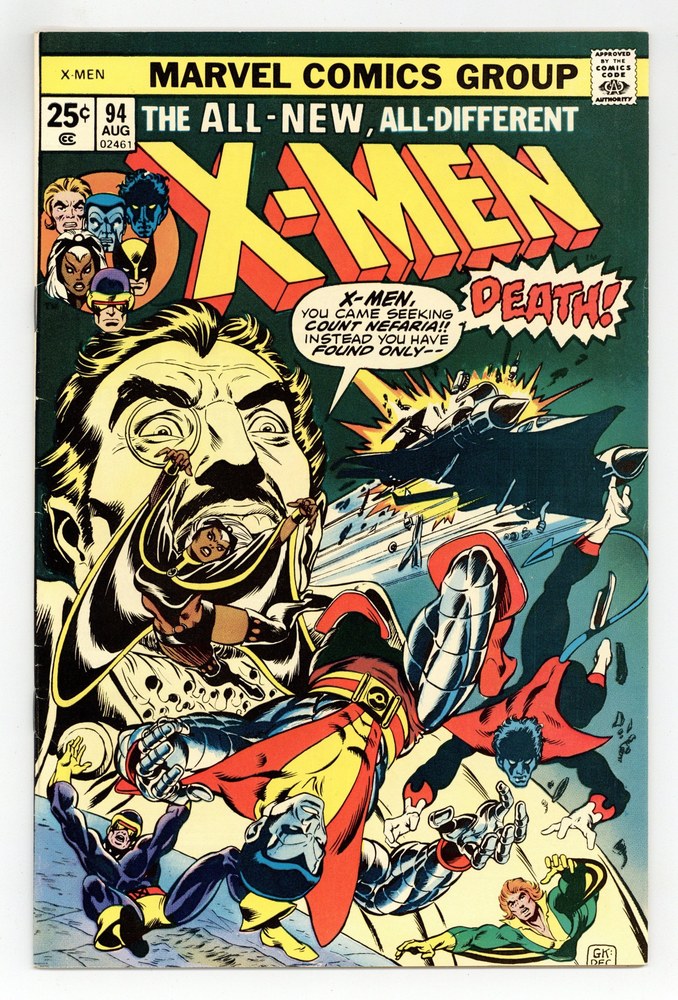
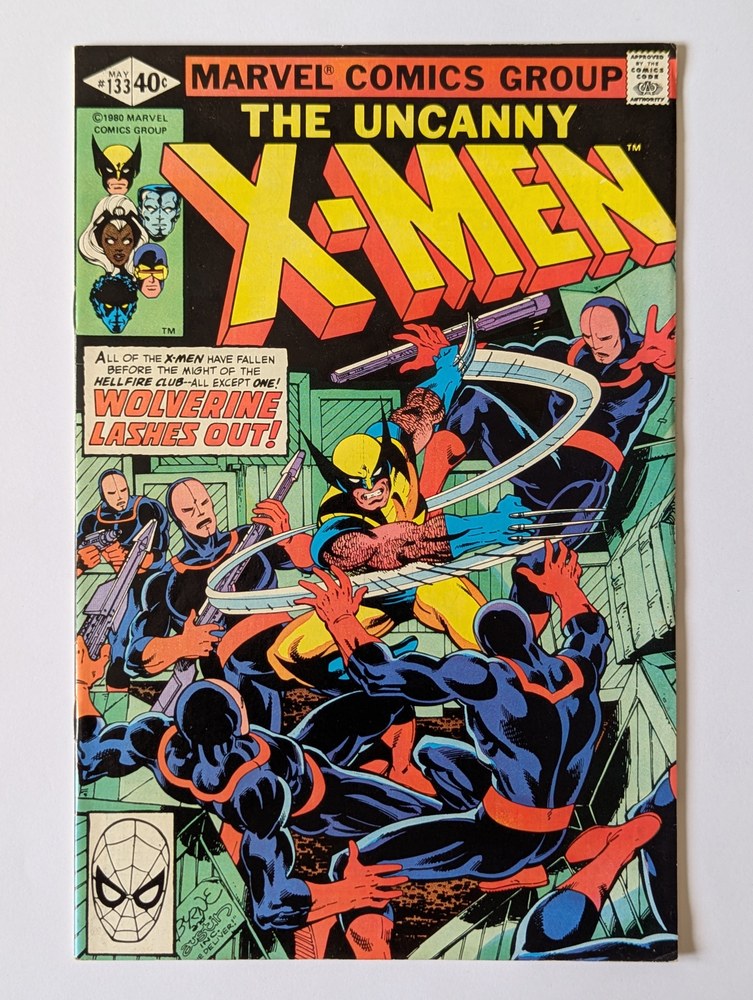
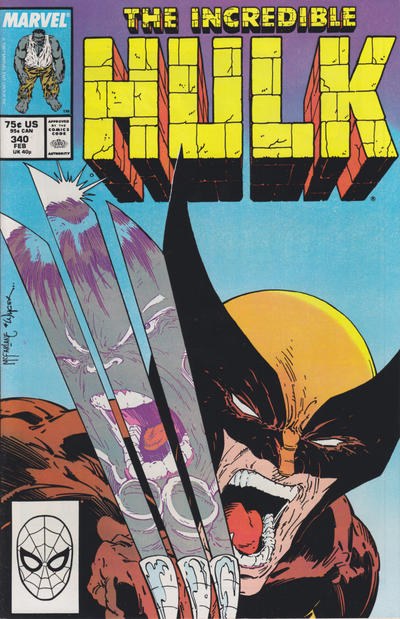
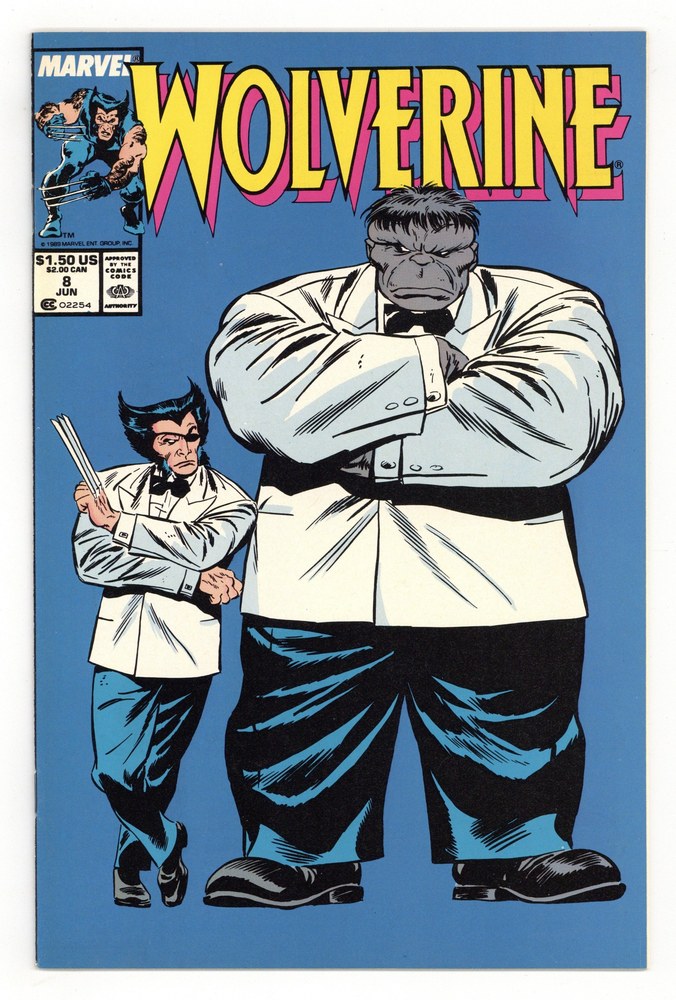
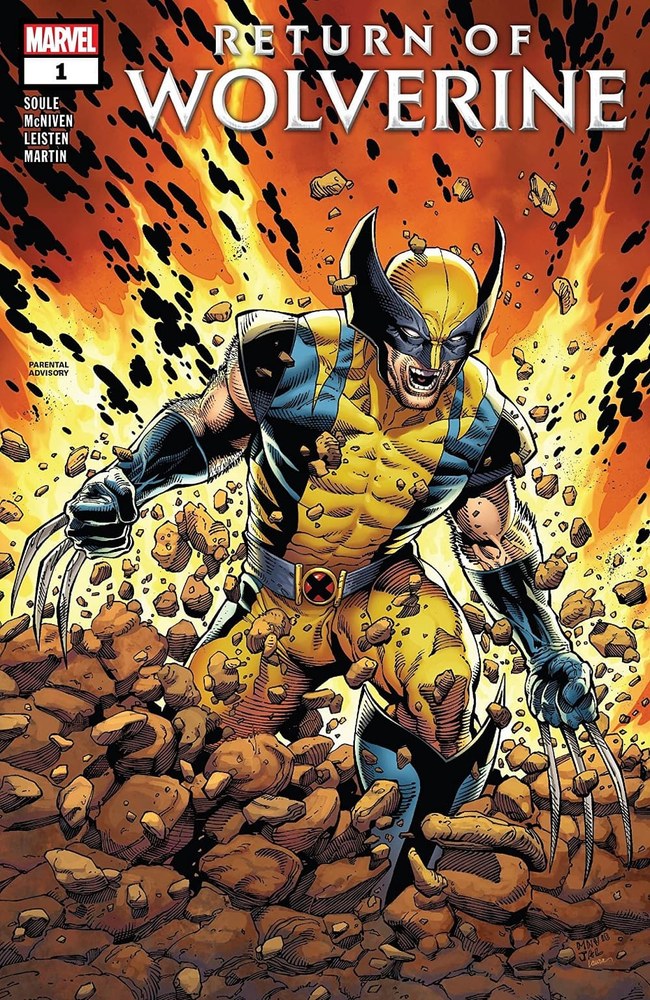
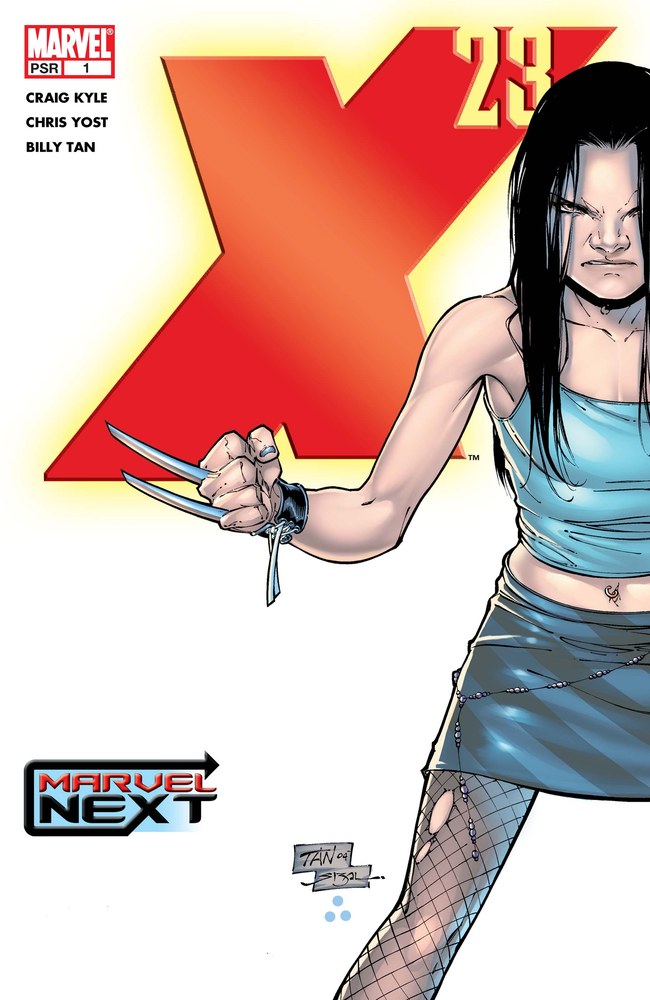
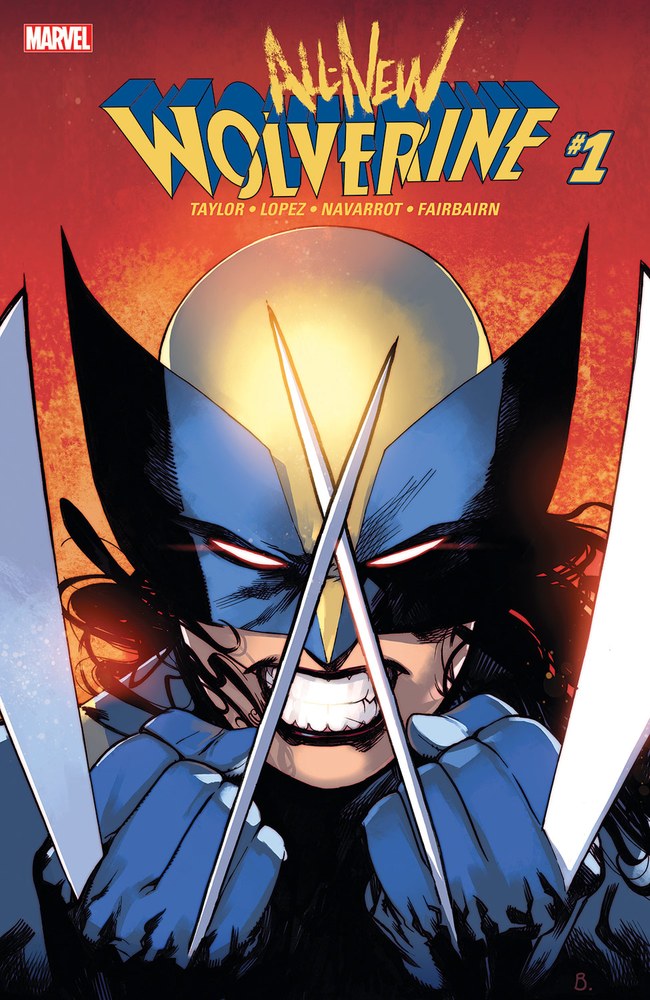
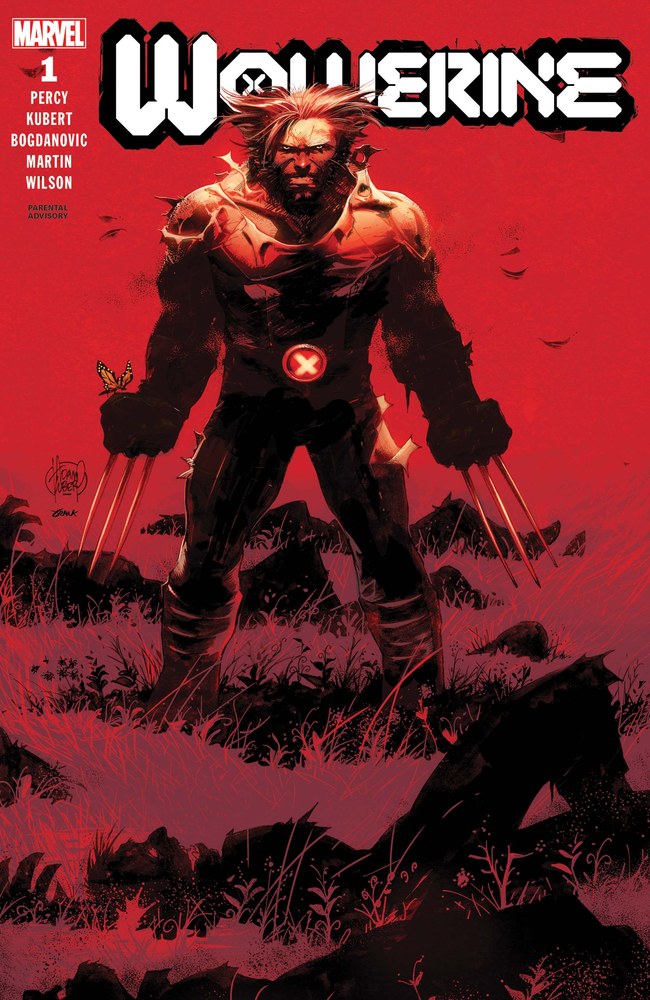
Cover artwork identifies the publication discussed. Check the individual edition when buying: an image can be reused on a facsimile, later printing or collected edition.
The first yellow mask. A snowy street. A laboratory tank. A road through a ruined future. Choose the image that pulls you in, then discover the person inside it.
Comic Agent is based in the UK. Not every comic is listed on eBay; contact us if you are looking for something specific. Covers here are editorial references. Individual listings show available stock and condition.
Publication details, creator credits and story contents are checked against Marvel’s records and publisher catalogues. Reading routes and interpretations are Comic Agent editorial judgments. “First appearance” descriptions specify the distinction between a cameo, a full appearance and another medium.
Wolverine, associated characters and cover artwork belong to Marvel and their respective rights holders. Comic Agent is an independent collector-run editorial and retail site.