
Published 25 September 2026. Research and market references checked 24 September 2026.
A monster can sell a cover. A great horror comic makes you turn the page. The distinction matters because the Bronze Age offers far more than a familiar shortlist of first appearances. An anonymous-looking anthology can contain a remarkable eight-page story. An extravagant painted cover can sit above very different interior artwork. A modest reading copy can provide more pleasure than the most expensive book in the cabinet.
This guide explores that wider landscape: DC's mystery houses, Charlton's unruly ghost stories, Marvel's monsters and occult adventurers, Warren's illustrated magazines, Skywald's disturbing experiments and the battlefield terrors of war horror. It connects the series to the people who made them, identifies useful starting points and explains how to build a collection around taste, budget and evidence.
Our main territory is the late-1960s revival through the early 1980s. Those boundaries are deliberately practical. Several essential series began before the conventional Bronze Age, and their most interesting development continued into it. Earlier roots and later successors are identified as such. A publication date, a story's original date and the date a character first appeared are three different facts.
The goal is to help you find books worth owning and reading. Prices and graded populations can inform that decision; neither can make an ordinary story into a classic.
Start with the kind of collection you want
I am not interested in investing
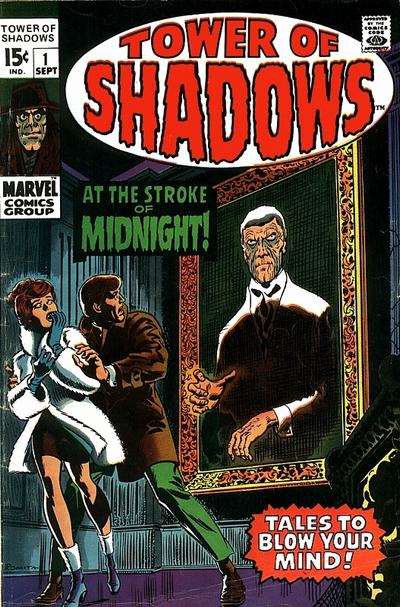
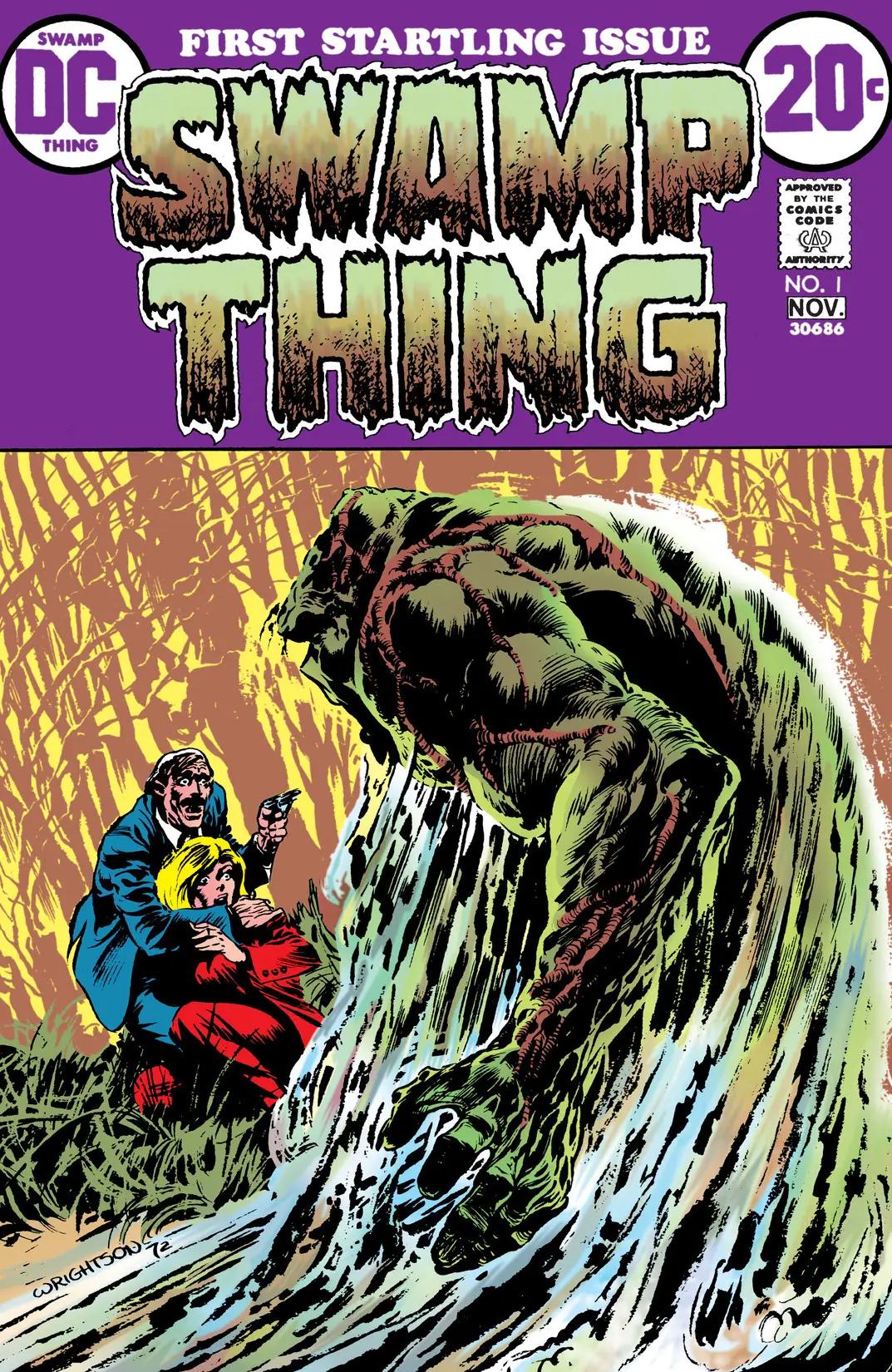
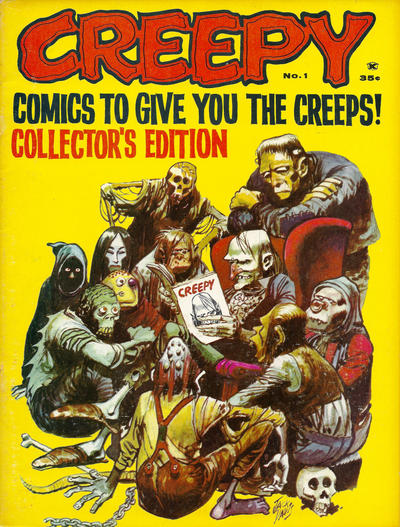
Start with a complete story or a sensibly chosen collection. For compact anthology horror, try the original Tower of Shadows material collected in Fantagraphics' Lost Marvels No 1. For a sustained Gothic adventure, begin Swamp Thing with the Len Wein and Bernie Wrightson stories. For vampires and an expanding supporting cast, start Tomb of Dracula from the beginning and follow it into the Marv Wolfman and Gene Colan era. For a different visual language, sample a Creepy Archives collection.
Choose an available digital edition, library copy or affordable reprint before paying an original-issue premium. Check the contents list: a familiar title on a modern collection does not necessarily mean the first stories are inside. Some material is graphic or disturbing; the magazines in particular were aimed at a different readership from Code-approved colour comics.
There is no requirement to buy a key, complete a run or have a comic graded. Read something that interests you. If it stays with you, that is a good reason to collect the original.
For readers interested in an overlooked collecting route, our expanded Marvel monster chapter makes the case for selected anthologies, Frankenstein and the Living Mummy. The war horror chapter offers another focused project, with specific Weird War Tales stories and the seven-issue John Kowalski sequence in War Is Hell.
Choose a spending plan before choosing an issue
The amounts below are suggested budgets for a project, not quoted fair market values for particular books. Availability, condition, edition and postage determine what each budget can actually buy.
| Your route | Suggested project budget | A useful first objective |
|---|---|---|
| Read and enjoy | Up to £30 | A collected edition, digital reading or a small selection of readable originals |
| Discover your taste | £30 to £75 | Sample two publishers and one magazine rather than committing to a long run |
| Build a focused collection | £75 to £150 | A short artist or theme sequence, bought patiently with a written checklist |
| Buy one significant original | £150 to £400 | Research an established key or an exceptional cover in a realistic condition band |
| Pursue a major key | £400 and above | Select one exact issue and grade target, then compare evidence before committing |
A £100 collection of stories you love is a complete collecting achievement. It does not need to be a stepping stone to an expensive slab.
For original comics, work out the delivered cost. For imported books that includes any shipping, tax and handling charges that apply. For auction results, check whether the quoted figure includes the buyer's premium. Set a ceiling that leaves room for the defects you can live with, and do not treat a seller's optimistic condition description as an independent grade.
Four purchases that teach different lessons
An ordinary anthology issue teaches you how much enjoyment is inside a comic without a recognised first appearance. An artist-selected issue teaches you to separate the cover credit from the interior credits. A short complete run teaches you to recognise changes of editor, tone and format. A carefully researched key teaches you how completeness and restoration can dominate the value of an individual copy.
Do not make all four purchases at once. Buy one, read it and let that experience improve the next decision.
Ten landmark books and a rough entry guide
Raw means a comic outside a grading-company holder. These are ten selected benchmark keys, not a ranking of the ten most expensive horror comics. They show the scale of the original-edition collecting route alongside the inexpensive reading options above. Vampirella #1 is included as a 1969 bridge into the Bronze period.
Raw acquisition-guide references checked 24 September 2026. These are Key Collector's US guide bands converted to pounds, not verified UK sold fair market values. Low, Mid and High are that guide's broad condition descriptions, not numerical CGC grades. The figures refer to original standard US editions, not facsimiles or later printings.
| Original issue | Why it is a benchmark | Low | Mid | High |
|---|---|---|---|---|
| Swamp Thing #1, 1972 | Alec Holland and the continuing title | £23 | £68 | £226 |
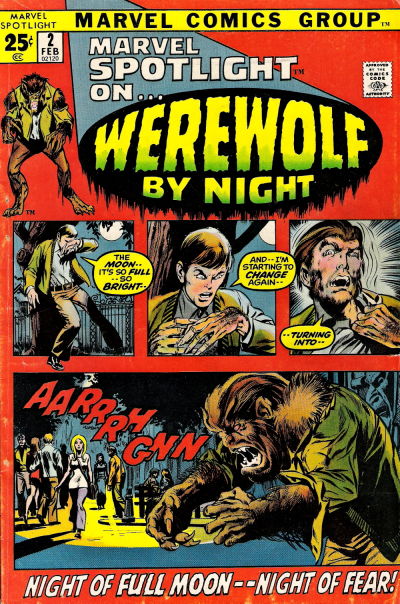
| Marvel Spotlight #2, 1972 | Jack Russell's Werewolf by Night debut | £30 | £90 | £302 |
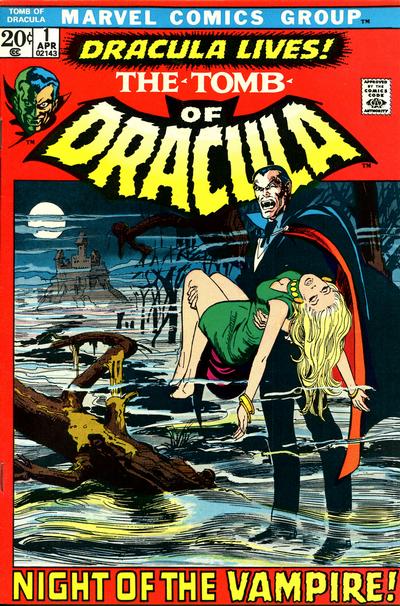
| Tomb of Dracula #1, 1972 | Launch of Marvel's continuing Dracula series | £45 | £136 | £452 |
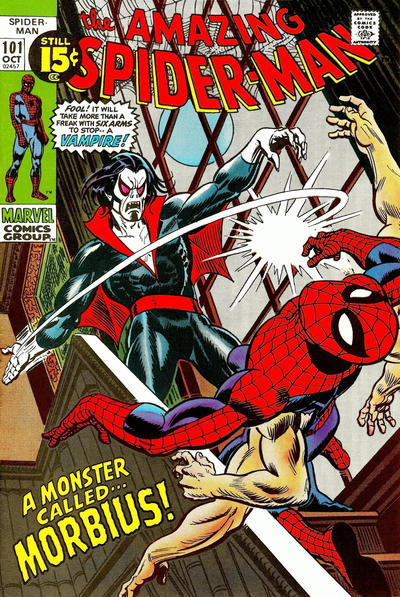
| Amazing Spider-Man #101, 1971 | Morbius debut | £60 | £151 | £603 |
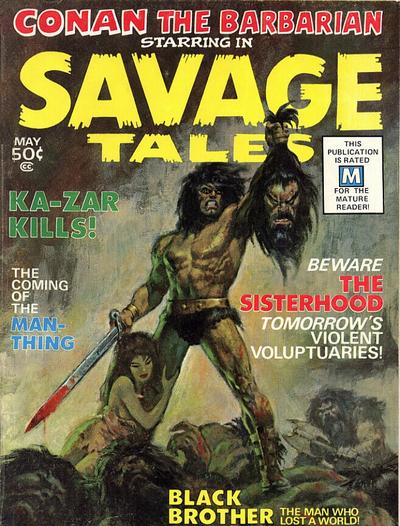
| Savage Tales #1, 1971 | Man-Thing debut in magazine format | £60 | £196 | £641 |
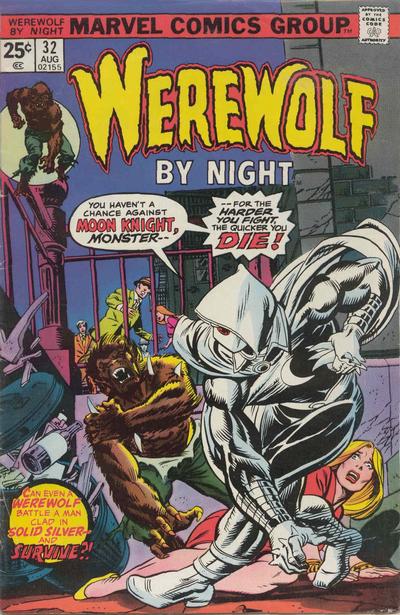
| Werewolf by Night #32, 1975 | Moon Knight debut | £75 | £226 | £754 |
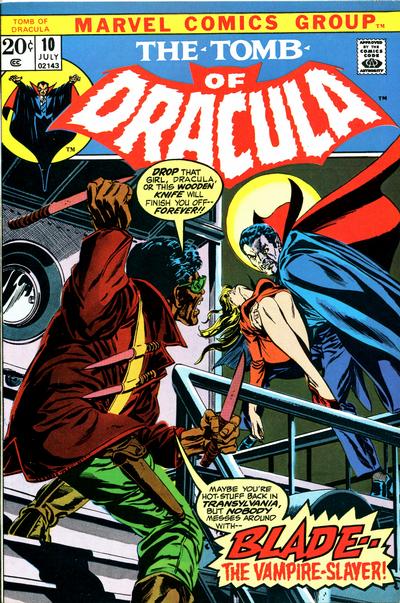
| Tomb of Dracula #10, 1973 | Blade debut | £83 | £290 | £829 |
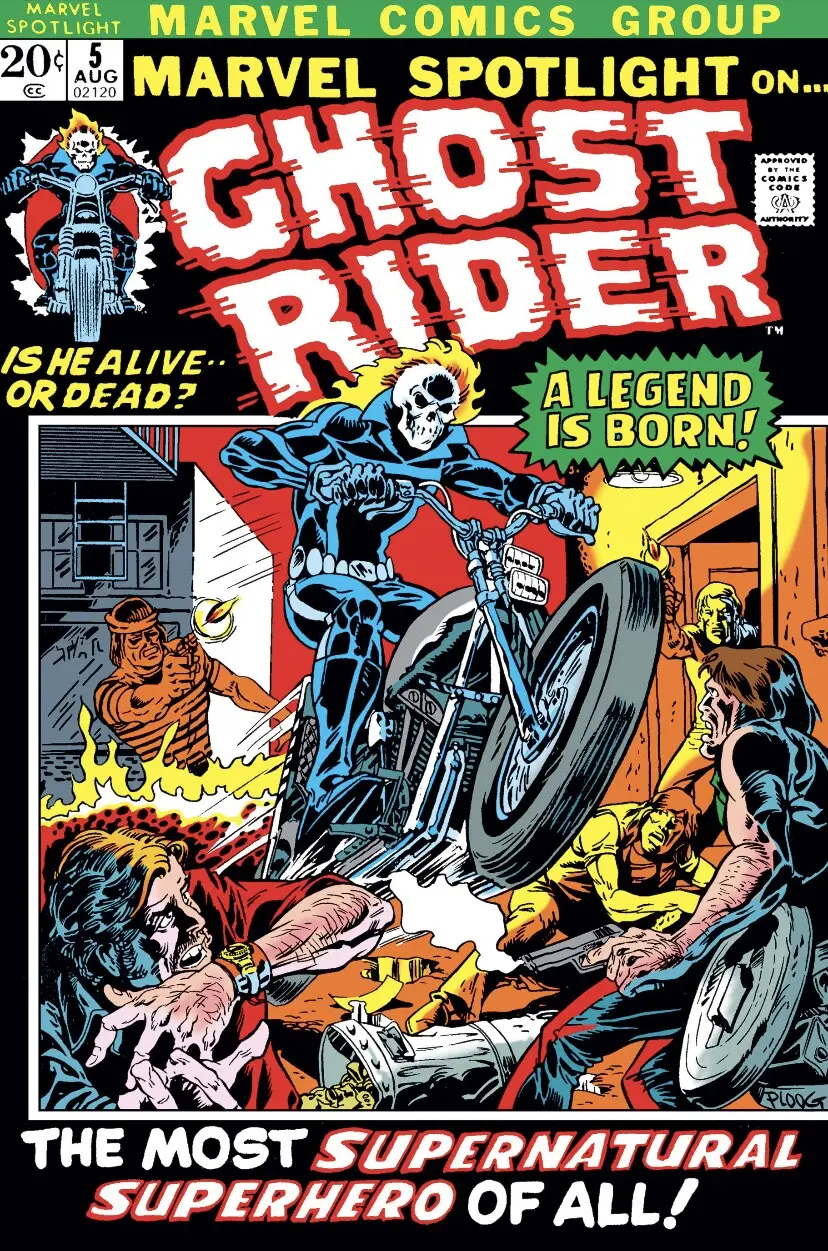
| Marvel Spotlight #5, 1972 | Johnny Blaze Ghost Rider debut | £151 | £603 | £1,508 |
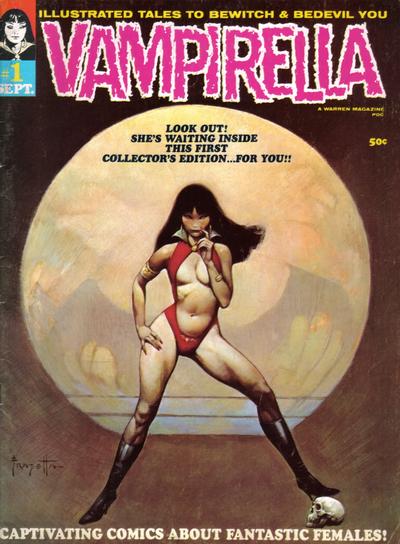
| Vampirella #1, 1969 | Vampirella debut and Frazetta cover | £143 | £611 | £1,734 |
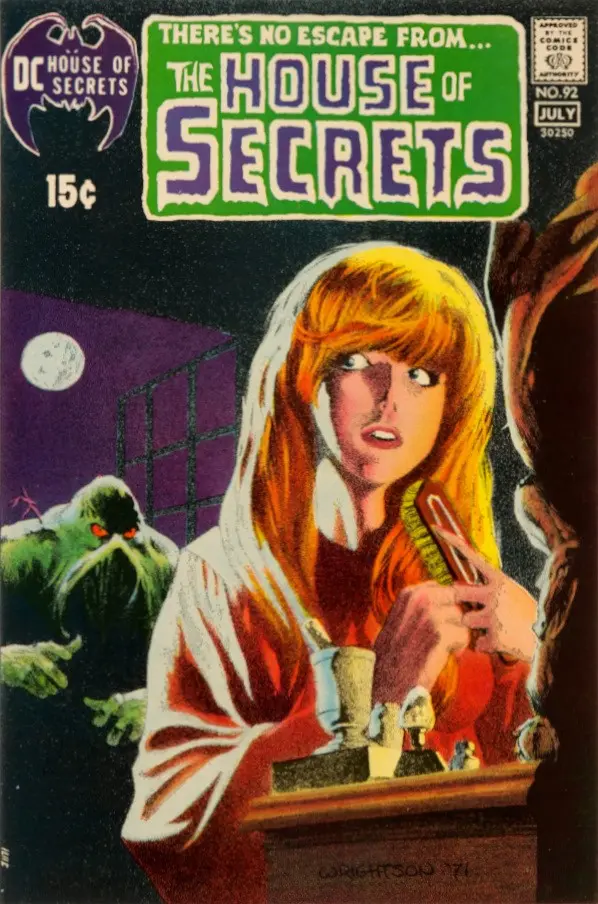
| House of Secrets #92, 1971 | Original Swamp Thing incarnation | £286 | £743 | £2,865 |
The conversion uses the Bank of England's 23 September 2026 reference of £1 to US$1.3265, rounded to the nearest pound. It excludes delivery, taxes, insurance and transaction costs. Converting a US guide does not establish a UK selling price.
Key Collector describes its figures as acquisition guidance derived from ungraded transactions and reduced by approximately 10 to 15 percent. The public issue pages do not supply an individual update date or a transaction sample for each displayed figure. Use this table to choose what to research, then compare recent complete copies of the same edition and condition before bidding. A low-band figure is not a promise that a sound copy is available at that price.
The original USD Low/Mid/High inputs, in table order, are 30/90/300; 40/120/400; 60/180/600; 80/200/800; 80/260/850; 100/300/1000; 110/385/1100; 200/800/2000; 190/810/2300; and 380/985/3800. The linked issue pages in the reference section make the calculation traceable.
Why horror returned in so many forms
The earlier books still in the room
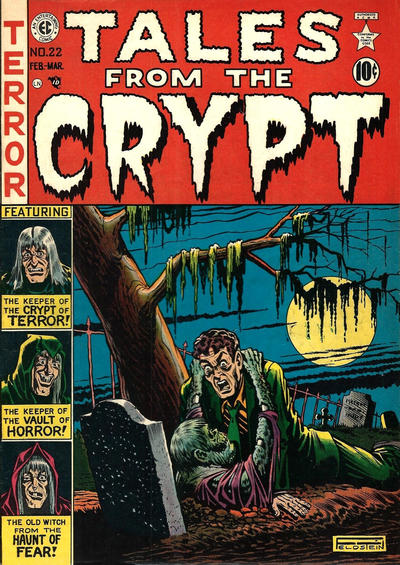
Pre-Code horror is the foundation. EC's Tales from the Crypt, The Vault of Horror and The Haunt of Fear helped establish the host, the moral trap and the cruel reversal as familiar forms. Other publishers contributed different imagery and voices; a history that stops at EC misses much of the material later collectors rediscovered.
The Comics Code introduced in 1954 sharply restricted mainstream comic-book horror. It was an industry system of self-regulation, not a universal law prohibiting every horror publication. The distinction explains why the story of horror did not simply stop. Mystery, suspense, science fiction, licensed properties and eventually magazine publishing provided different ways forward.
Warren's Creepy began in 1964 as a magazine and carried material excluded by the Code. It therefore belongs in the Silver Age roots of this guide, even though its 1970s issues are central to the Bronze Age story. Vampirella's 1969 launch likewise sits on the boundary rather than fitting a tidy decade label.
The revival was already happening before 1971
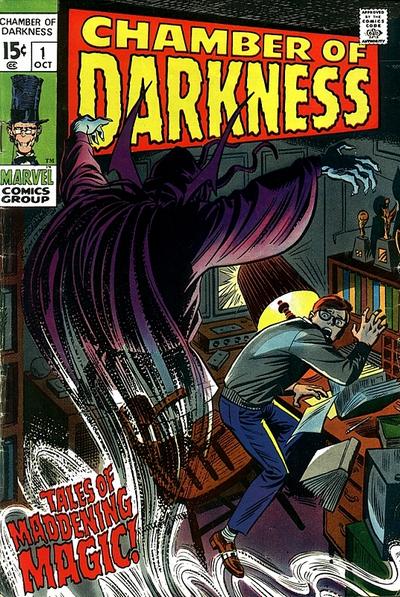
DC's late-1960s return to mystery anthology storytelling and Marvel's 1969 launches Tower of Shadows and Chamber of Darkness preceded the familiar early-1970s monster boom. The 1971 revision of the Comics Code widened what participating publishers could do with traditional horror creatures. It accelerated an existing movement rather than creating horror comics from nothing.
The result was a marketplace with several overlapping traditions: short supernatural tales, Gothic romance, monster heroes, occult adventure, adult magazines and stories where war or social cruelty supplied the terror. The same collector might enjoy all of them, but they do not require the same checklist or buying strategy.
A useful date rule: identify the exact series and original publication year whenever a title has been revived. Haunted, Ghost Manor, Eerie and several Marvel monster titles can lead a casual search to the wrong publication.
How to judge an overlooked horror comic
An overlooked book earns attention through something specific. That might be a sustained sequence of strong stories, an artist finding a distinctive voice, a memorable character, a striking cover or an unusual treatment of a familiar theme. A small census count is useful context only after we establish why anyone should care about the comic.
For each selection, ask what is inside. Is the lead story new to this issue? Is the artist on the cover also responsible for the interior? Is the story complete, or the middle of a serial? Is a character making a debut, returning after an absence or merely appearing on the cover? Those questions produce a much better collection than accepting every seller's use of the word key.
Then ask which version you want. An original US edition, a UK-price edition, a later reprint, a facsimile and a collected edition can offer different benefits. None should be valued using a sale of another version without explaining the difference.
In the following chapters, read a series map as an invitation to explore. It is not a promise that every issue in that series contains the same quality or the same creative team.
DC and the houses of mystery
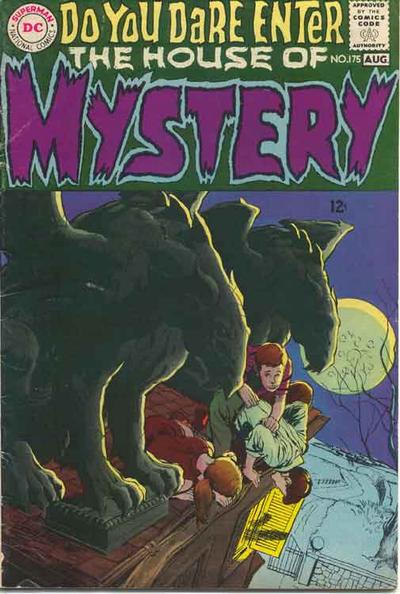
DC offers two connected pleasures: a large library of short stories and a cast of hosts who eventually acquired lives beyond introducing them. Cain, Abel, Destiny and Lucien matter to later readers, but their original anthologies deserve attention on their own terms. The stories vary in tone and quality, and that variation is a reason to choose intelligently rather than collect only launch issues.
Find your way around the titles
| Series | Where it fits |
|---|---|
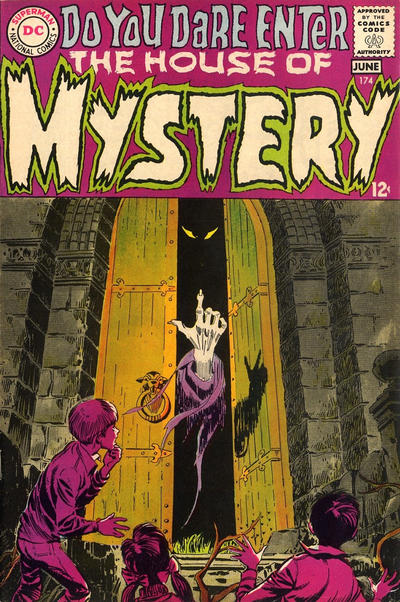
| House of Mystery | The late-1960s editorial reset begins at #174; Cain arrives in #175 |
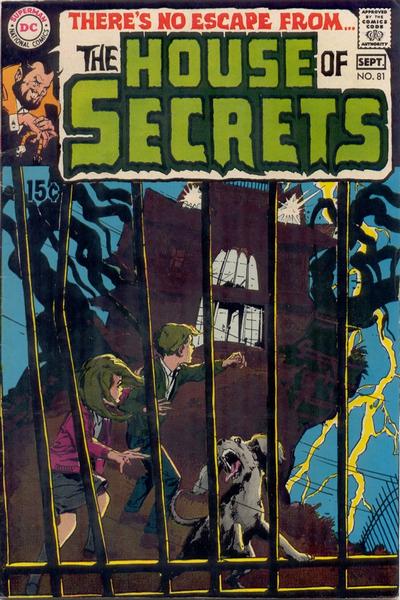
| House of Secrets | The anthology resumes at #81 in 1969; #92 introduces the original Swamp Thing |
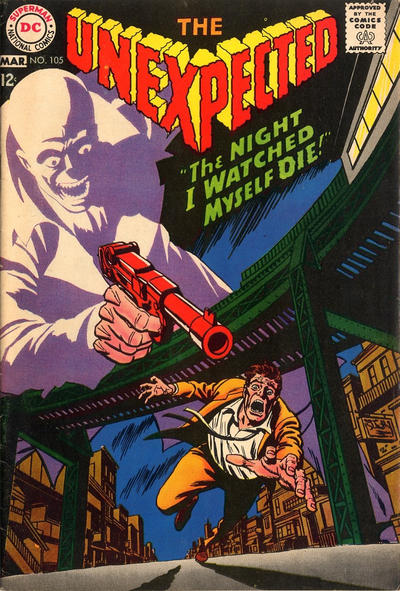
| The Unexpected | The 1968 title begins at #105 by continuing Tales of the Unexpected numbering |
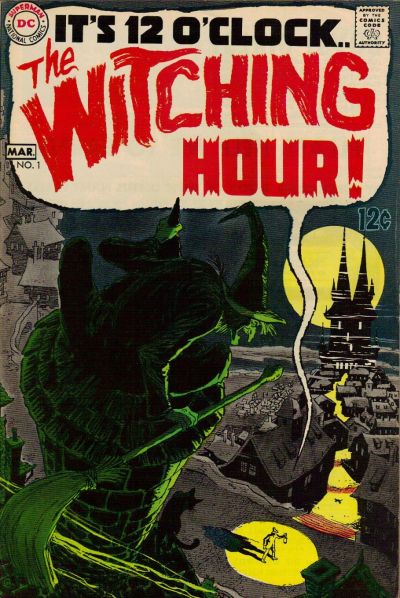
| The Witching Hour | A 1969 launch with Cynthia, Mildred and Mordred; runs to #85 |
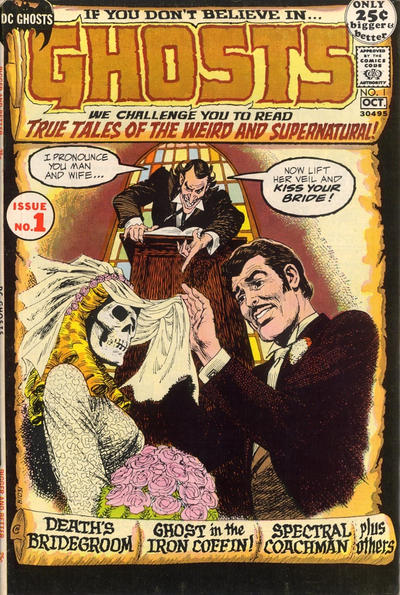
| Ghosts | A 1971 to 1982 anthology whose supposedly true-story framing is part of its packaging |
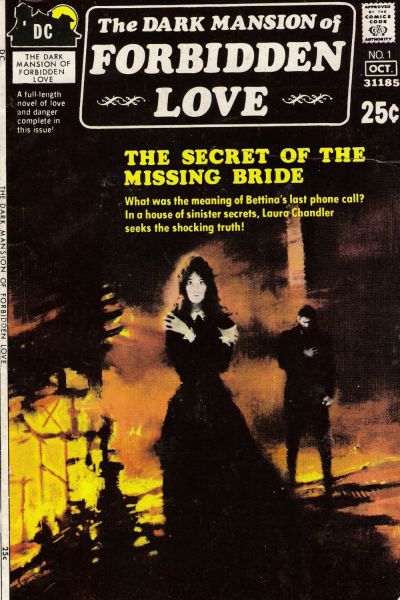
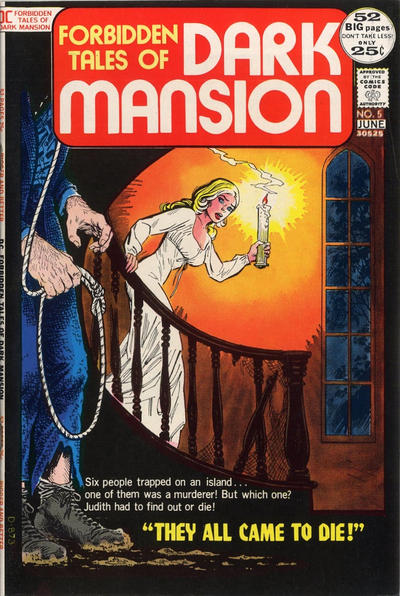
| The Dark Mansion of Forbidden Love | Four issues of Gothic romance and horror before a change of title |
| Forbidden Tales of Dark Mansion | Continues that numbering from #5 to #15 |
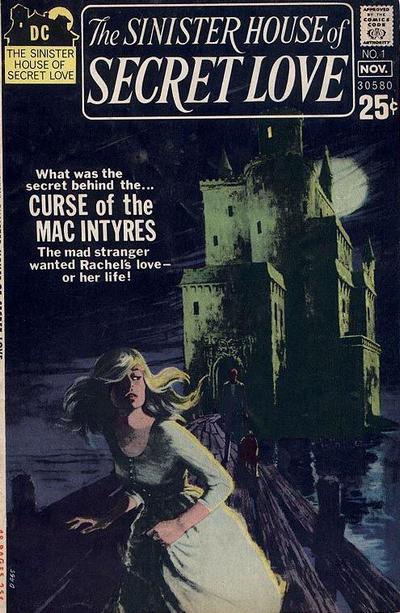
| The Sinister House of Secret Love | A separate four-issue Gothic experiment, easily confused with Dark Mansion |
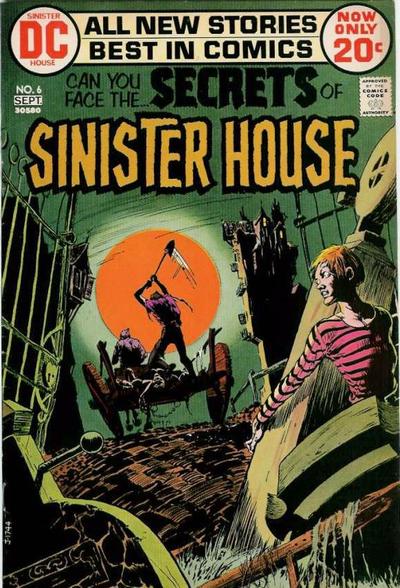
| Secrets of Sinister House | Its continuation from #5 to #18, including Eve's arrival in #6 |
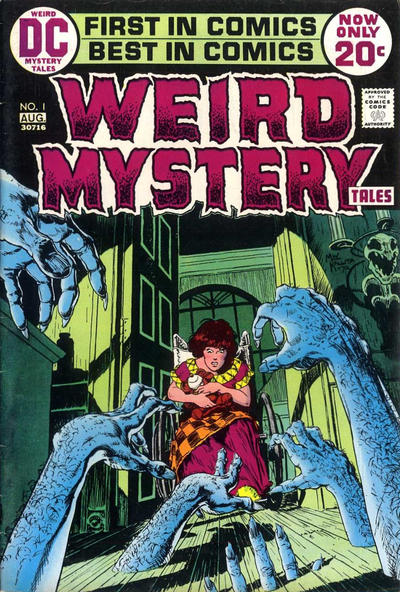
| Weird Mystery Tales | The 1972 series runs to #24; Destiny begins in #1 |
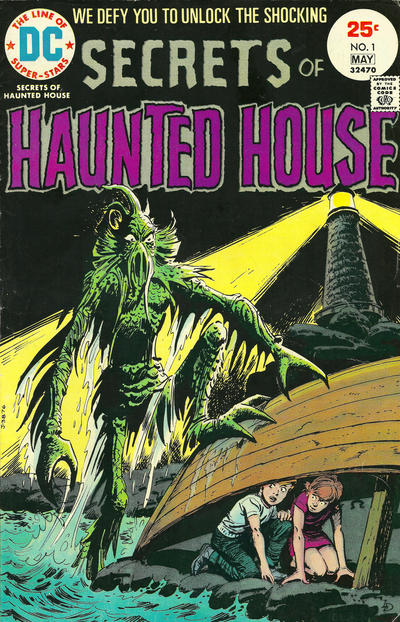
| Secrets of Haunted House | A separate 1975 launch, eventually reaching #46 with a publication gap |
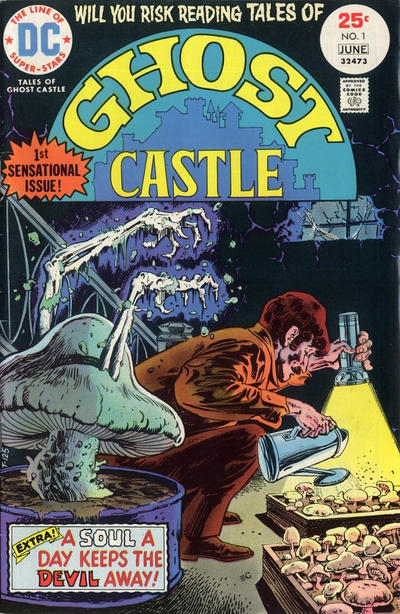
| Tales of Ghost Castle | Three issues in 1975; Lucien's original home |
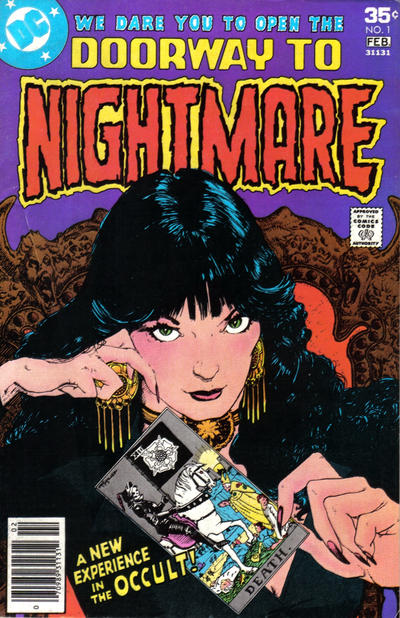
| Doorway to Nightmare | Five 1978 issues introducing Madame Xanadu's world |
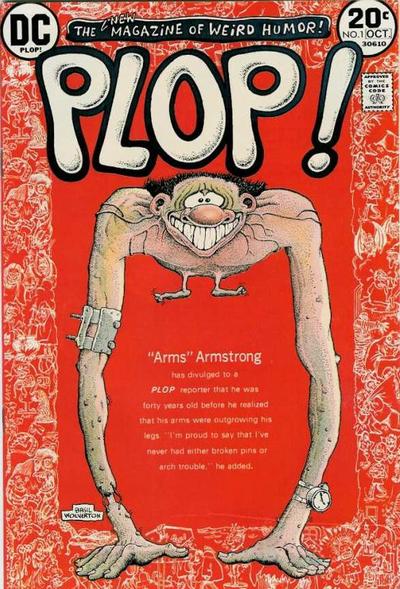
| Plop! | Grotesque humour belongs beside the more solemn horror anthologies |
These names are similar enough to cause real buying mistakes. Secrets of Haunted House is not a renamed Secrets of Sinister House. Weird Mystery Tales #1 from 1972 is not the 1971 DC 100 Page Super Spectacular issue that used the same title. Write the series year into a search when ambiguity matters.
Do not take Ghosts' presentation as proof that its supernatural events happened. It is a historical storytelling device, just as an anthology host is a device for inviting readers into the next tale.
The Witching Hour deserves its own shelf
The Witching Hour belongs at the centre of a DC horror collection. Its 1969 launch places it in the late-Silver revival, while its continuing run through #85 makes it an essential part of the Bronze landscape. Cynthia, Mildred and Mordred give the anthology a different hosting ensemble from Cain and Abel's houses.
Start with a readable issue and choose the next purchase by the story or artist that interests you. A small selection from different parts of the run can tell you more about its appeal than buying the first issue alone. Keep separate notes for cover artwork and interior contributions, and check the credits for each issue before paying an artist premium.
For collectors, #1 provides a clear launch milestone. The population comparison later in this guide also shows why an anthology can be overlooked in conversation without having a tiny recorded grading population. Let the stories and the artwork make the case first; price and condition then decide which copy belongs in your collection.
Three stories to start a deeper collection
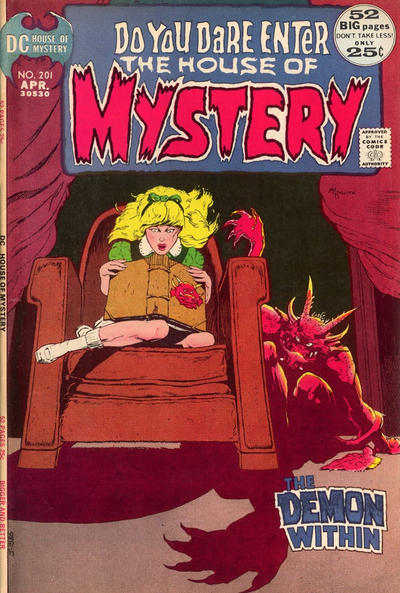
House of Mystery #201 from 1972 — The Demon Within. Joe Orlando plots, John Albano scripts and Jim Aparo draws a story in which a child's transformation becomes a test of the adults around him. Michael Wm Kaluta provides the issue's cover. This is a good first selection for readers interested in the moral unease of horror rather than a parade of familiar monsters. The cover and story credits also demonstrate why a single artist name in a sales title is insufficient.
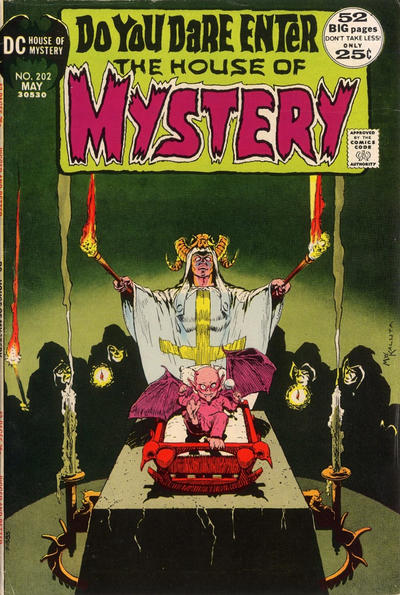
House of Mystery #202 from 1972 — The Poster Plague. Steve Skeates and Sergio Aragonés turn anticipation and a campus mystery toward macabre humour. Kaluta again provides the cover, whose subject is a different story. Pairing #201 and #202 shows how two consecutive issues can reward quite different tastes. The Poster Plague is in #202, a detail sometimes muddled in secondary accounts.
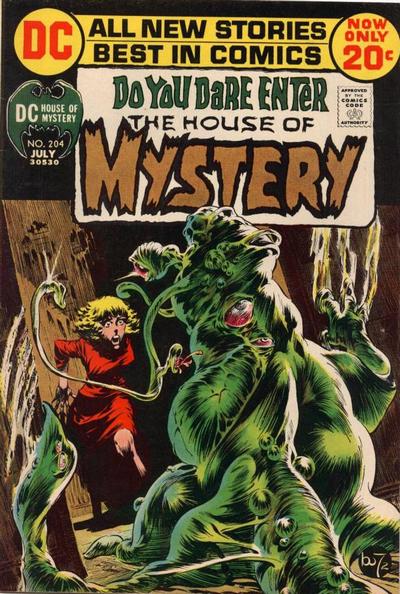
House of Mystery #204 from 1972 — All in the Family. Mary Skrenes, credited as Virgil North, writes with Bernie Wrightson contributing plot and art; Wrightson also supplies the cover. A stranded couple, a swamp and a house from a nightmare provide the premise. This is a useful Wrightson route alongside his better-known Swamp Thing work, without assuming that less famous means inexpensive.
These are reading selections, not a claim that every page in each issue is new or by the featured creators. An anthology should be catalogued story by story when originality and attribution matter.
The supernatural characters around the anthologies
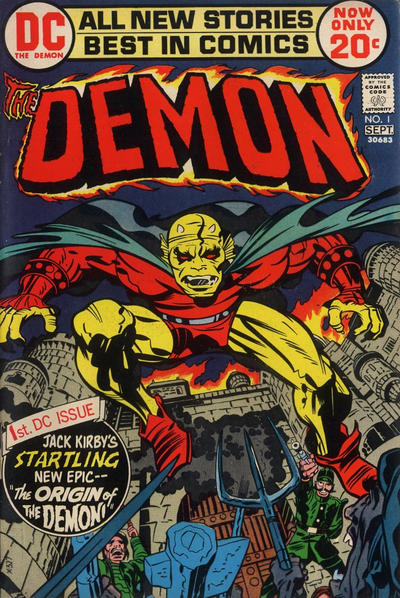
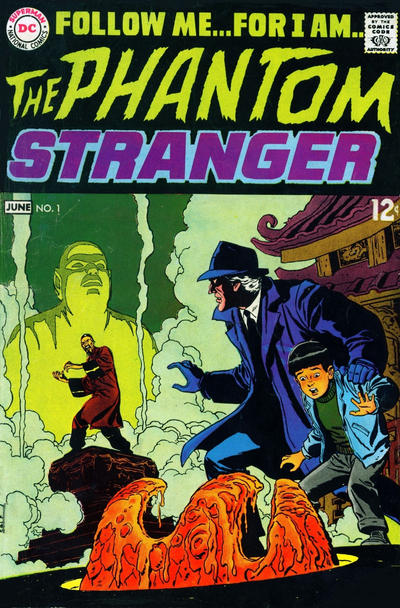
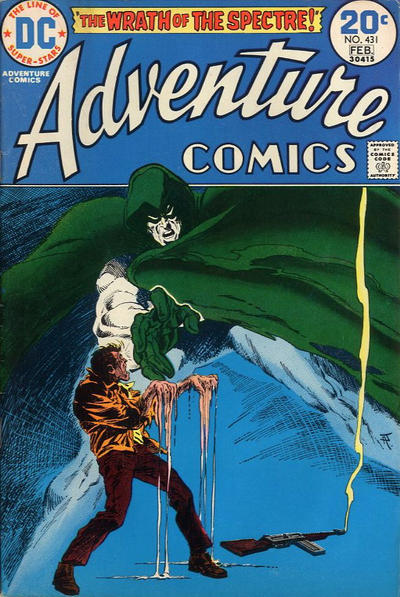
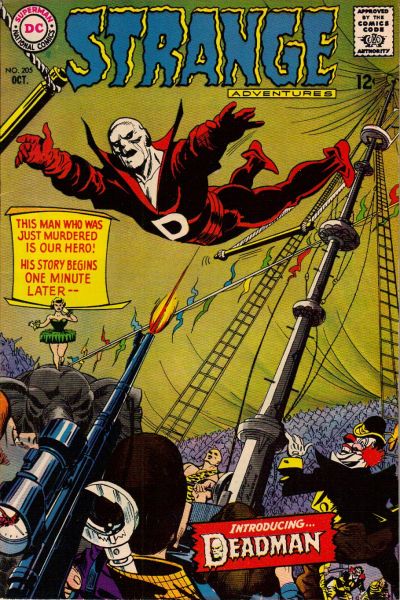
Jack Kirby's The Demon #1 from 1972 introduces Etrigan and Jason Blood, moving from anthology unease toward sustained supernatural adventure. The Phantom Stranger's 1969 series is a revival of an older character, while the Spectre stories beginning in Adventure Comics #431 are a Bronze-era development of a Golden Age figure. Deadman's Strange Adventures #205 debut belongs to 1967. These characters belong in the wider reading map, but it would be inaccurate to say the Bronze boom created all of them.
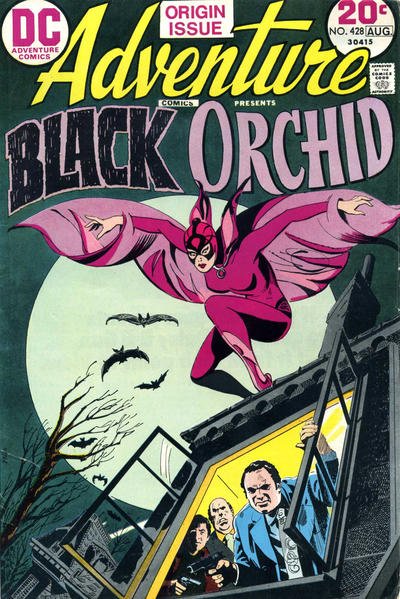
Black Orchid's Adventure Comics #428 debut offers an adjacent mystery route. Her later treatment should not be projected backwards onto every aspect of those original stories. Horror publishing grows through reinterpretation as well as invention.
The Swamp Thing distinction is particularly important. House of Secrets #92 introduces Alex Olsen's original incarnation in 1971. Swamp Thing #1 from 1972 establishes Alec Holland and the continuing series. Both are essential milestones; they are not the same origin simply printed twice.
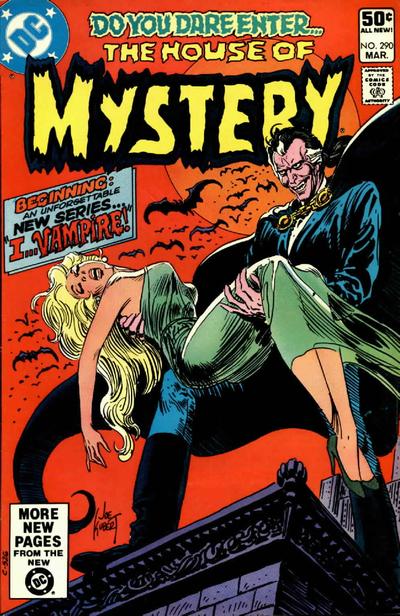
At the other end of the period, House of Mystery #290 from 1981 introduces Andrew Bennett and I Vampire, with J M DeMatteis writing and Tom Sutton drawing beneath a Joe Kubert cover. It provides a direct bridge from anthology publishing to serial character horror, and from Sutton's Charlton work to DC.
Charlton and the pleasure of discovery
Charlton deserves a substantial chapter because it rewards looking beyond the standard superhero checklist. Tom Sutton, Steve Ditko, Wayne Howard, Pat Boyette, Jim Aparo and Don Newton offer different reasons to open a book. A collection built around these creators can be coherent without a major character debut at its centre.
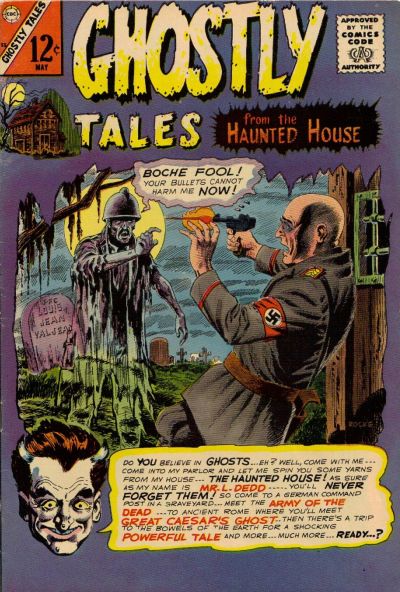
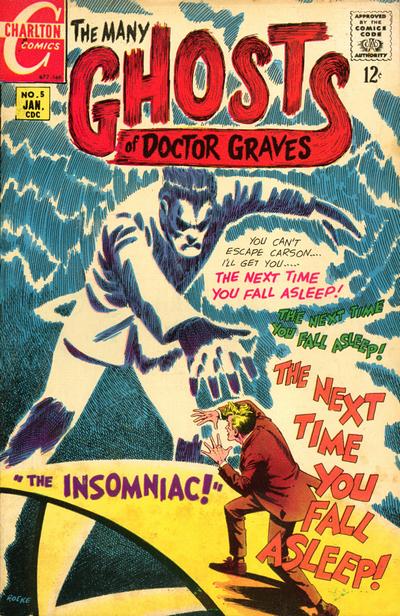
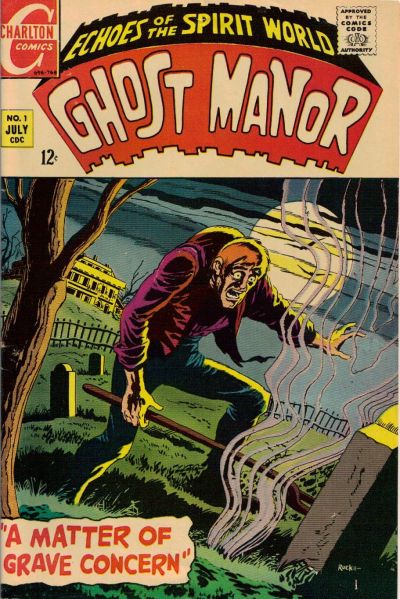
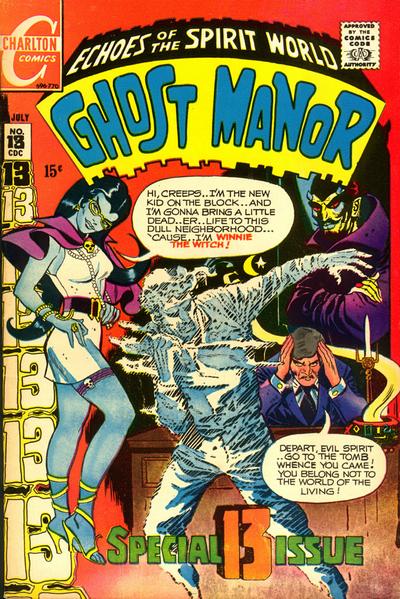
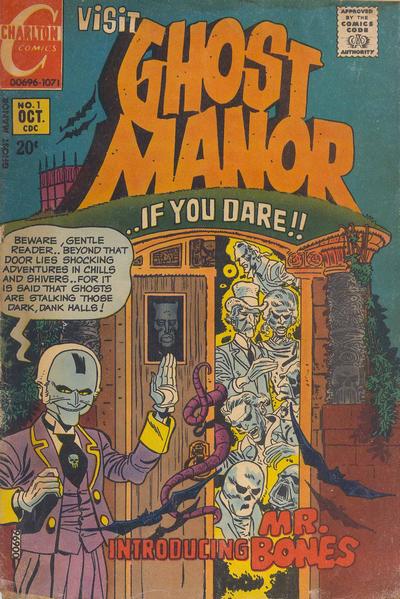
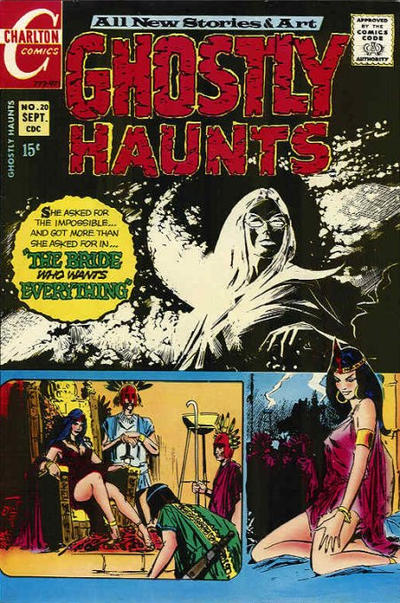
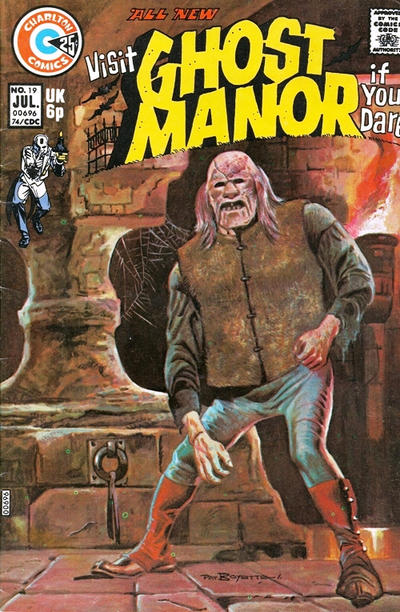
The first task is mastering the numbering. Ghostly Tales starts at #55 because it inherits an existing sequence. Ghostly Haunts starts at #20 by continuing the first Ghost Manor series. Meanwhile, a second Ghost Manor starts again at #1 in 1971. Confusing those two Ghost Manor runs can produce both the wrong purchase and the wrong population comparison.
The Charlton shelf
| Series | Original collecting route |
|---|---|
| Ghostly Tales | #55 to #169, beginning in 1966 and continuing into 1984 |
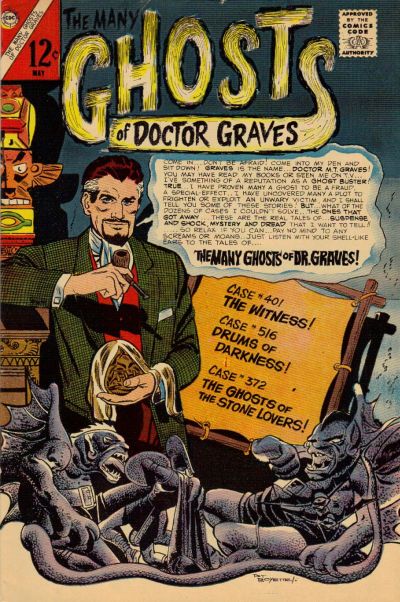
| The Many Ghosts of Doctor Graves | #1 to #72, 1967 to 1982 |
| Ghost Manor, first series | #1 to #19, 1968 to 1971; continues as Ghostly Haunts |
| Ghostly Haunts | #20 to #58, 1971 to 1978 |
| Ghost Manor, second series | #1 to #77, 1971 to 1984 |
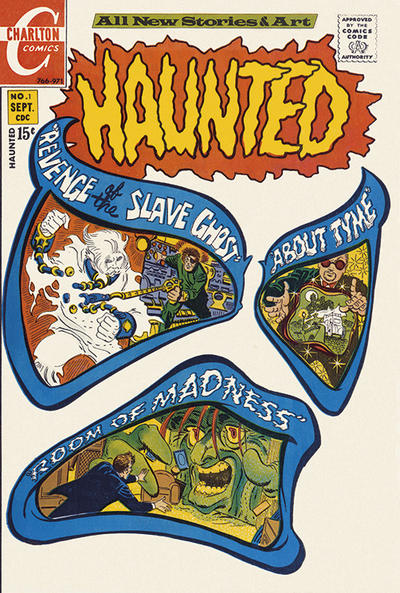
| Haunted | #1 to #75, 1971 to 1984; later cover branding emphasises Baron Weirwulf's Haunted Library |
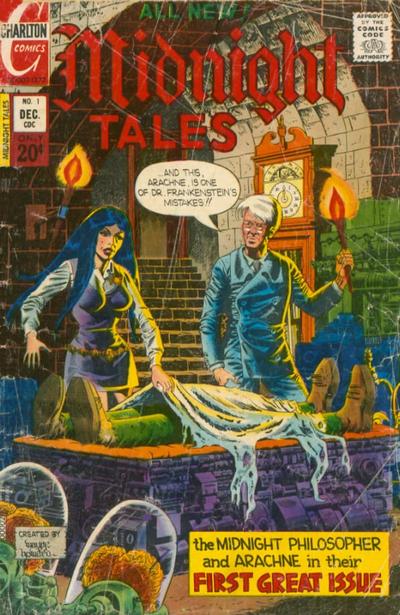
| Midnight Tales | #1 to #18, 1972 to 1976 |
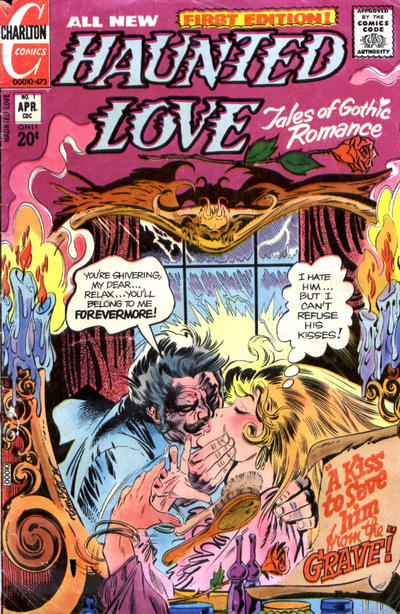
| Haunted Love | #1 to #11, 1973 to 1975 |
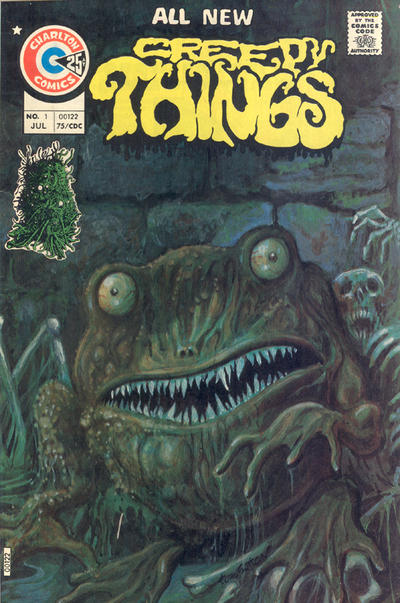
| Creepy Things | #1 to #6, 1975 to 1976 |
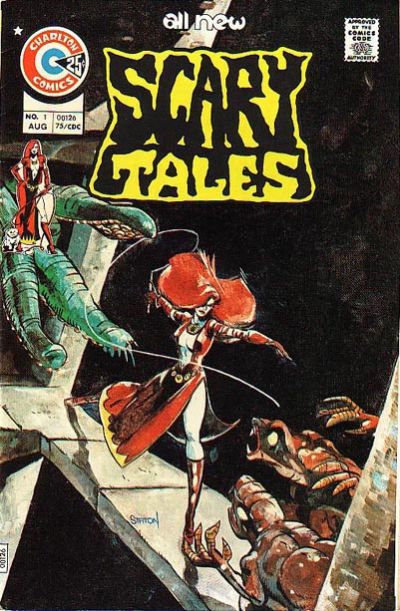
| Scary Tales | #1 to #46, 1975 to 1984 |
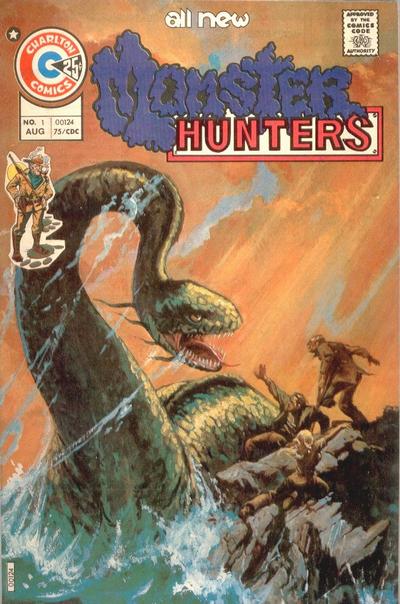
| Monster Hunters | #1 to #18, 1975 to 1979 |
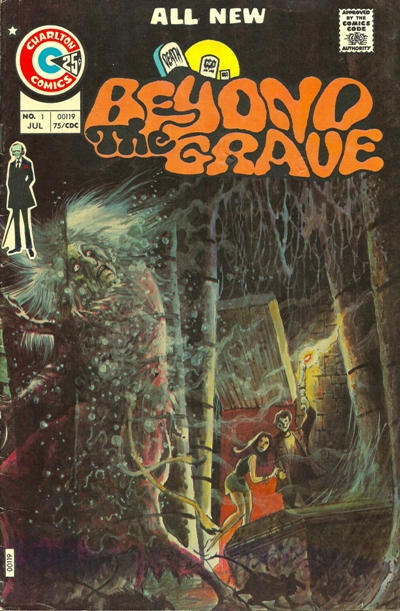
| Beyond the Grave | #1 to #17 across 1975 to 1984, with a substantial gap |
Those date spans do not mean continuous monthly publication or entirely new material throughout. Later reprints and Modern Comics reissues need identifying. A reader may welcome an affordable later appearance; an original-publication collector needs the earlier issue.
Follow Sutton beyond the cover
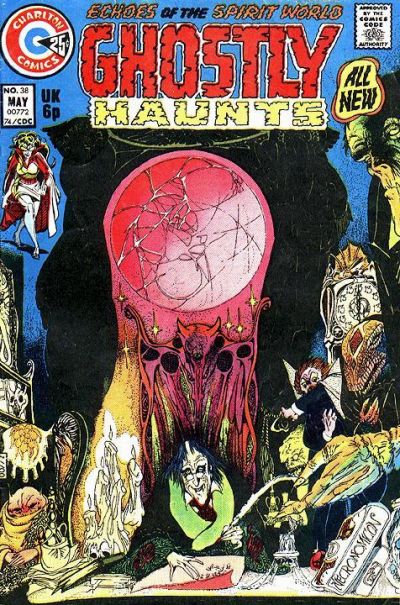
Ghostly Haunts #38 from 1974 contains Joe Gill and Tom Sutton's The Weirdest Character I've Ever Known, built around fictional creations escaping their writer. Sutton also supplies the cover. Its later history makes an excellent collecting lesson: the story and cover were reused in different Ghost Manor issues. Matching a familiar image does not prove that the interior is the same.
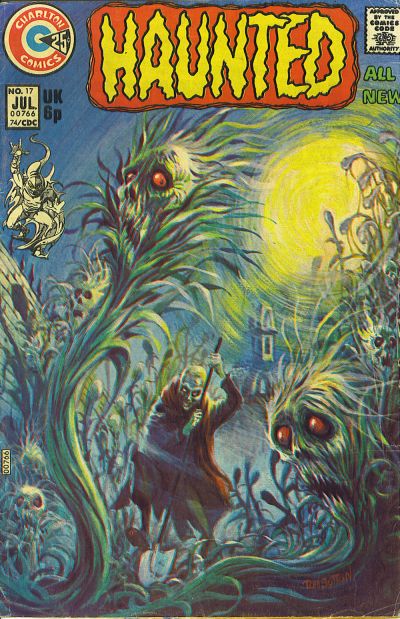
Haunted #17 from 1974 offers A Budding Evil, written and drawn by Sutton, alongside his painted cover. It is a clear route for readers interested in plant horror and a strong example of choosing an issue for both the exterior and the story. It is not a secret Swamp Thing or Man-Thing first appearance.
Creepy Things #1 from 1975 includes Sutton's The Well, in which an uncanny voice draws a listener towards madness. Here writing, drawing and cover collecting meet in one issue. The story also appeared later in Scary Tales #33; the original and the reprint should be clearly differentiated.
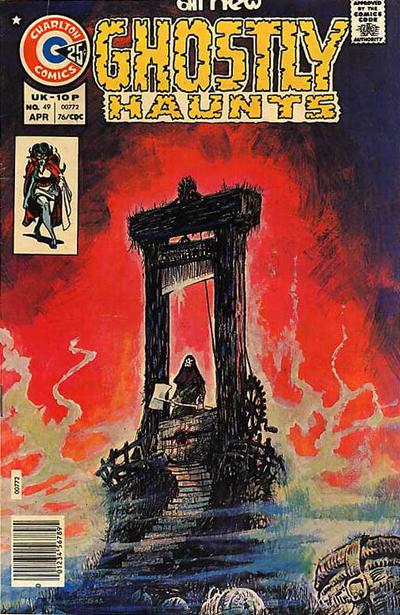
Ghostly Haunts #49 from 1976 belongs in a cover-led selection. Sutton painted the memorable cover, but the lead story Doorway to Hell is by Joe Gill and Martí Riera. Someone buying it for Sutton interiors deserves that information before paying a premium. This issue also appears in the population watchlist, where the evidence adds context without replacing the artistic reason to want it.
Give Wayne Howard his own space
Midnight Tales is more than another ghost-title variation. Professor Coffin, Arachne and interleaved framing sequences create a recurring world around the stories. In #1, Nicola Cuti scripts and Wayne Howard draws the framing material and Weave Me a Web. Howard's contribution deserves an individual feature rather than a passing name in a Sutton or Ditko article.
Use Midnight Tales alongside Haunted Love to show how varied Charlton could be. One builds an idiosyncratic host world; the other intersects Gothic romance with horror. Ditko trails through titles such as Ghostly Tales, Doctor Graves and Scary Tales add another direction, but the artist credit must be checked issue by issue. A series association never guarantees new work in every instalment.
Marvel and the monster universe
Marvel's Bronze Age horror works best as several connected collections. The experimental anthologies offer short-form storytelling. The reprint titles let readers revisit earlier monster and suspense material. Continuing characters turn horror into serial adventure. Black-and-white magazines provide another format and tone. Buying solely by the word horror misses those differences.
The anthology shelf
| Series or sequence | What the reader is buying |
|---|---|
| Tower of Shadows #1 to #9, 1969 to 1971 | A short anthology experiment with an unusually interesting roster of artists |
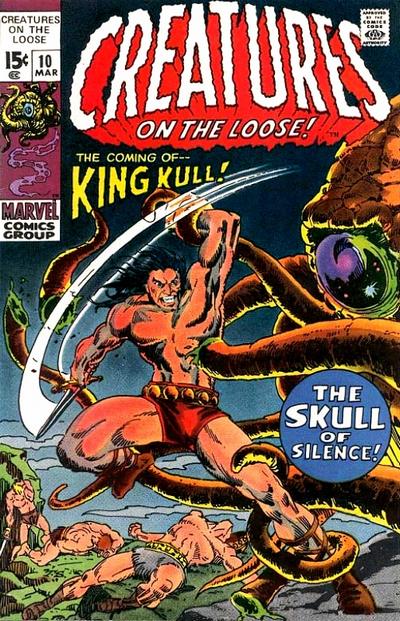
| Creatures on the Loose #10 to #37 | The continuation of Tower's numbering, moving through monster material into adventure features |
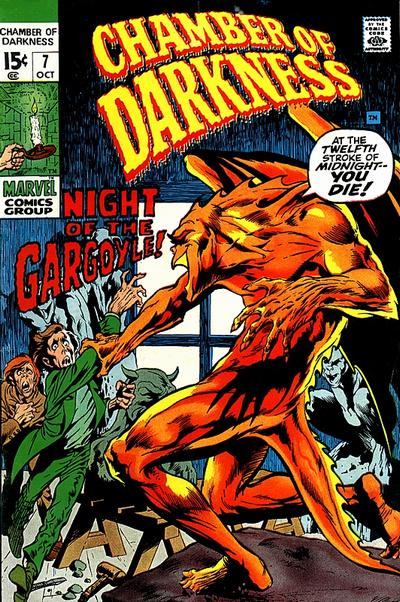
| Chamber of Darkness #1 to #8, 1969 to 1970 | A companion anthology mixing new work with some reprinted material |
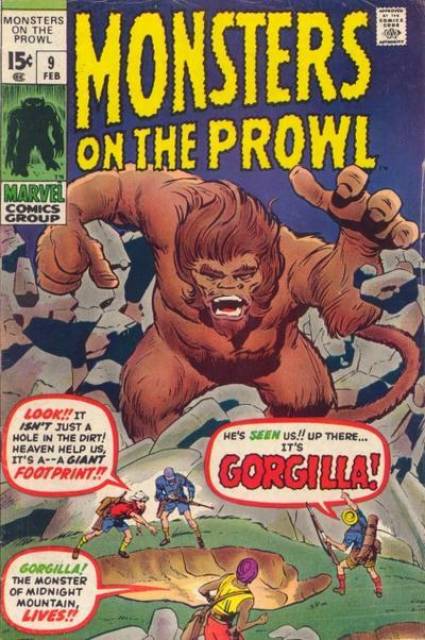
| Monsters on the Prowl #9 to #30 | Chamber's renamed continuation, predominantly reprint-led with some new early material |
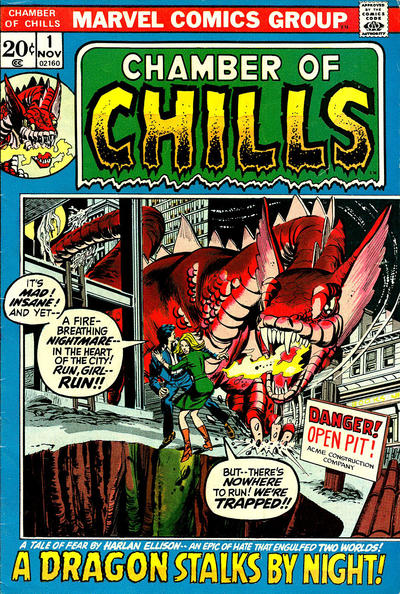
| Chamber of Chills, 1972 series | Early new stories and adaptations alongside older material, becoming reprint-led |
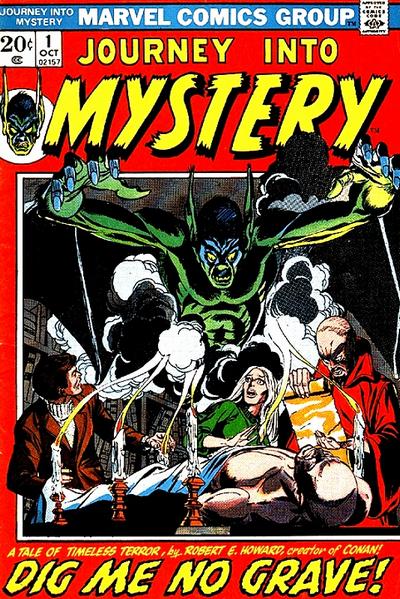
| Journey into Mystery, 1972 series | A horror revival distinct from the earlier title associated with Thor |
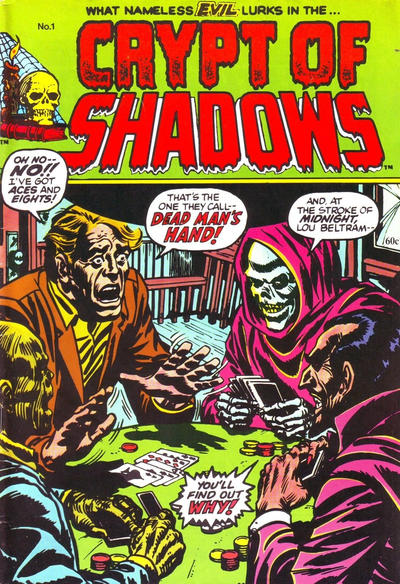
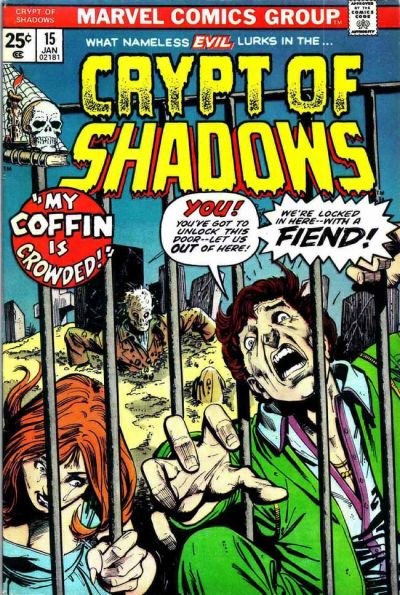
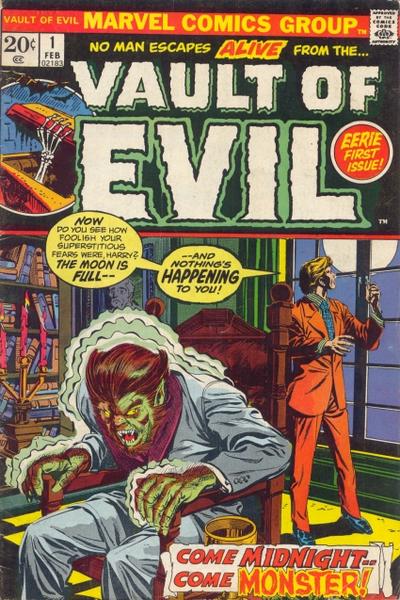
| Crypt of Shadows and Vault of Evil | Compact reprint-led runs with a separate attraction for cover collectors |
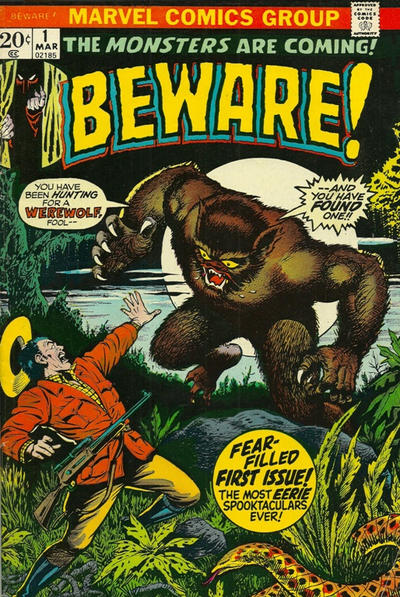
| Beware, 1973 series | Another short reprint route; identify publisher and year carefully |
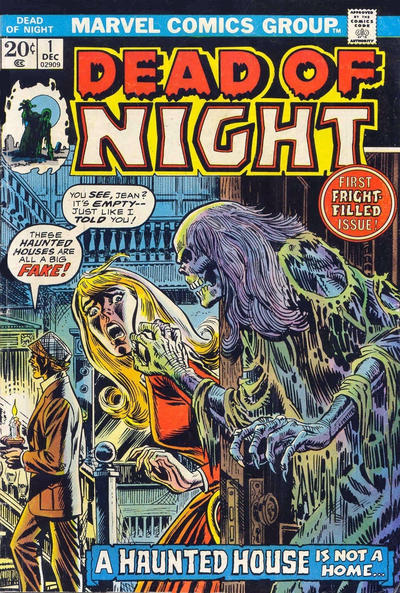
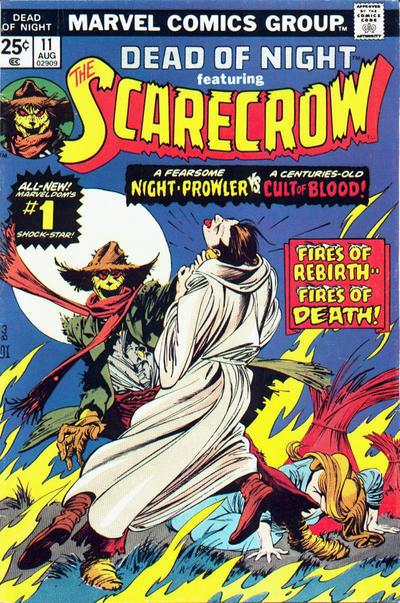
| Dead of Night #1 to #11 | Reprints followed by a new supernatural Scarecrow feature in the final issue |
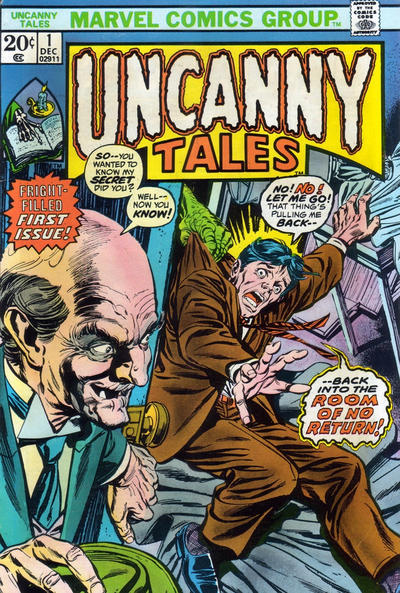
| Uncanny Tales, 1973 series | Later cover-titled Uncanny Tales from the Grave; another route into earlier material |
| Where Monsters Dwell and Where Creatures Roam | Giant-monster and science-fiction neighbours of the horror line |
| Supernatural Thrillers | Literary adaptations followed by recurring-character material, notably the Living Mummy |
Reprints deserve a place in this guide. They preserve access to earlier stories, and a new cover can itself be the reason someone wants a Bronze Age issue. The collecting mistake is paying for a supposed original story or first appearance without checking where the contents first ran.
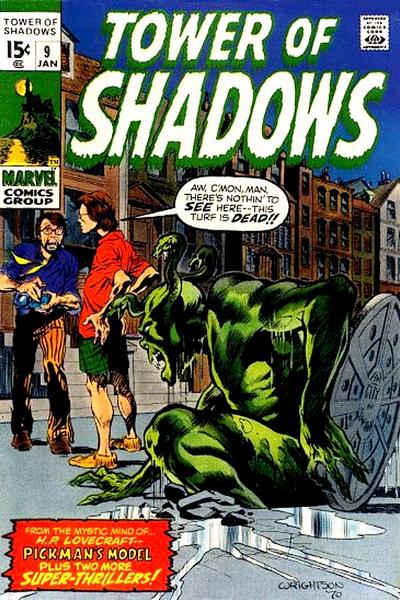
Look inside Tower of Shadows #1. Jim Steranko's seven-page At the Stroke of Midnight is an excellent starting point for thinking about horror as page design and compressed storytelling. The published cover is by John Romita; the celebrated Steranko work is inside. Fantagraphics' Lost Marvels No 1 provides a collected route through all nine Tower issues, removing any need to start by buying an expensive original.
Look inside Dead of Night #11. Enter the Scarecrow, written by Scott Edelman and drawn by Rico Rival, changes the direction of a reprint-led title at its final issue. The cover is by Gil Kane and Bernie Wrightson. Follow the supernatural character into Marvel Spotlight #26 and Marvel Two-in-One #18. This is the figure later called Straw Man, not either publisher's unrelated Scarecrow villain.
Marvel monsters overlooked and potentially undervalued
Comic Agent's view: Marvel's wider monster shelf is overlooked, and selected books look undervalued for the artwork, reading pleasure and history they offer. These qualities give readers several ways to build a collection beyond the familiar first appearances. Our strongest candidates combine a compelling cover with interesting contents or a clear place in the evolution of Marvel's monsters. This is a collecting judgement; financial upside still depends on the price of the particular copy and demand when it is sold.
There are three ways into this territory. The giant-monster anthologies preserve the imaginative machinery of pre-superhero Marvel. The Gothic and supernatural characters turn creatures into continuing protagonists. The cover gallery brings together dramatic designs across both groups. They overlap, but someone who loves a Kirby alien invasion may want a different reading experience from someone looking for Dracula's Gothic intrigue.
The reprint shelf has a collecting identity of its own
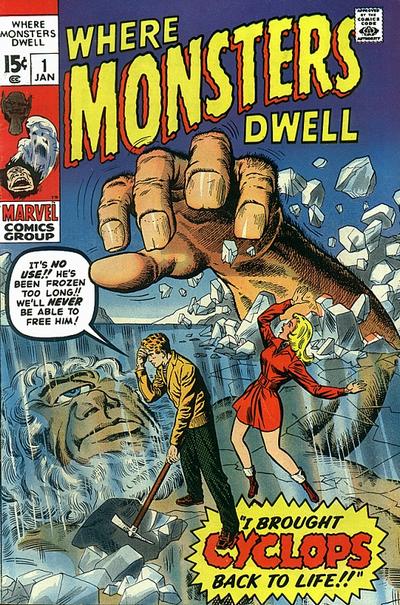
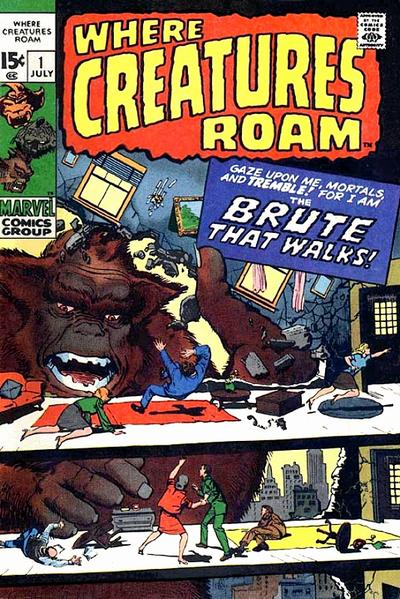
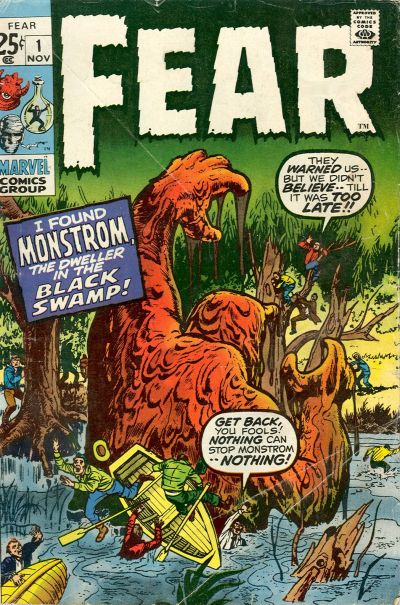
Where Monsters Dwell, Where Creatures Roam and early Fear deserve sustained attention. Their Bronze Age publication dates sit over material first published in earlier decades. That makes them part of the story of how Marvel repackaged its past for a new readership. A 1970s original printing of a reprint comic is still a period object, with its own cover, advertisements, paper and editorial context.
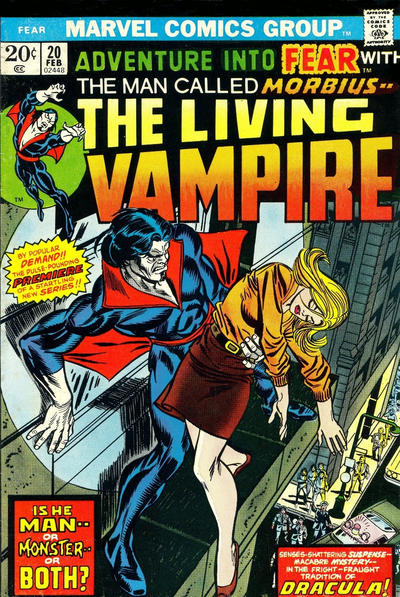
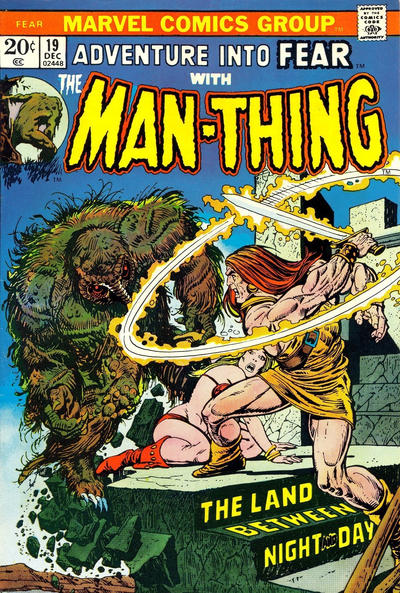
Fear illustrates the transition particularly clearly. Its first nine issues are a monster and suspense reprint anthology; Man-Thing arrives as the new lead feature in #10, before Morbius takes over with #20. Following that progression shows a publisher moving from its back catalogue into a developing supernatural universe. Treat Fear #1 as the anthology's launch, with an attraction separate from the later character keys.
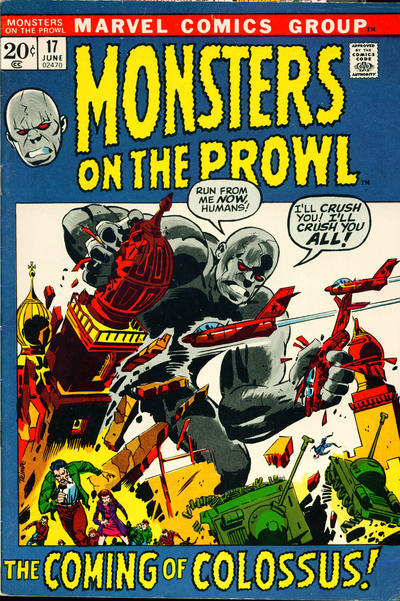
Monsters on the Prowl and Creatures on the Loose also reward inspection beyond their logos. Their numbering continues Chamber of Darkness and Tower of Shadows respectively, and their contents change along the way. Buy an identified story, artist or cover. A run assembled solely because every cover says “monster” can contain fantasy adventure, science fiction and reprints of stories already owned elsewhere.
Six ways to build the collection
| Route | Start here | What makes it worth exploring |
|---|---|---|
| The early monster anthology | Fear #1, 1970; Where Creatures Roam #1, 1970 | Period reprint packages that introduce the shelf before its best-known continuing characters take over |
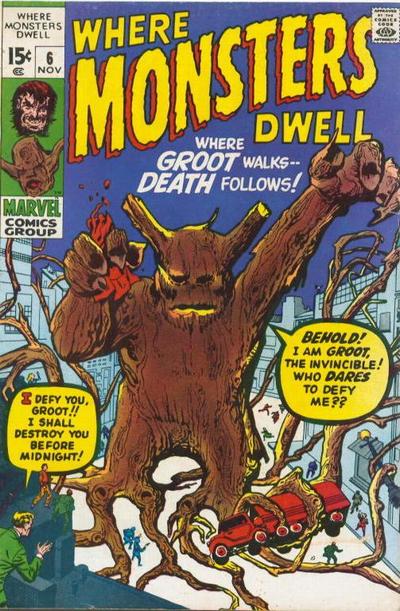
| Groot's monster-era roots | Where Monsters Dwell #6, 1970 | Reprints the Groot story from Tales to Astonish #13, 1960; useful for exploring the much earlier invader concept |
| Cover art and character history together | Monsters on the Prowl #17, 1972 | Herb Trimpe's cover fronts the Kirby and Dick Ayers Colossus story originally published in Tales of Suspense #14, 1961 |
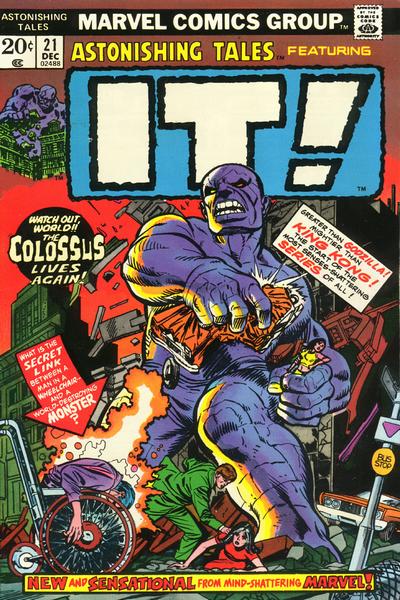
| A monster becomes a continuing protagonist | Astonishing Tales #21 to #24, 1973–74 | The Living Colossus revival becomes a compact feature with scripts credited to Tony Isabella and art by Dick Ayers |
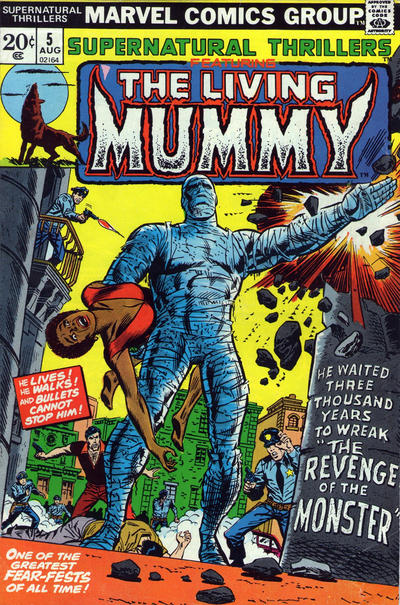
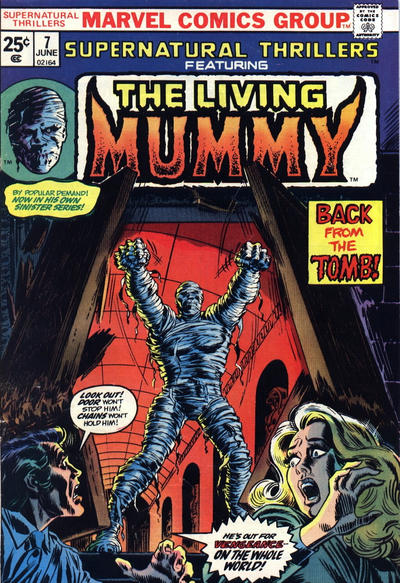
| A less familiar supernatural lead | Supernatural Thrillers #5 and #7 to #15, 1973–75 | N'Kantu the Living Mummy develops from a debut into a continuing series with its own supporting mythology |
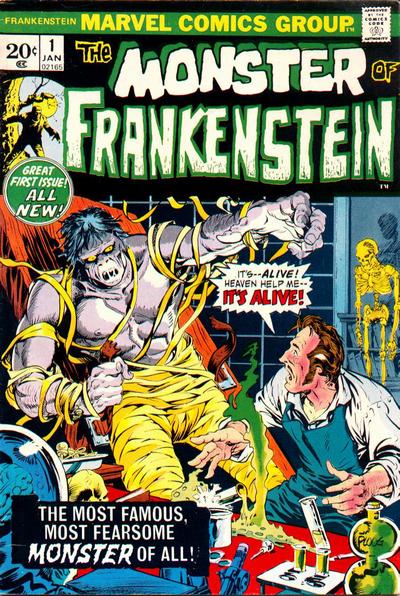
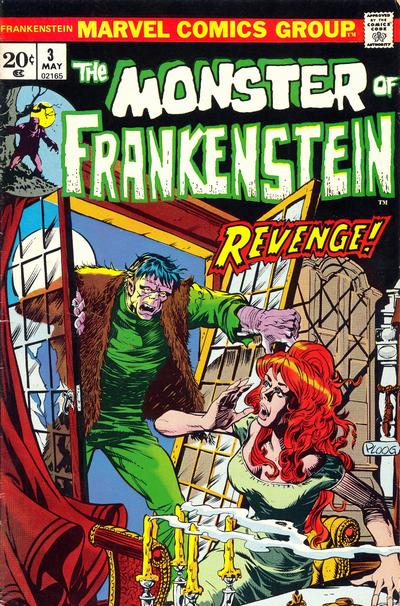
| A creator-led Gothic collection | Frankenstein #1 to #4, 1973 | Gary Friedrich and Mike Ploog provide a coherent opening reading sequence; the attraction extends beyond owning the first issue |
The Groot distinction needs a clear caption. Where Monsters Dwell #6 is a reprint of an older monster story. It is neither Groot's original first appearance nor the launch of the later Guardians characterisation. Its interest lies in seeing that earlier version and owning its 1970 presentation. Connecting a book to a familiar name should help readers understand its history, rather than erase the differences.
The Colossus pairing is especially useful. Put Monsters on the Prowl #17 beside Astonishing Tales #21 and you can explain an earlier monster story, a Bronze reprint with a new cover, and a new serial revival. The name also needs care: this is It! the Living Colossus, distinct from the Sturgeon creature adapted in Supernatural Thrillers #1 and from the X-Men's Colossus.
N'Kantu deserves more space than a first-appearance label. Steve Gerber and Rich Buckler introduce him in Supernatural Thrillers #5. From #8, Tony Isabella and Val Mayerik take the feature into further supernatural adventure; the issue introduces the Elementals. Read through the sequence to decide whether its combination of monster tragedy and fantasy appeals. Marvel's 2019 Horror Omnibus collects this material and the Colossus run, although the price and availability of a particular edition need checking before treating it as the economical option.
What supports the value argument
The most defensible starting point is accessible entry cost. Checked on 24 September 2026, Key Collector's raw acquisition guide puts Where Monsters Dwell #6 at approximately £7 / £19 / £68 across its Low / Mid / High bands. Supernatural Thrillers #5 is approximately £11 / £38 / £113. These use the opening buying guide's conversion of £1 = $1.3265. They are broad guide references, excluding delivery and selling costs; they are not UK realised-sale FMV or numerical grades.
Those figures make the books plausible entry points into a substantial collecting field. Strengthen the buying case by pairing the artwork or historical interest with a reasonable delivered price, several comparable sales and evidence that collectors are actually buying. An attractive book with only ambitious asking prices may be difficult to resell.
Future attention could come from renewed interest in particular artists, well-curated reissues, or readers exploring the wider monster catalogue. These are reasons to watch the field and keep records of demand. For an ordinary raw reading copy, completeness and price matter more than a tiny slab census. For an expensive high-grade copy, examine census distribution and recorded sales in that grade separately.
Our collecting approach: choose a cover you love, establish exactly what is inside, then buy the best complete copy your budget comfortably allows. Start with one anthology, one character sequence and one artist-led selection. The collection earns its place through the enjoyment it delivers; any later market recognition is an additional possibility.
The characters that made horror a continuing story
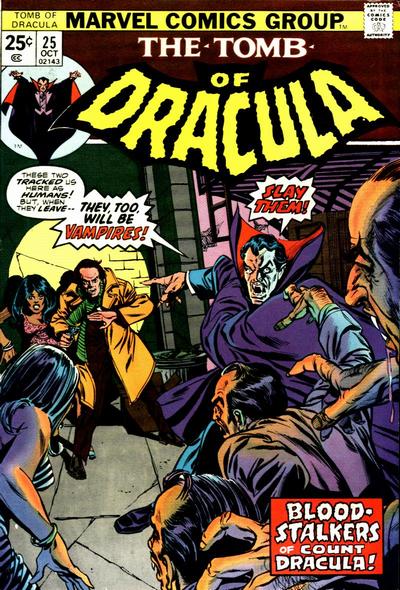
Tomb of Dracula rewards reading as an ensemble drama. Gene Colan's interiors, Tom Palmer's inks and Marv Wolfman's long writing tenure matter beyond the individual key issues. The series began before Wolfman took over; attributing the entire run to its best-known team erases its actual development. Blade's arrival in #10 and vampire detective Hannibal King's in #25 are useful milestones within a much longer reading experience.
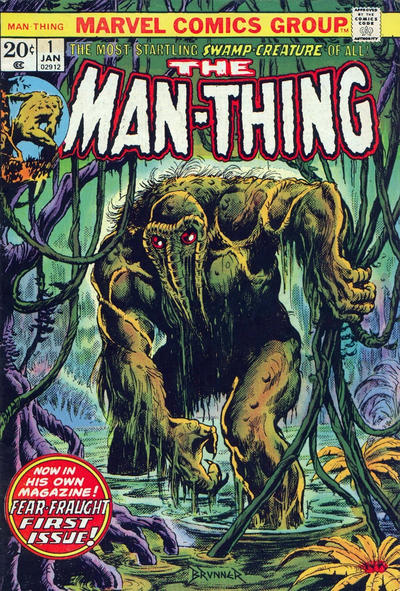
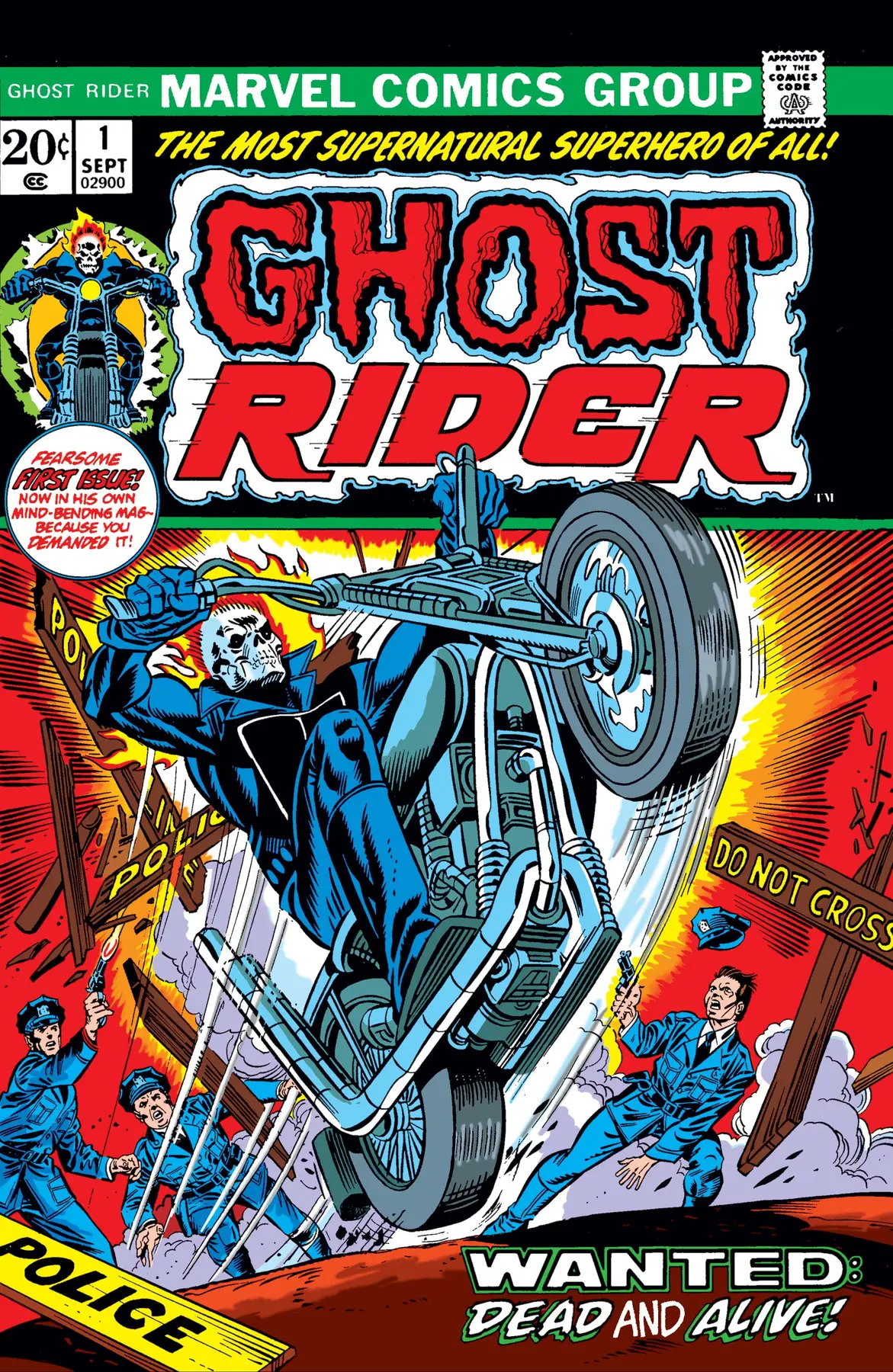
Werewolf by Night, Ghost Rider and Man-Thing lead in different directions. Jack Russell's serial turns bodily transformation into an ongoing personal problem. Johnny Blaze combines the supernatural with a stunt performer's world. Steve Gerber's Man-Thing stories use the swamp creature as a way into human fear, cruelty and social conflict. Their crossovers connect the shelf, but each series has its own reason to read it.
The route into these characters often begins outside a solo title. Man-Thing moves from Savage Tales to Astonishing Tales and Fear before Man-Thing #1. Jack Russell starts in Marvel Spotlight #2, and Johnny Blaze in #5. Morbius begins in Amazing Spider-Man #101 before taking over the Fear feature from #20. A solo first issue is a publishing milestone, not automatically a character debut.
Frankenstein offers a quieter collecting route. Gary Friedrich and Mike Ploog's opening issues adapt and rework the literary monster through expressive period storytelling. Begin with #1 to #4 as a reading sequence. The book's claim to attention is the treatment and artwork, not the invention of Frankenstein.
Beyond the most familiar monsters
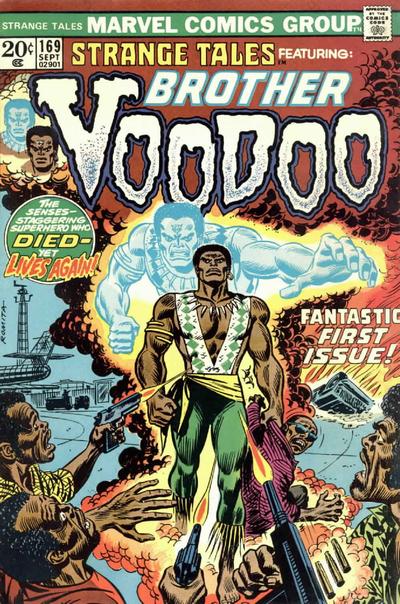
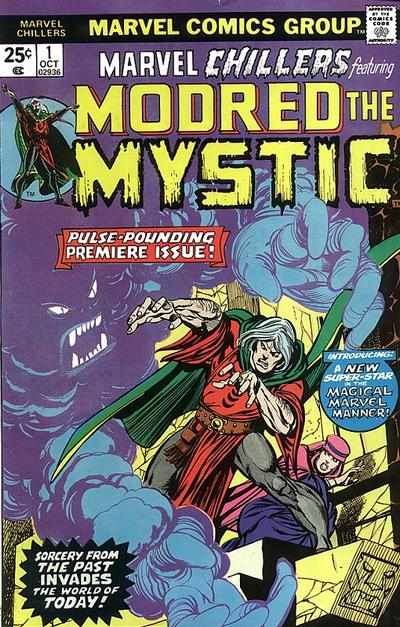
Brother Voodoo's Strange Tales #169 launch, the Living Mummy in Supernatural Thrillers #5, Satana in Vampire Tales #2 and Modred in Marvel Chillers #1 broaden the line considerably. Read these as particular 1970s fictional constructions; their treatments of religion, folklore and culture are not reliable guides to the real traditions from which they borrow.
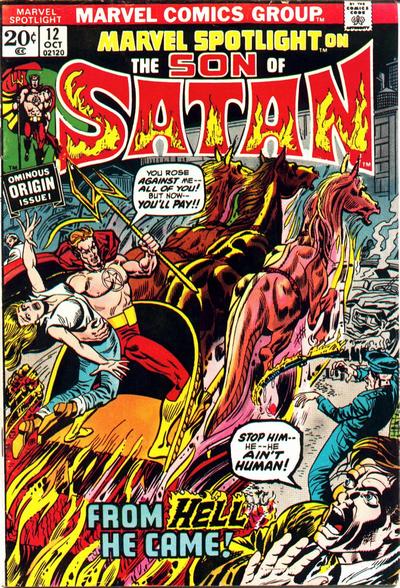
Daimon Hellstrom requires careful first-appearance language: Ghost Rider #1 introduces him in shadow, while subsequent appearances and Marvel Spotlight #12 establish his starring identity. John Jameson's transformation into Man-Wolf in Amazing Spider-Man #124 is not the first appearance of John Jameson. Greer Nelson's Tigra transformation in Giant-Size Creatures #1 is likewise distinct from her earlier identity as the Cat.
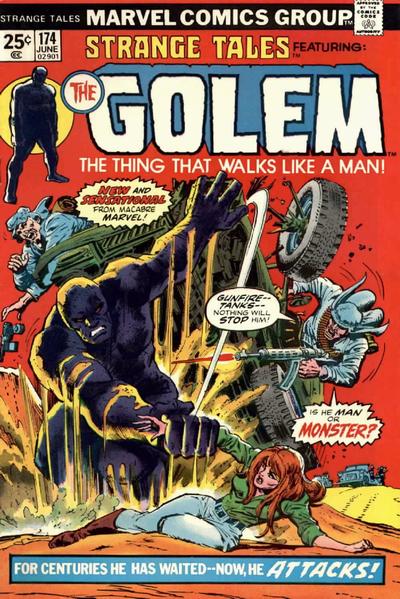
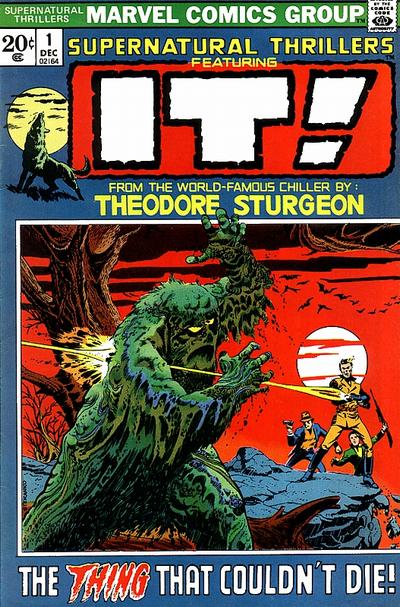
Marvel's Golem in Strange Tales #174 is a particular comic-book interpretation of a much older folkloric figure. Supernatural Thrillers #1 adapts Theodore Sturgeon's It; that creature is not It the Living Colossus. These distinctions make the shelf more interesting and protect buyers from abbreviated descriptions that turn every new costume or revival into an absolute first.
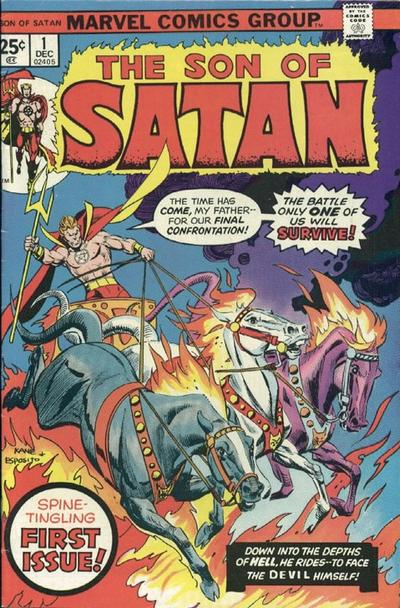
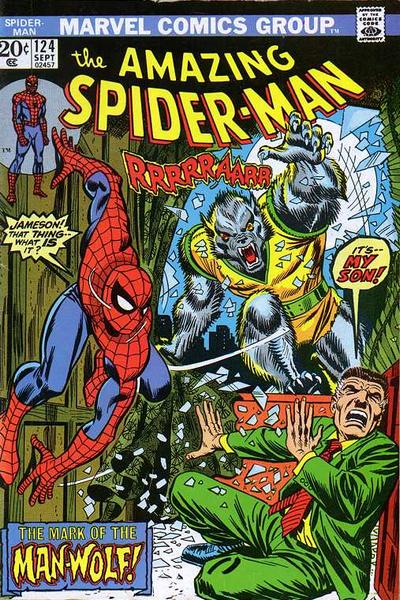
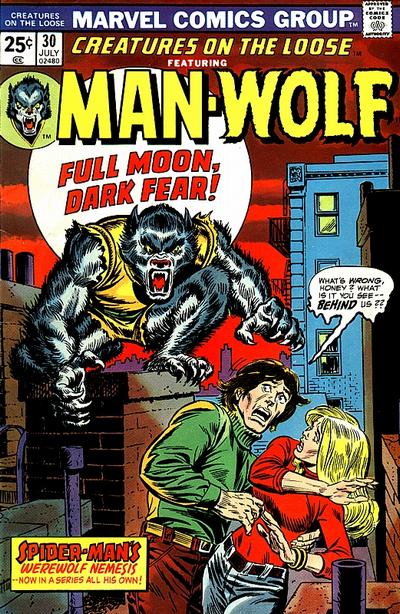
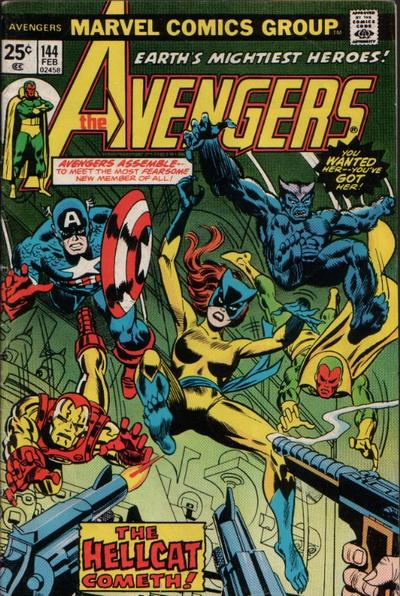
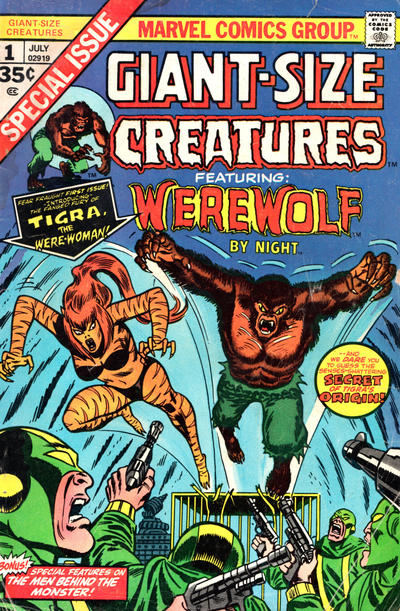
The magazine gallery
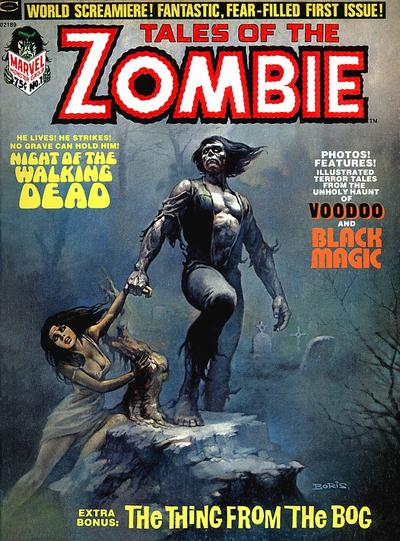
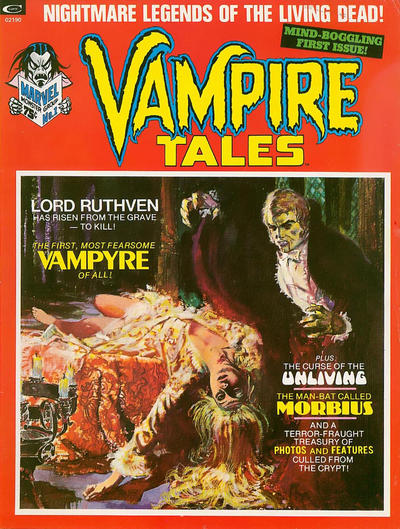
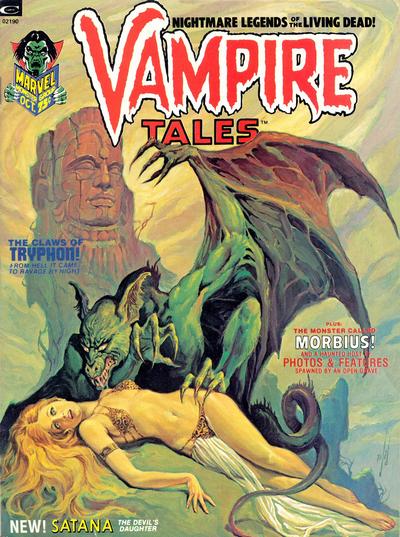
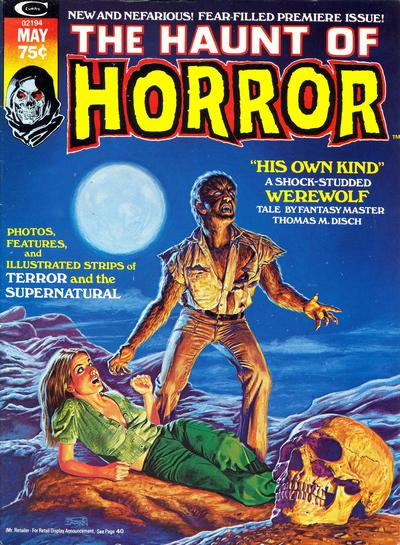
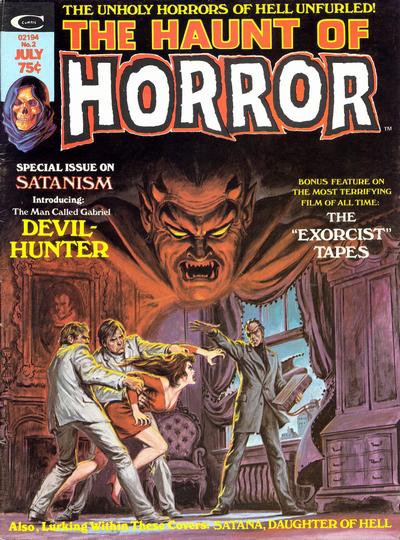
Dracula Lives, Monsters Unleashed, Tales of the Zombie, Vampire Tales and Haunt of Horror expand Marvel horror beyond the standard colour comic. Give them their own gallery and their own collecting notes. Larger pages and monochrome interiors change how the art is experienced, while prose and editorial material can make a magazine feel different from a serial comic.
Roy Thomas and Dick Giordano begin their Stoker adaptation in Dracula Lives #5. The original magazine serial did not complete the novel; readers wanting the whole adaptation should seek the later completed Stoker's Dracula collection. Buying a sequence of the original magazines is a different project.
Tales of the Zombie is also a lesson in roots. Simon Garth first appeared in Menace #5 in 1953, then returned in the 1970s magazine. Vampire Tales #1 is significant to Morbius's magazine career, while #2 contains Satana's debut. Neither distinction should be confused with the characters' other publishing milestones.
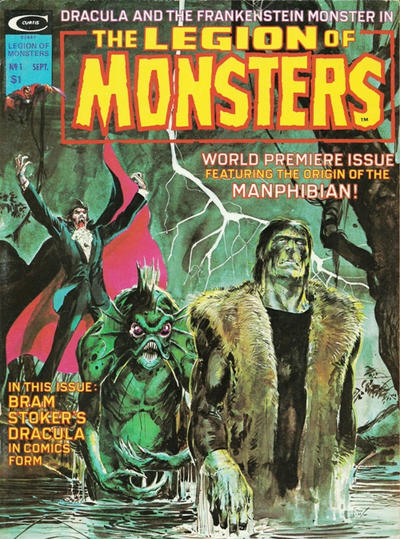
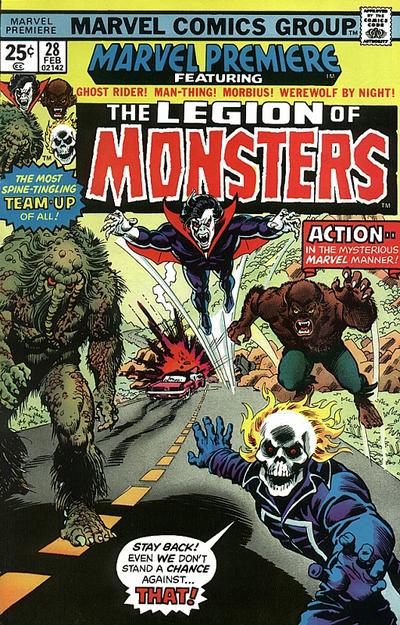
Two title traps deserve explicit labels. The 1973 Haunt of Horror prose digest and the 1974 comic magazine are different publications. Legion of Monsters #1 from 1975 is a magazine anthology; Marvel Premiere #28 from 1976 brings together the familiar monster team. A title's first use and a team's first appearance are different collecting questions.
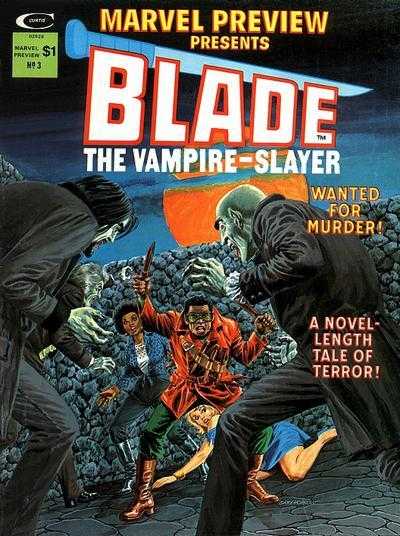
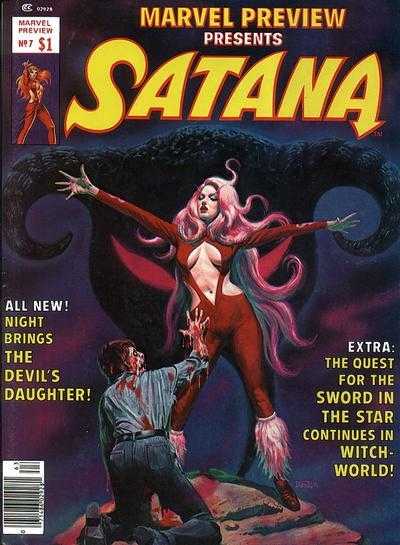
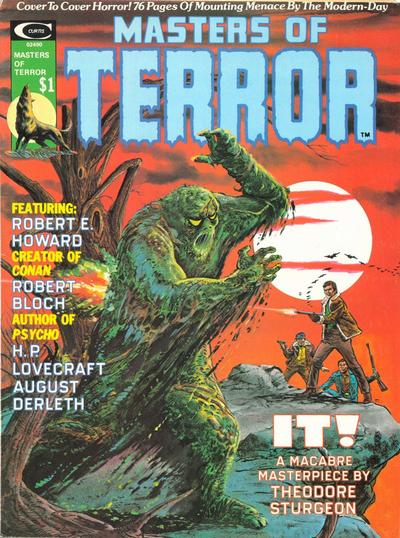
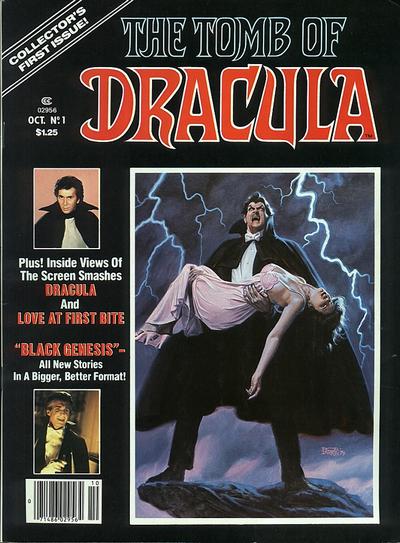
Keep Marvel Preview's horror issues in the directory too, especially #3 for Blade and #7 for Satana, alongside Masters of Terror and the later Tomb of Dracula magazine. Marvel Preview as a whole is a genre showcase, not a continuous horror series. The US Dracula Lives magazine must also be distinguished from Marvel UK's later weekly of the same name.
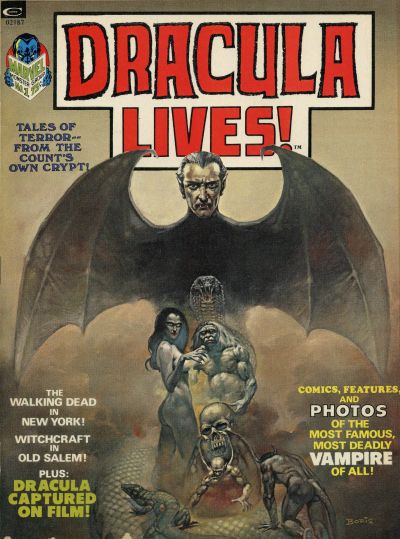
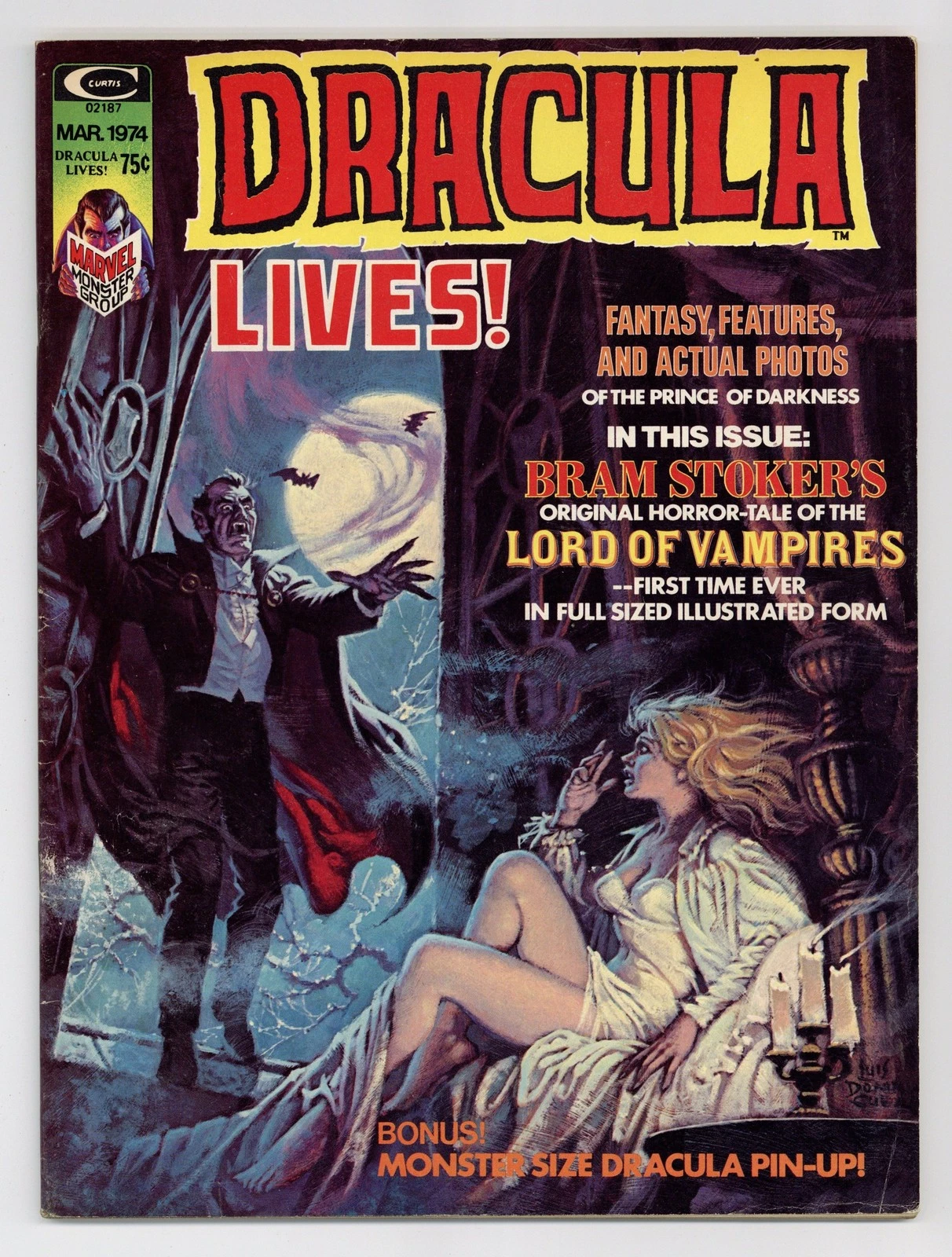
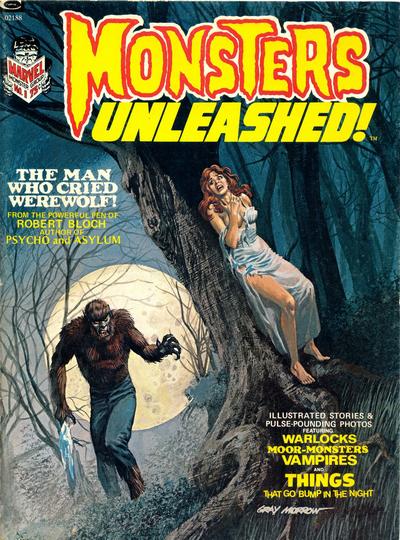
Warren and the magazine artists
The magazine shelf belongs at the centre of Bronze horror. Creepy, Eerie and Vampirella began before the conventional 1970 boundary, yet their 1970s issues are essential to understanding the period. Their larger pages, painted covers and predominantly black-and-white interiors offer a different experience from a standard colour comic. They should retain their full proportions in an illustrated guide.
Creepy is a strong anthology route. Eerie also develops recurring features and serials. Vampirella combines an increasingly substantial central character with other material. Treating all three as interchangeable containers for attractive paintings loses the distinctions that help a reader decide what to buy.
Read the story behind the cover
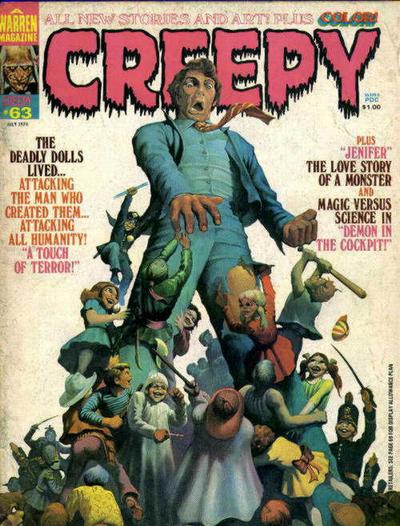
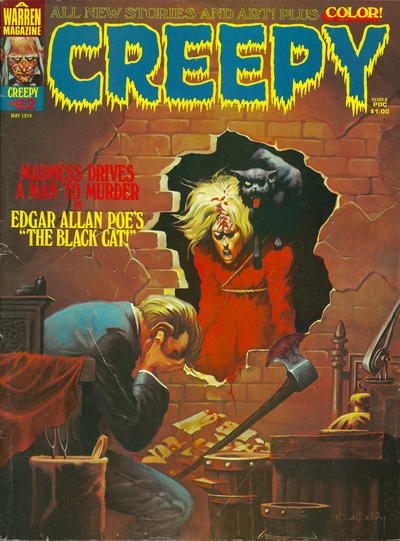
Creepy #62 from 1974 contains Bernie Wrightson's adaptation of Poe's The Black Cat. Creepy #63 follows with Jenifer, written by Bruce Jones and drawn by Wrightson. The latter has a Ken Kelly cover, making it another clear example of why an interior-art collection needs different credits from a cover collection. Creepy Presents Bernie Wrightson offers a collected reading route through his magazine work.
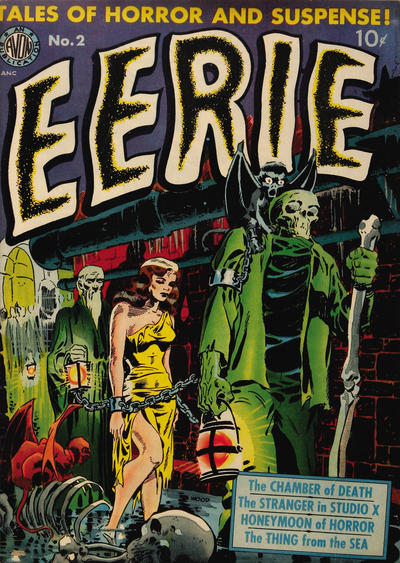
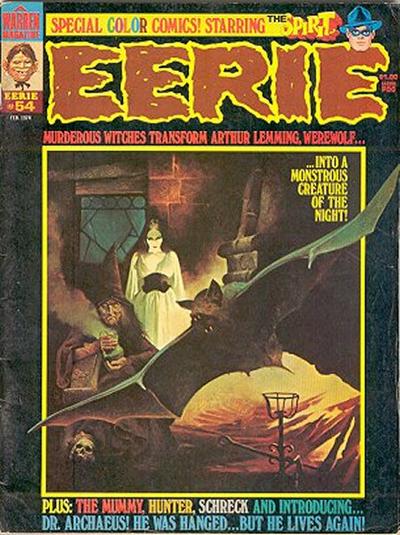
Eerie #54 from 1974 provides a useful serial-horror snapshot, with features including The Mummy Walks, Curse of the Werewolf, Hunter, Schreck and Doctor Archaeus. Its contents include a colour Spirit reprint as well, so even this single magazine resists a simple all-new-horror label. Follow a particular feature's sequence if you want continuity, rather than assuming a random issue will provide a complete story.
Give the international artists equal space in the discussion. José González, Esteban Maroto, José Ortiz, Luis García Mozos and Rafael Auraleón belong in the reading map alongside familiar US names. The magazine tradition is a useful antidote to an account of the era based entirely on superhero creators.
Vampirella beyond her first issue
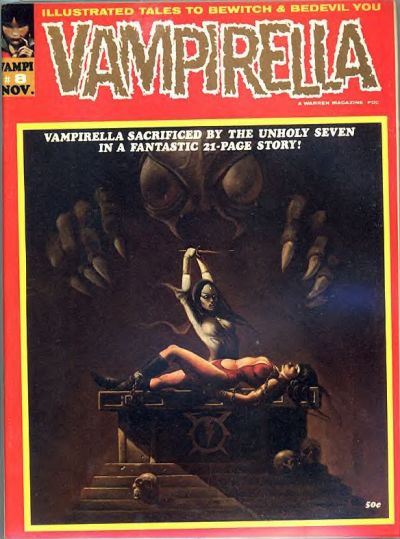
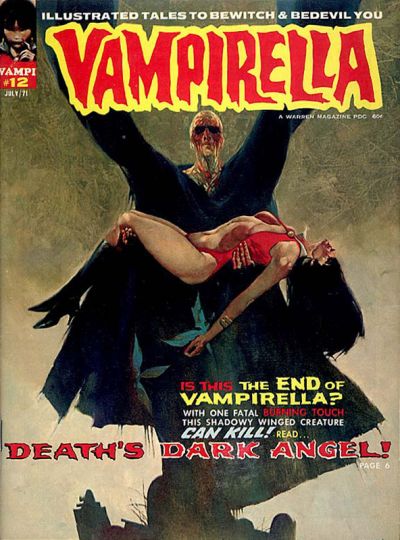
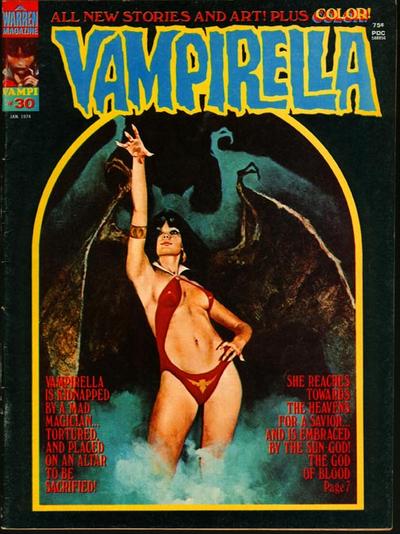
Vampirella #1 from 1969 is the debut and the famous Frank Frazetta cover, but a four-issue route tells a richer story. In #8, Archie Goodwin and Tom Sutton develop the feature with the Cult of Chaos and Adam and Conrad Van Helsing. José González begins drawing the feature in #12, with Goodwin's Death's Dark Angel. Pantha appears in #30, in Steve Skeates and Rafael Auraleón's Re-Birth.
Those are different milestones: launch, supporting-world development, a defining artist's arrival and a new character. Someone interested in the heroine's evolution has a reason to pursue all four, while someone seeking a first appearance might want only one. This is how a character map becomes a reading guide.
When using archive editions, check the exact contents and ISBN. New double-sized Creepy Archives paperbacks do not necessarily share the same issue contents as older hardcovers with the same volume number. A collection's contents list is more useful than the volume number alone.
Skywald and its continuing nightmares
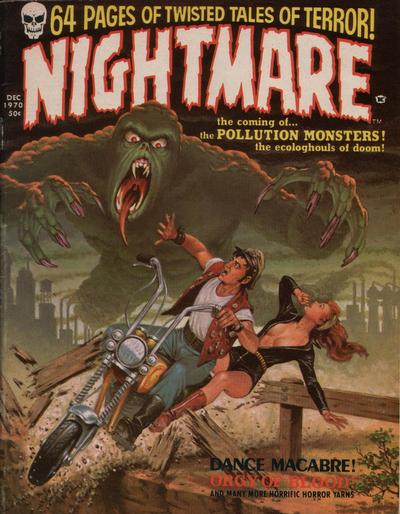
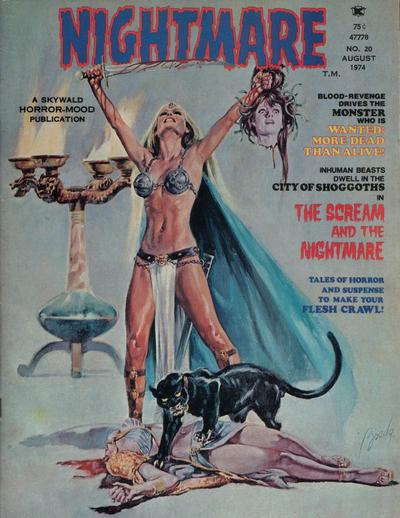
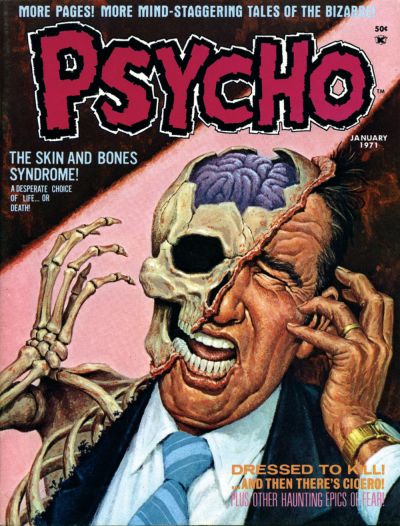
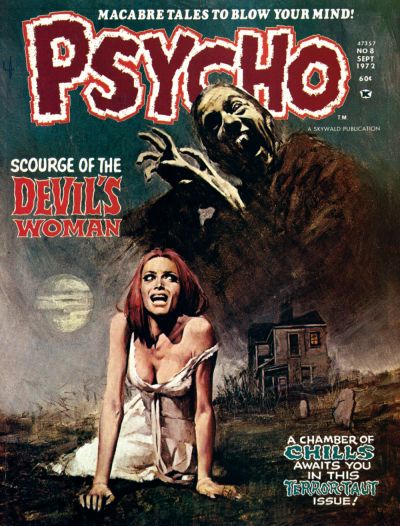
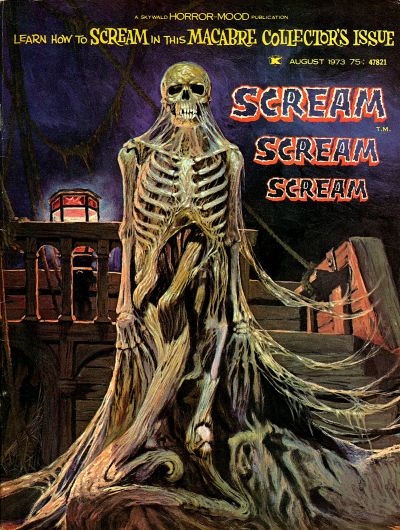
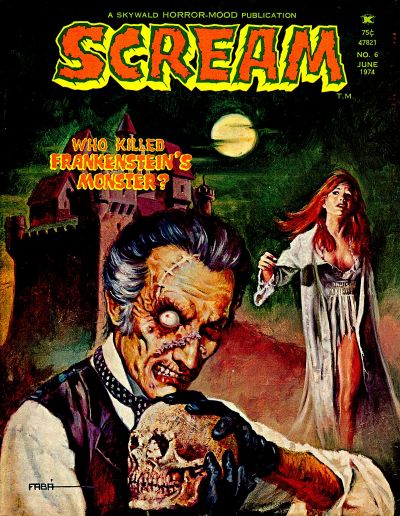
Nightmare, Psycho and Scream form a distinctive magazine shelf. Alan Hewetson's term Horror-Mood captures the publisher's interest in recurring nightmares and an oppressive imaginative world. His retrospective history is a valuable insider source, while the actual issue contents establish the reading sequences.
The Human Gargoyles starts in Psycho #8 and crosses between titles. A single-title run therefore does not automatically give the reader the whole sequence. A practical trail is Psycho #8; Nightmare #10, #13 to #15 and #19; Psycho #20; then Nightmare #20 and #23. Hewetson and Maelo Cintron are the central creative names. This is precisely the sort of connected discovery a publisher directory should help a newcomer make.
Saga of the Victims, by Hewetson and Jesús Suso Rego, begins in Scream #6. Its original magazine chapters appear in #6 to #9 and #11, but the planned conclusion was not published in that original run. Later collections differ in what they include. Confirm the ending before promising a complete reading experience.
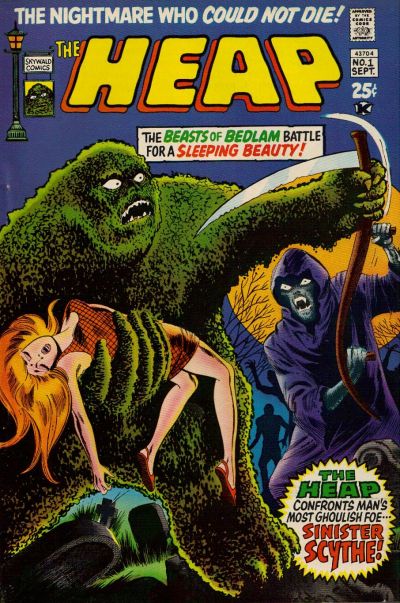
Skywald also contributes to the swamp-monster family through its version of the Heap. The Heap #1 from 1971 and the magazine appearances belong to that branch, not to the Golden Age character's original debut. Similar monster shapes do not establish that Man-Thing, Swamp Thing and the Heap are the same creation.
Other publishers that belong on the shelf
Atlas Seaboard
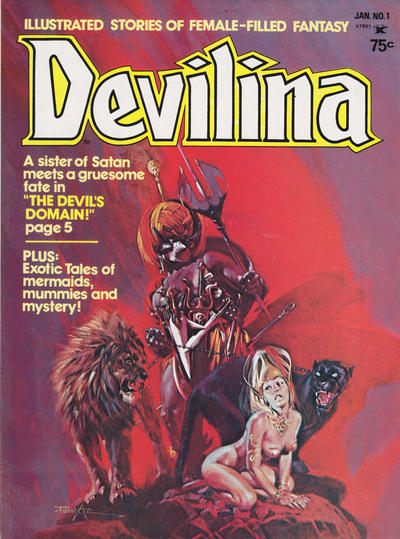
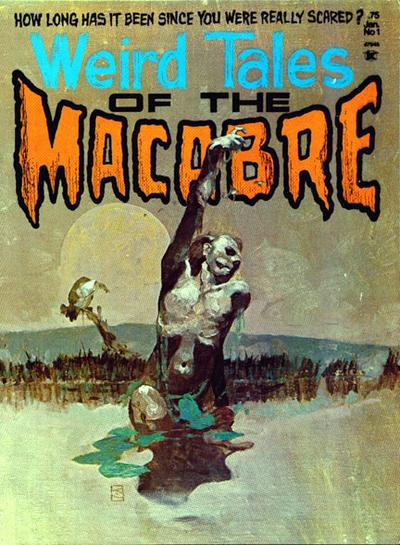
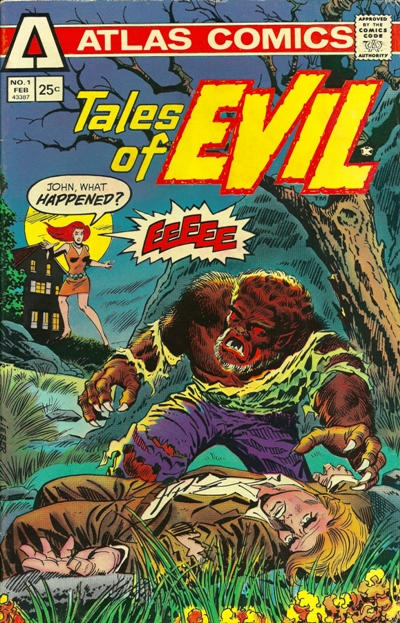
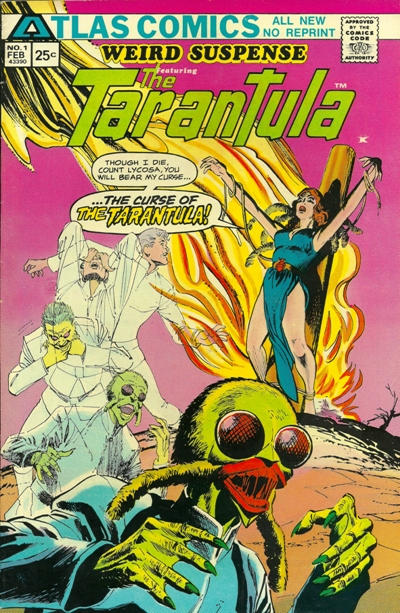
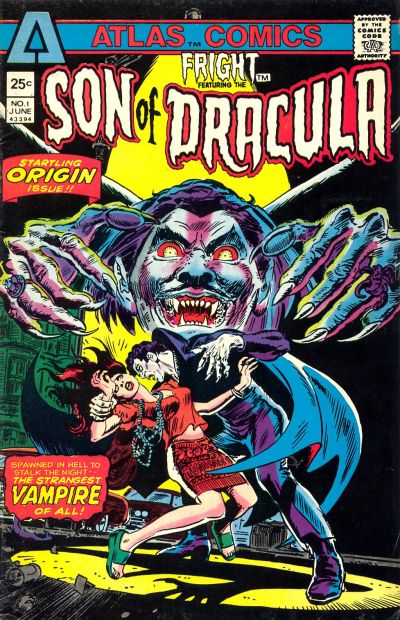
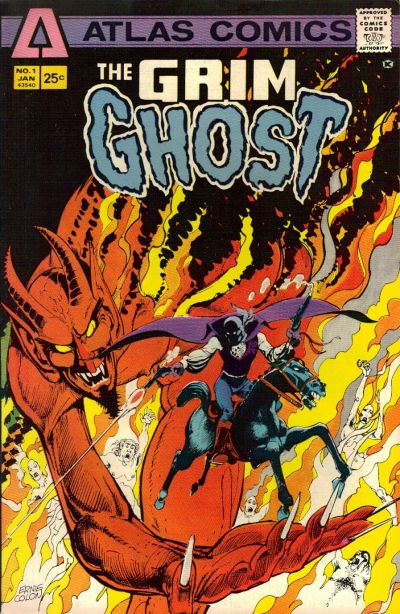
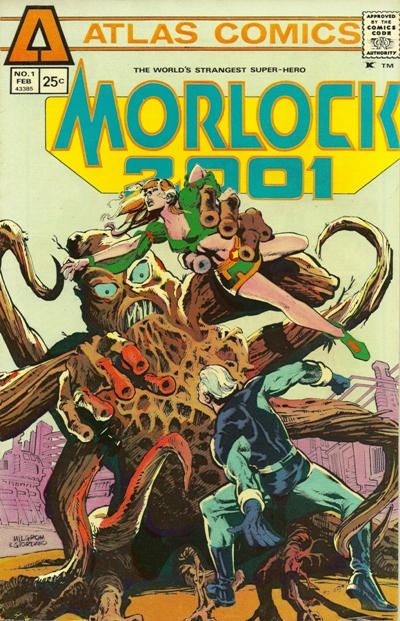
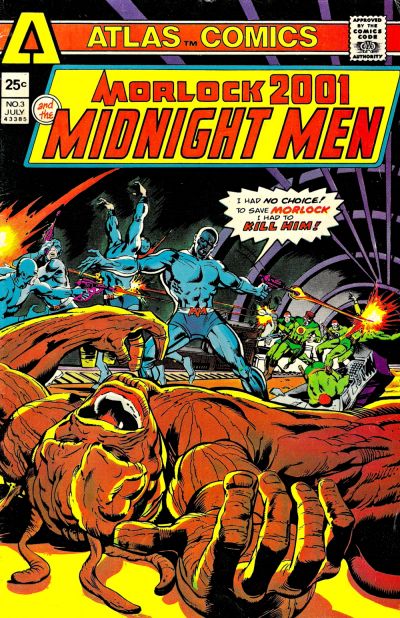
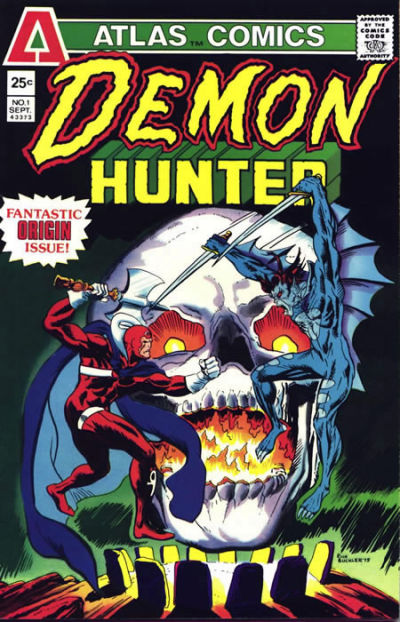
The short-lived 1970s Atlas/Seaboard line belongs beside the larger publishers. It is a different venture from the earlier Atlas associated with Marvel. Devilina and Weird Tales of the Macabre represent its magazine output, while Tales of Evil, Weird Suspense, Fright, The Grim Ghost, Morlock 2001 and Demon-Hunter broaden the colour-comic map into horror, monsters and supernatural adventure.
Weird Tales of the Macabre #1 has a Jeffrey Catherine Jones painting, credited at the time as Jeff Jones. Devilina #1 has a Pujolar cover. Both are conventionally identified by their January 1975 cover dates despite reaching sale in late 1974. This is another reminder that cover dates are not always release dates.
Fright #1 introduces Adam Lucard, Son of Dracula. Morlock 2001 supplies a different monster concept, with #3 offering a Steve Ditko and Bernie Wrightson interior-art combination. The Grim Ghost opens an afterlife-based adventure route. These books deserve explanation as stories and publishing experiments; short runs alone do not establish rarity or a likely future premium.
Archie and Red Circle
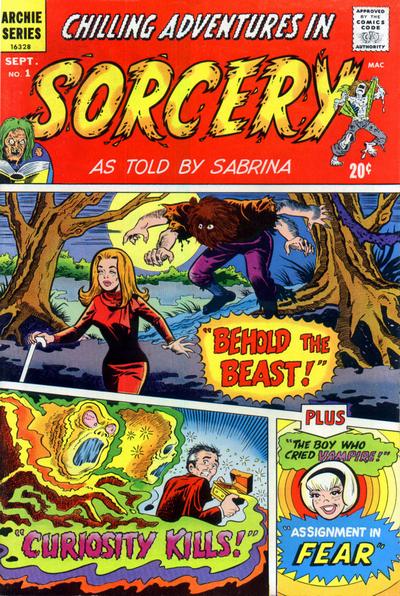
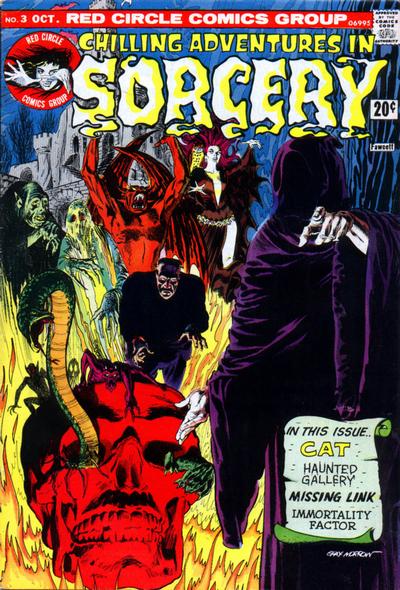
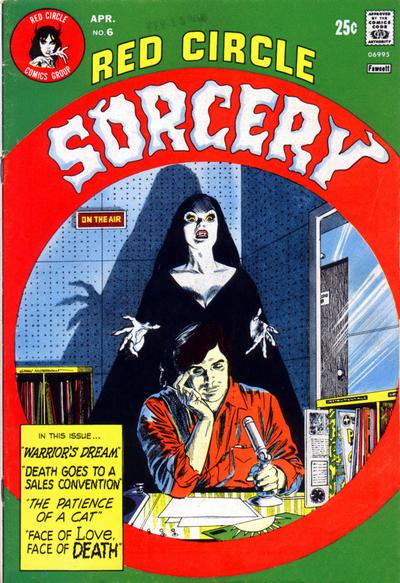
Archie's move into serious horror is easily missed if the publisher name creates an expectation of teen comedy. The numbering travels from Chilling Adventures in Sorcery as Told by Sabrina #1 and #2, through Chilling Adventures in Sorcery #3 to #5, into Red Circle Sorcery #6 to #11. Gray Morrow is a useful artistic and editorial starting point for this part of the field.
Keep the title change visible. A reader collecting a complete sequence needs to know why three different logos occupy one numbered run. The visual shift also makes an instructive gallery: the publisher identity alone does not tell you the intended tone of every comic it produced.
Gold Key Whitman and Dell
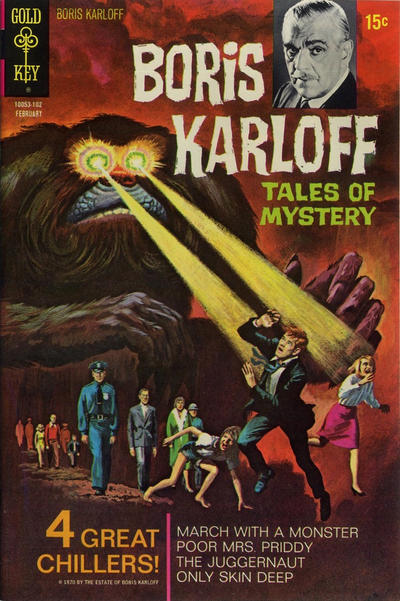
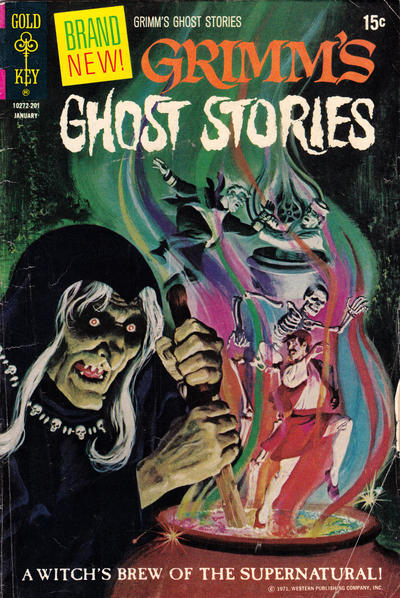
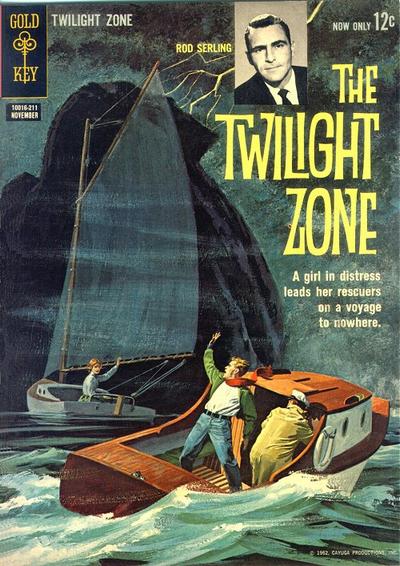
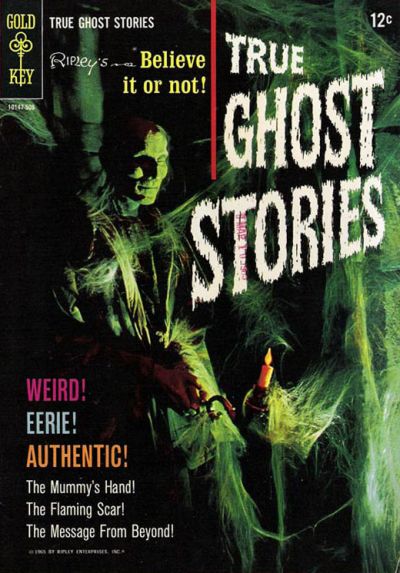
Boris Karloff Tales of Mystery, The Twilight Zone, Ripley's Believe It or Not, Grimm's Ghost Stories and Mystery Comics Digest give this history another set of formats and expectations. George Wilson's painted covers offer a clear artistic route. Boris Karloff Tales of Mystery #33 and Grimm's Ghost Stories #1 are useful Bronze-period examples, with separate interior artists and stories to inspect.
The numbering needs care. The Karloff title follows Boris Karloff Thriller; there is no need to invent a Tales of Mystery #1 under a later title. Gold Key's Twilight Zone #1 is not the earliest Twilight Zone comic, because Dell predecessors exist. Ripley's early numbering and subtitles need matching to the particular issue. A Whitman logo or a later reprint should trigger identification, not an automatic assumption of rarity.
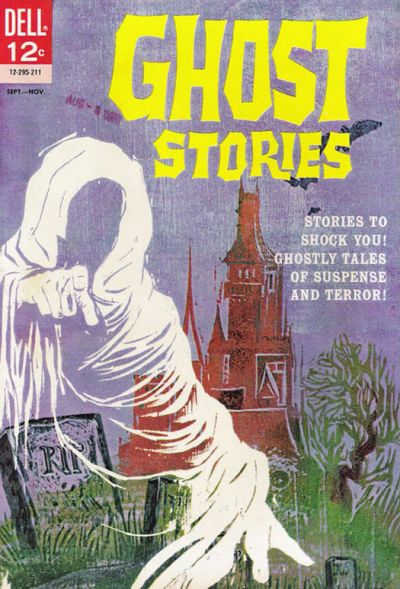
Dell's Ghost Stories #1 from 1962, containing The Monster of Dread End, makes a worthwhile Silver Age doorway. Its series continues into the early 1970s. Horror's history is richer when those surviving traditions are visible alongside the better-known revival.
Eerie Publications
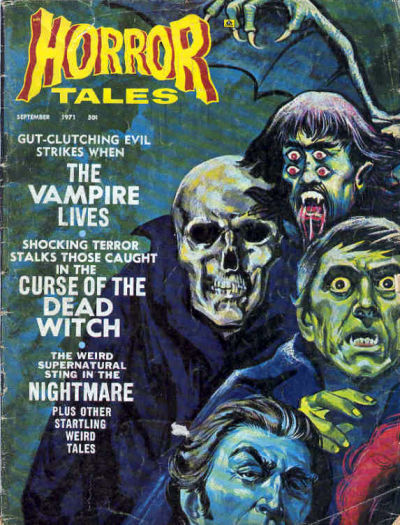
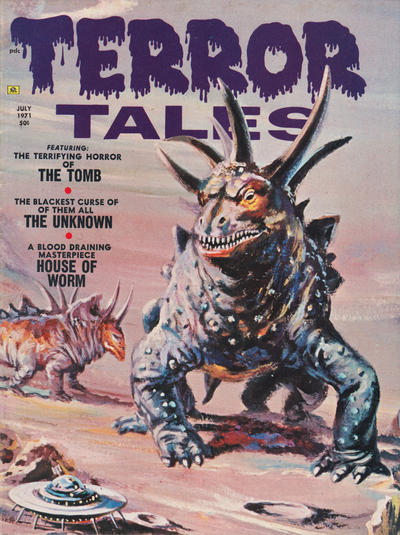
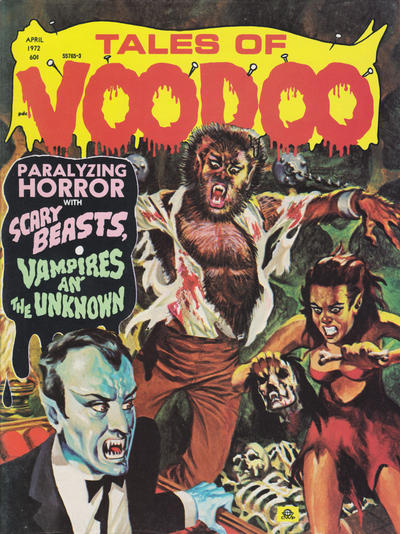
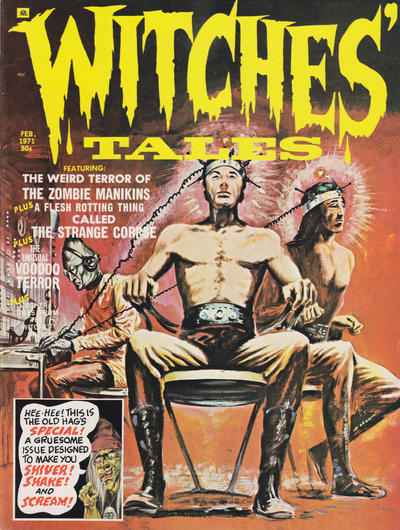
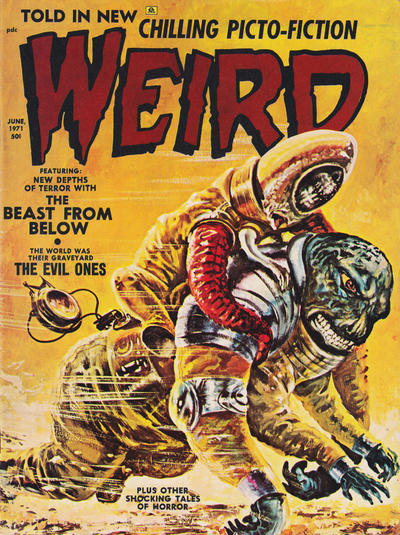
Eerie Publications is a publisher; Warren's Eerie is a magazine from another company. Eerie Publications' Weird, Horror Tales, Terror Tales, Tales from the Tomb, Tales of Voodoo and Witches' Tales belong in a separate gallery. Their lurid presentation is part of the period's visual history, but reused or redrawn earlier material complicates the dating of individual stories.
Use volume, issue and year in requests. Horror Tales Vol 3 #5 from September 1971 is an unambiguous example; Horror Tales #5 on its own is not. Before calling an interior an original Bronze story, check its bibliographic history.
A British doorway
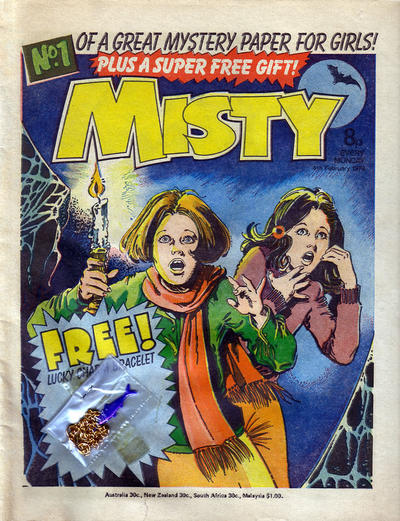
Misty opens a different view of late-1970s horror. Its first issue is dated 4 February 1978, and its 101-issue original run ends in January 1980. Moonchild, by Pat Mills and John Armstrong, and The Sentinels, by Malcolm Shaw and Mario Capaldi, give readers concrete serial routes. Rebellion's collections offer a way to read this material without assembling a fragile weekly run.
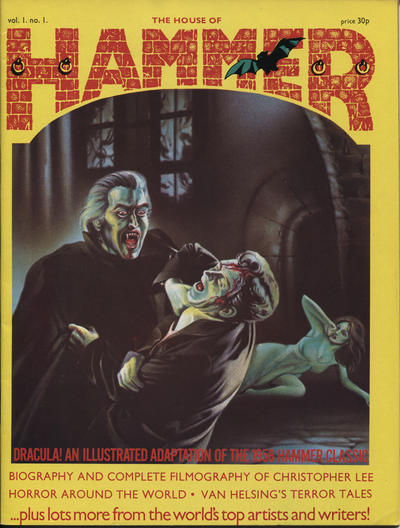
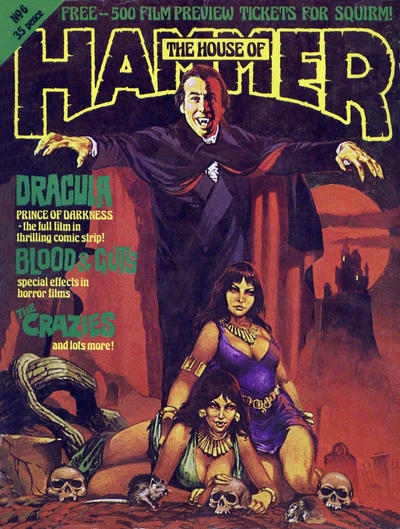
The House of Hammer connects horror cinema and comics. Its first issue adapts Dracula through Dez Skinn and Paul Neary, while #6 features Donne Avenell and John Bolton's Dracula Prince of Darkness adaptation. Film licensing, painted covers and interior adaptation art deserve attention alongside the American anthology tradition.
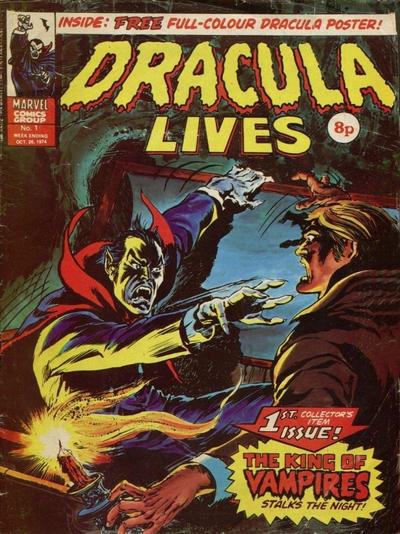
Marvel UK's Dracula Lives weekly, whose first issue is dated 26 October 1974, is another edition trap: it is not the US magazine of the same name. British reprint history belongs in the guide, especially for a UK collector, but the edition must be identified before its contents or price can be compared.
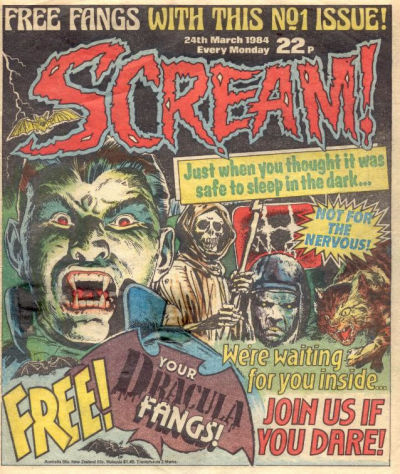
Scream #1, dated 24 March 1984, belongs in a clearly marked continuation beyond the main Bronze focus. The original 15-issue weekly run and later specials are separate collecting tasks. Features such as The Dracula File and The Thirteenth Floor show what a later British generation did with the material, and this Scream is entirely distinct from Skywald's US magazine.
War horror
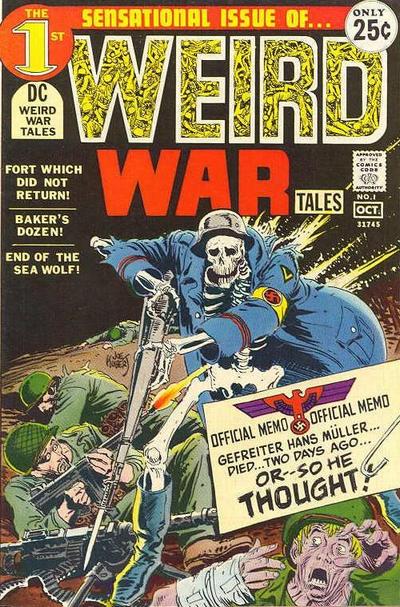
War horror deserves its own shelf, and Weird War Tales deserves considerably more attention than a handful of character debuts. A trench, a wrecked aircraft or a deserted village already contains the materials of a ghost story: people who disappeared, violence that refuses to stay buried, and survivors unsure what they owe the dead. When the supernatural enters that landscape, victory can become a trap. Surviving the battle may be only the beginning.
There are three overlapping collecting routes here. Supernatural warfare brings ghosts, curses and the undead into military stories. Weird war adventure adds dinosaurs, robots, impossible machines and monster soldiers. The human horror of war finds terror in ordinary decisions and their consequences. Labelling these strands helps readers choose. A dinosaur on a cover does not automatically make a comic horror, and a story without a monster may be the most disturbing book on the shelf.
Weird War Tales and the changing series
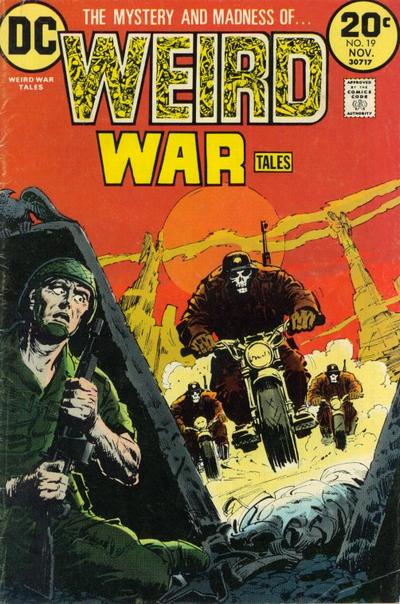
DC's original Weird War Tales ran from 1971 to 1983, ending at #124. Its long life makes it a substantial collection, but also creates several manageable ways in. You can collect an early anthology sample, follow a particular artist, choose naval and aviation nightmares, or assemble the later Creature Commandos appearances. Nobody needs to buy 124 issues before discovering whether the series is for them.
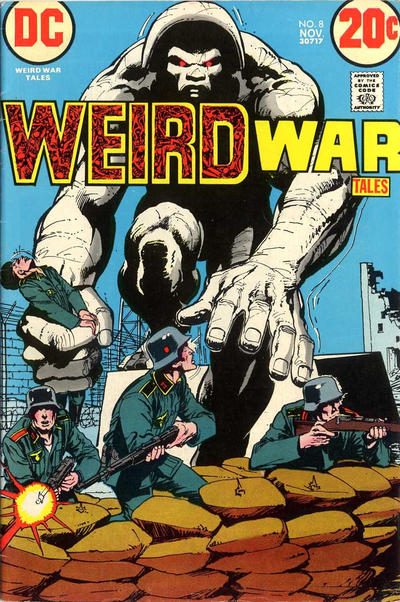
The launch under Joe Kubert mixed new material with earlier war stories. #1 contains new Kubert work alongside reprints, including material by Russ Heath and Kubert. The original publication history matters: the date on this cover does not date every story inside. Joe Orlando's editorship is credited from #8, cover dated November 1972, with E. Nelson Bridwell assisting. That gives a useful dividing point when exploring the early issues, without pretending the book changed overnight or that every earlier page was a reprint.
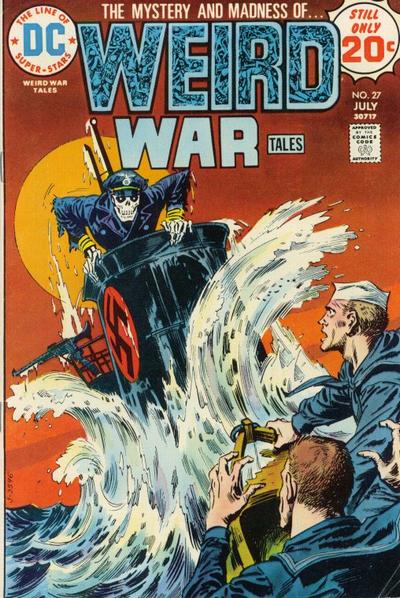
The anthology format is central to the attraction. A short story must establish its soldiers, location and danger quickly; a final-page discovery can then overturn everything the reader thought they understood. The uniformed Death host and cover imagery give these separate stories a recognisable identity. The scale ranges from one frightened individual to the extinction of a civilisation. Readers who only search for recurring characters miss much of the series' imaginative range.
Read two or three stories together and notice the changes in rhythm. The same issue can place an atmospheric ghost story beside a cruel moral reversal or a science-fiction nightmare. That variety is a reason to buy selected ordinary issues. It also explains why a powerful cover and the most memorable interior story may be by different artists.
A Weird War reading sampler worth opening
| Issue | What to look for | Why it earns a place |
|---|---|---|
| #1, 1971 | Kubert's launch and the mixture of new work and reprints | The starting point for understanding the book as an anthology |
| #8, 1972 | Orlando's credited editorial arrival; Neal Adams cover | A useful early transition issue and cover-art choice |
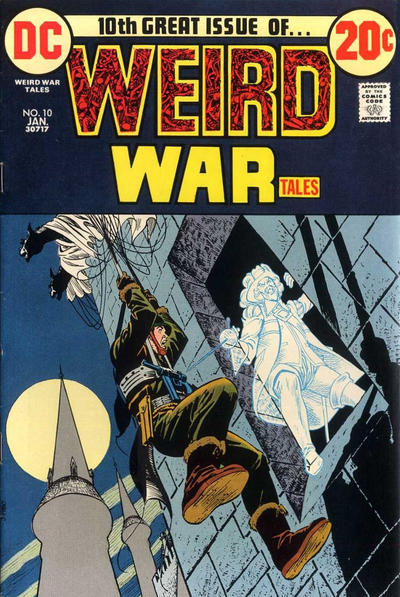
| #10, 1973 | Len Wein and Walter Simonson's “Cyrano's Army”; Sheldon Mayer and Alex Toth's “Who Is Haunting the Haunted Chateau?” | A creator milestone with substantial additional reading interest |
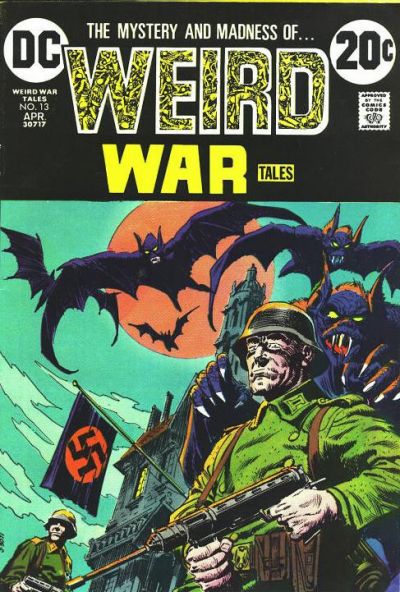
| #13, 1973 | Arnold Drake and Alex Niño's “Old Samurai Never Die” | Follow the visual storytelling into an issue without a headline character debut |
| #19, 1973 | Drake and Gerry Talaoc's “The Platoon That Wouldn't Die!” | A strong starting point for Talaoc and the series' central supernatural-war premise |
| #27, 1974 | Jack Oleck and Frank Robbins' “Survival of the Fittest!”; Oleck and Alfredo Alcala's “The General” | Contrasting artistic approaches in one issue, beneath a Luis Dominguez cover |
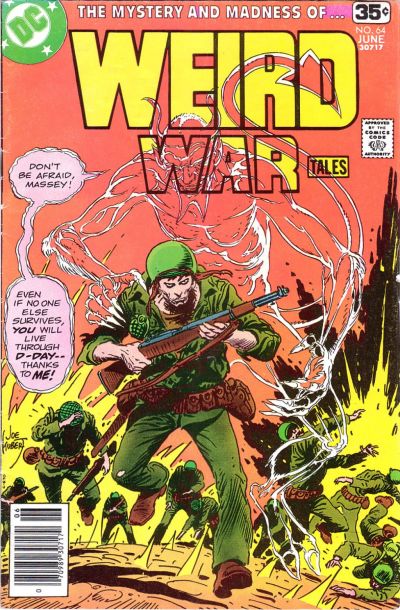
| #64, 1978 | Wyatt Gwyon, Frank Miller and Danny Bulanadi's “Deliver Me from D-Day” | An early Miller assignment and the correct issue for his first DC artwork |
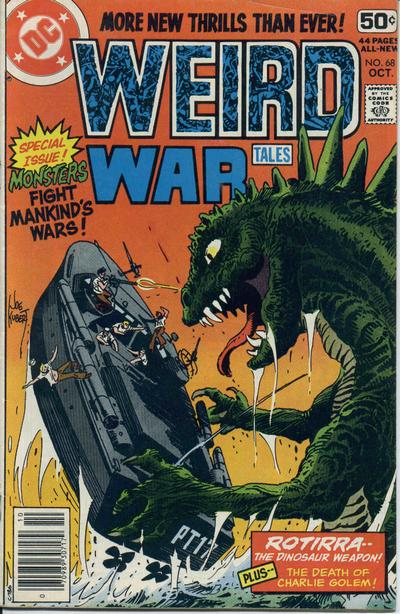
| #68, 1978 | Later Miller work, including Roger McKenzie's “The Day After Doomsday” episode | Extend the artist trail; this is not Miller's first DC appearance |
#10 is worth reading beyond its key label. Simonson's six-page “Cyrano's Army” is his professional comics debut, but the Mayer/Toth story gives the same purchase another purpose. A collector attracted by the historical milestone can discover a very different approach to ghost-story staging within the same cover. The cover is by Nick Cardy; neither interior credit makes it a Simonson or Toth cover.
#27 is our additional discovery pick. Robbins' restless line and Alcala's detailed surfaces invite an unusually useful comparison. The issue demonstrates how much the artist shapes the mood, even when the scripts share an author. That is a stronger reason to follow a book than attaching an unsupported “rare key” label to it. Its cover artist, Dominguez, deserves separate recognition.
For a compact artist collection, begin with Toth in #10, Niño in #13, Talaoc in #19 and Robbins and Alcala in #27. Then expand from the artists you enjoy. This turns the series into an art education you can actually read, and gives each acquisition a reason beyond completing a number sequence.
Creature Commandos and GI Robot
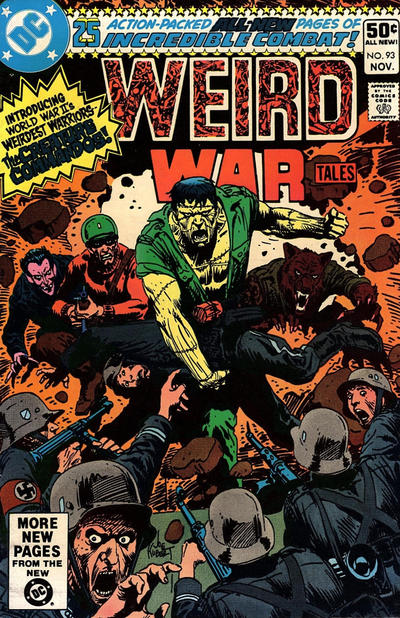
Weird War Tales #93, November 1980, introduces the original Creature Commandos, created by J.M. DeMatteis and Pat Broderick, with John Celardo inking. The concept combines military organisation with familiar monster imagery: people made into weapons, then sent into a conflict already filled with human cruelty. It offers a different reading experience from the earlier succession of unrelated nightmares. Character relationships and recurring adventures become part of the attraction.
The debut is the historical marker; following the team requires more of the run. DC's Creature Commandos collection gathers stories from #93, 97, 100, 102, 105, 108–112, 114–119, 121 and 124. That list is useful for either choosing a collected edition or assembling the original appearances. A collection described as containing stories from those issues does not necessarily reproduce every feature in each original comic.
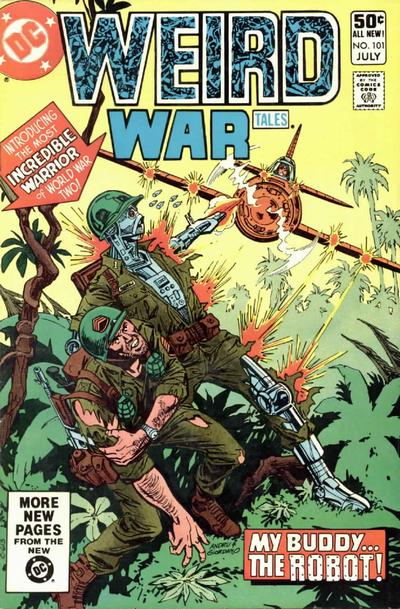
#101, July 1981, introduces J.A.K.E. 1 in Robert Kanigher and Pepe Moreno's “My Buddy—The Robot!” Earlier G.I. Robot incarnations already existed. Record the specific incarnation when making a key claim, and keep the original wartime team separate from later adaptations and their revised line-ups. This part of the shelf is best approached as monster and science-fiction war adventure with horror ingredients; the promise is different from a stand-alone battlefield ghost story.
Marvel War Is Hell and John Kowalski
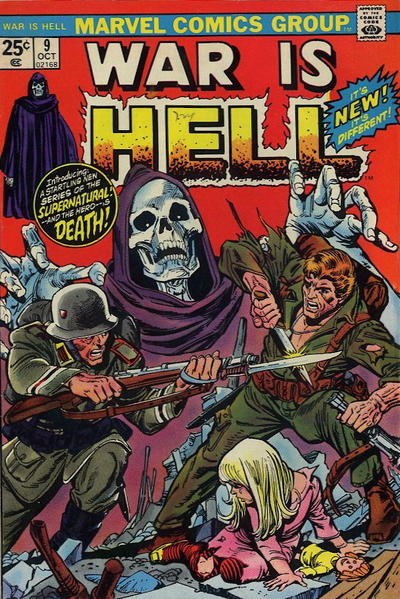
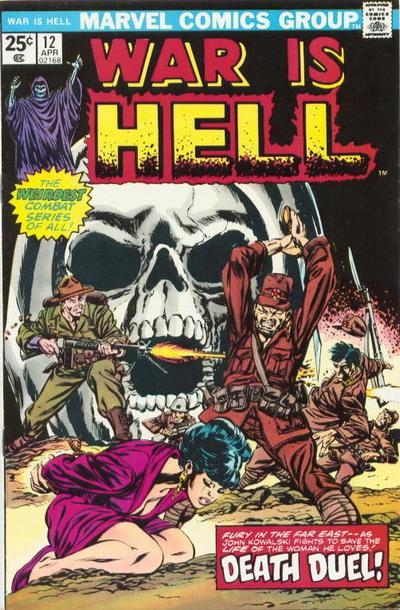
Marvel's War Is Hell #9–15, 1974–1975, belongs near the centre of this discussion. The series began with war reprints in #1–8; the John Kowalski supernatural sequence starts in #9. Buying #1 because it starts the title will not start this particular story. That is exactly the kind of distinction a new collector needs before spending money.
Kowalski is killed during the invasion of Poland, but Death denies him an ordinary release. He is forced to inhabit other lives and experience the conflict through them. The premise gives the series a continuing protagonist without requiring every instalment to follow the same military unit. It can move between viewpoints and make survival, guilt and responsibility personal. For readers exploring Marvel beyond the established monster stars, it is one of the most useful short projects on this page.
The opening issue has several writing credits: Tony Isabella is credited for the plot, Chris Claremont for the script and Roy Thomas also receives a credit; the issue index additionally identifies Steve Gerber's uncredited dialogue assistance. Dick Ayers and Frank Springer provide the interior art. Calling it simply an early Claremont comic conceals some of its making, although his continuing work is an important reason to follow the sequence.
#12, April 1975, is the story-led companion to the debut. “My Love Must Die!” is by Claremont, Don Perlin and Dave Hunt. Its personal stakes make it a useful recommendation for someone who wants to test the serial's emotional range. Read #9 first for the premise, then continue in order if it works for you. Collecting all seven original Kowalski issues gives the project a clear boundary.
Our editorial view is that this serial deserves more attention within Marvel horror. “Overlooked” here means it has strong material worth bringing into the conversation; it is not a measured claim that its price must rise. Anyone pursuing a value thesis should check completed sales and availability for the actual issue and condition. The reading case already stands without a speculative promise.
Haunted Tank and The War That Time Forgot
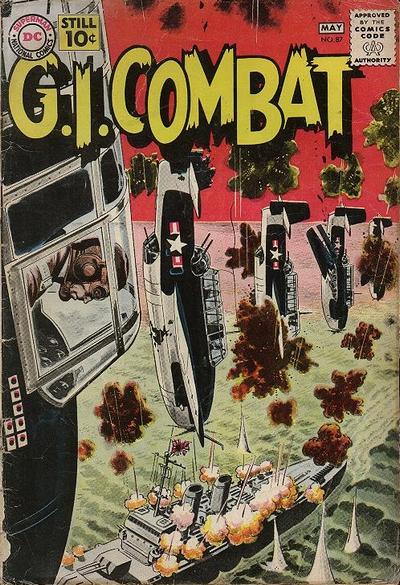
G.I. Combat #87, 1961, introduces the Haunted Tank, created by Robert Kanigher and Russ Heath. A ghost advises a Second World War tank commander: the supernatural is built into an ongoing military feature. Its adventures continue through the Bronze era, making G.I. Combat a relevant neighbouring shelf. The ghost's presence does not make every instalment a horror story, however. Often the appeal is military adventure, visual craft and the recurring crew.
For a reader, sample the feature in a collected edition or a complete, affordable Bronze issue before deciding whether the first appearance belongs on the wish list. DC's Showcase Presents: Haunted Tank Vol. 1 identifies the early reading route as stories from G.I. Combat #87–119, The Brave and the Bold #52 and Our Army at War #155. It is a reading reference, not a claim about current stock or price.
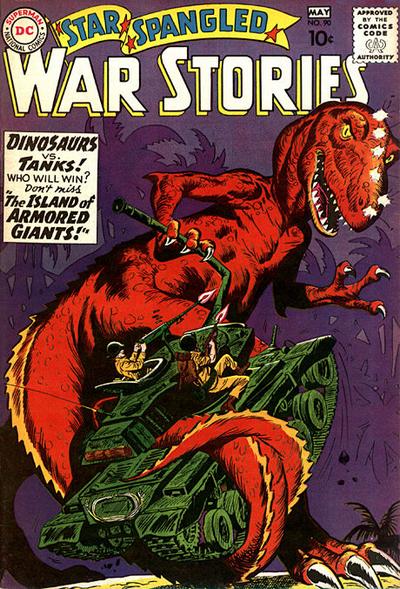
Star Spangled War Stories #90, 1960, launches The War That Time Forgot. Soldiers confronting dinosaurs establish a different ancestry for weird war: prehistoric spectacle and impossible survival rather than necessarily supernatural terror. Its covers make a striking companion gallery, but new readers should know what experience they are buying. Keep these Silver Age origins clearly dated even when the collecting emphasis is Bronze.
Warren and war in the horror magazine
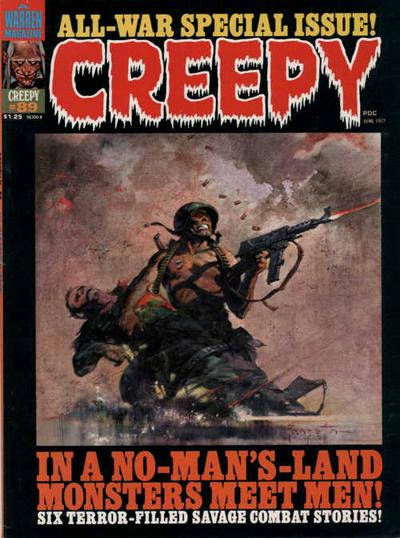
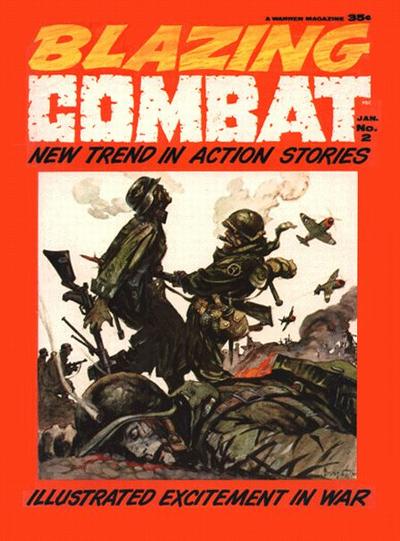
The overlap also works in the other direction: a horror magazine can devote an issue to war. Creepy #89, June 1977, is Warren's all-war special. Its Frank Frazetta cover reuses the painting from Blazing Combat #1, an important distinction for cover collectors. Inside, “Angel of Jaipur”, by Bill DuBay and John Severin, provides a specific artist trail between the war and horror shelves.
Treat the issue as an opportunity to compare storytelling across formats. The larger black-and-white page gives a different experience from a DC colour comic, and the war theme can accommodate human cruelty alongside fantastic material. “All-war” does not mean every contribution is a supernatural story, nor that every story is equally successful. The attraction is the themed issue and its creators, rather than a claim that every page is an undiscovered masterpiece.
Its earlier companion is Warren's four-issue Blazing Combat, 1965–1966. In #2, “Landscape!”, by Archie Goodwin and Joe Orlando, follows a Vietnamese farmer caught in a conflict he cannot control. This is a serious recommendation for the human-horror branch. It belongs among the roots, not under a false Bronze launch date or a description of Blazing Combat as a supernatural title.
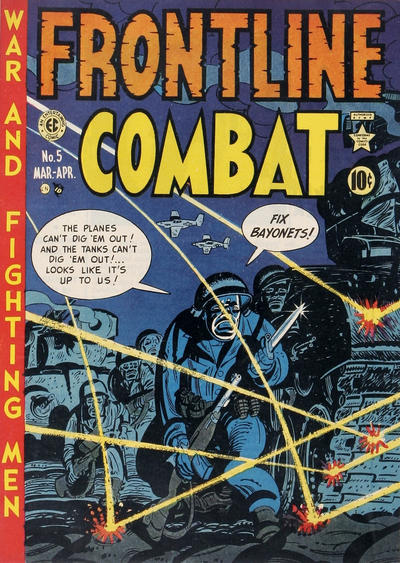
For the deeper historical comparison, Harvey Kurtzman's “Big 'If'!” in Frontline Combat #5, 1952, shows why EC's war comics matter here. Terror and loss require no resurrected corpse. Read it beside “Landscape!” and then a Weird War ghost story: the differences in how each creates dread are the point. EC's Two-Fisted Tales and Frontline Combat belong in this carefully labelled human-horror reading route.
Britain and Fiends of the Eastern Front
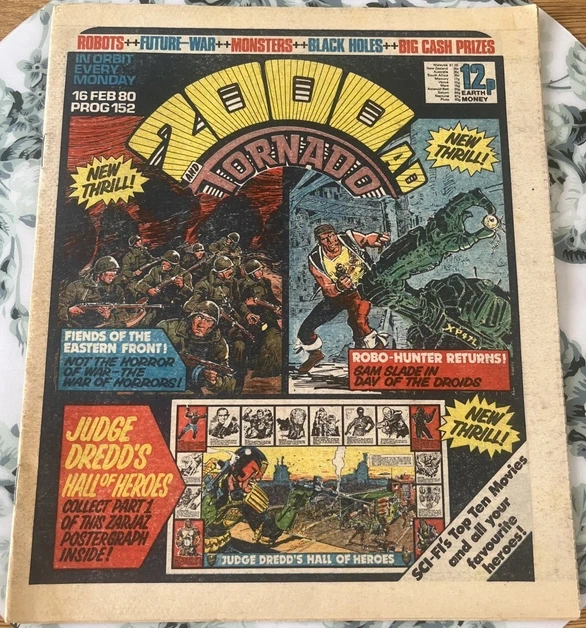
A UK guide should give Fiends of the Eastern Front a proper place. Gerry Finley-Day and Carlos Ezquerra's original serial runs in 2000 AD Progs 152–161, 1980; Prog 152 is dated 16 February 1980, under the 2000 AD and Tornado masthead. The wartime vampire premise makes it a direct war-horror recommendation, rather than a general war comic added to widen the list.
The short serial format gives the story a different rhythm from Weird War Tales: each instalment must keep one continuing nightmare moving. Read the original sequence or a collection containing it before following the later Fiends stories. For collecting, the opening prog is the milestone, while the ten-part sequence is the original reading project. Confirm that a set contains all ten episodes; a few attractive covers will not tell the whole story.
Build a war horror collection around what you enjoy
Start with one contained project: the four-issue Weird War artist sampler above, War Is Hell #9–15, or the original ten-part Fiends serial. Add the historical companions when you want to understand the genre more deeply. A small, purposeful group is easier to read, budget for and assess than a speculative stack of unrelated “horror covers”.
There is a credible discovery case for ordinary Weird War Tales issues and less discussed war-horror material: distinctive artwork, concentrated stories and several audiences that could take an interest. Future attention could come through artist reassessment, reprints or renewed interest in the characters. Those are possibilities to monitor, not established demand or guaranteed price growth. Low CGC submissions can reflect limited grading incentives just as easily as scarcity. The census watchlist later in this guide supplies a starting point for investigation; the first test remains whether the comic rewards opening it.
The characters the boom created and transformed
The most enduring result of the horror revival may be the characters who escaped their original publishing format. An anthology host became part of a later mythology. A werewolf's opponent became a headline superhero. A magazine feature continued through later publishers. The distinctions below identify the actual milestone being collected.
DC hosts and supernatural figures
| Character | Issue and year | The precise milestone |
|---|---|---|
| Cain | House of Mystery #175, 1968 | Host debut, after the #174 editorial reset |
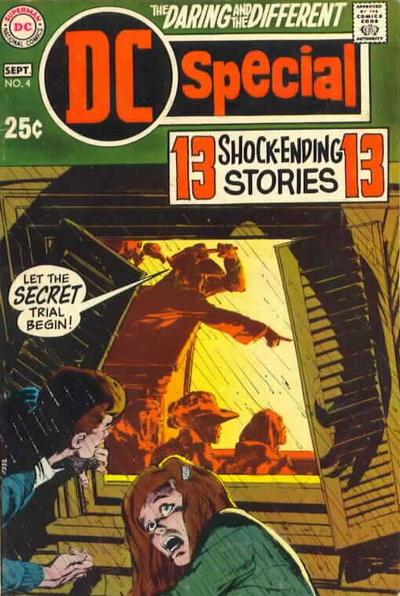
| Abel | DC Special #4, 1969 | Debut before House of Secrets #81 became his anthology home |
| Swamp Thing | House of Secrets #92, 1971 | Alex Olsen's original incarnation; Alec Holland follows in Swamp Thing #1 |
| Etrigan and Jason Blood | The Demon #1, 1972 | Kirby's continuing supernatural concept begins |
| Destiny | Weird Mystery Tales #1, 1972 | Host debut; the later Endless mythology is a subsequent development |
| Eve | Secrets of Sinister House #6, 1972 | Host debut and a later link to the Dreaming |
| Lucien | Tales of Ghost Castle #1, 1975 | Original host role before his later Sandman importance |
| Madame Xanadu | Doorway to Nightmare #1, 1978 | Debut story by David Michelinie and Val Mayerik; Kaluta cover and design contribution |
| Creature Commandos | Weird War Tales #93, 1980 | Original wartime team debut |
| Andrew Bennett | House of Mystery #290, 1981 | I Vampire begins with DeMatteis and Sutton |
Marvel monsters and their neighbours
| Character | Issue and year | The precise milestone |
|---|---|---|
| Man-Thing | Savage Tales #1, 1971 | Character debut before the later solo title |
| Morbius | Amazing Spider-Man #101, 1971 | Science-fiction vampire debut before the sustained horror features |
| Jack Russell | Marvel Spotlight #2, 1972 | Werewolf by Night debut |
| Johnny Blaze | Marvel Spotlight #5, 1972 | Supernatural biker debut, distinct from the earlier Western Ghost Rider |
| Blade | Tomb of Dracula #10, 1973 | Wolfman and Colan's vampire hunter debuts |
| Brother Voodoo | Strange Tales #169, 1973 | Jericho Drumm's debut |
| Satana | Vampire Tales #2, 1973 | Debut in the magazine line |
| Daimon Hellstrom | Ghost Rider #1 and Marvel Spotlight #12, 1973 | Shadowed introduction and subsequent starring development require separate wording |
| N'Kantu | Supernatural Thrillers #5, 1973 | Living Mummy debut |
| Man-Wolf | Amazing Spider-Man #124, 1973 | Transformation of the already established John Jameson |
| Hannibal King | Tomb of Dracula #25, 1974 | Vampire detective debut |
| Tigra | Giant-Size Creatures #1, 1974 | Transformation of Greer Nelson, previously the Cat |
| Moon Knight | Werewolf by Night #32, 1975 | Debut by Doug Moench and Don Perlin |
| Scarecrow | Dead of Night #11, 1975 | Supernatural character later called Straw Man |
| Modred | Marvel Chillers #1, 1975 | Mystic debut connected to the Darkhold |
The same principle applies outside Marvel and DC. Vampirella #1 starts her publishing life, while Vampirella #30 introduces Pantha. Midnight Tales #1 establishes Professor Coffin and Arachne. Simon Garth's 1973 magazine career revives a 1953 character, and the Skywald Heap follows an older monster tradition. A careful guide gives these stories their own identities rather than treating every return as a birth.
Follow a character into the existing files
Use the broader horror guide to discover the connections, then follow the dedicated histories for a more complete reading and collecting route: Swamp Thing, Man-Thing, Ghost Rider, Blade, Morbius, Werewolf by Night and Moon Knight.
Follow the artists as well as the characters
A cover-first collection and a story-art collection can overlap beautifully, but their checklists are different. Record the role that makes each issue interesting. Inkers, writers and editors can be central to the result, and an anthology may contain several completely different teams.
| Artist trail | A useful starting point | What to compare |
|---|---|---|
| Tom Sutton | Ghostly Haunts #38 and #49; Haunted #17; Creepy Things #1 | Painted cover, line-art story and writing as different contributions |
| Bernie Wrightson | House of Mystery #204; Creepy #62 and #63 | Colour anthology work and monochrome magazine storytelling |
| Jim Aparo | House of Mystery #201; the Phantom Stranger and Spectre routes | Acting, clarity and supernatural atmosphere inside the story |
| Wayne Howard | Midnight Tales #1 | How framing characters give an anthology a continuing identity |
| Steve Ditko | Ghost Manor #13 from the 1968 series; Morlock 2001 #3 | Distinctive interior drawing, including a collaboration with Wrightson |
| Mike Ploog | Marvel Spotlight #2; Frankenstein #1 to #4 | Expression and movement across different monster protagonists |
| Gene Colan and Tom Palmer | Tomb of Dracula | The combined effect of pencils and inks across a continuing serial |
| José González | Vampirella #12 onward | The development of a defining character interpretation |
| Alex Niño and Gerry Talaoc | Weird War Tales #13 and #19 respectively | Two distinct approaches within the war-horror anthology |
| Michael Wm Kaluta, Nick Cardy and George Wilson | Selected DC and Gold Key covers | Cover composition as a separate collecting discipline |
These starting points should lead to checked credits, not an assumption that an artist appears in every issue that follows. The same caution applies to Nestor Redondo, Alfredo Alcala, Ruben Yandoc, E R Cruz and other important contributors: find the actual story and give the individual work its credit.
The overlooked horror watchlist
This watchlist begins with artistic or historical reasons to investigate a book. It then asks what the available grading and market evidence can actually tell us. It includes comparison books as well as low-population examples so that the word scarce does not become a label applied to everything.
Population source and date: the following are CGC figures displayed by MyComicShop, checked 24 September 2026. MyComicShop warns that updates may lag CGC by two months or more. An effective census date is not supplied. These are delayed displayed populations, not a verified live September census or a count of surviving copies.
CGC is a third-party grading service. Universal is one of its label categories. All counts below refer to the standard issue entry and Universal category only. Signature, Qualified, Restored and Conserved copies are excluded. Where separately catalogued, a Mark Jewelers or other variant must be assessed on its own entry. Zero means no entry displayed in that cell of this source, not proof that no such copy exists today.
| Original issue | Universal total | At 9.8 | At 9.6 | At 9.4 |
|---|---|---|---|---|
| Ghostly Haunts #49, 1976 | 15 | 1 | 1 | 0 |
| Haunted #17, 1974 | 20 | 0 | 2 | 3 |
| Ghost Manor #19, 1974 second series | 4 | 0 | 1 | 2 |
| Ghost Manor #23, 1975 second series | 56 | 2 | 3 | 5 |
| Weird War Tales #10, 1973 | 47 | 2 | 10 | 13 |
| Weird War Tales #68, 1978 | 33 | 4 | 12 | 2 |
| Tales of Ghost Castle #1, 1975 | 248 | 20 | 60 | 66 |
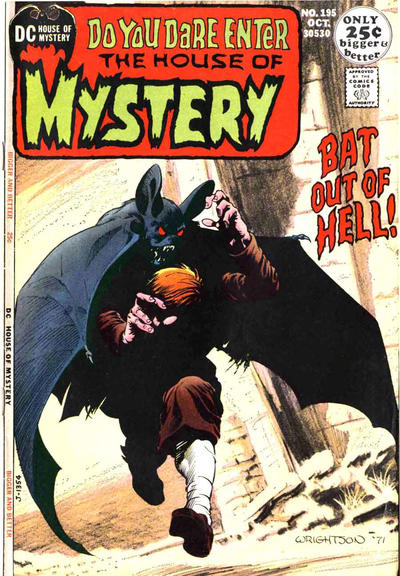
| House of Mystery #195, 1971 | 343 | 15 | 32 | 44 |
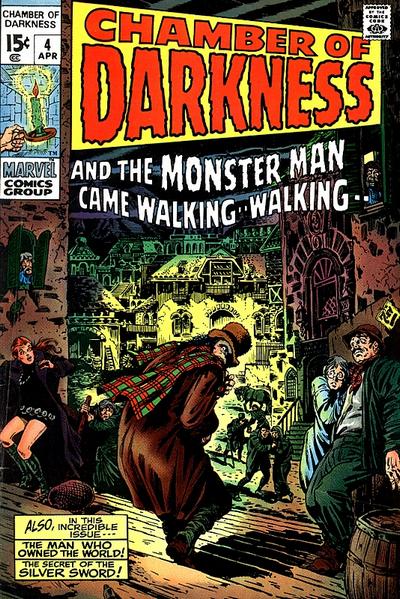
| Chamber of Darkness #4, 1970 | 352 | 8 | 36 | 62 |
| The Witching Hour #1, 1969 | 531 | 8 | 23 | 39 |
The comparison is revealing without a rarity ranking. Ghost Manor #19 has very little recorded submission activity in this source. Tales of Ghost Castle #1, despite belonging to a three-issue series with a cult following, has a much larger recorded population. A short publication run is not evidence of a tiny graded population, still less a tiny surviving supply.
Ghostly Haunts 49
Why follow it: a memorable painted Tom Sutton cover gives the issue an identifiable visual appeal. The displayed Universal total is small, but that does not make the issue undiscovered. Possible reason for wider interest: more readers following Sutton's cover work into Charlton. What could limit the case: existing attention may already be reflected in prices, and the interior artist attribution can disappoint a buyer expecting a Sutton lead story. Collector verdict: an artist-led target to price carefully, not a cheap sleeper by default.
Haunted 17
Why follow it: Sutton's painted cover and A Budding Evil provide both exterior and interior reasons to care. Possible reason for wider interest: a focused plant-horror or Sutton feature could help readers find the issue. What could limit the case: the delayed table's absence of a Universal 9.8 does not demonstrate impossibility; additional submissions could change the picture quickly. Collector verdict: a story-and-art selection first, with condition research alongside it.
Ghost Manor 19 and 23
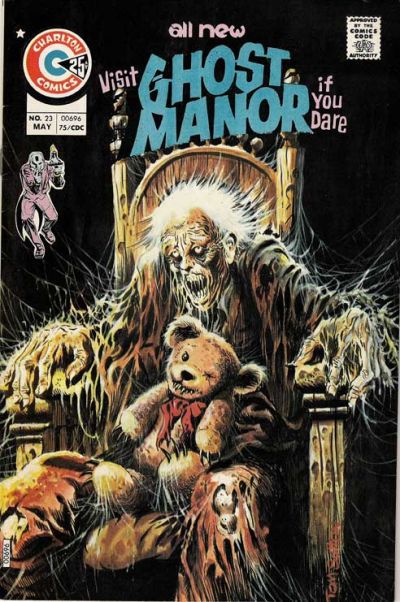
Why follow them: #19 combines a Pat Boyette painted cover with Sutton's The Hybrid Man inside; #23 offers a Sutton painted cover and Terrible Teddy. The two issues should not be collapsed into a single artist claim. Possible reason for wider interest: readers following the relationships between Charlton's painters and storytellers. What could limit the case: four displayed Universal entries for #19 are too small a sample to infer a survival rate or high-grade percentage of all copies. Collector verdict: promising subjects for further observation, with edition checks essential.
Weird War Tales 10 and 68
Why follow them: #10 combines the Simonson milestone with other interior work, including Alex Toth, beneath a Nick Cardy cover. #68 offers early Frank Miller work beneath Joe Kubert's cover. Possible reason for wider interest: artist collectors discovering short assignments outside the superhero titles they already know. What could limit the case: thin transaction volume and confusion over first-work claims. Miller's first DC milestone is #64, not #68. Collector verdict: clear creator-led reasons to investigate, with no assumption that every early job deserves a premium.
Three comparisons that improve the watchlist
Tales of Ghost Castle #1 is attractive as Lucien's original home and the beginning of a manageable three-book project. Its 248 displayed Universal copies make it an instructive check on casual low-pop claims. Interest in its later connections does not mean it was always neglected or is difficult in every grade.
House of Mystery #195 has Wrightson cover and interior interest. Its much larger displayed population gives context to the Charlton figures. Do not repeat a casual Swamp Thing prototype claim without examining chronology: #195 appeared after House of Secrets #92.
Chamber of Darkness #4 offers an artistic mixture including Kirby, Sutton and Barry Windsor-Smith. Starr the Slayer is not Conan's first appearance. The Witching Hour #1 is an important anthology launch with substantial recorded grading activity. Both deserve a place in the comparative set; neither should be called low population simply because it appears on this page.
How much is one sale worth as evidence
An archived MyComicShop listing marks a Ghostly Haunts #49 CGC 7.5 copy sold at US$500, approximately £377 at the exchange rate used here. Another marks a Ghost Manor #23 CGC 6.5 copy sold at US$275, approximately £207. Neither page supplies a transaction date. These are identifiable archived price observations, not September 2026 sale records or a fair market value range. They do show why it would be misleading to describe every Sutton-related issue as an inexpensive undiscovered buy.
A computer-generated guide figure is another kind of evidence again. An estimated price for a grade with no recorded sales cannot substitute for a comparable transaction. Where there are too few usable observations, the honest conclusion is that pricing confidence is low.
Buying the copy rather than the description
Start with completeness
An attractive front cover does not establish that a comic is complete. Ask for the back cover, spine, staples and centre pages. On a significant purchase, establish whether pages, coupons, inserts or pin-ups are missing. Check the requirements of the specific issue rather than assuming every book originally contained the same extras. A removed Marvel Value Stamp, where present, is a completeness defect even if the main story remains readable.
For magazines, check contents and physical construction with particular care. Larger covers can show edge wear and creasing that a front-on photograph hides. Some volumes contain colour sections or features that matter to completeness. A photograph of a slab label should be clear enough to read the grade, designation, page quality and any stated qualifications; the certification number should match the book being offered.
Restoration, trimming, detached components and replaced or married pages can change the collecting proposition. They may still be acceptable to a reader who knows what they are buying, but they must be disclosed and compared with similarly described copies. Never pay an unrestored-copy premium on the assumption that an attractive photograph proves originality.
Understand what condition does to the market
There are two useful questions: can I find a complete copy, and can I find a copy in the condition I want? A book can be fairly accessible in worn condition yet difficult to buy with a clean dark cover, sound spine and strong presentation. That is a condition question, not proof that very few copies survive.
Record the defects that actually matter to you. If you collect cover art, a crease through the focal image may bother you more than wear on the back. If you read originals, secure pages and a sound spine may matter more than a sharp corner. Grading can aid comparison, but a numerical grade does not describe every visual difference between two copies.
Avoid assuming cleaning or pressing will deliver a particular grade or profit. Do not buy a damaged comic on the basis of an unverified upgrade story. Assess the book and price as offered.
Edition traps worth learning once
- An original first printing and a facsimile are different purchases, even when their front covers look very similar.
- A UK price on a cover needs identifying: a price variant, a distributor stamp and a separately produced British reprint are not interchangeable descriptions.
- A series relaunch can repeat the title and issue number. Publisher, year and format belong in the search.
- A magazine and a colour comic can share a character or title without sharing numbering or contents.
- A reprint anthology can contain older stories with new covers. Credit and value the actual edition in front of you.
- A cover can introduce a collecting interest without containing a character's first appearance. Verify the interior and publication sequence.
Build a record that will still be useful next year
Record title, issue, publisher, year, printing, format, condition notes, purchase date and total paid in pounds. Add the cover artist, the interior story that motivated the purchase and its creators. Save the seller's description and relevant photographs. For a graded copy, also record the certification number and any notes you relied on.
That record makes a collection more useful whether you keep it, sell it or simply want to remember why an apparently ordinary issue mattered to you.
Reading the census without being misled
CGC's Population Report records material graded by CGC. It is not a census of every surviving comic. Raw collections, unsubmitted dealer stock and copies graded by other companies sit outside that count. CGC expressly cautions that its population data does not establish a collectible's overall rarity or value.
The most informative comparison usually involves similar books: the same publisher or format, a comparable period, a similar price level and a plausible shared readership. A low-value Charlton issue and a major Marvel first appearance attract different submission incentives. Comparing their totals without that context confuses grading activity with surviving supply.
Keep three ideas separate. Low recorded population means few copies appear in the specified report. High-grade scarcity within the report means few recorded copies reach the stated grade. Market scarcity means copies rarely become available in the market you are observing. None automatically proves the other two.
A high-grade percentage is especially unstable when the total is tiny. One newly submitted copy can materially change the picture. A zero in a grade means none is recorded in that category in that dataset; it does not prove that no raw copy could achieve it. A current snapshot also cannot tell you what the population was ten years ago.
Each census entry should therefore carry its source, check date, exact edition, label category, grade breakdown and any update delay. A figure reproduced by a dealer remains a secondary snapshot even if the underlying data originates with CGC.
What would support a stronger collecting case
A persuasive case combines an identifiable reason to want the book with evidence about availability and transactions. We would look for repeat completed sales of comparable copies, sufficient photographs or descriptions to judge condition, and a period of observation long enough to include quiet weeks. A single optimistic listing establishes an asking price, not a market level.
Potential demand can come from readers discovering a creator, renewed attention to a story, a useful reprint or broader interest in a visual style. These are possible explanations, not forecasts. A reprint can also satisfy readers without increasing demand for originals. Rising prices can encourage more owners to sell or submit books, expanding visible supply.
Every watchlist entry needs a reason the case could fail. The audience may remain small. A scarce high grade may not command a useful premium. Transactions may be too infrequent to support a dependable value. A book can remain a wonderful acquisition even if it never appreciates.
What a ten year return would require
A defensible comparison needs matched editions and a consistent grade or condition band at both ends, with enough transactions to reduce the influence of an unusual sale. Currency movements, buyer's premiums, selling costs and inflation can materially change the result. Changing from raw copies in the first period to certified high grades in the second is not a meaningful like-for-like return.
This guide does not manufacture a ten-year percentage where that evidence is absent. A dated watchlist and repeatable method are a sounder starting point for future updates.
Plan a collection you can finish
The anthology sampler
Choose six complete issues across DC, Charlton, Marvel and one magazine publisher. Pick them for identified stories or artists, read them and write one sentence about what worked. Your next six purchases should follow the preferences that emerge. This is a controlled way to explore without mistaking a publisher logo for a guarantee of quality.
The artist trail
Choose one artist and decide whether you are collecting covers, interiors or both. Tom Sutton is a particularly useful teaching example because the painted cover, the pen-and-ink story and the issue containing both can lead to different checklists. Record credits before buying. Expand to collaborators and related artists only when the first trail makes sense to you.
The war horror shelf
Choose a small group of Weird War Tales issues for specific stories, then add one example of the dinosaur-war tradition and one realistic war story. Keep those strands labelled. The comparison helps you decide whether your main interest is supernatural atmosphere, imaginative spectacle or the moral consequences of combat.
The character family
Choose a debut, a strong early story and a later development. This produces a more informative collection than a row of unrelated first issues. The Swamp Thing lineage, Marvel's supernatural characters and DC's horror hosts all reward this approach, but their bibliographies require different distinctions between prototypes, revivals and first appearances.
The patient key purchase
Decide the exact book, edition, acceptable defects and maximum delivered price. Observe the market before bidding. If the evidence is thin, reduce the confidence of the valuation rather than increasing the drama of the sales pitch. An opportunity you understand is more useful than one you are rushed into buying.
Where the horror story goes next
The early 1980s do not provide a neat end to horror comics. Some anthology lines closed, others continued with reprints, and characters created or revived during the boom found new audiences. Later Swamp Thing and Sandman stories changed how readers understood figures inherited from earlier decades. British horror, independent comics and later creator-owned series deserve their own continuation of the story.
For this collection, however, keep the centre of gravity in the Bronze Age. Explore the original publishing context, learn to recognise the creators and find the stories behind the covers. An issue does not need a newly discovered first appearance to justify a place on your shelf.
Sources and further reading
Research checked 24 September 2026. Publisher pages establish reading routes and publication context; issue indexes support story-level credits and numbering. Guide prices, archived sale listings and delayed population tables have different evidential uses and are identified separately. Editorial recommendations express the reasons to explore the material, rather than claiming every original story has been newly reviewed in full.
Historical context and accessible reading
- Library of Congress on horror comics and the magazine route.
- Library of Congress on Tales from the Crypt.
- The 1971 Comics Code text via the Comic Book Legal Defense Fund.
- DC A Beginners Guide to DC Horror.
- Fantagraphics Lost Marvels No 1 Tower of Shadows.
- Marvel Horror The Magazine Collection.
- Marvel Stokers Dracula completed adaptation.
- Marvel Decades Legion of Monsters collected contents.
- Marvel Frankenstein series.
- GCD Tower of Shadows 1 story credits.
- GCD Dead of Night 11 story and cover credits.
- Marvel on the Son of Satan introduction.
- Marvel Horror Omnibus collected character routes.
- TwoMorrows It Rose from the Tomb.
Price reference pages
The ten original-edition pages below supply the USD inputs for the early buying table. The guide's own methodology and the currency source are linked first.
Population and transaction references
- CGC Population Report and limitations.
- Ghostly Haunts 49 displayed CGC table.
- Haunted 17 displayed CGC table.
- Ghost Manor 19 displayed CGC table.
- Ghost Manor 23 displayed CGC table.
- Weird War Tales 10 displayed CGC table.
- Weird War Tales 68 displayed CGC table.
- Tales of Ghost Castle 1 displayed CGC table.
- House of Mystery 195 displayed CGC table.
- Chamber of Darkness 4 displayed CGC table.
- The Witching Hour 1 displayed CGC table.
- Archived Ghostly Haunts 49 CGC 7.5 sold listing.
- Archived Ghost Manor 23 CGC 6.5 sold listing.
DC and Charlton series stories and creator credits
Publisher histories establish the broader context; the Grand Comics Database issue indexes help separate cover credits, individual stories and later reprints. Dates below refer to the original issues. Checked 24 September 2026.
- DC: A Beginner's Guide to DC Horror — the anthology revival, the two Houses, Forbidden Tales and the later lives of the horror hosts.
- Grand Comics Database: House of Mystery #175 — Cain's 1968 introduction and Neal Adams's cover; distinguish it from the preceding editorial reset.
- Grand Comics Database: DC Special #4 — Abel's first appearance, before House of Secrets #81.
- Grand Comics Database: House of Mystery #201 — The Demon Within, with Orlando, Albano and Aparo story credits and Kaluta's cover.
- Grand Comics Database: House of Mystery #202 — The Poster Plague by Skeates and Aragonés; separate Kaluta cover credit.
- Grand Comics Database: House of Mystery #204 — Mary Skrenes as Virgil North and Bernie Wrightson's contributions to All in the Family.
- Grand Comics Database: Ghostly Haunts #38 — Gill and Sutton's The Weirdest Character I've Ever Known, with distinct later cover and story reprints.
- Grand Comics Database: Ghostly Haunts #49 — Sutton's painted cover and Gill/Martí Riera's Doorway to Hell interiors.
- Grand Comics Database: Haunted #17 — Sutton's painted cover and A Budding Evil, alongside the issue's other contributors.
- Grand Comics Database: Creepy Things #1 — Sutton's The Well and its later reprint trail.
- Grand Comics Database: Midnight Tales #1 — Cuti and Howard's framing sequence, Weave Me a Web, and the Coffin/Arachne world.
- Grand Comics Database: Charlton publishing catalogue — cross-checks for the wider catalogue, series dates and issue counts.
- Grand Comics Database: Forbidden Tales of Dark Mansion — the eleven-issue #5–15 run and its continuation from The Dark Mansion of Forbidden Love.
- Grand Comics Database: Secrets of Sinister House — the fourteen-issue #5–18 run and its separate Gothic predecessor.
- DC: Madame Xanadu's original introduction — Doorway to Nightmare #1, David Michelinie and Val Mayerik.
- DC: Super Scares—Seven of DC's Most Terrifying Horror Stories — the Fleisher/Aparo Spectre horror run beginning in Adventure Comics #431.
Magazines and war horror sources
Further issue indexes and publisher reading guides for the magazine and war chapters.
- Creepy Presents Bernie Wrightson — Grand Comics Database — maps the collected stories back to original issues, including The Black Cat in Creepy #62 and Jenifer in #63.
- Creepy Archives Volume 9 — Dark Horse / Penguin Random House — collects #42–45 and explicitly discusses the Spanish contributors, including Luis Garcia.
- Eerie Archives Volume 9 — Dark Horse / Penguin Random House — identifies Esteban Maroto among the magazine's regular contributors.
- Eerie Archives Volume 19 — Dark Horse / Penguin Random House — identifies José Ortiz among the contributors.
- Vampirella #30 — Grand Comics Database — Pantha's Re-Birth, with Steve Skeates and Rafael Auraleón credits; January 1974 issue.
- The Human Gargoyles collection — Grand Comics Database — the original sequence crosses Psycho and Nightmare; useful for constructing a reading trail.
- Saga of the Victims collection — Grand Comics Database — original magazine chapters from Scream #6–9 and #11. Collection contents must be checked before promising the completed ending.
- Seaboard / Atlas publisher index — Grand Comics Database — a directory for the separate 1970s Atlas venture and its short-lived titles.
- Chilling Adventures in Sorcery — Grand Comics Database — the title and numbering trail into Red Circle Sorcery.
- The Weird World of Eerie Publications — Feral House excerpt — publisher history and context for the reused and redrawn material; distinguishes Eerie Publications from Warren.
- The House of Hammer — Dez Skinn's account — the editor's history of the magazine and its adaptation/artwork approach.
- Dracula Lives, Marvel UK 1974 series — Grand Comics Database — #1 dated 26 October 1974; British weekly format, black-and-white interiors and separate identity from the US magazine.
- Weird War Tales #1 — Grand Comics Database — separates new Kubert material from earlier war-story reprints.
- Back Issue #51 preview — TwoMorrows — creator interview supporting Walter Simonson's professional debut with Cyrano's Army in Weird War Tales #10.
- Weird War Tales #64 — Grand Comics Database — Deliver Me from D-Day credits: Wyatt Gwyon, Frank Miller and Danny Bulanadi; June 1978. Establishes why #68 should not be labelled Miller's first DC artwork.
- Creature Commandos collection — DC — publisher's original-series reading route, collecting stories from Weird War Tales #93, 97, 100, 102, 105, 108–112, 114–119, 121 and 124.
- League of Lizards: Six DC Stories for Dinosaur Lovers — DC — identifies Star Spangled War Stories #90 as the beginning of The War That Time Forgot.
- Blazing Combat — Fantagraphics — publisher's account of the 1965–1966 series and the Vietnam story Landscape; a realistic war companion, not a supernatural anthology.
Further sources for the Marvel monsters collecting argument
- Key Collector Where Monsters Dwell 6 raw acquisition guide. USD Low/Mid/High inputs 9/25/90, checked 24 September 2026.
- Key Collector Supernatural Thrillers 5 raw acquisition guide. USD Low/Mid/High inputs 15/50/150, checked 24 September 2026. Both GBP conversions use the opening table's rate and limitations.
- GCD Where Monsters Dwell 6 issue and reprint details.
- GCD Monsters on the Prowl 17 cover and reprinted Colossus story.
- GCD Astonishing Tales 21 and the Living Colossus revival.
- GCD Supernatural Thrillers 8 story credits and the Elementals.
- GCD Fear 1 original anthology issue.
- Marvel Masterworks Man Thing Volume 1 contents.
Further sources for the expanded war horror chapter
- GCD Weird War Tales 8 editorial and cover credits.
- GCD Weird War Tales 10 story credits.
- GCD Weird War Tales 27 story and cover credits.
- Marvel War Is Hell 9 issue record.
- GCD War Is Hell 9 detailed writing credits.
- Marvel War Is Hell original series.
- Michigan State University index for My Love Must Die.
- DC Showcase Presents Haunted Tank Volume 1 contents.
- GCD GI Combat 87 original issue.
- GCD Creepy 89 including the reused cover.
- Michigan State University index for Angel of Jaipur.
- GCD Frontline Combat 5.
- Fantagraphics Corpse on the Imjin collection and Kurtzman war stories.
- Rebellion interview on Fiends of the Eastern Front and its original serial.
- GCD 2000 AD and Tornado publication dates.